
This is part 5 with Kyoto, Otsu and Nagoya. Part one from Tokyo, two from Osaka, three from Onomichi and part four from Kinosaki Onsen.
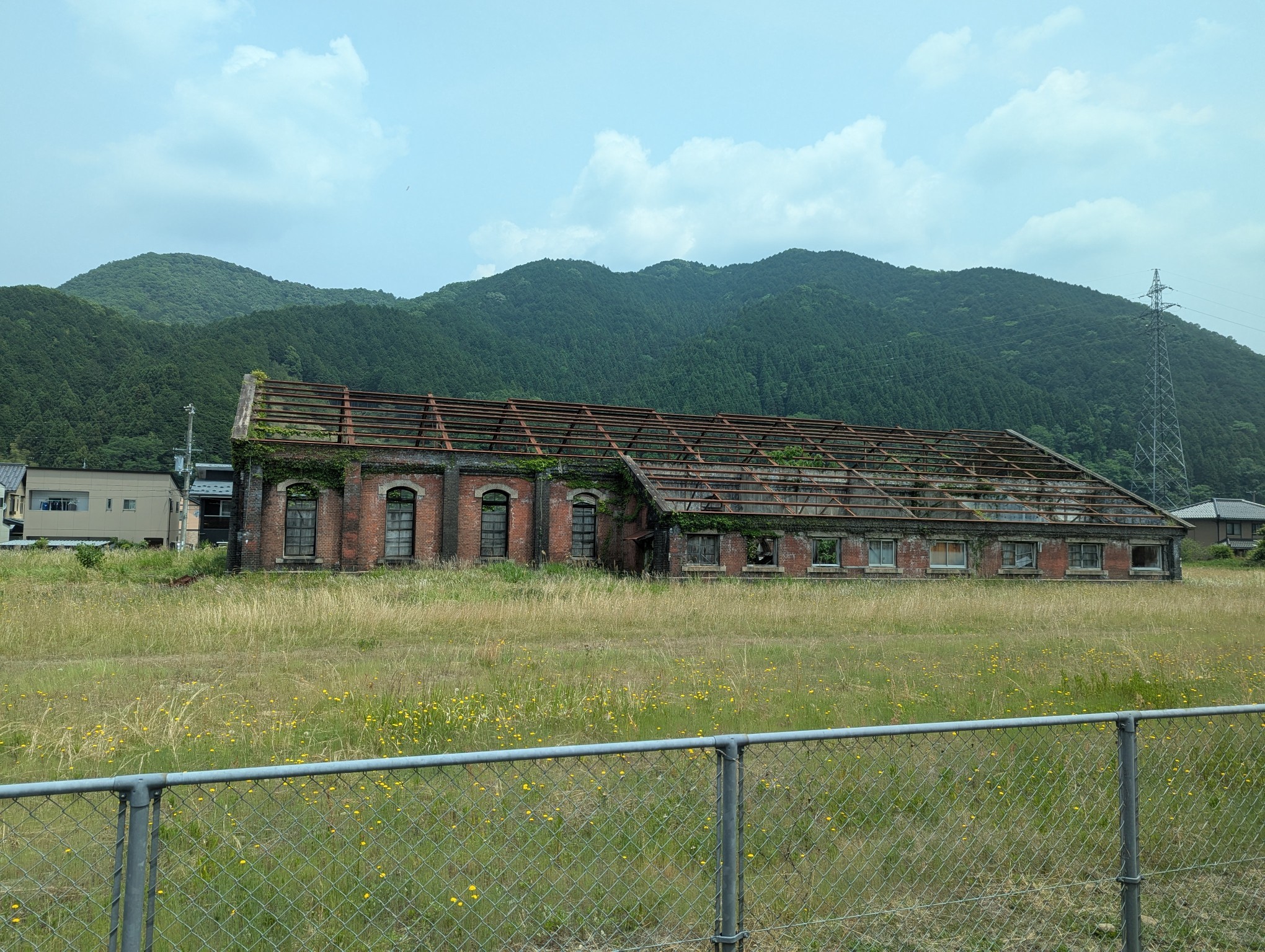
As mentioned, we took the Limited Express from Kinosaki Onsen to Kyoto. The main benefit of this train is that it provides a direct connection to Kyoto. With the train card in Japan, you can use most regional trains directly and without reservation, but some trains do require a special reservation. The Limited Express is one such case. So we spent the money to get a little more comfort, as well as a direct connection.
This train journey gave me the chance to let my mind wander, watch some TV shows and relax. As I looked out of the window, I saw abandoned buildings, rice fields and mountains fly by. As we neared Kyoto, the train passed through a scenic valley created by the Katsura River. I later found out that there is a special Sagano Scenic Railway trolley train that goes down a different route, which we could have booked in advance. When we reached Kyoto, we had some time before we could check into our hotel. To get rid of our larger bags, we used the baggage storage facilities at the station and went to the nearby markets.
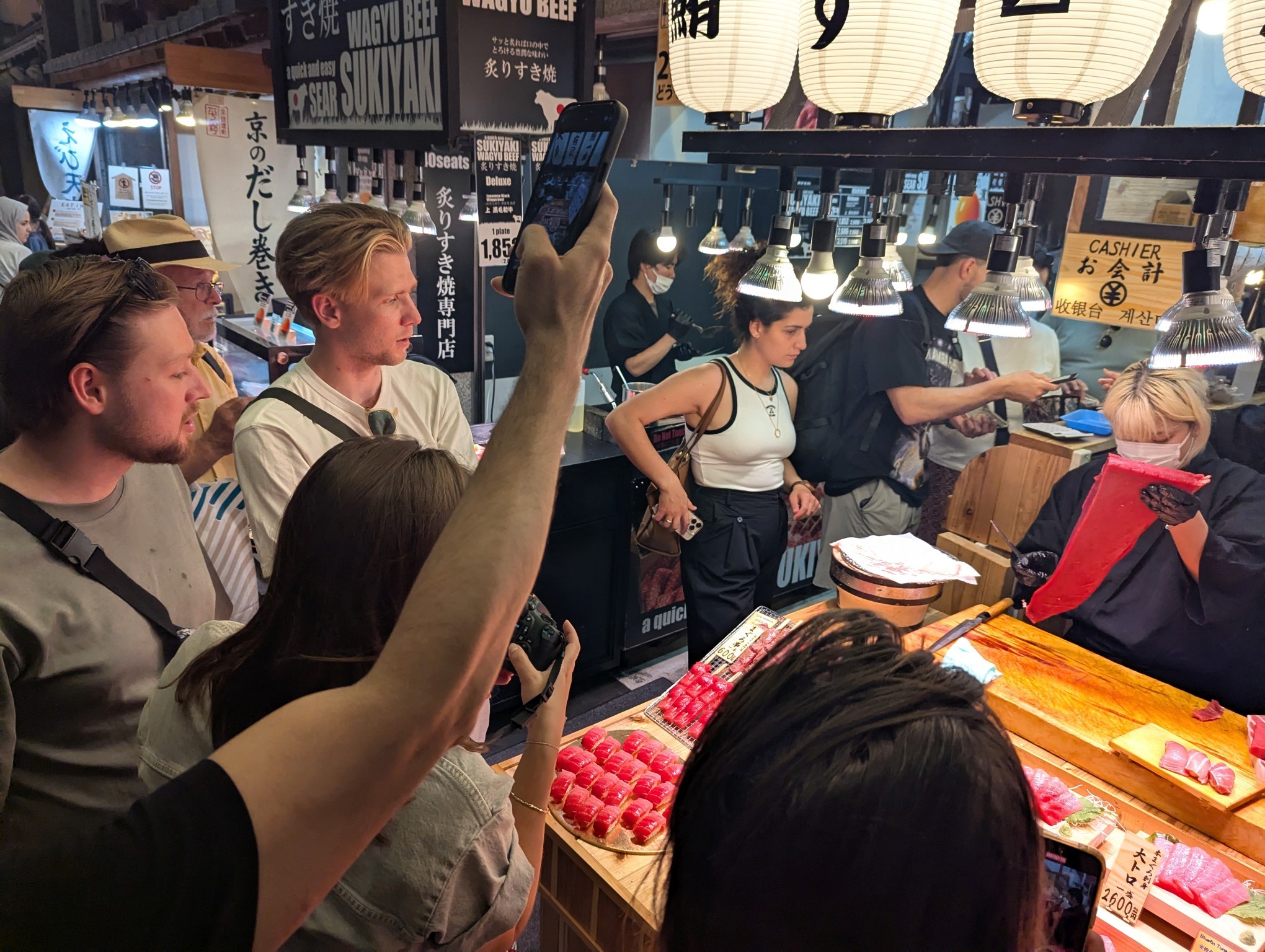
I managed to find a new wallet in the market, as my old one had started to disintegrate in my pocket. The market passageway is sometimes interrupted by streets with normal through traffic. Personally, I would not want to pass through such streets, as the alley is very crowded and people sprawl into the street to eat the food they bought in the market. After this brief diversion, we headed back to the train station, collected our luggage and made our way to Otsu, where our hostel was located for the next two nights.
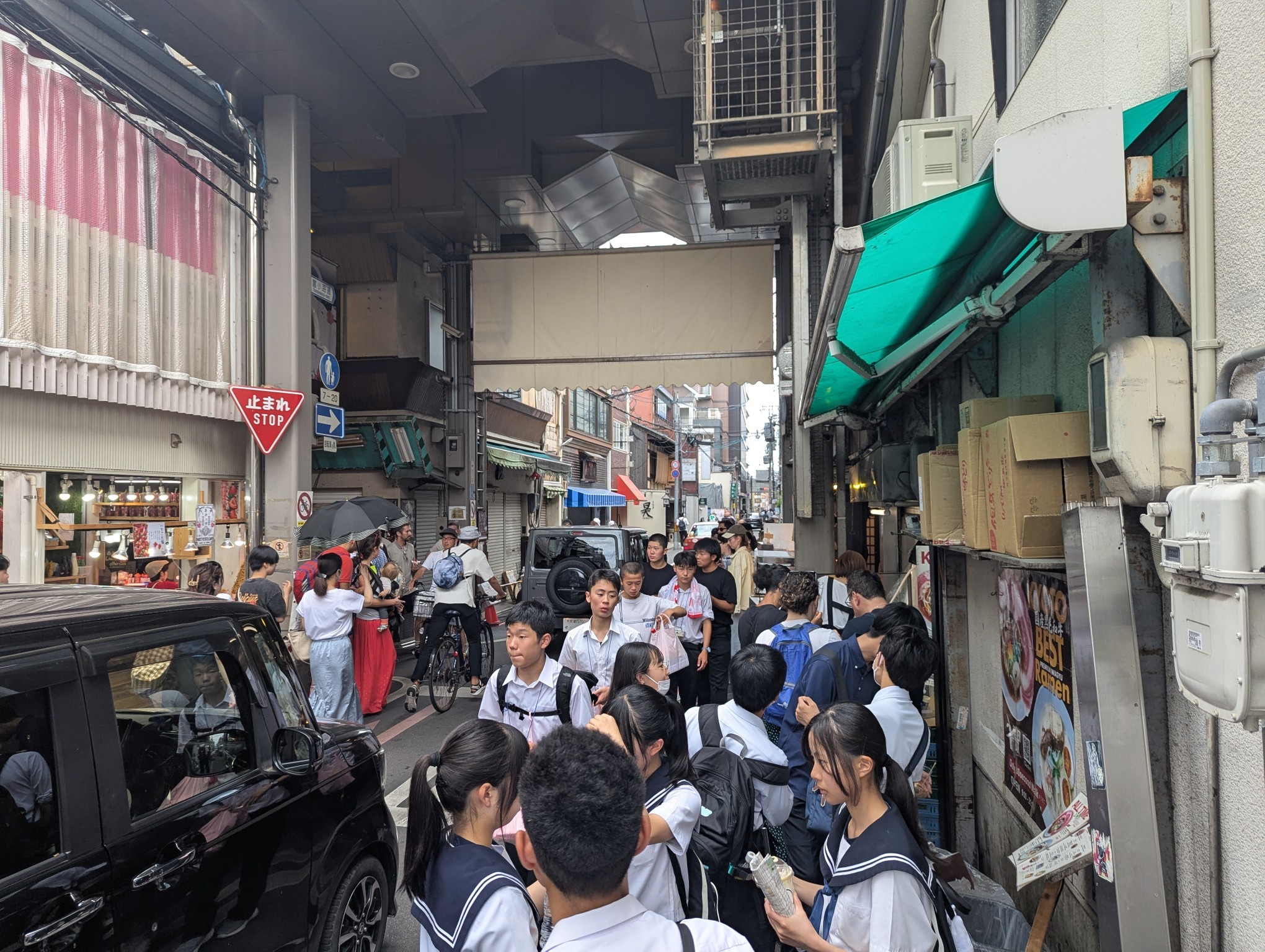
To get there, you first need to take a regional train towards Otsu, after which you will need to walk for a while to reach the hotel. Thankfully, we had arranged for our larger luggage to be sent on to Tokyo.
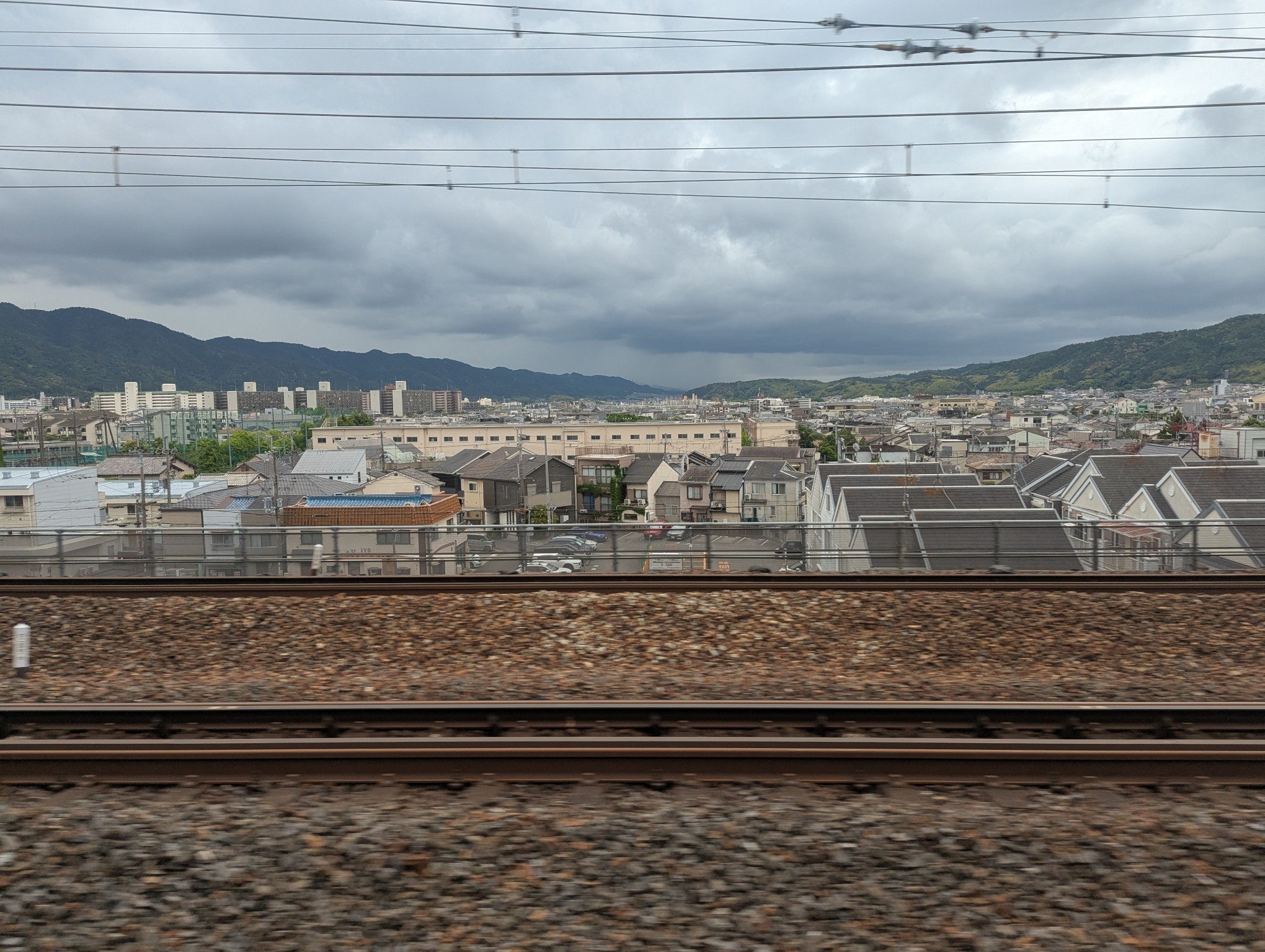
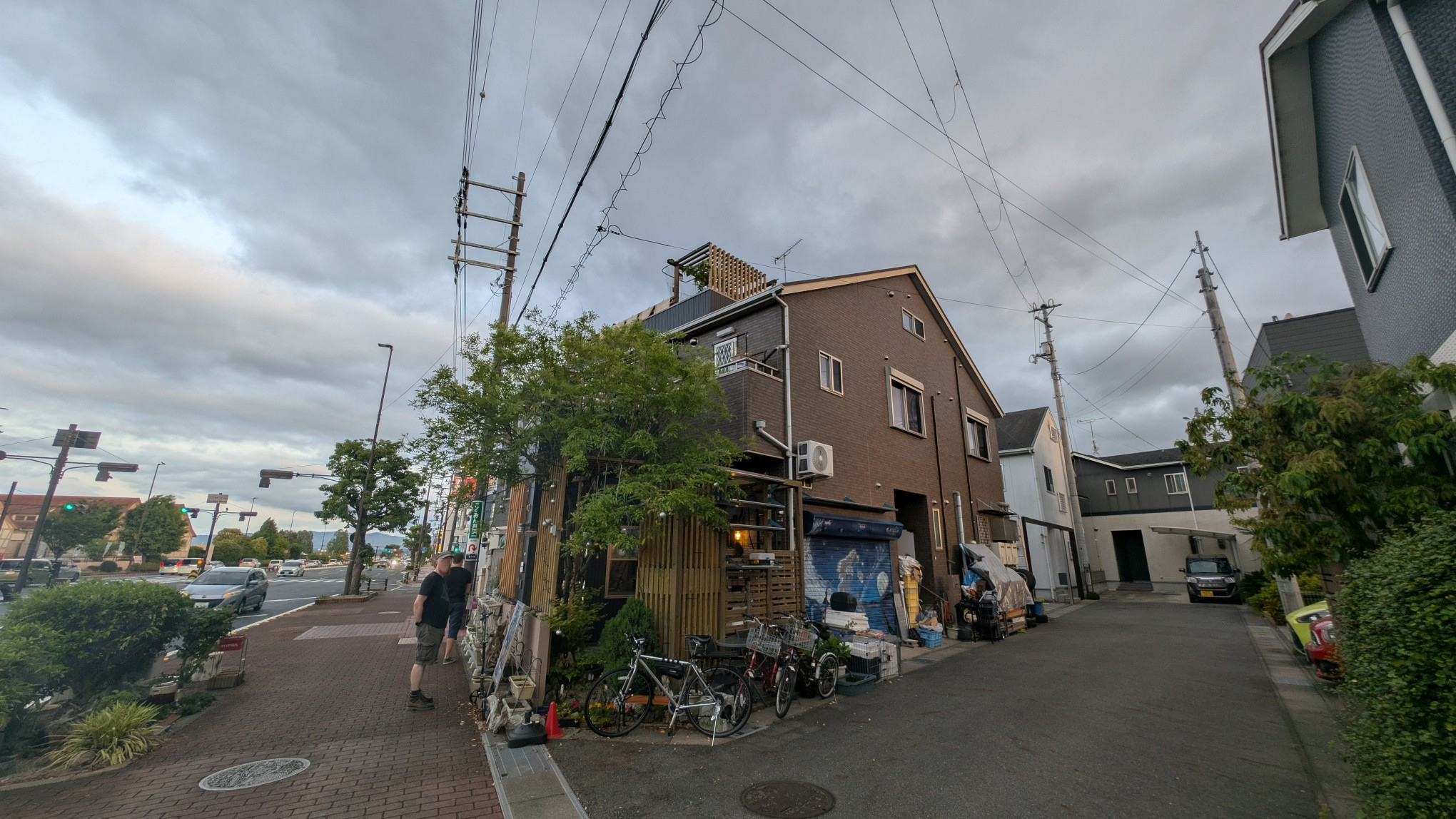
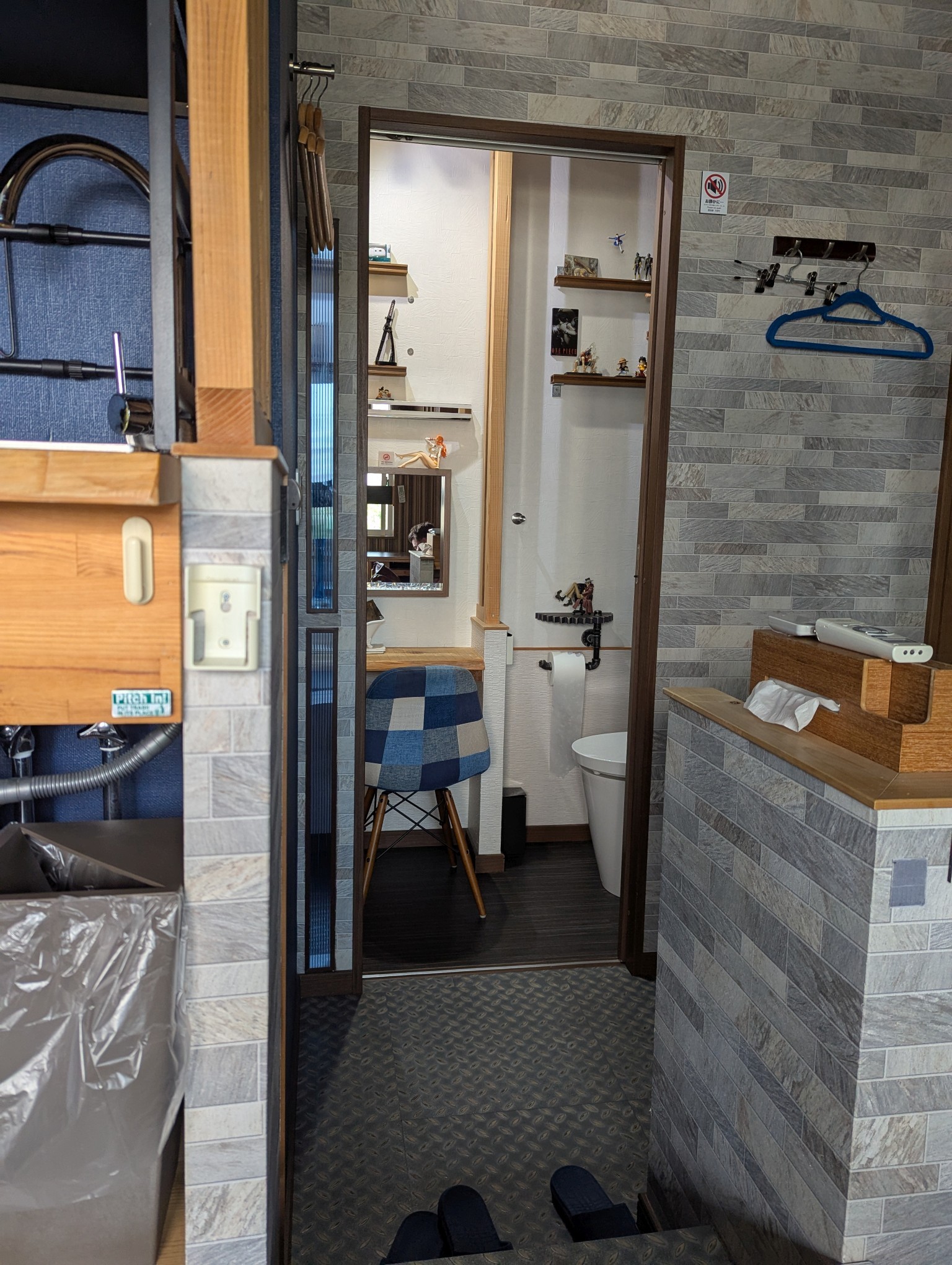
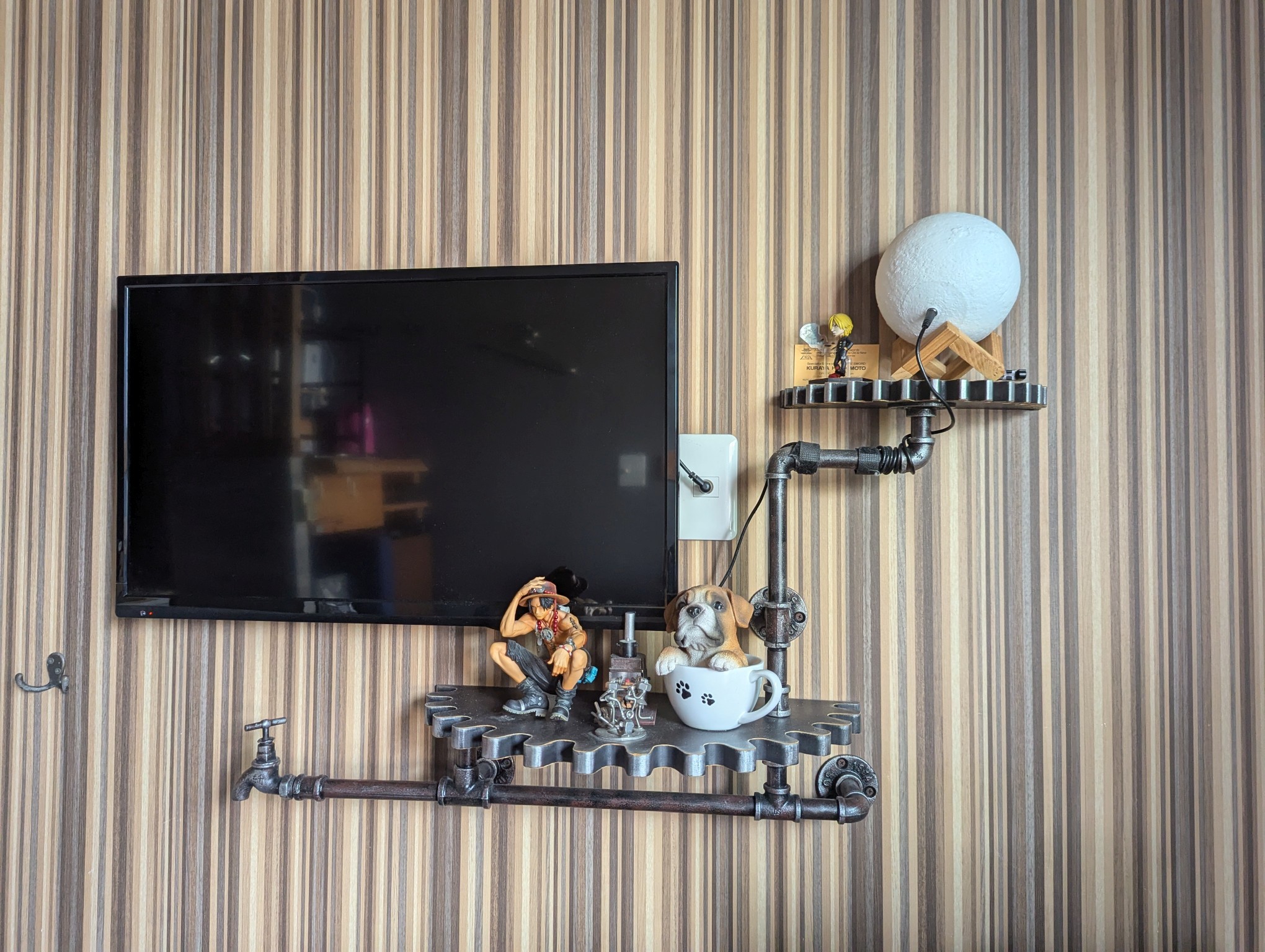
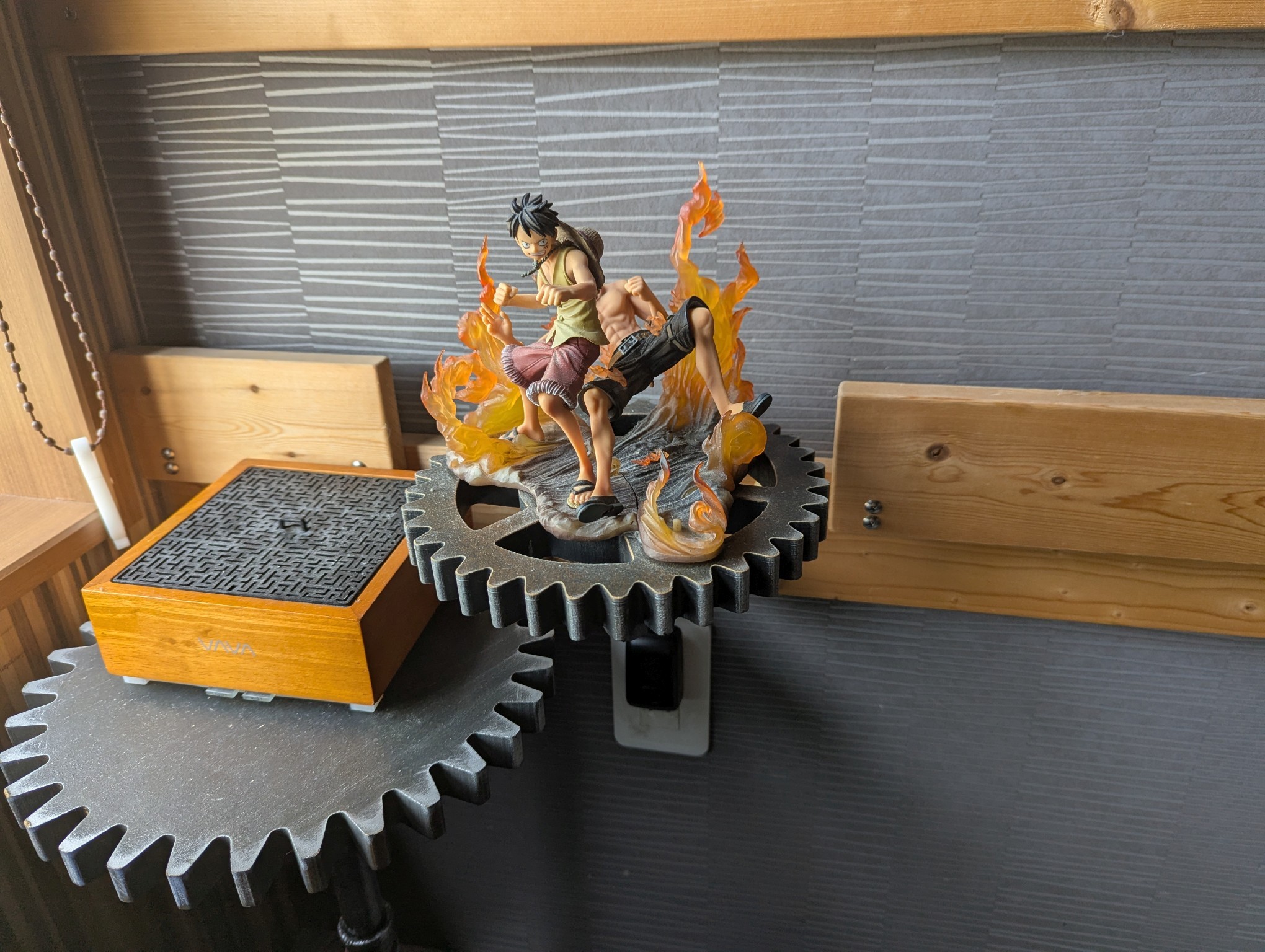
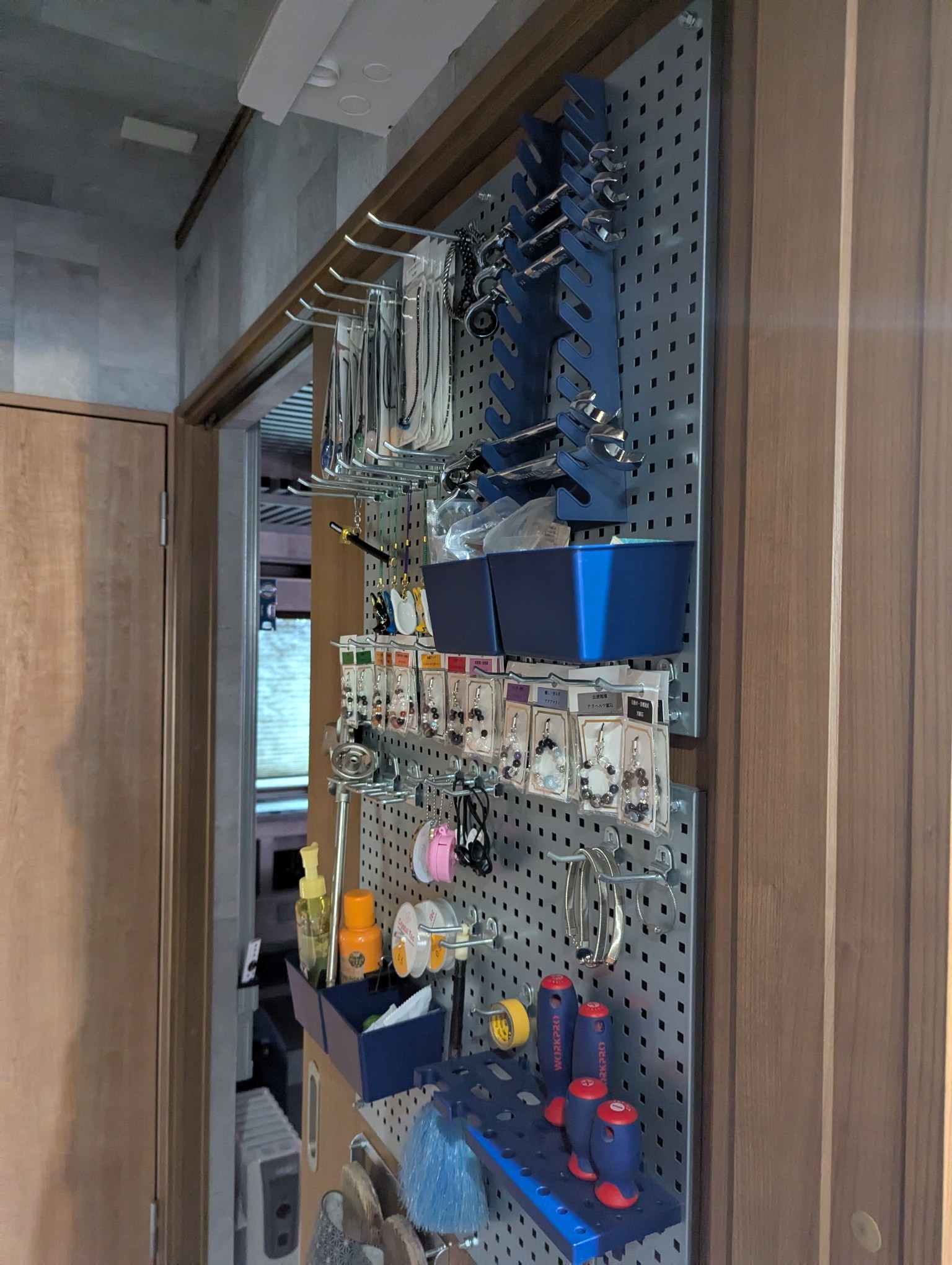
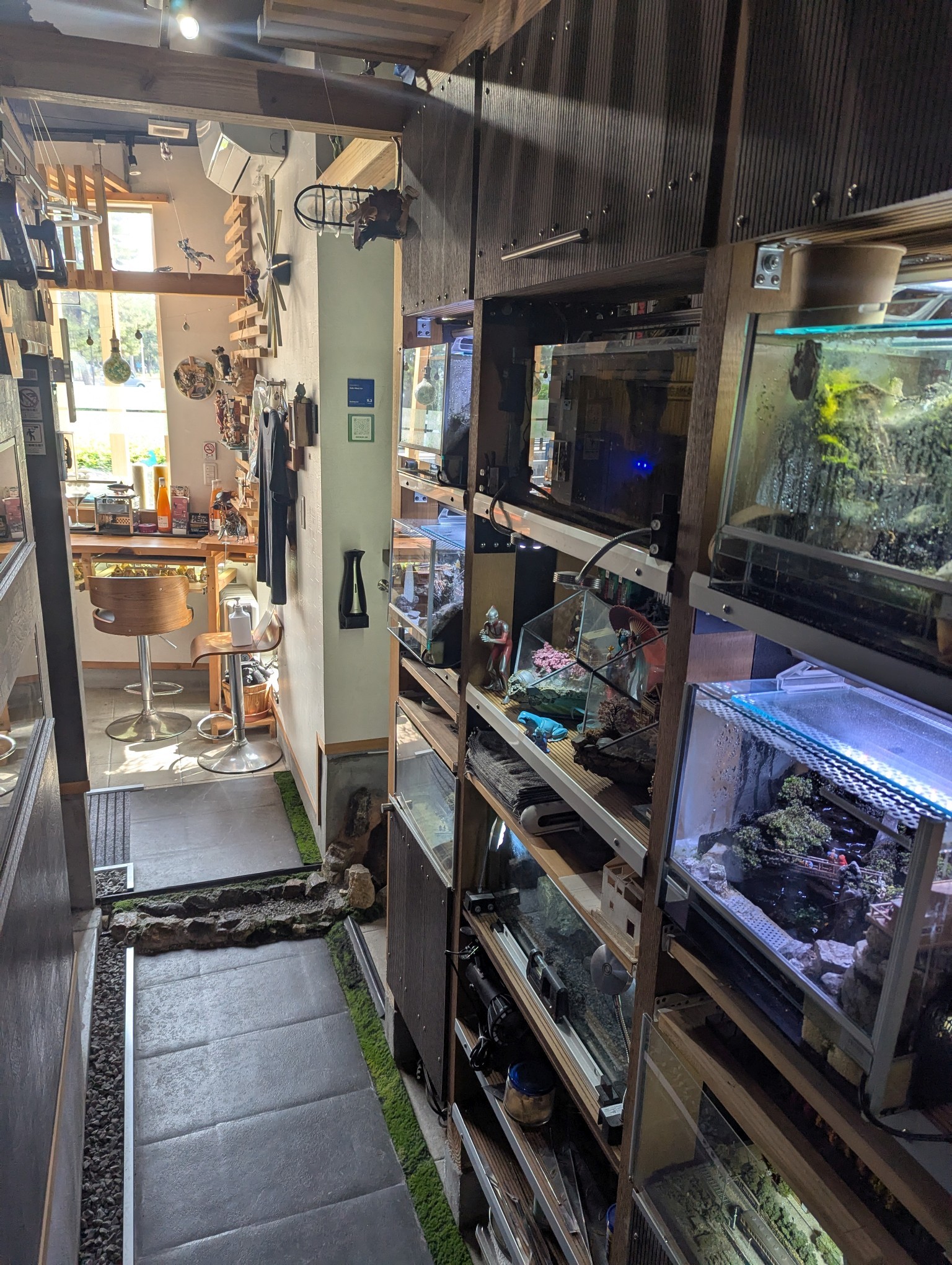
For this stay, we chose a boutique hotel that was advertised as being full of trinkets and nerdy things. This was no understatement. The hotel was filled with all kinds of random items, which was a bit much for my taste. The rooms were decent, but there was a strange, stale smoke odor in the hallway. The rooms were small and had a strange furniture layout. Somehow, a full-size chair was blocking the path in the very narrow bathroom. My friend and his wife had a slightly larger room with a big empty wardrobe, so they moved the chair into the wardrobe. There were small figurines in the corners of our rooms and hanging from the ceiling. You could play a game to see how many things you could discover in the pictures. The longer you were in the room, the more things you would find. Overall, this left the group with mixed feelings, to the extent that we considered leaving after just one night. In the end, we decided to stay. At least the rate was low.
After the initial shock, we decided to visit the nearby Wirtshaus. Otsu has a partnership with the Bavarian town of Würzburg, so some carpenters and builders came to Japan and built an authentic German Wirtshaus, complete with a beer garden and all the amenities you would expect. Sadly, the staff did not speak any German, but the food was German, as expected. I ordered schnitzel and my friends ordered curry wurst with fries and bratwurst. We washed it all down with some typical German beer.
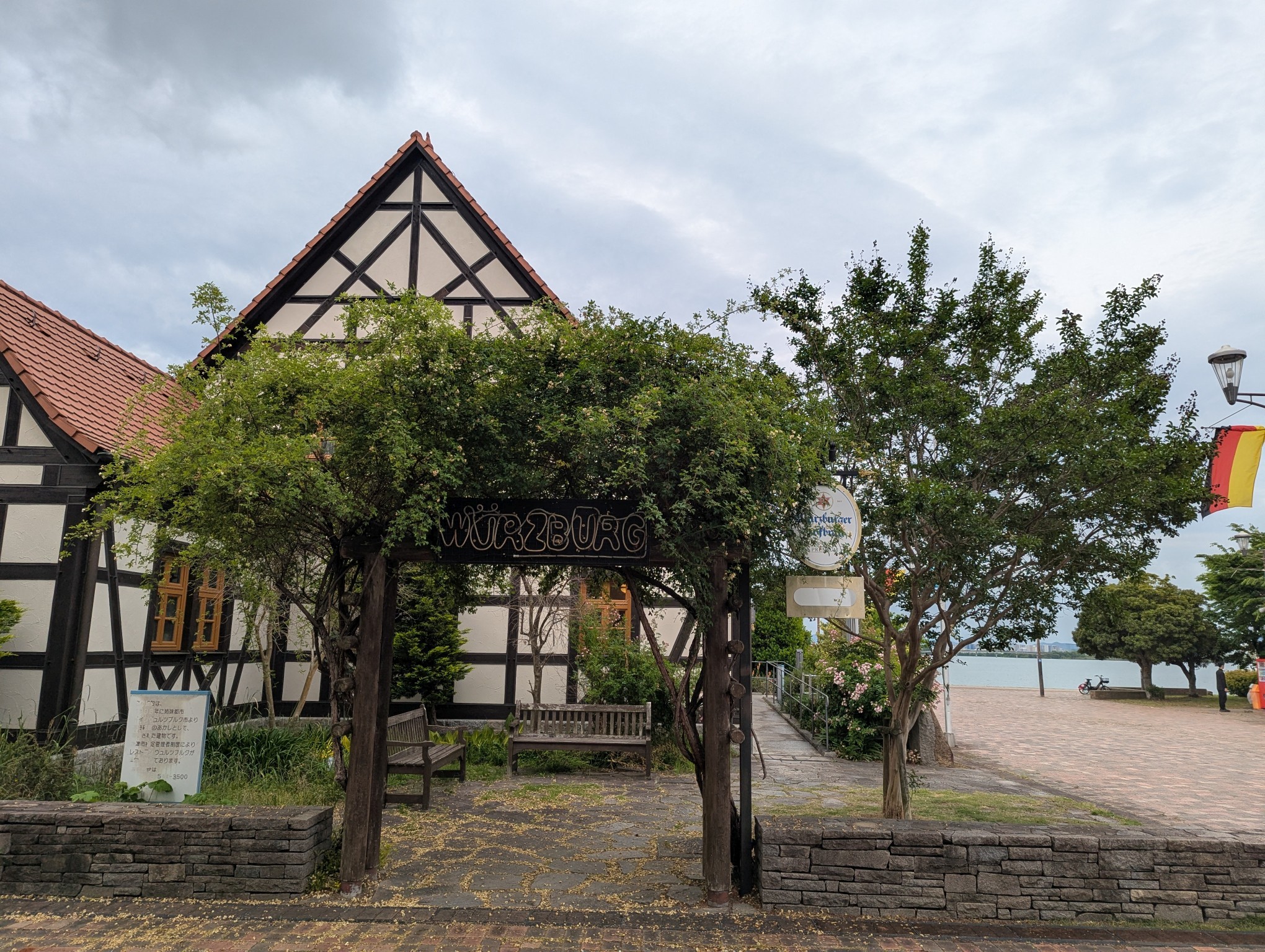
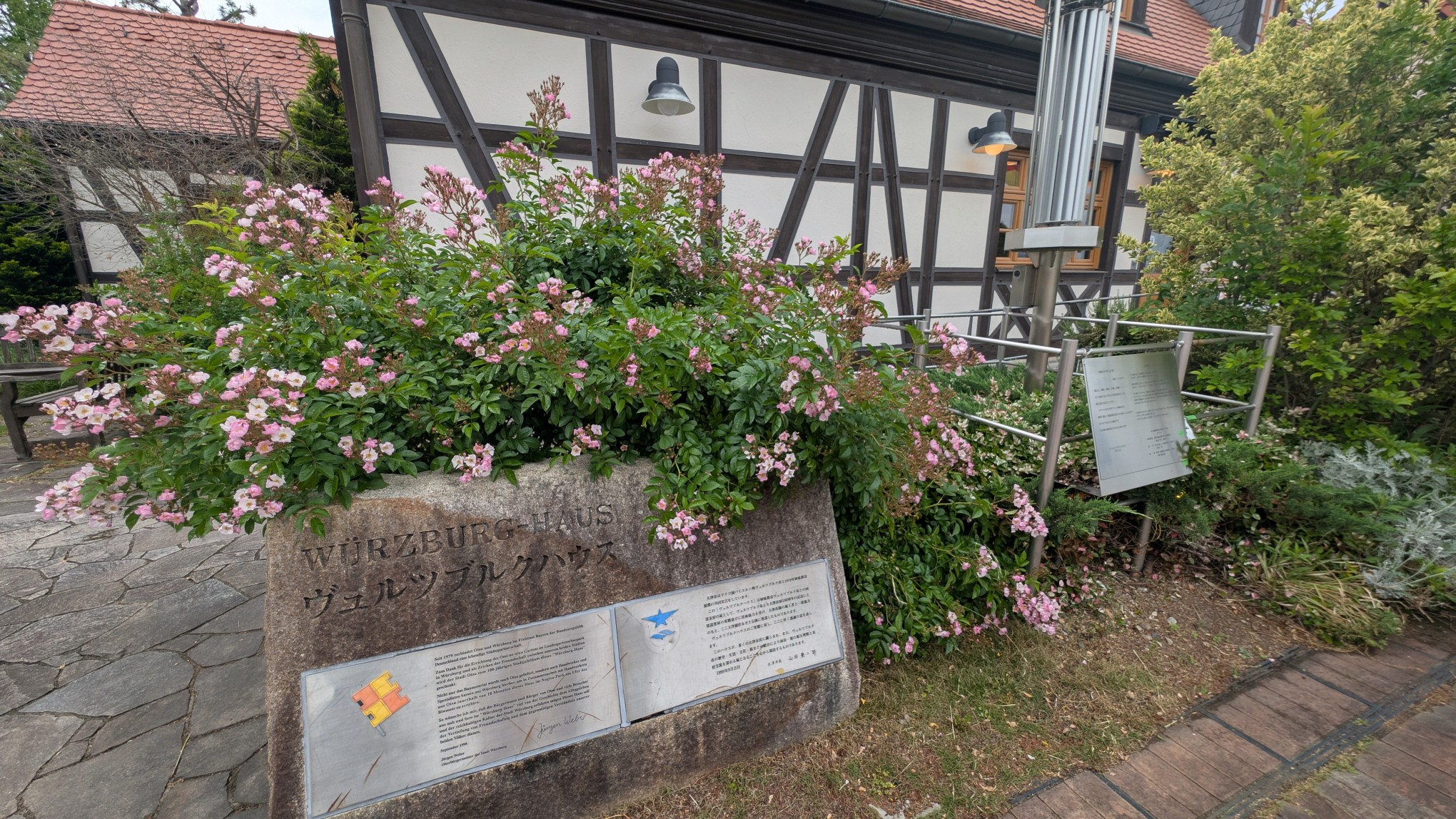
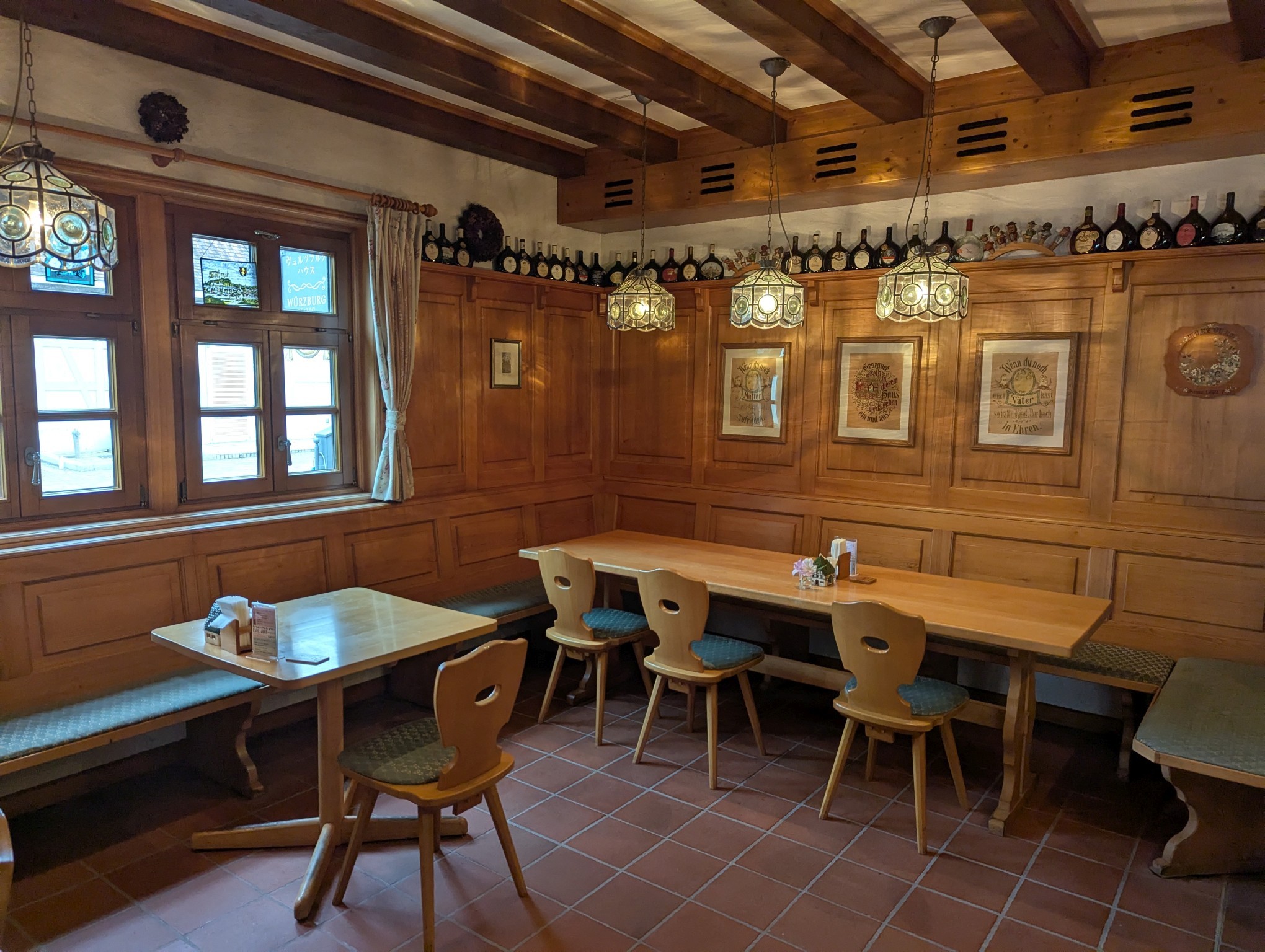
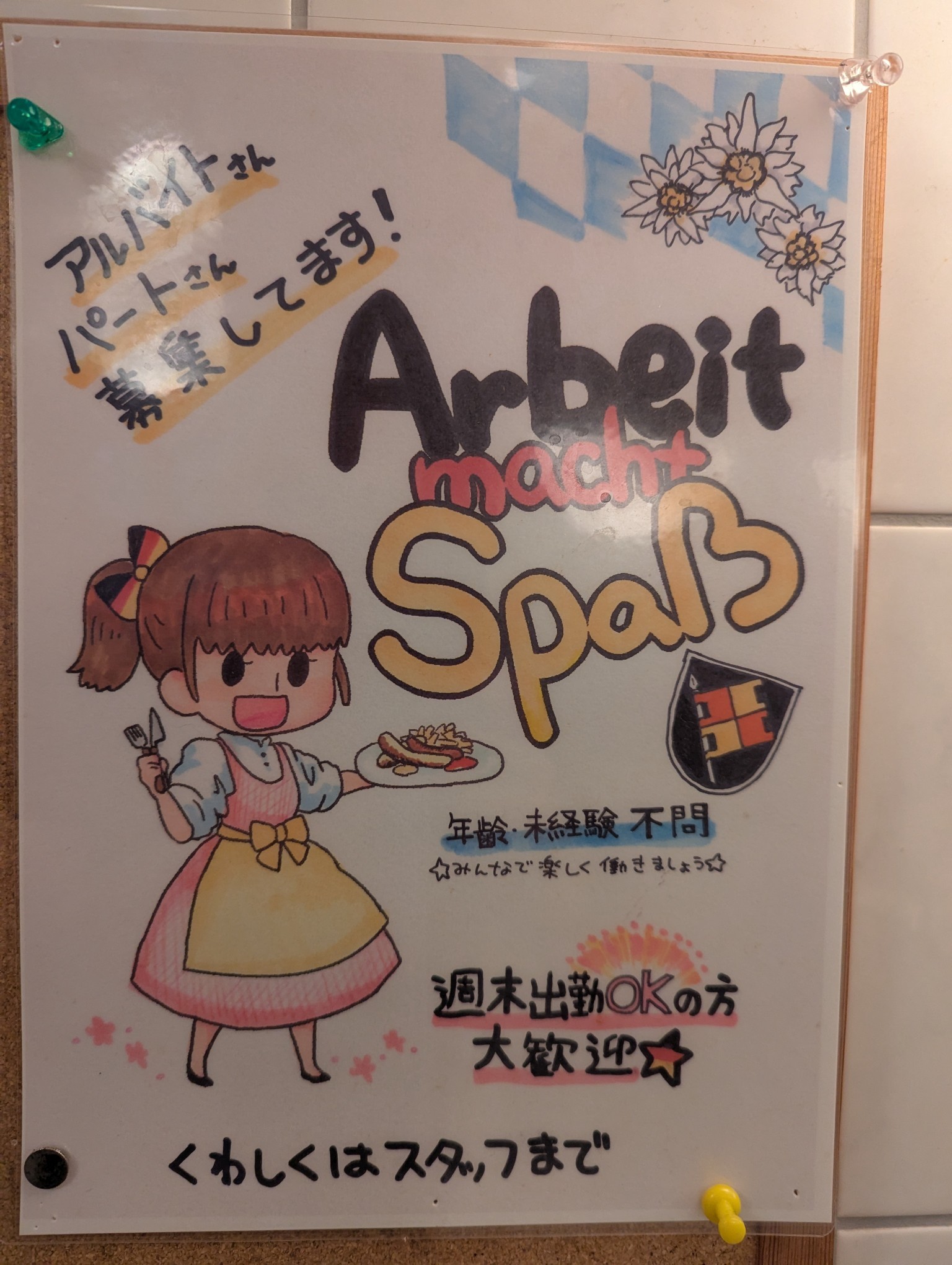
Having finished dinner, we strolled along the shore of nearby Lake Biwa, Japan’s largest freshwater lake. There, we spotted a coffee shop called Lago and visited a nearby supermarket for snacks.
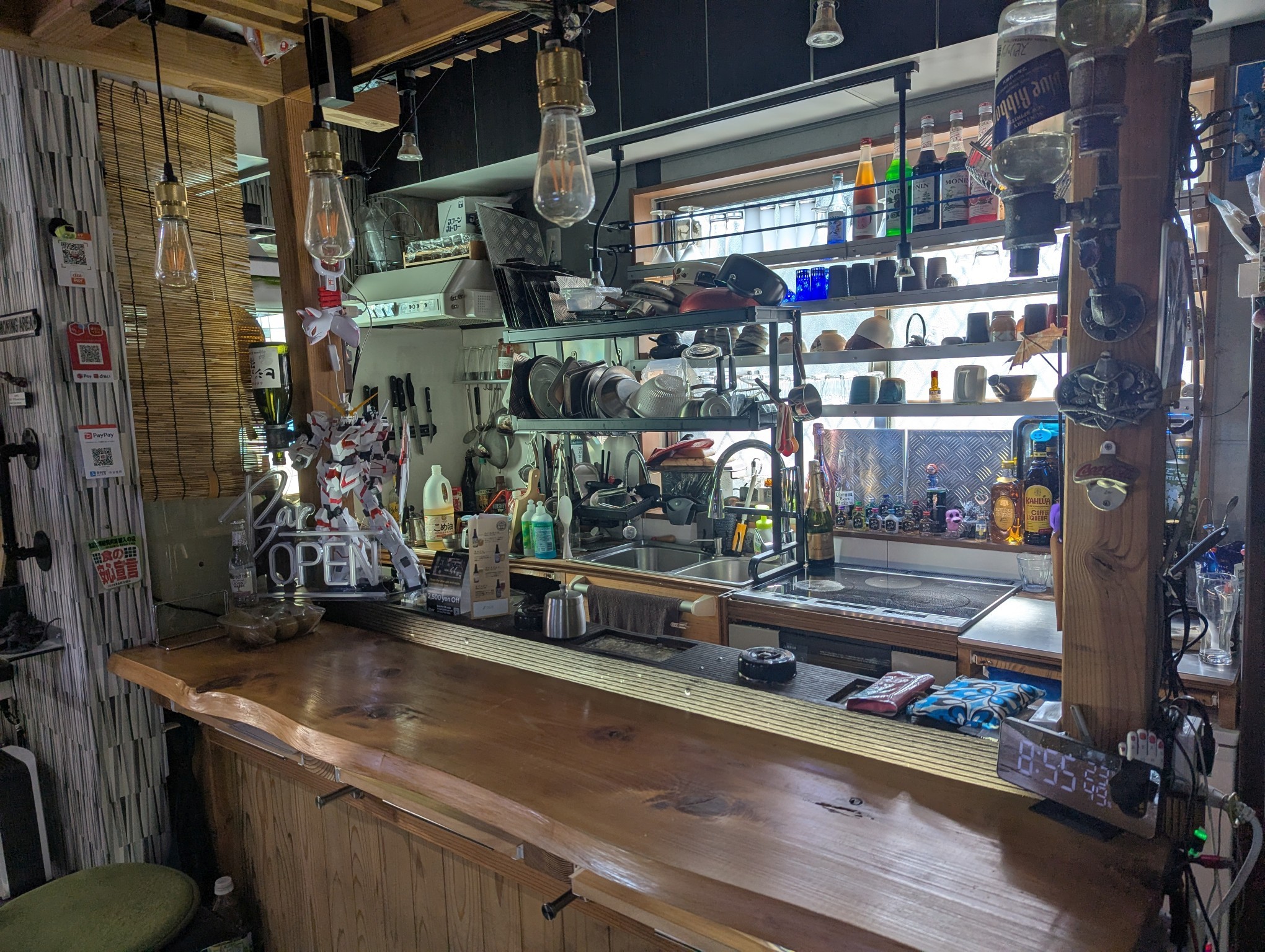
Back at our hotel, we decided to check out the ground floor. Online, it was advertised as lively, with the option to chat with locals and connect with the host. There was even a bar set up in the entryway. But, to our surprise, the entire place was completely abandoned. The lights were on and music was playing, strangely from two different devices with different music at the same time. There was a billiards table in the main room, so we decided to play a game. We quickly found the balls and cues amid the clutter on the walls and shelves. There are three different sets of cues, ranging from normal size to short and very short. The need for these cues became obvious quite soon, as the walls and shelves were too packed with stuff to play properly without hitting the statuettes or glassware behind you. Ultimately, we had to switch billiard sticks multiple times. While waiting for my turn, I took the opportunity to inspect the room. There was an assortment of random things: soft air rifles, ammunition of various shapes and sizes, action figures, heads of action figures, cocktail glasses, a noisy robot, gas masks, movie props and a projector showing a landscape video. There was a theme, but it seemed to grow more and more over the months.
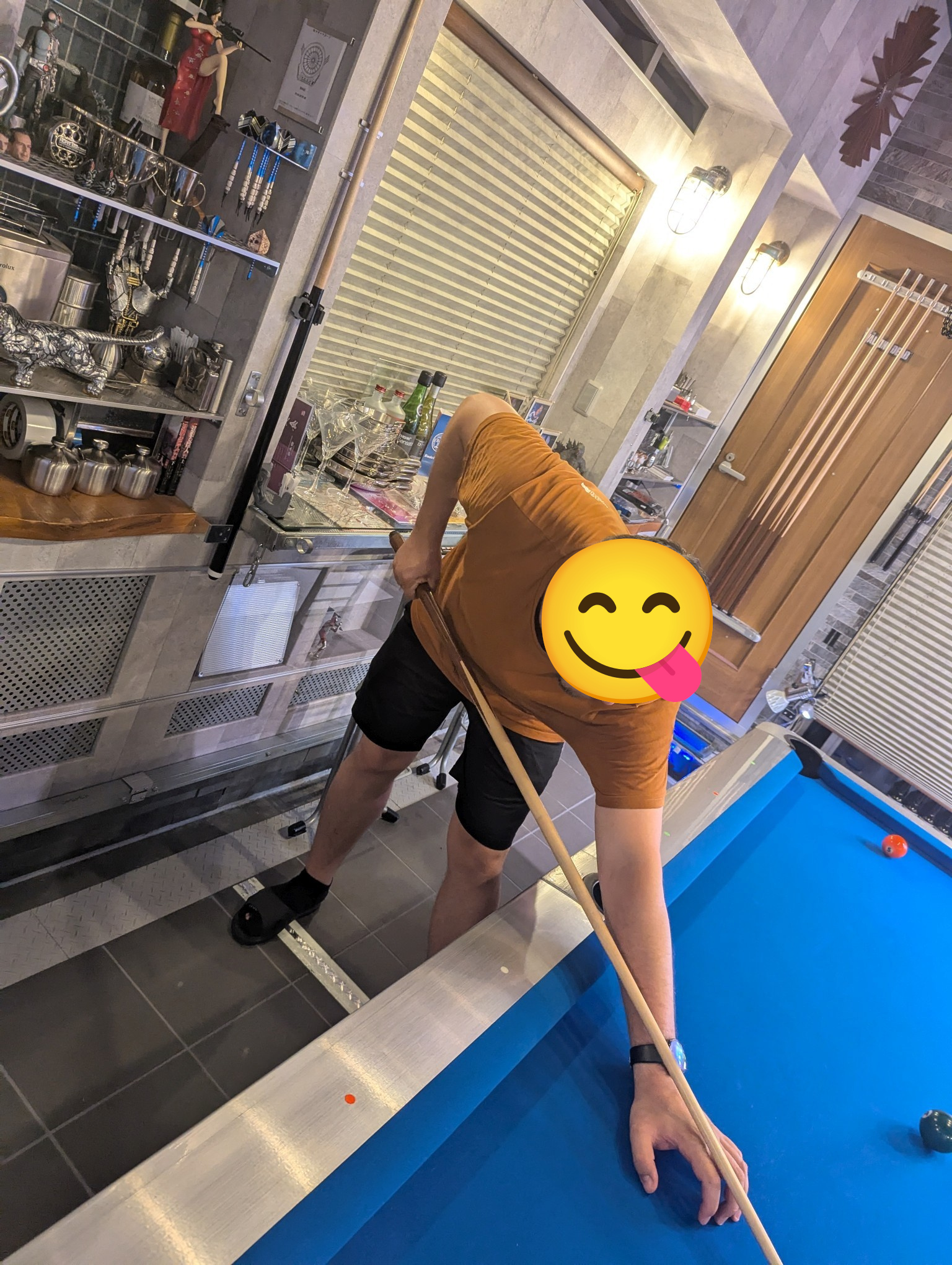
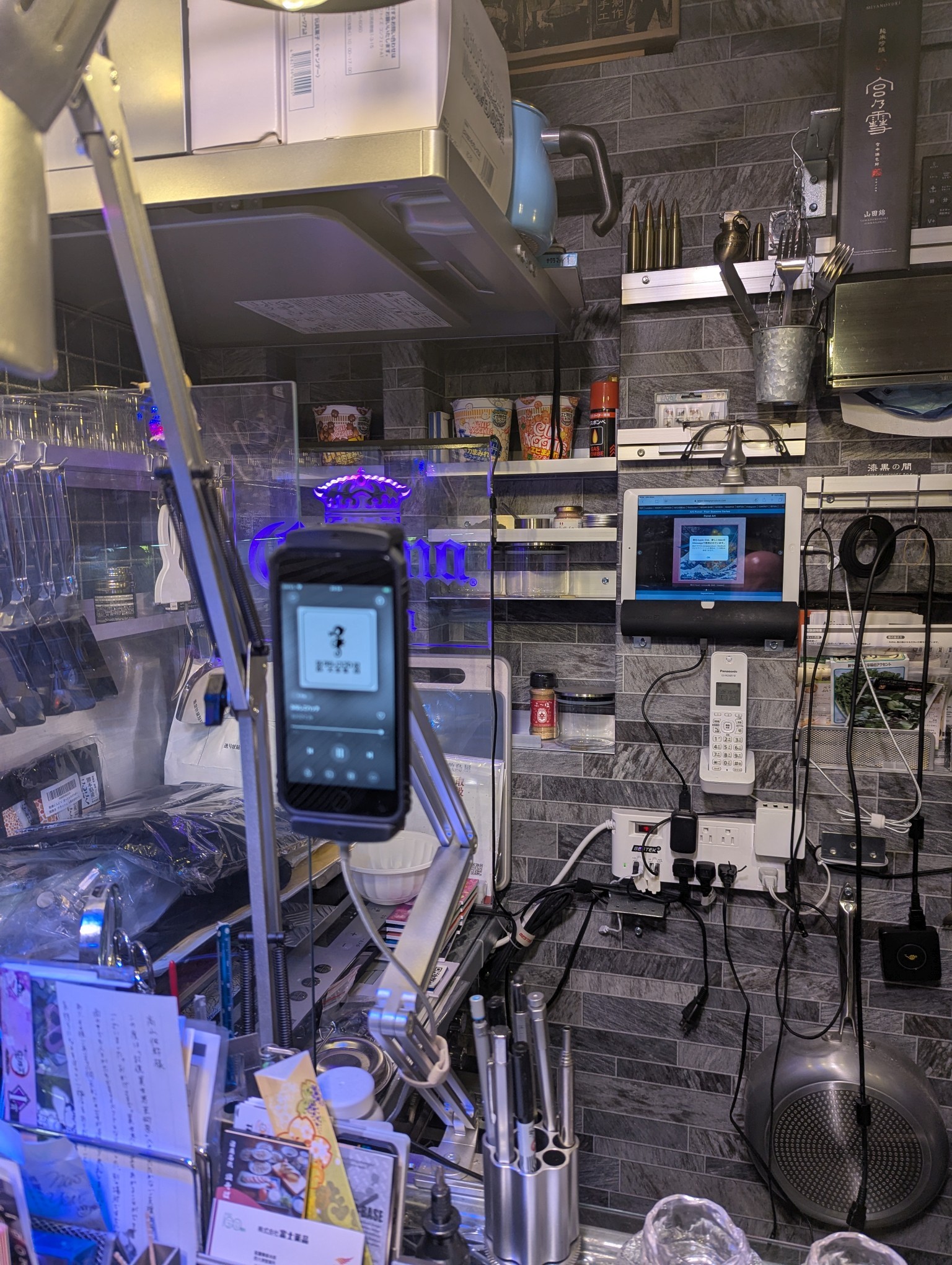
A couple of games went by with no one showing up, so we decided to head back to our rooms and rest for the evening.
Hiking in Kyoto
We discussed what we should do during the day and realized there wasn’t much of interest in Otsu or the surrounding area. We decided to go back to Kyoto, visit another temple and go hiking. This time, we chose Nanzen-ji Temple, which is close by on the train route to Kyoto.
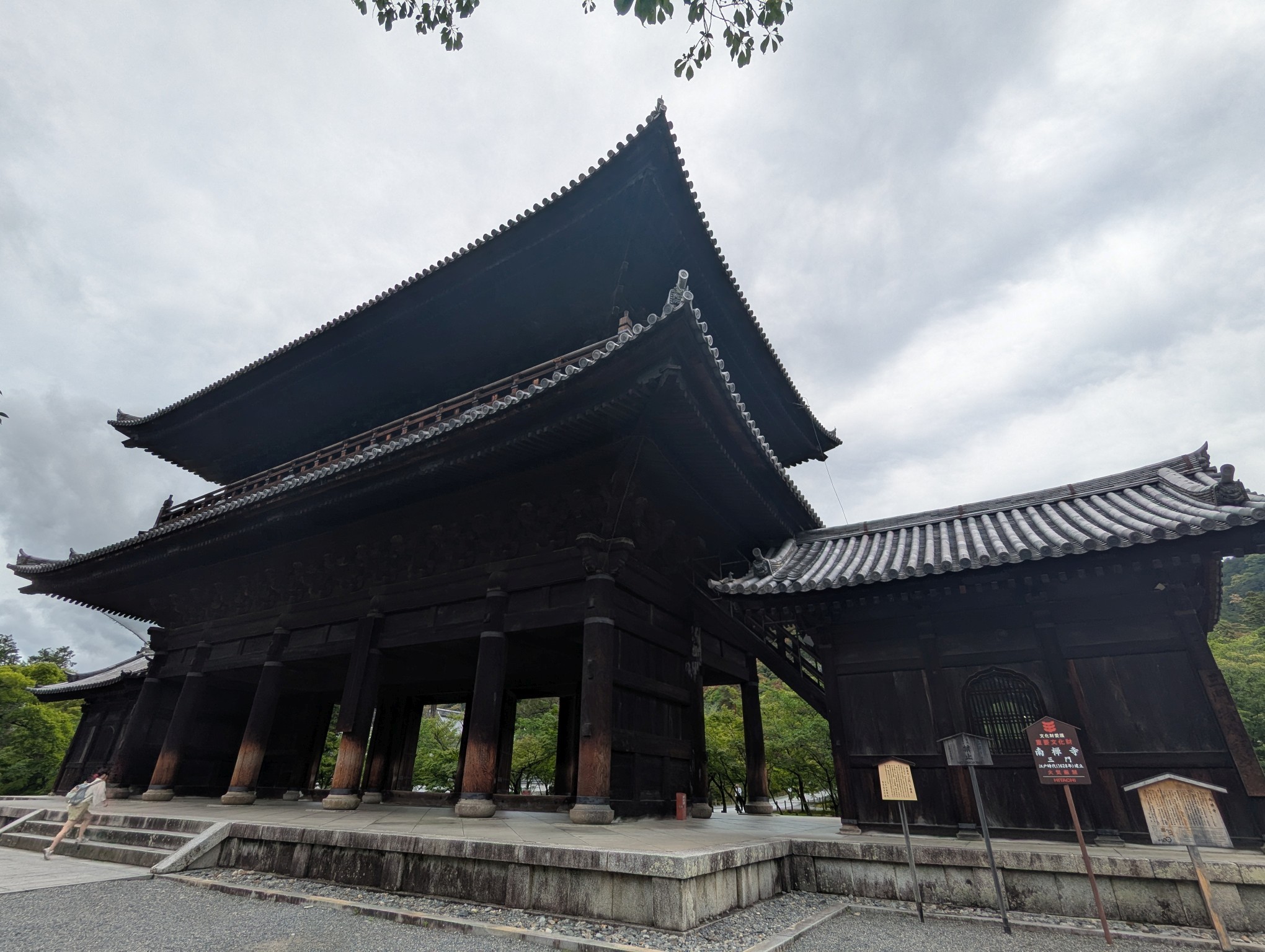
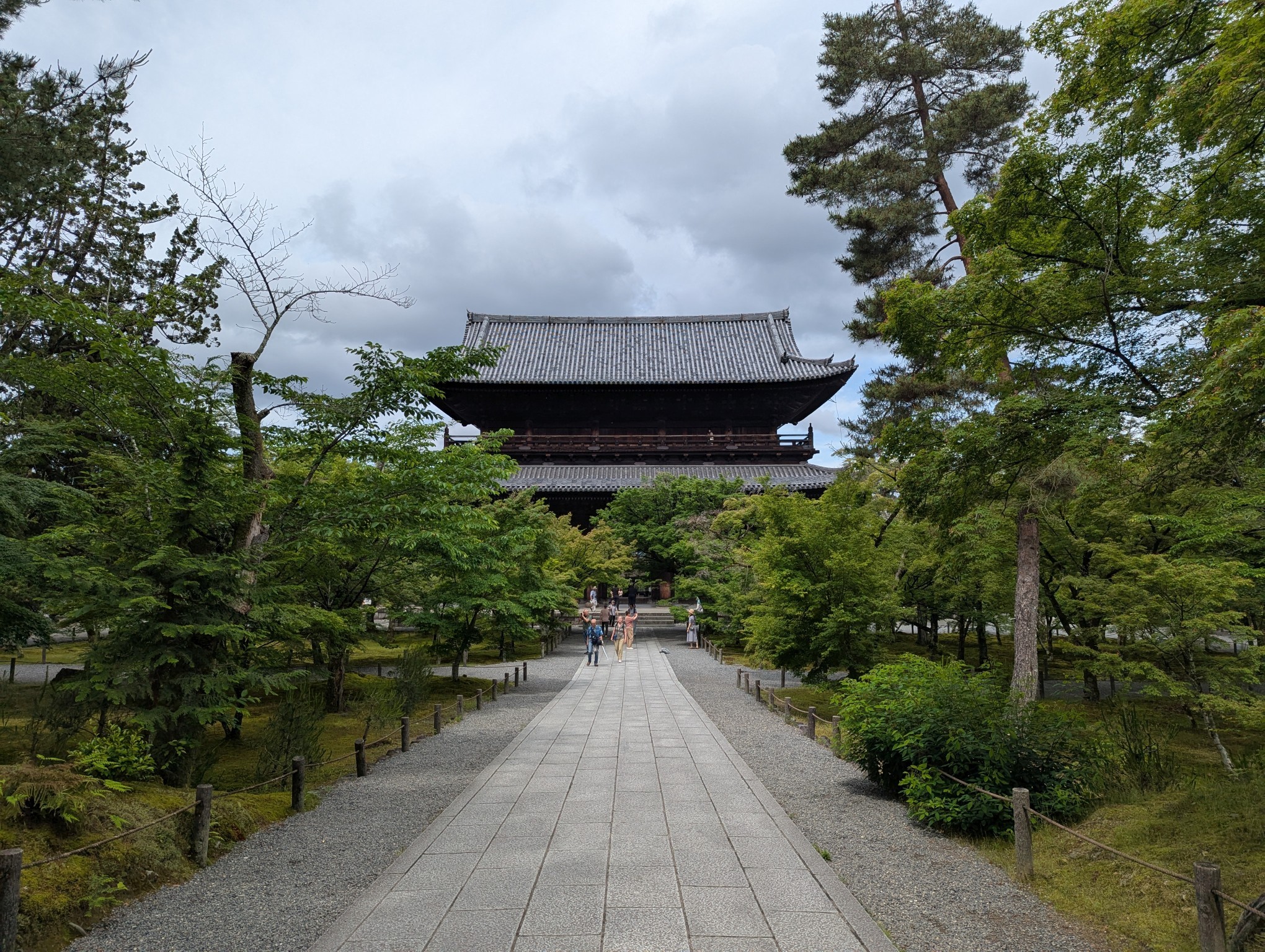
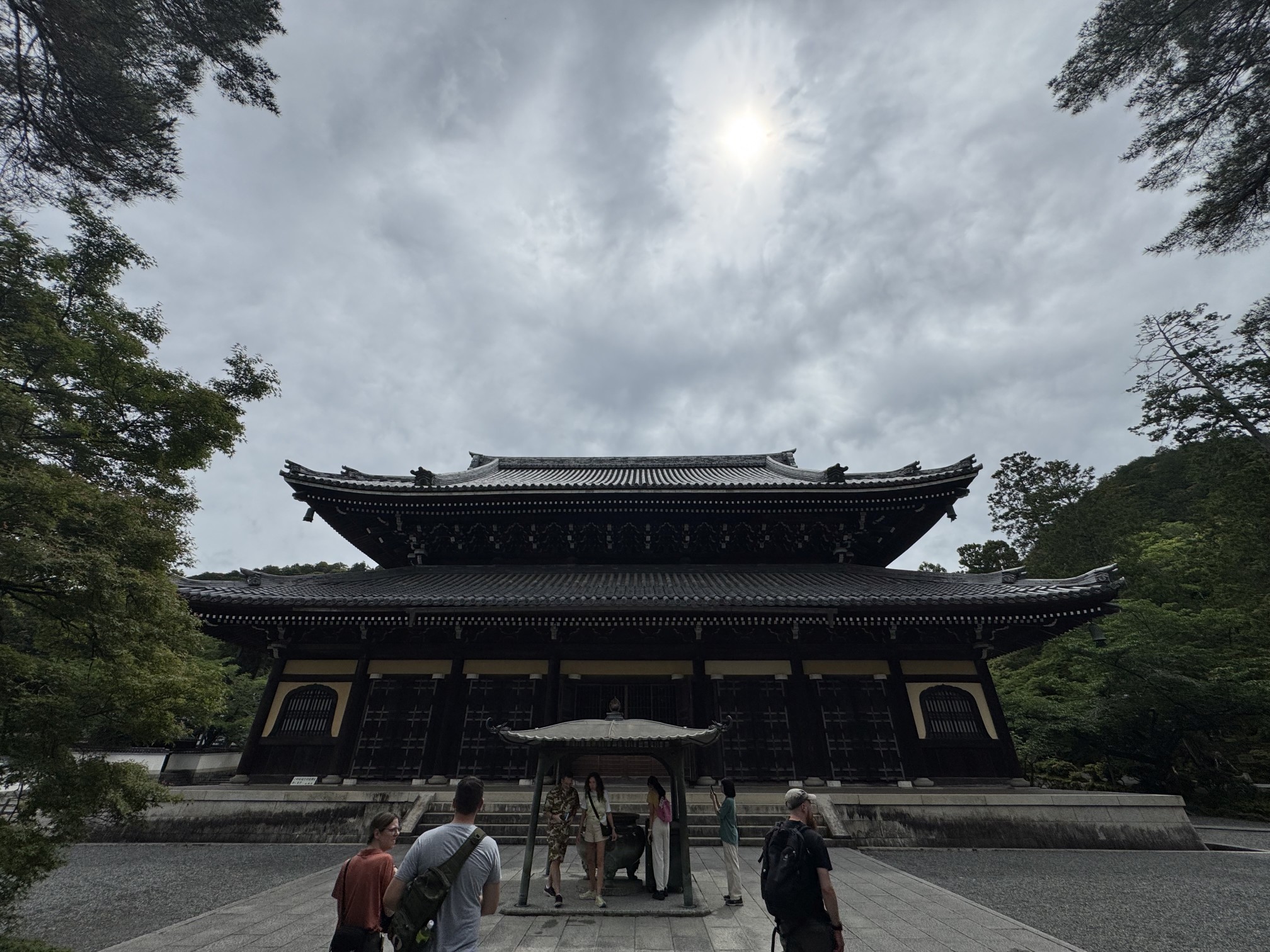
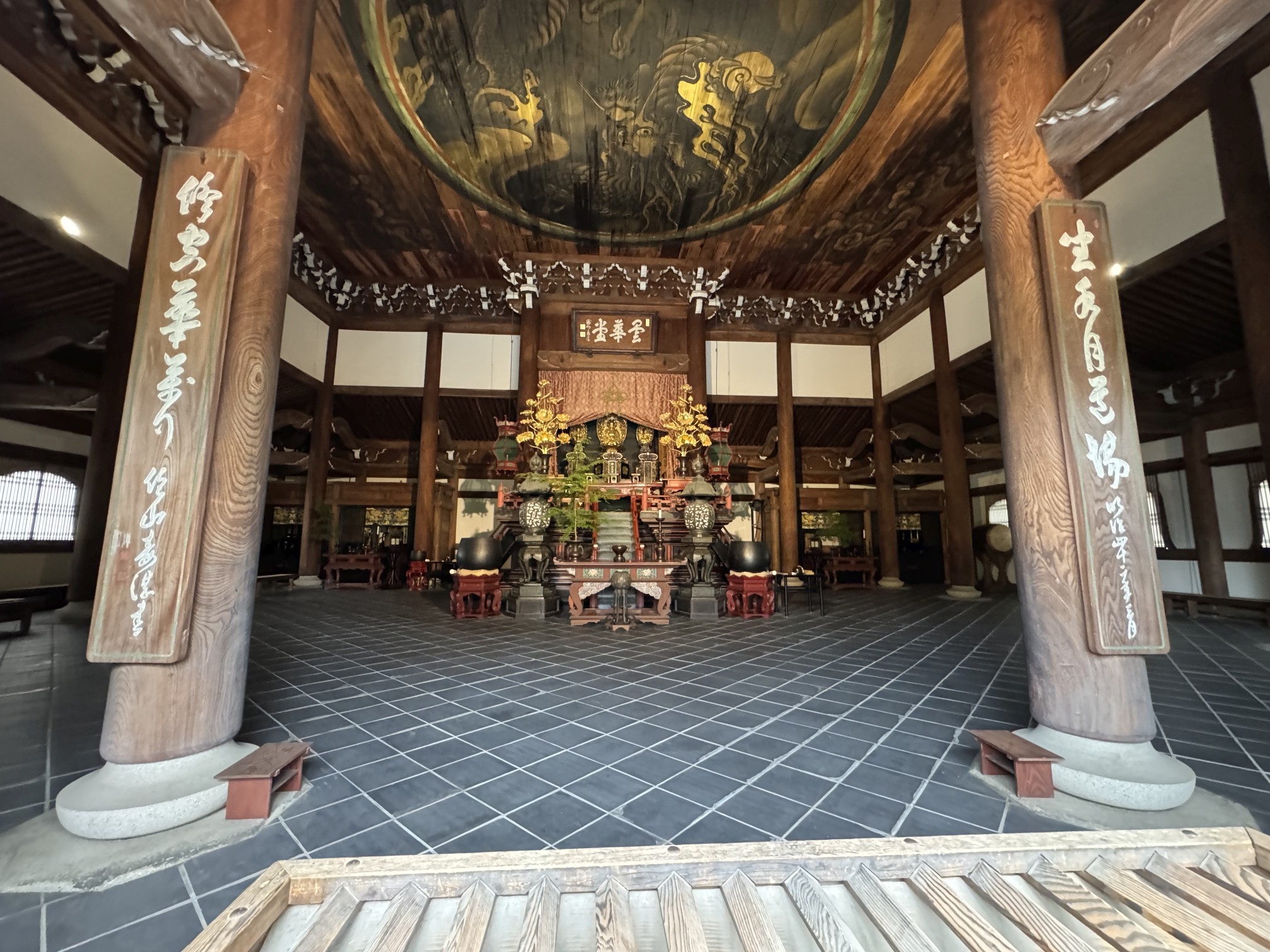
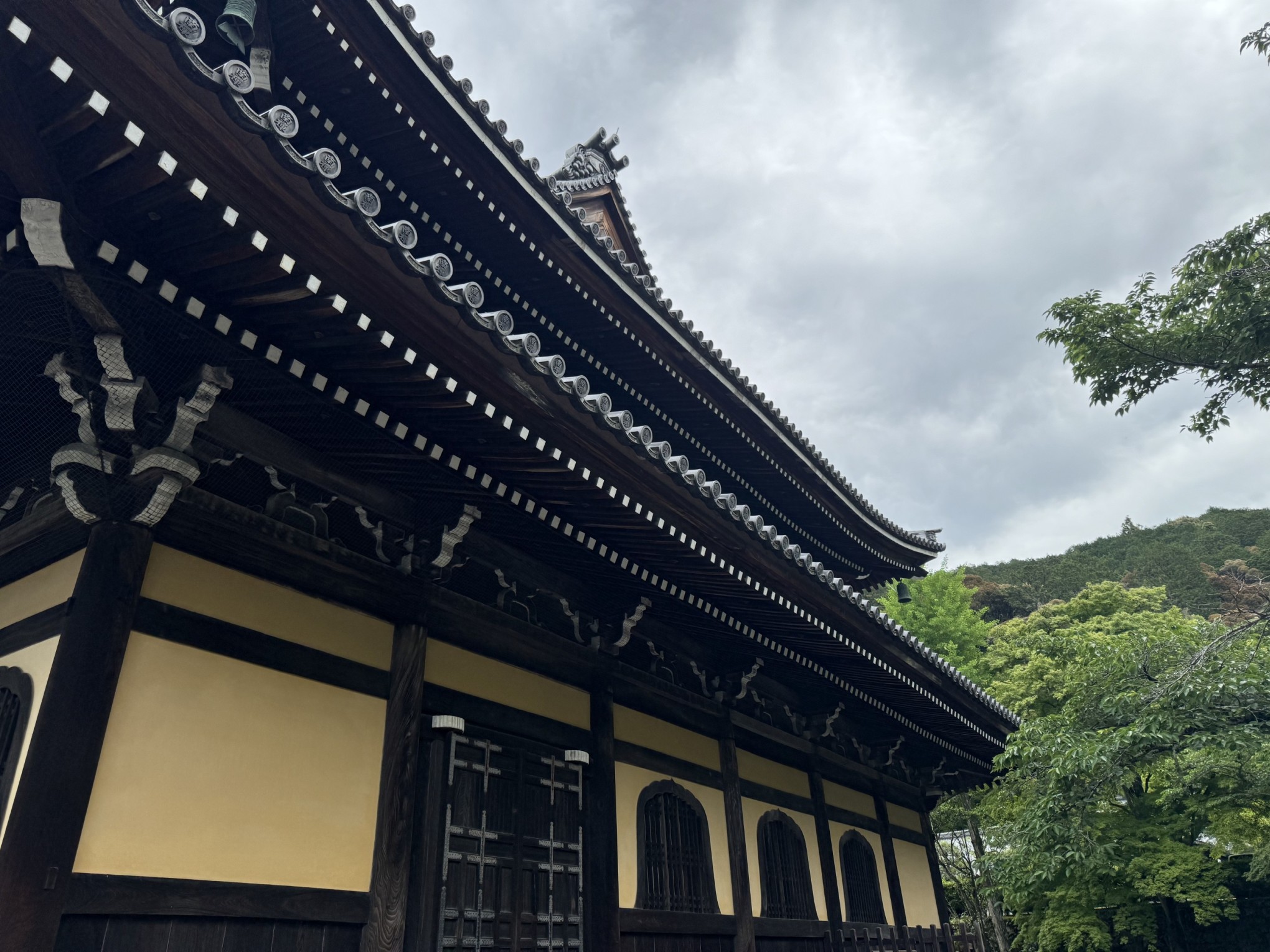
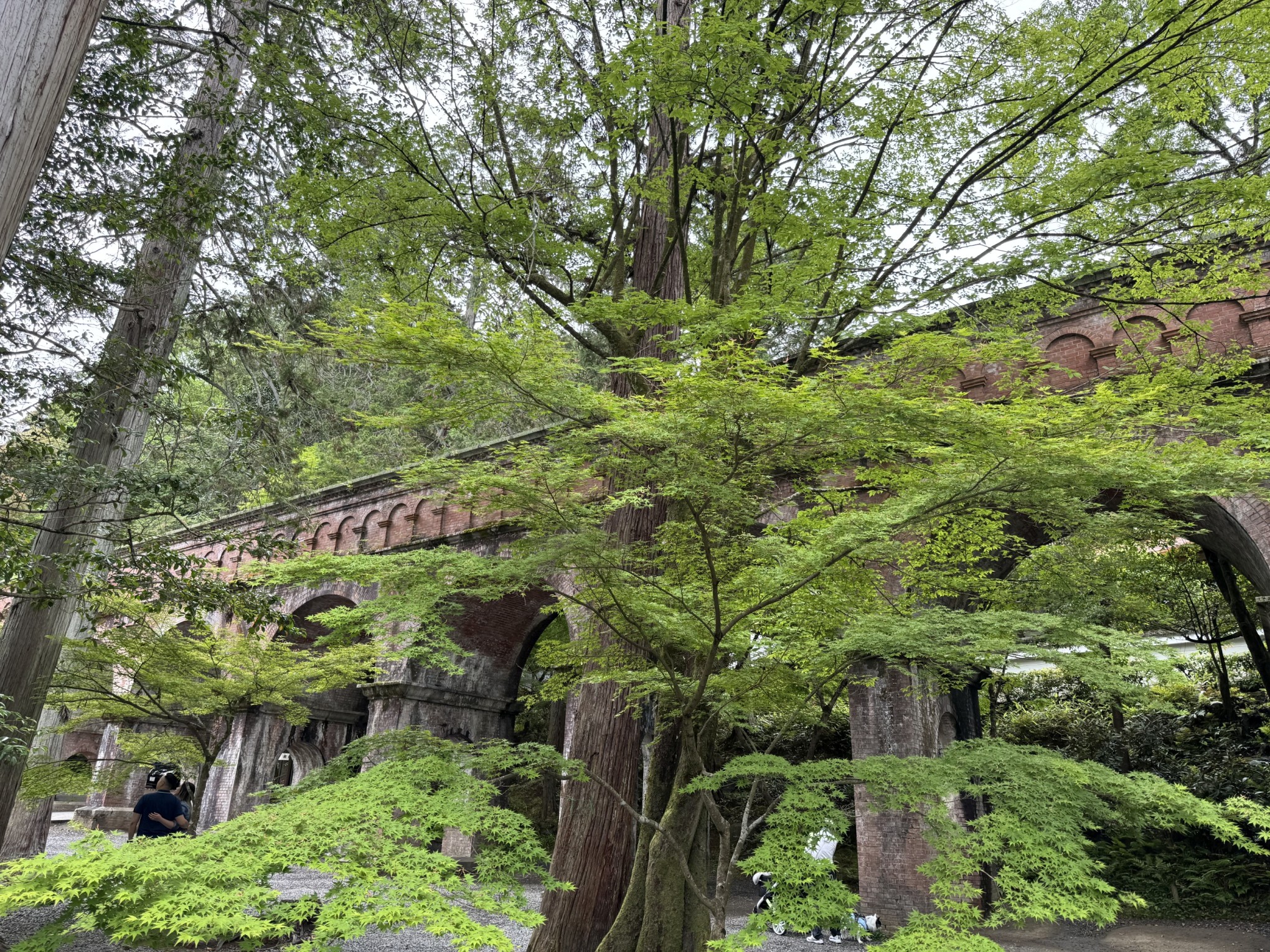
We spent some time exploring the temple grounds before discovering an ancient aqueduct leading down from the mountain. We decided to follow the stream upstream. You pass through a forested area and then an old electrical plant. Starting there, tours are offered to go further upstream by boat. This would take you to a Lake Biwa and to Otsu. If we had known about this in advance and booked it, our trip to the hotel the previous day could have been entirely different.
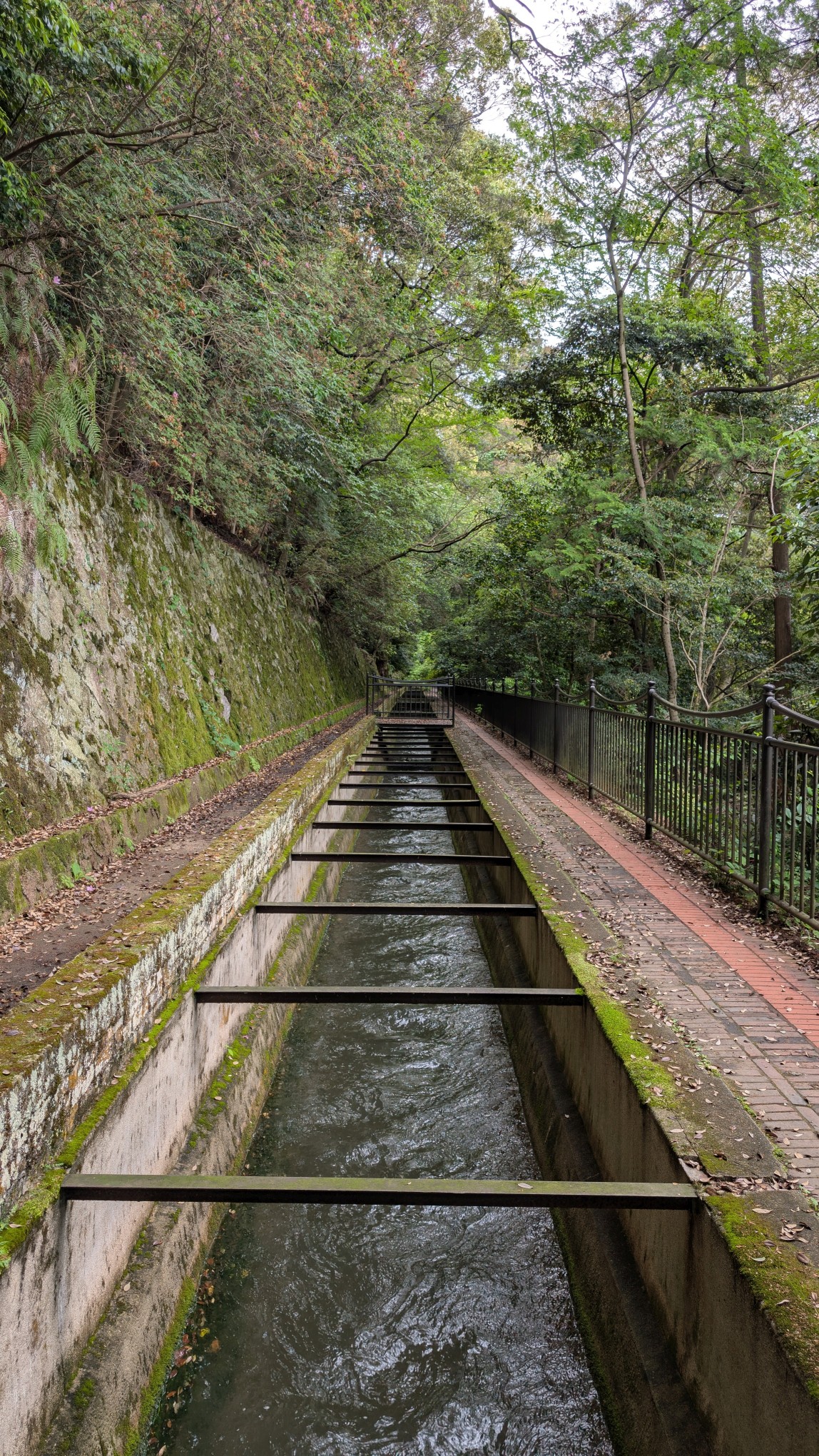
From the electrical plant, we continued up the mountain. Here, we came across one of the many vending machines nestled in the jungle where you can purchase cold refreshments. Behind the machine, nestled in the forest, was a small shrine area called the Himukai Dai Shrine.
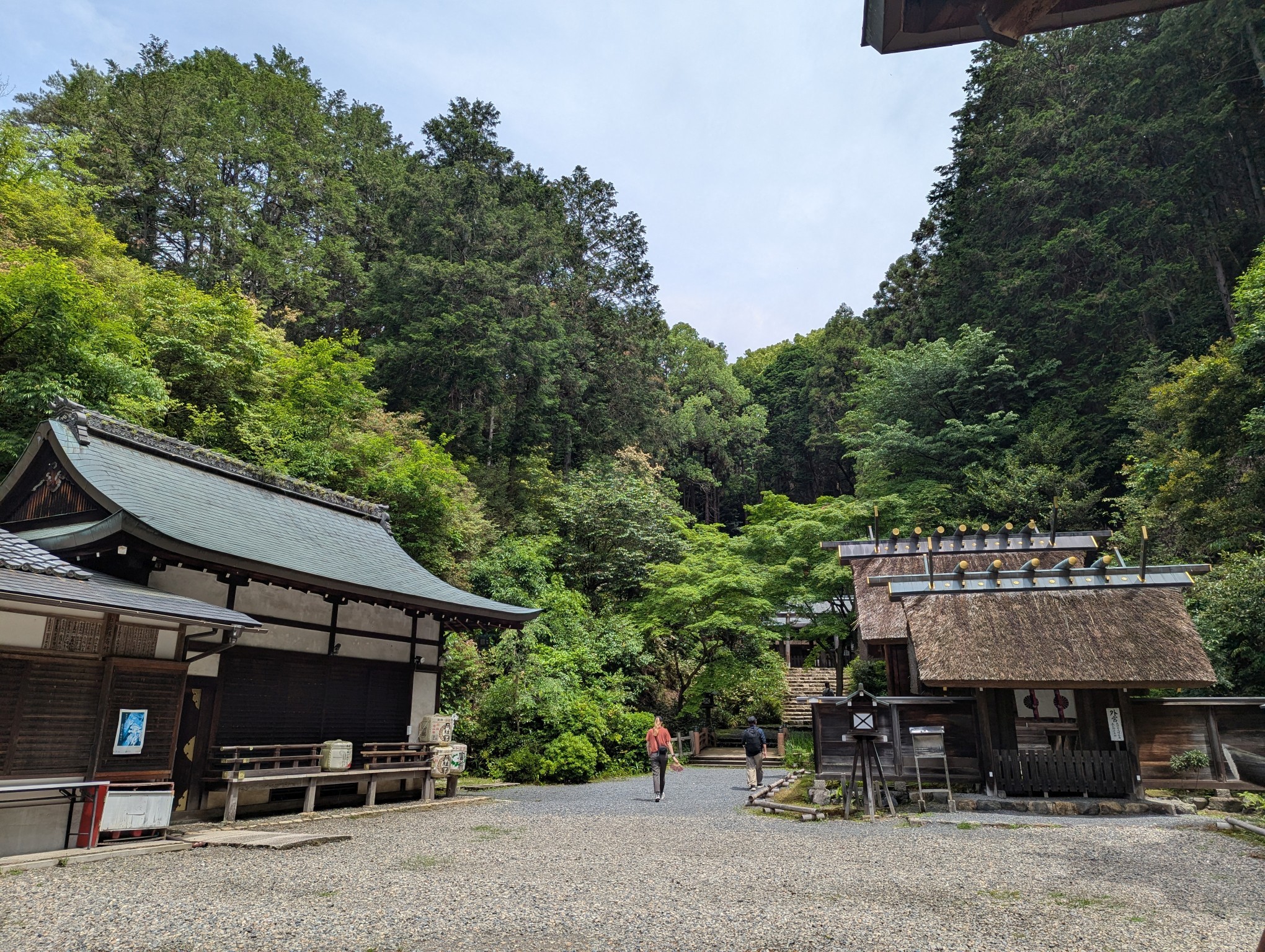
The path behind the shrine continued directly into the jungle. Just up the incline was a cave named Ama-no-Iwato containing porcelain prayer pieces. We continued walking through the forest, which had only occasional pedestrian traffic. We passed some signs warning us about aggressive monkeys, but we did not encounter any. Later, the forest split and revealed a view of the city jungle.
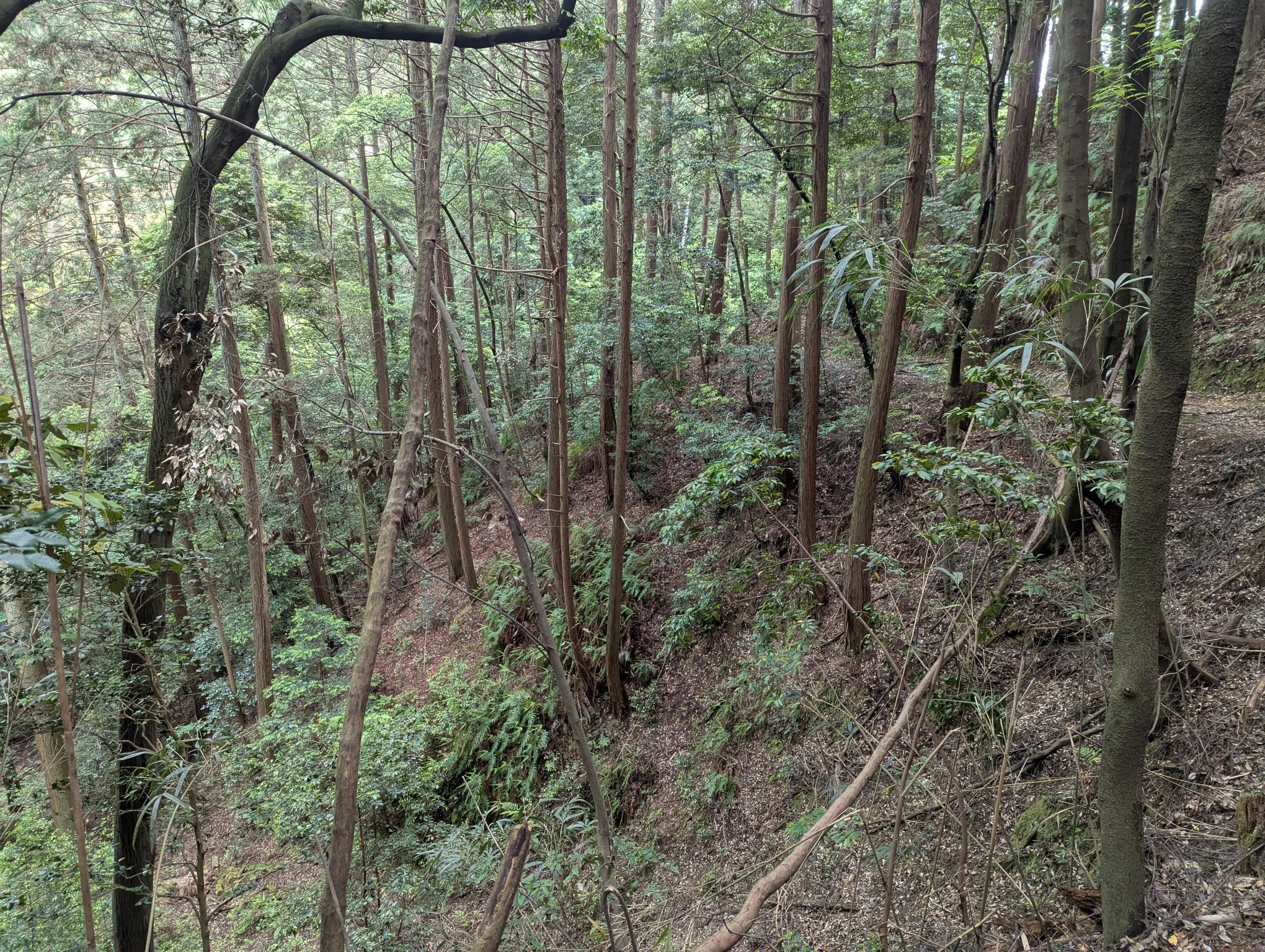
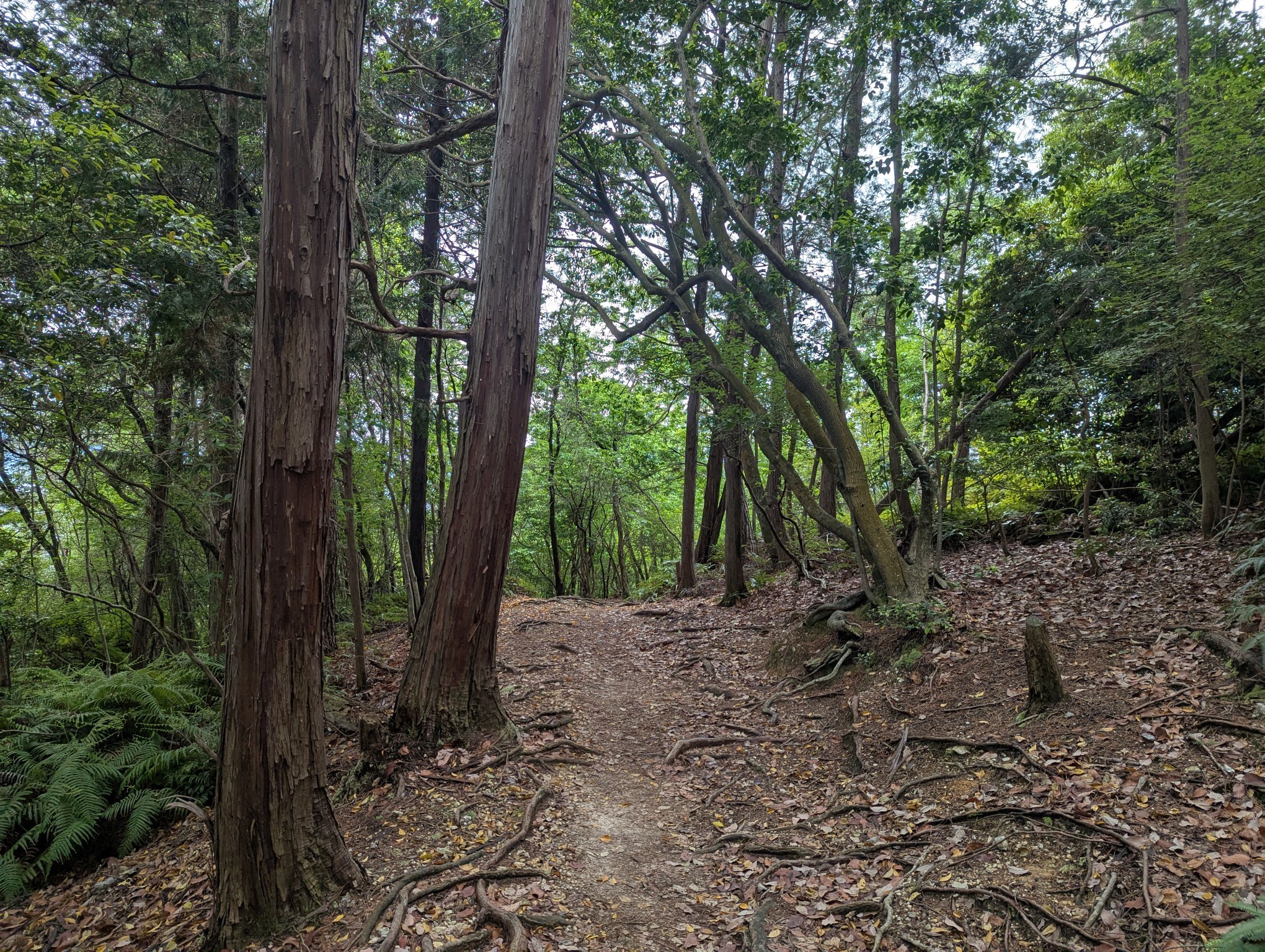
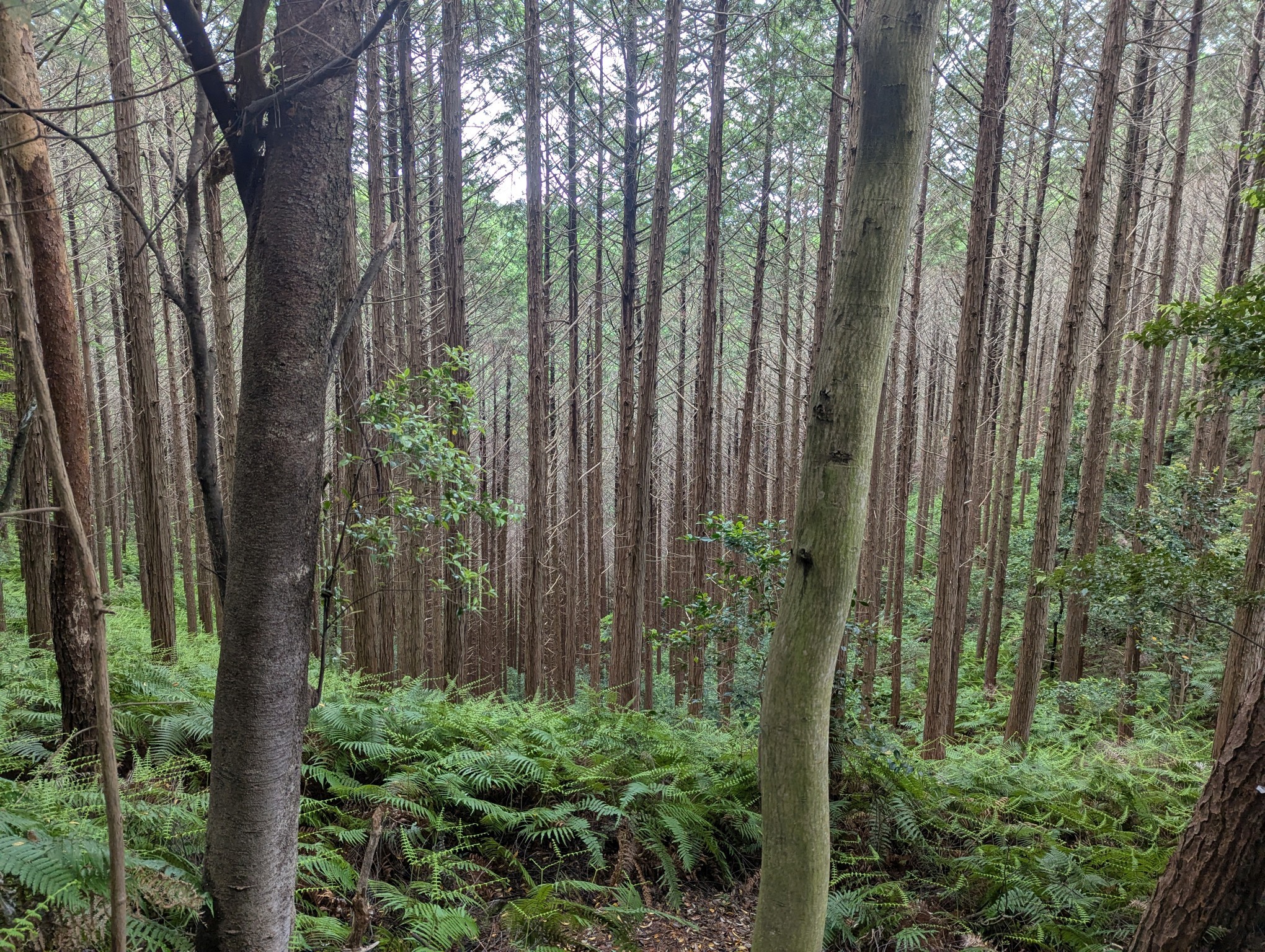
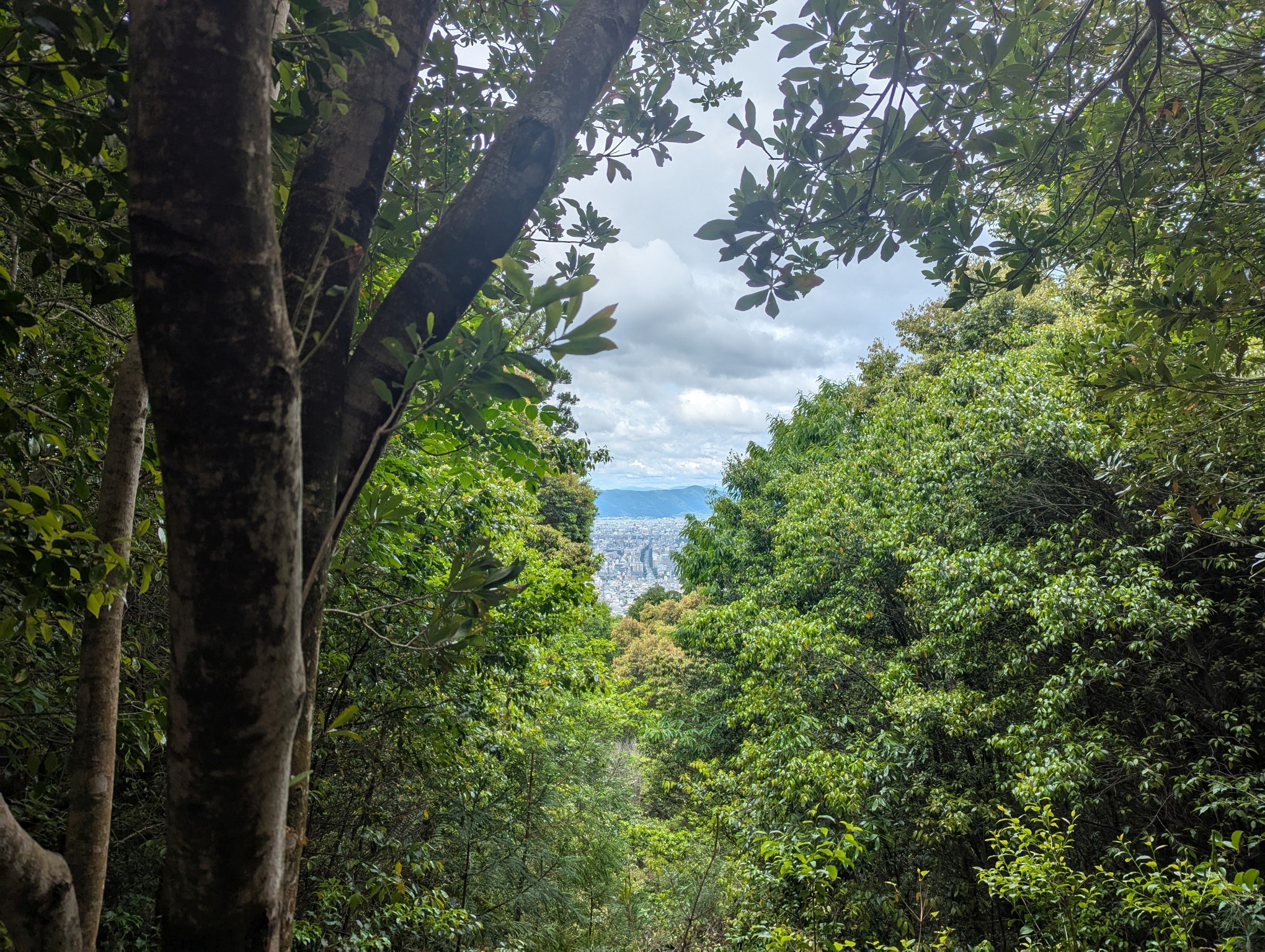
Sadly, my cousin chose a different walking pace and soon left the rest of our group. This was annoying because we wanted to stay together and take our time walking, but he was up and gone.
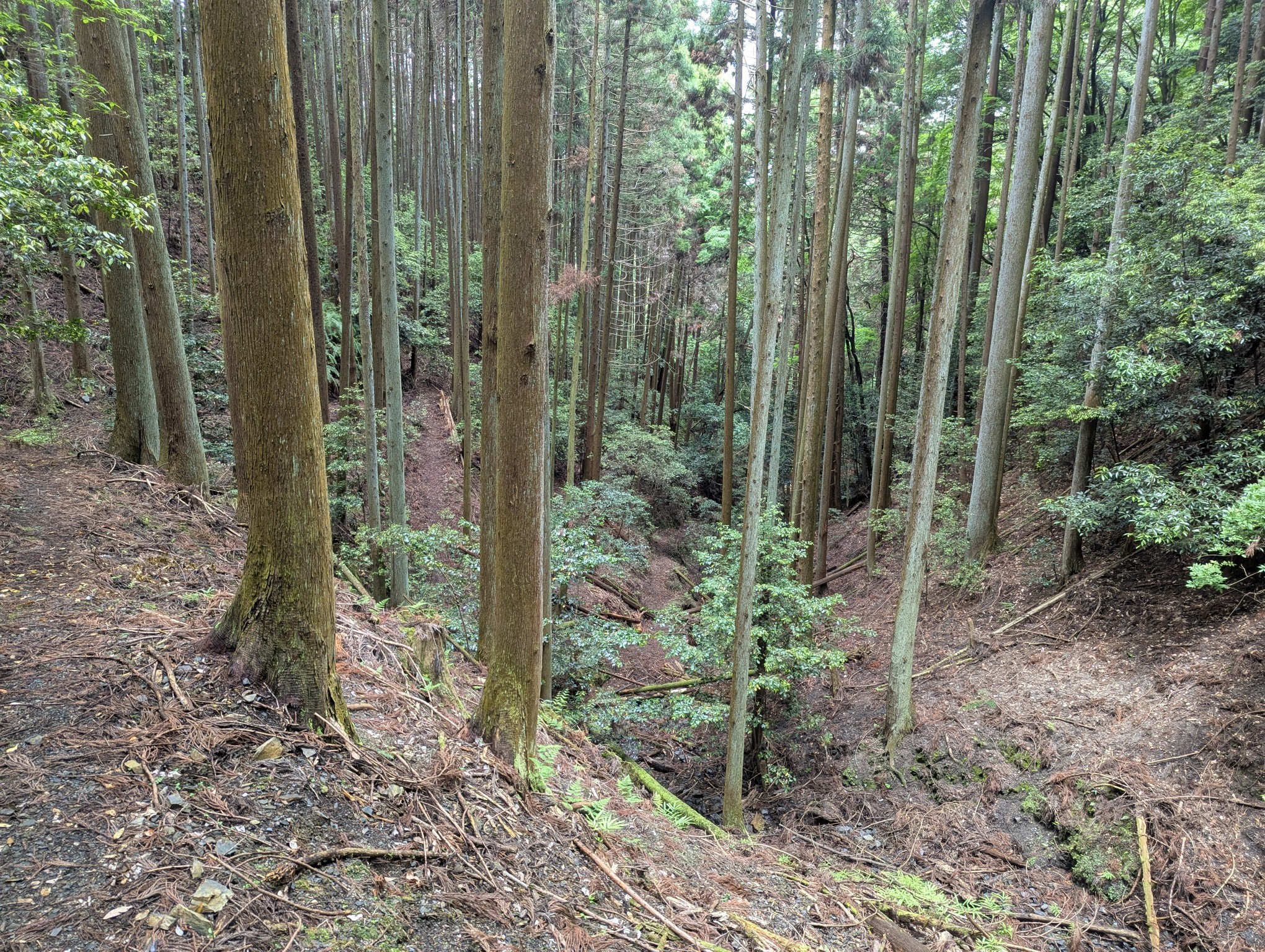
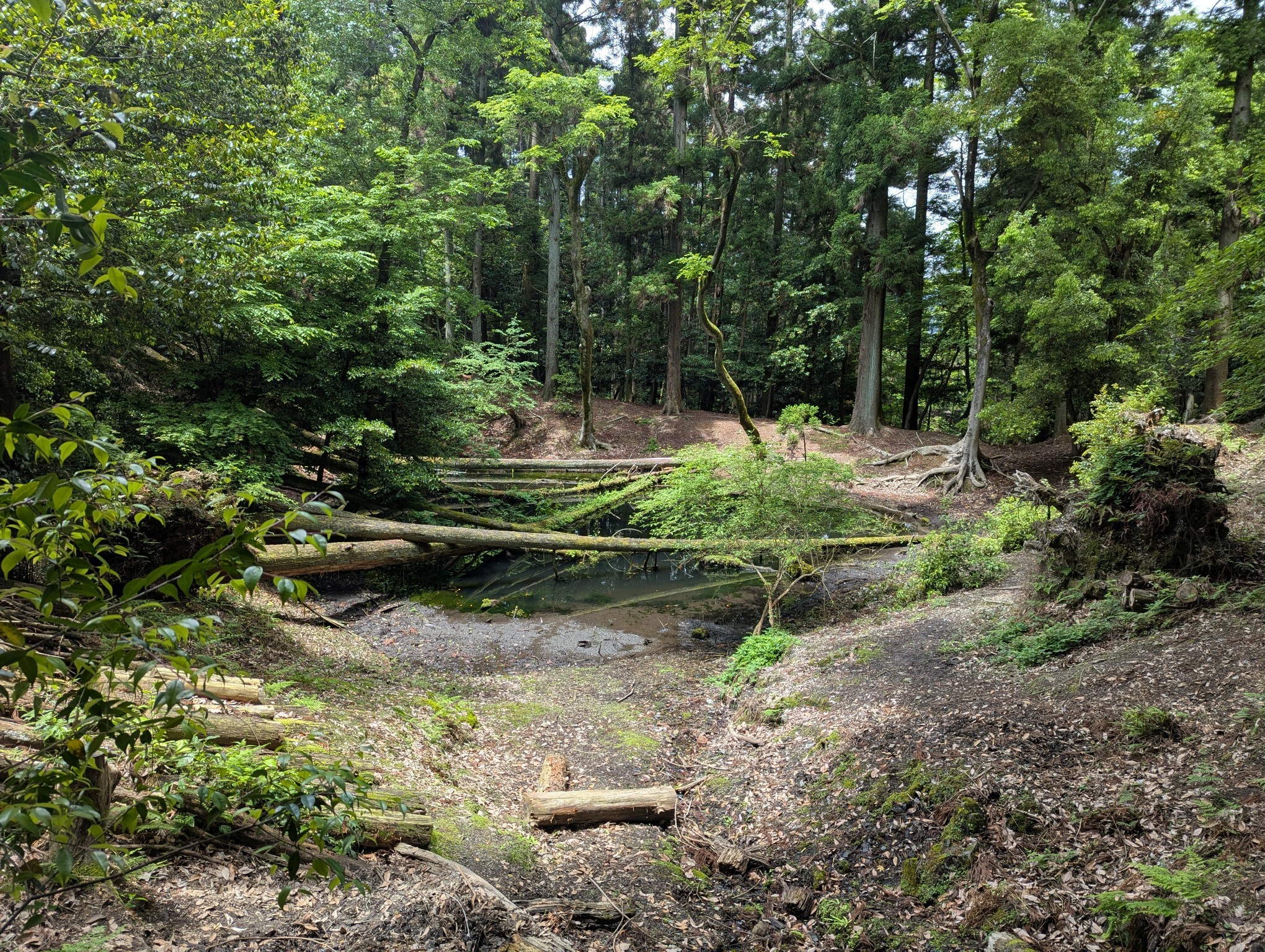
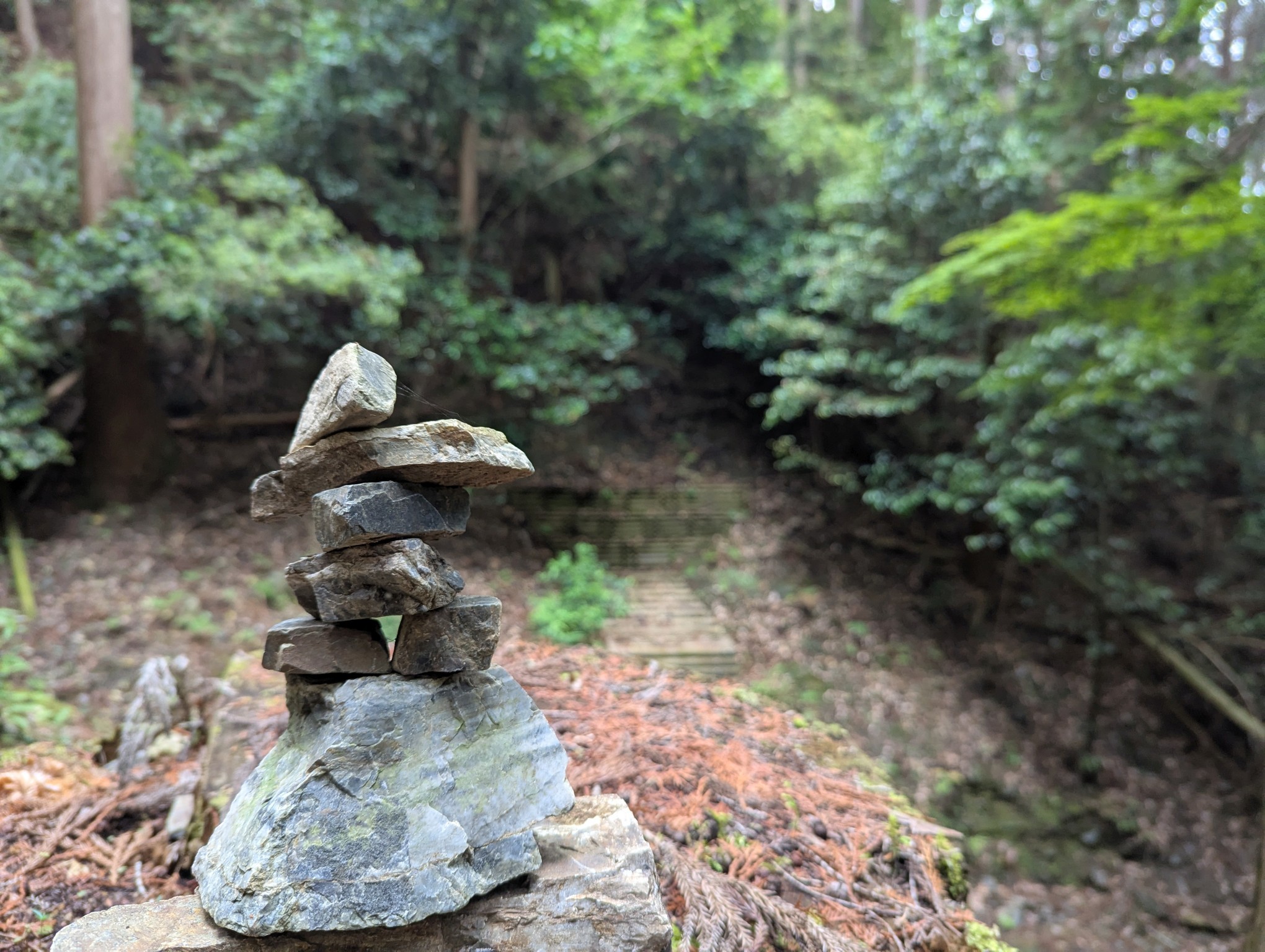
At another crossing, the route took us down the mountain and back into the city. The path was steep, but we managed to make our way down. We passed a small lake with little red fish and a fallen tree stump. At the foot of the mountain, there was a small shrine with a torii gate, as well as a short stream with a waterfall. The entire trip was 3.8 km long. I liked this hike even if it was a bit rough terrain and rather humid it was still some new sight away from the crowds.
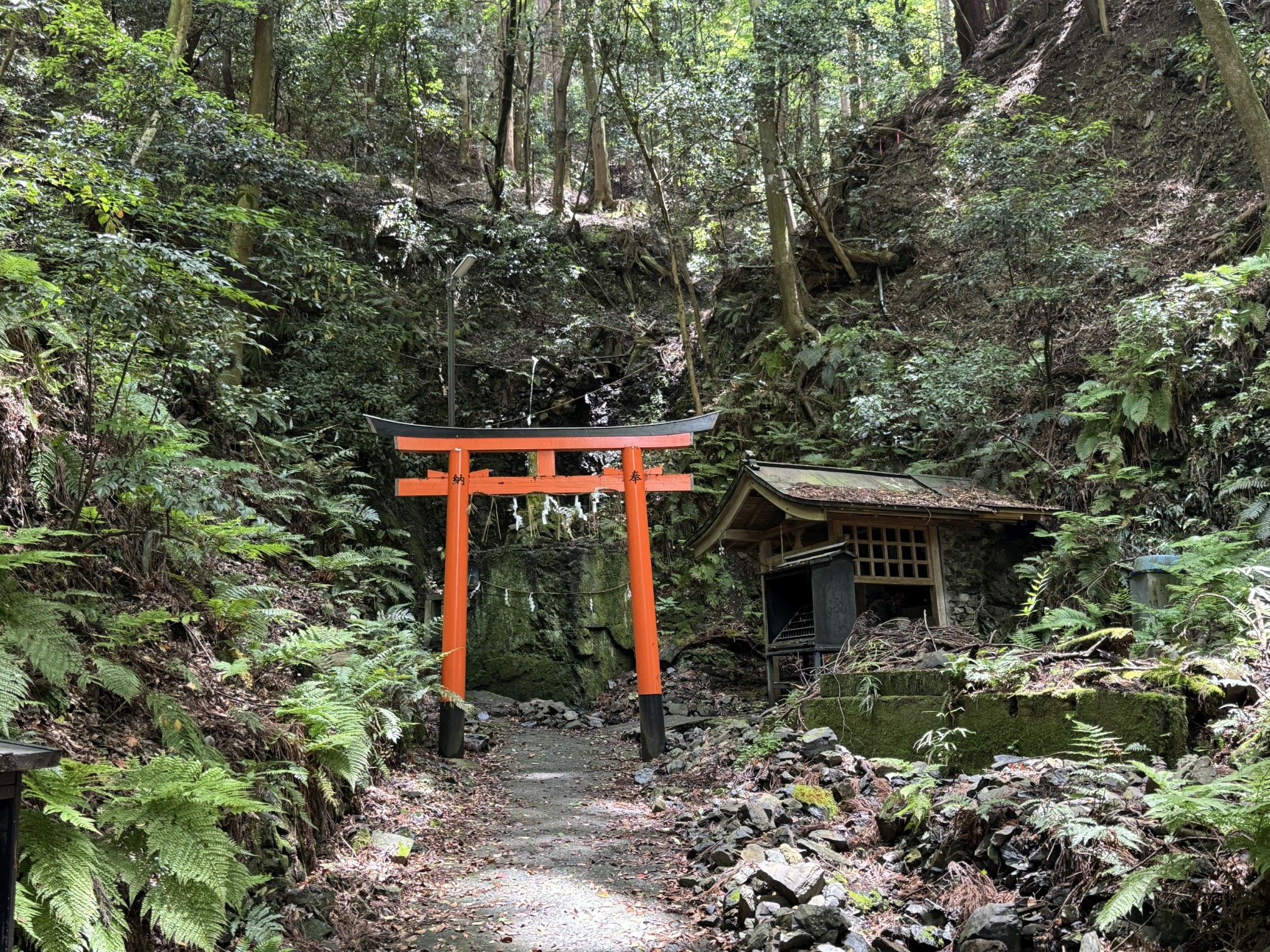
Back at the city’s border, there was another Shrine (Kumano Nyakuōji) where we were able to buy refreshments from a vending machine. We also took the opportunity to use the restroom and buy some souvenirs.
In the city, we met up with my cousin, who spent the time conducting interviews with local schoolchildren. The schoolchildren were tasked with asking foreigners questions as part of a school project. We went into a restaurant that offered Japanese curry as part of its set menu. The restaurant was staffed by an elderly couple who served the food slowly but methodically. The food was delicious and inexpensive (1,100 yen for the curry and a cola).
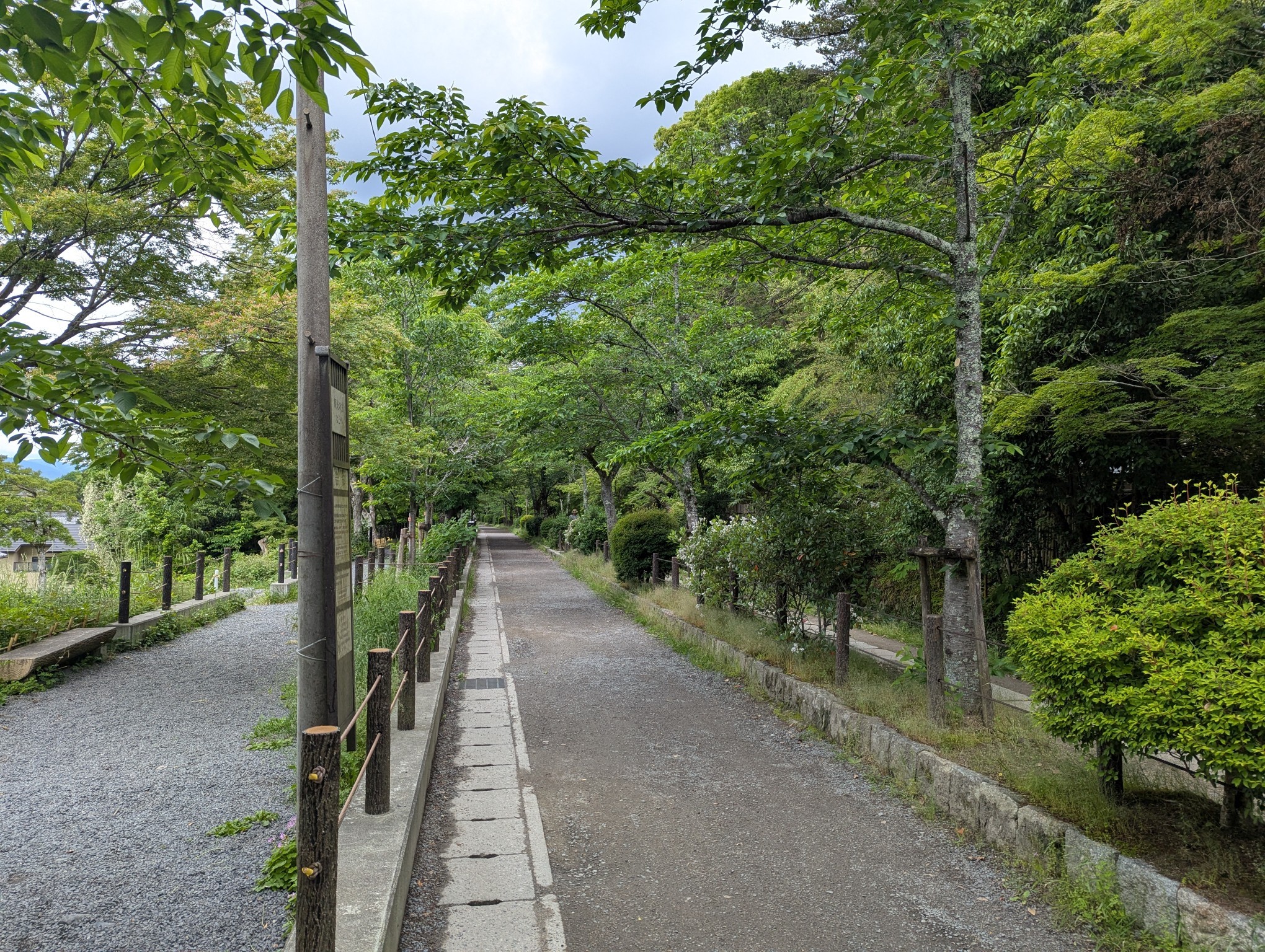
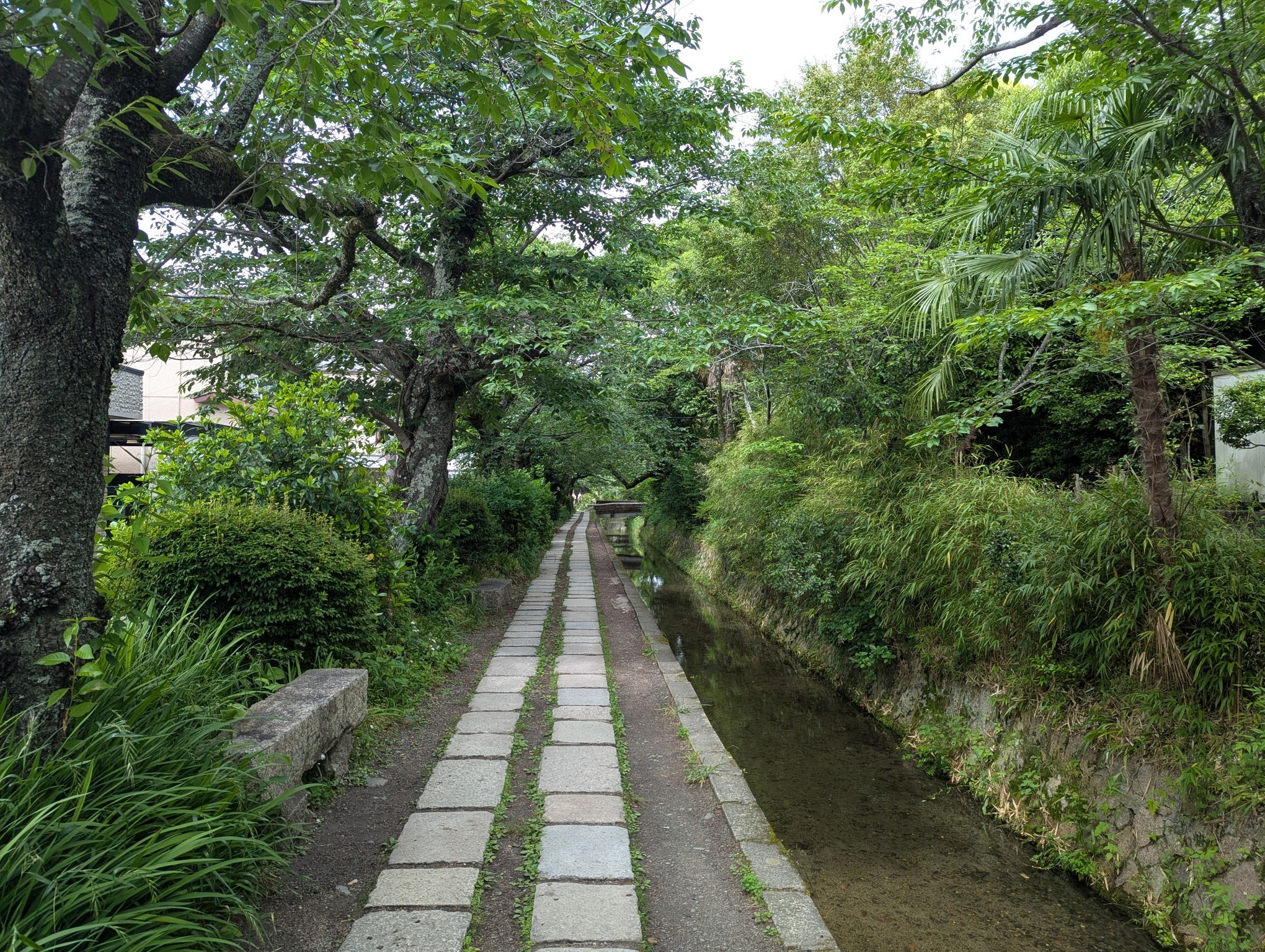
Near the restaurant, the Philosopher’s Walk begins. It follows a canal lined with cherry trees that is fed by the aqueduct we visited earlier. During the high season, when the cherry trees are in bloom, this path transforms into a sea of white blossoms. Now, we only saw the lush green trees. Small restaurants and vending machines selling drinks and ice cream are sometimes located next to the path.
After lunch, the afternoon heat set in, so we had to decide where to go next. We could either explore more of Kyoto or go back to Otsu and explore the town near the lake. Ultimately, we chose the latter and took the train back to Otsu.
First, we took a bus, then a different line than the day before to Otsu. I find it fascinating that there are different lines serving roughly the same location, yet both are frequently used and operate profitably. As it turned out, the other train ended at the same station where we had arrived the previous day.
From the station, you can walk up to a large pedestrian bridge that offers a beautiful view of the big lake and the town’s ferry port. The ferries are similar to those used at Lake Bodensee in Germany and can be used for amusement or transportation.
Our first stop was the ferry terminal to see if there was anything we could do this afternoon, but sadly, there were no more ferries today. The bike rental place was also closed and the rates were quite high compared to the places where we had stayed previously.
We hung around the Big Biwaku sign for a little while. Meanwhile, a large lake boat returned to the terminal and began unloading passengers. Then, we went to a nearby coffee shop to get some cold drinks and cake and to get away from the sun for a while. We overlooked the fact that this was a smoking establishment. Most places in Japan are smoke-free, but the climate control did a good job of keeping any odors away from us.
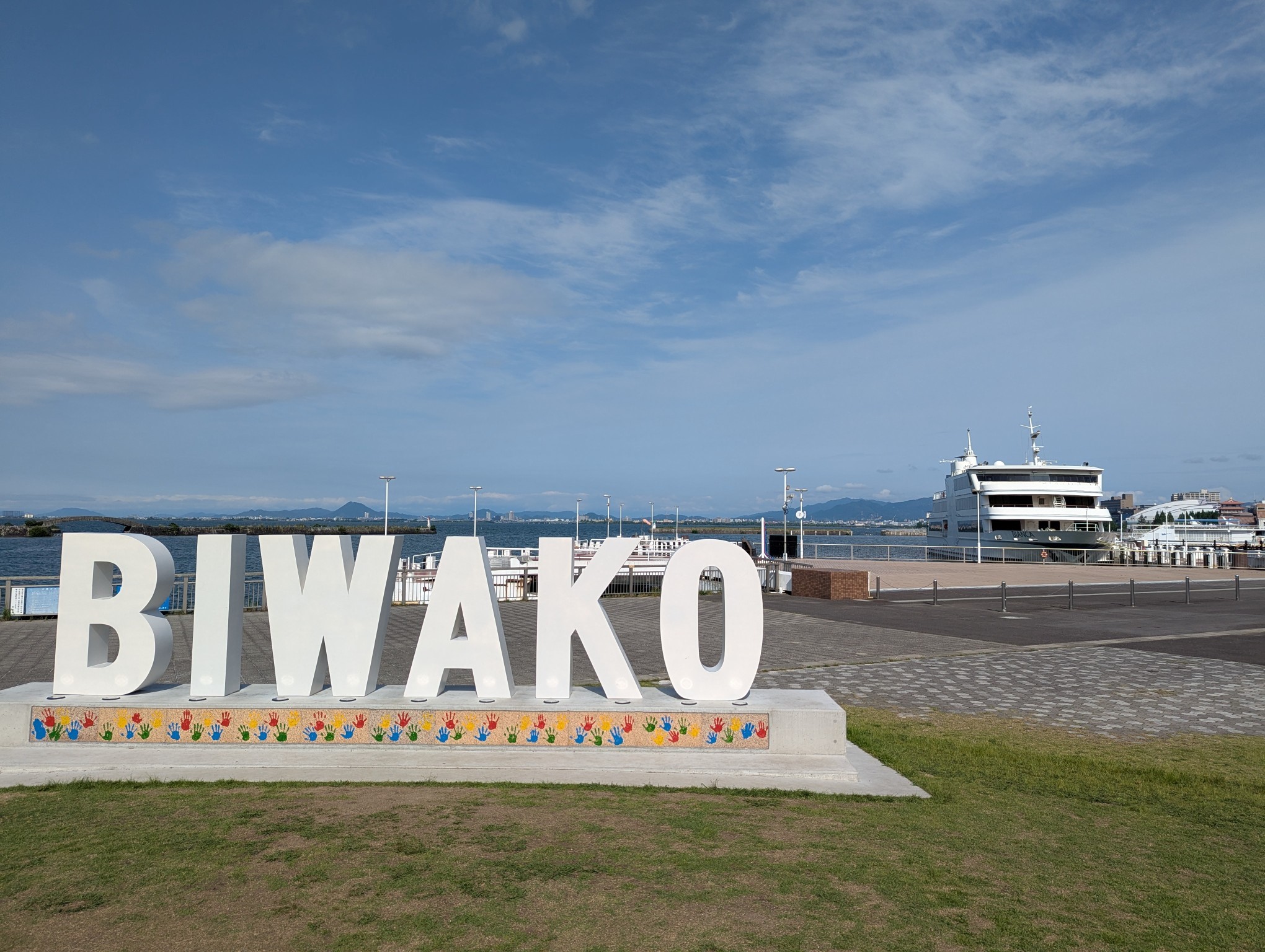
We continued walking along the shoreline toward our hotel. First, though, we stopped at a convenience store to grab some chips and snacks. After dropping off our things at the hotel, we went to a nearby supermarket for some beers and an evening dinner at the lake. There wasn’t much going on in the surrounding area and we had already explored the restaurants in Würzburg.
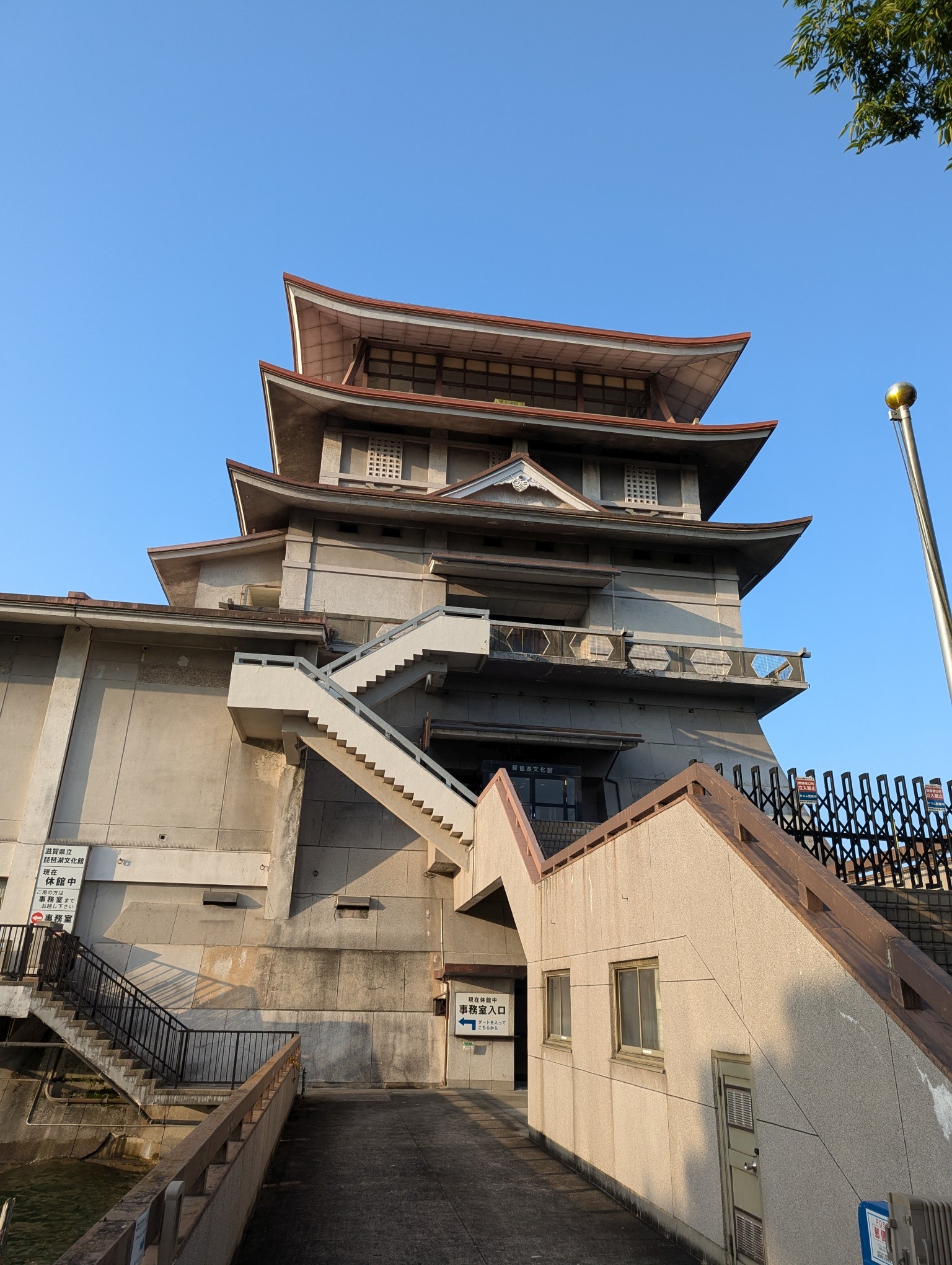
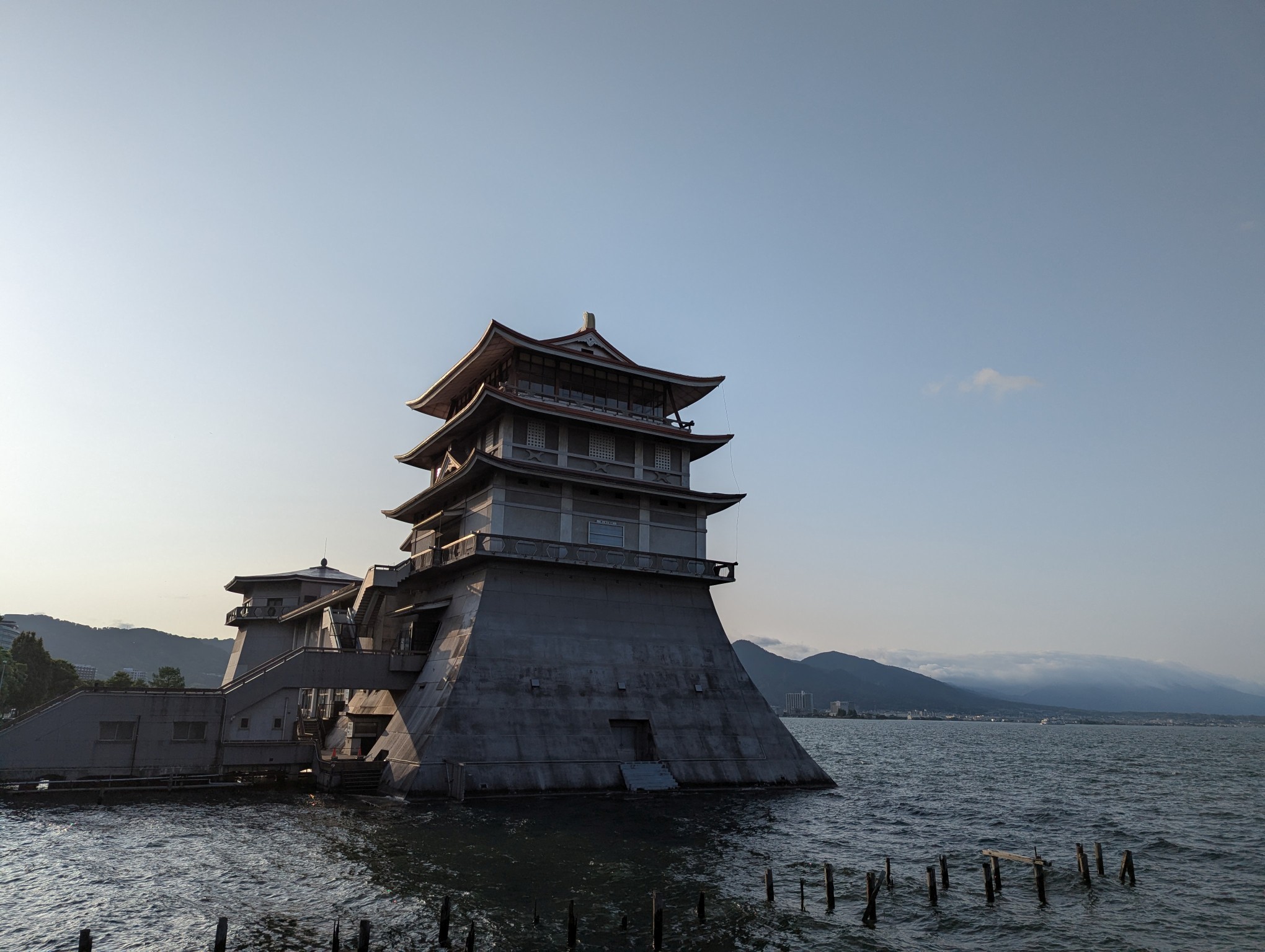
After finishing our meal, we went back to the ground floor of our hotel to see if there was any life in the place now. This time, the bar was open and the owner was serving us beers. We briefly chatted with the other couple staying there, who were from Australia and had traveled by bike. We played another round of billiards and chatted with the owner. You could tell that she was overwhelmed by all the stuff and stories she was telling. After the game was over and the beers were finished, we headed back to our room, as tomorrow would be another travel day to Tokyo, with a stop in Nagoya.
To Tokyo with stop at Nagoya
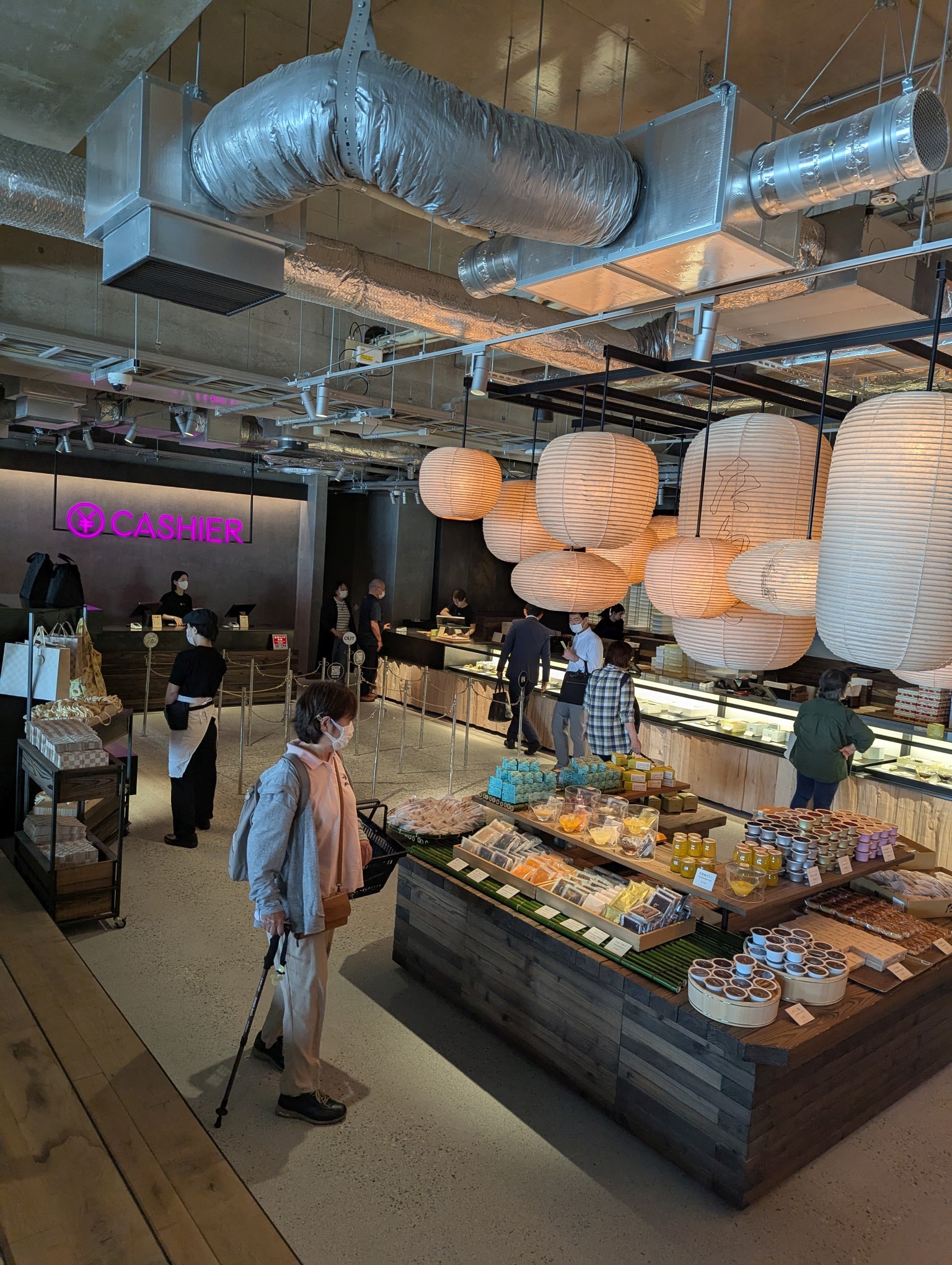
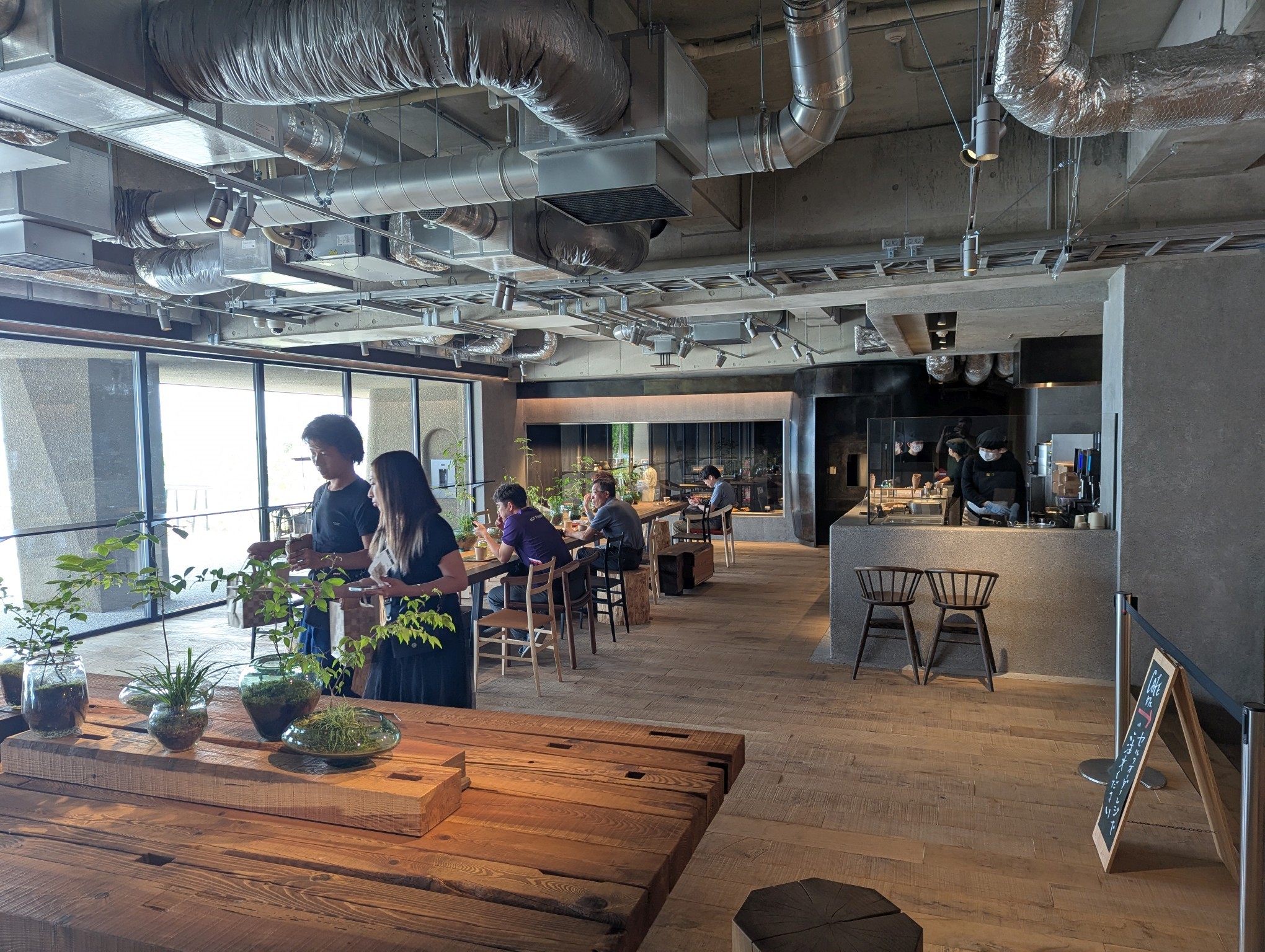
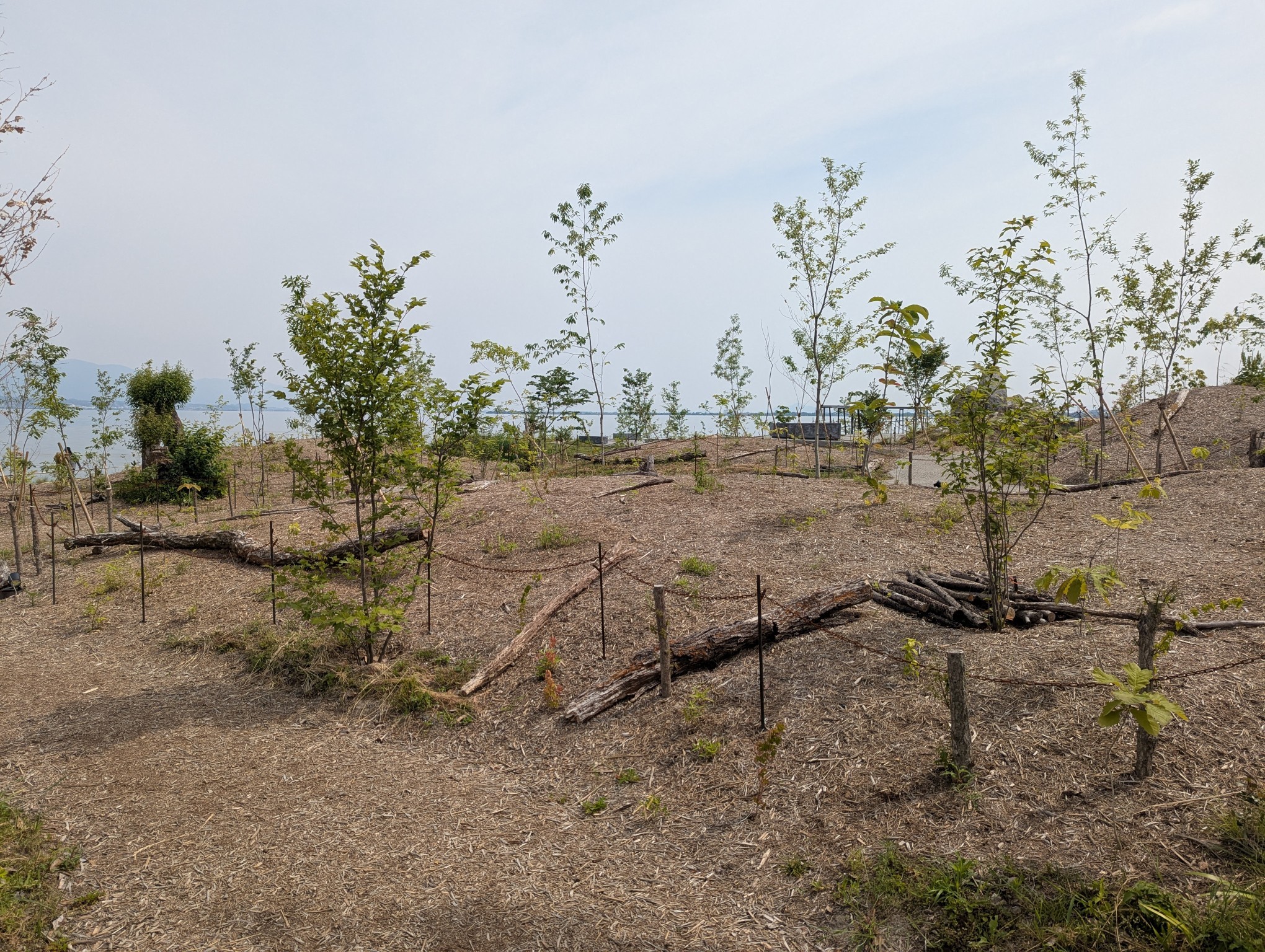
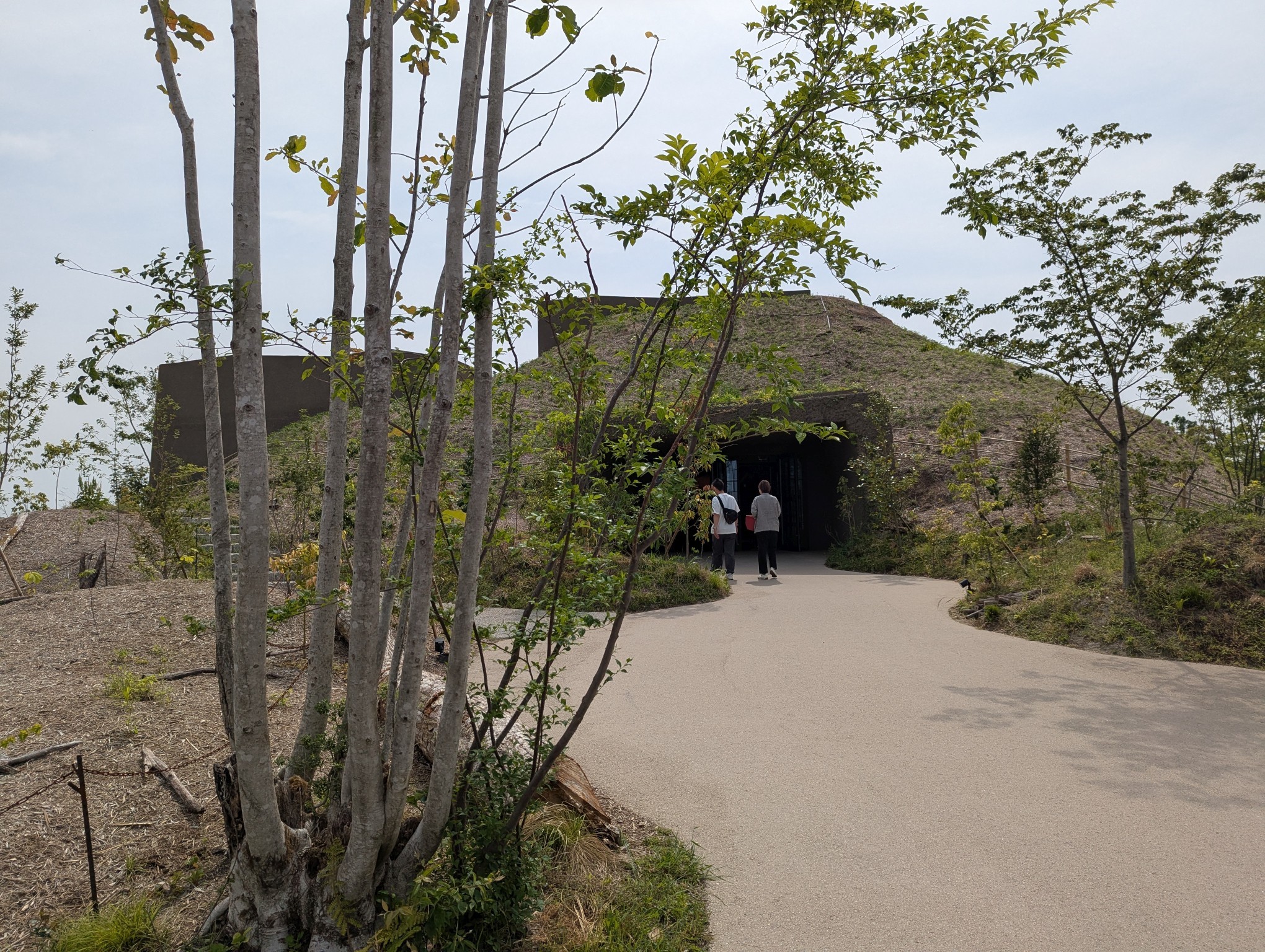
Before departing for Kyoto, where we would take the Shinkansen, we visited the Lago place for coffee. It’s a shop, coffee shop and bakery, but the place didn’t open until nine. From the outside, you could see that the place was pretty new and had a fancy garden, but the garden closed at six in the evening, so we did not have a chance to explore it. By nine, the sun was out and, since there were no big trees, there was no shade and no reason to spend time in the garden. We quickly browsed the shop and had something to drink. It was not what we expected. It was too fancy, poor in quality and expensive, build for Consoomer. After this stop, we went to the train station and traveled to Kyoto.
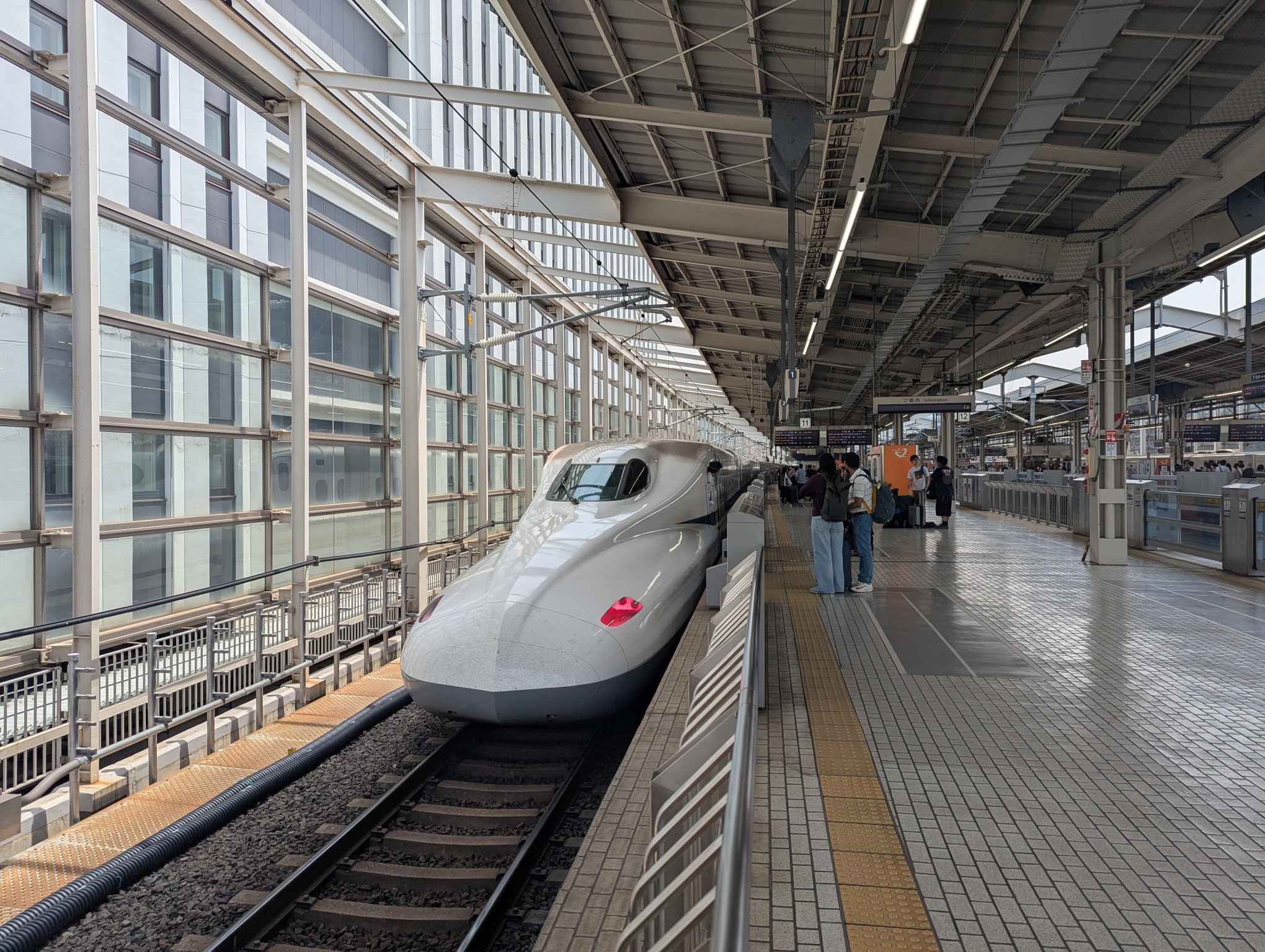
This time, we didn’t reserve seats on the Shinkansen. We decided against it because we only had a short train ride and trains come frequently. Still, we had to stand during the ride and I would say the extra cost is worth it, even for shorter trips.
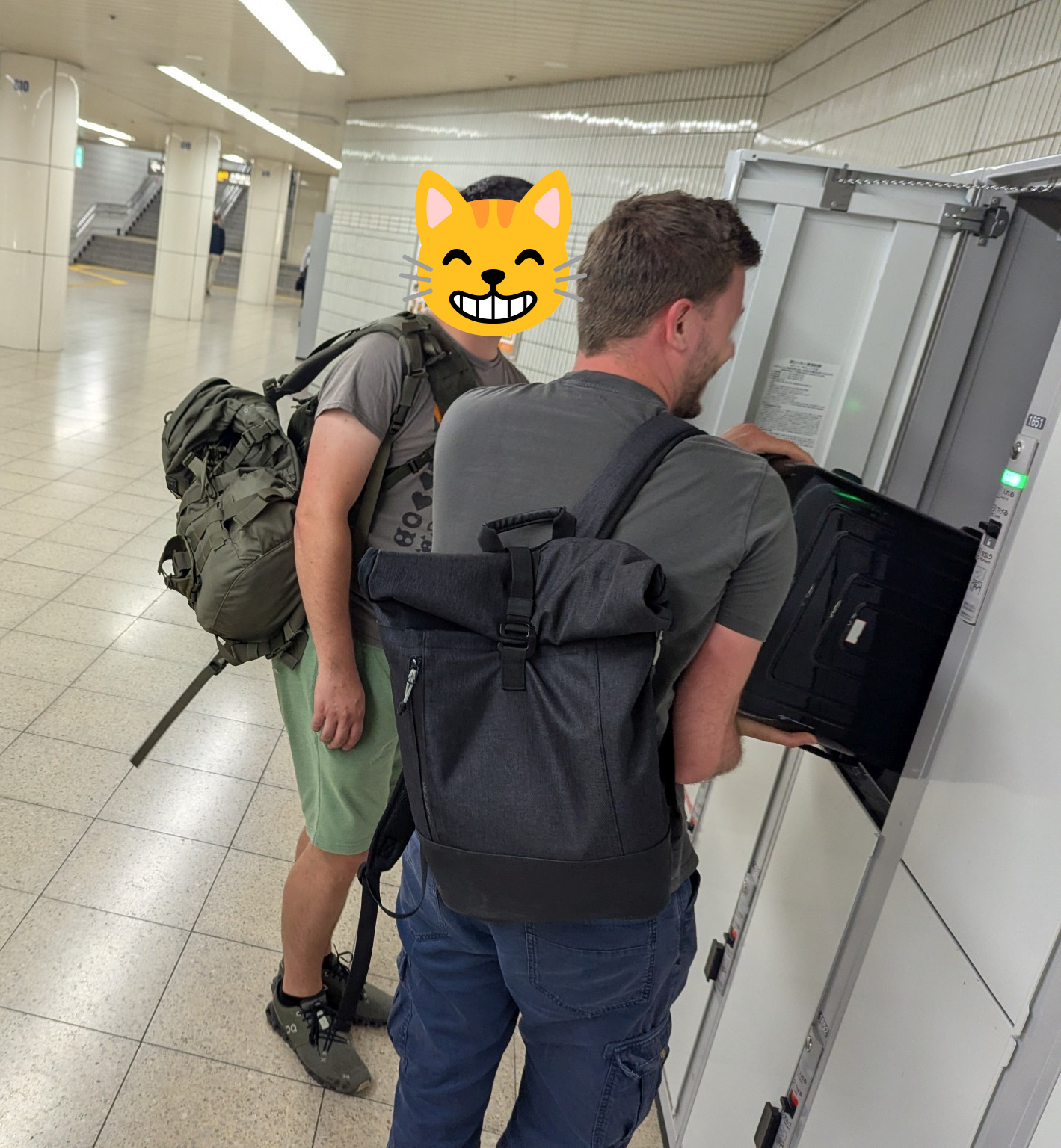
When we arrived at the train station in Nagoya, we first had to orient ourselves. To be free to explore the park later, we used a nearby locker to stow our hand luggage. That day, we planned to visit the Ghibli Park, located on the outskirts of Nagoya in the former World Expo area. The crowds in Nagoya were comparable to those in other towns we visited, perhaps with a little less tourism than in other cities.
We made a brief stop at a bookstore for some souvenirs and then took the metro closer to the city center. Nagoya has a central park system with a TV tower resembling the Eiffel Tower in Paris, as well as the Oasis 21, a building containing shops, restaurants and transportation with an arched glass walkway. We only passed by both attractions as we did not have time to explore them fully.
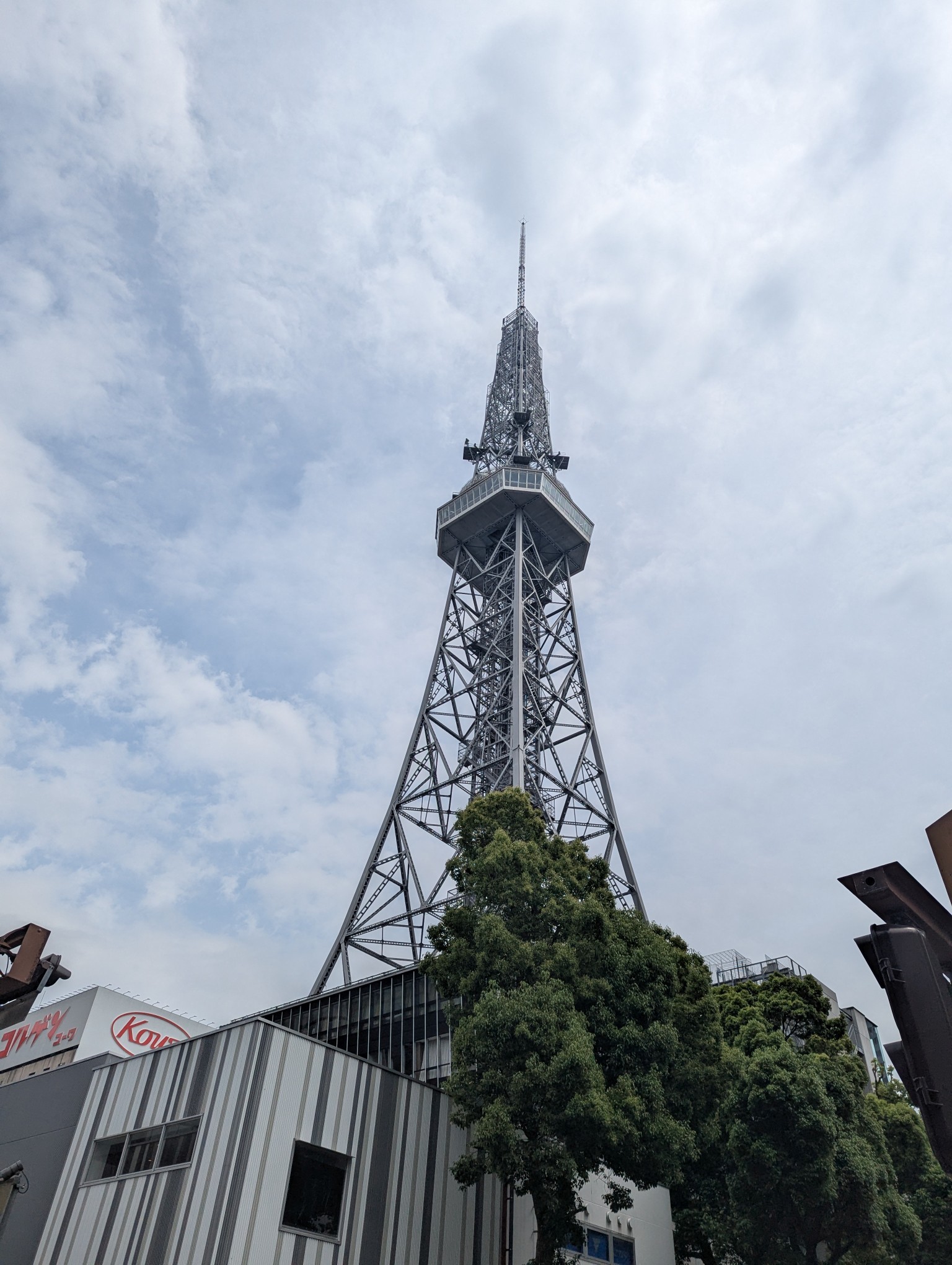
For dinner, we went to a nearby shopping area with a unique floor plan. Only two floors were connected and a layer with a fake ceiling separated the other floors. This created interesting themes and types of shops on every other floor.
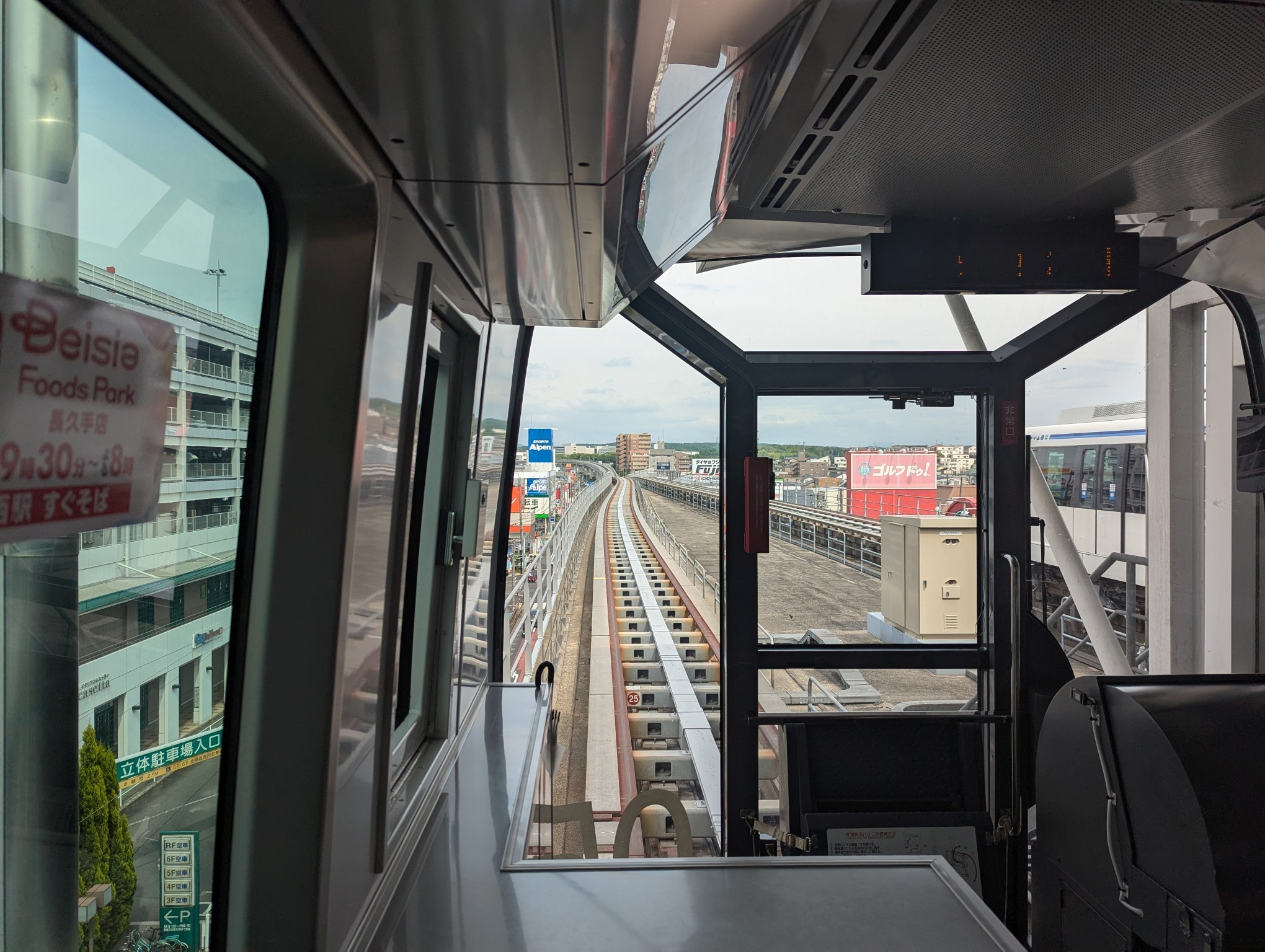
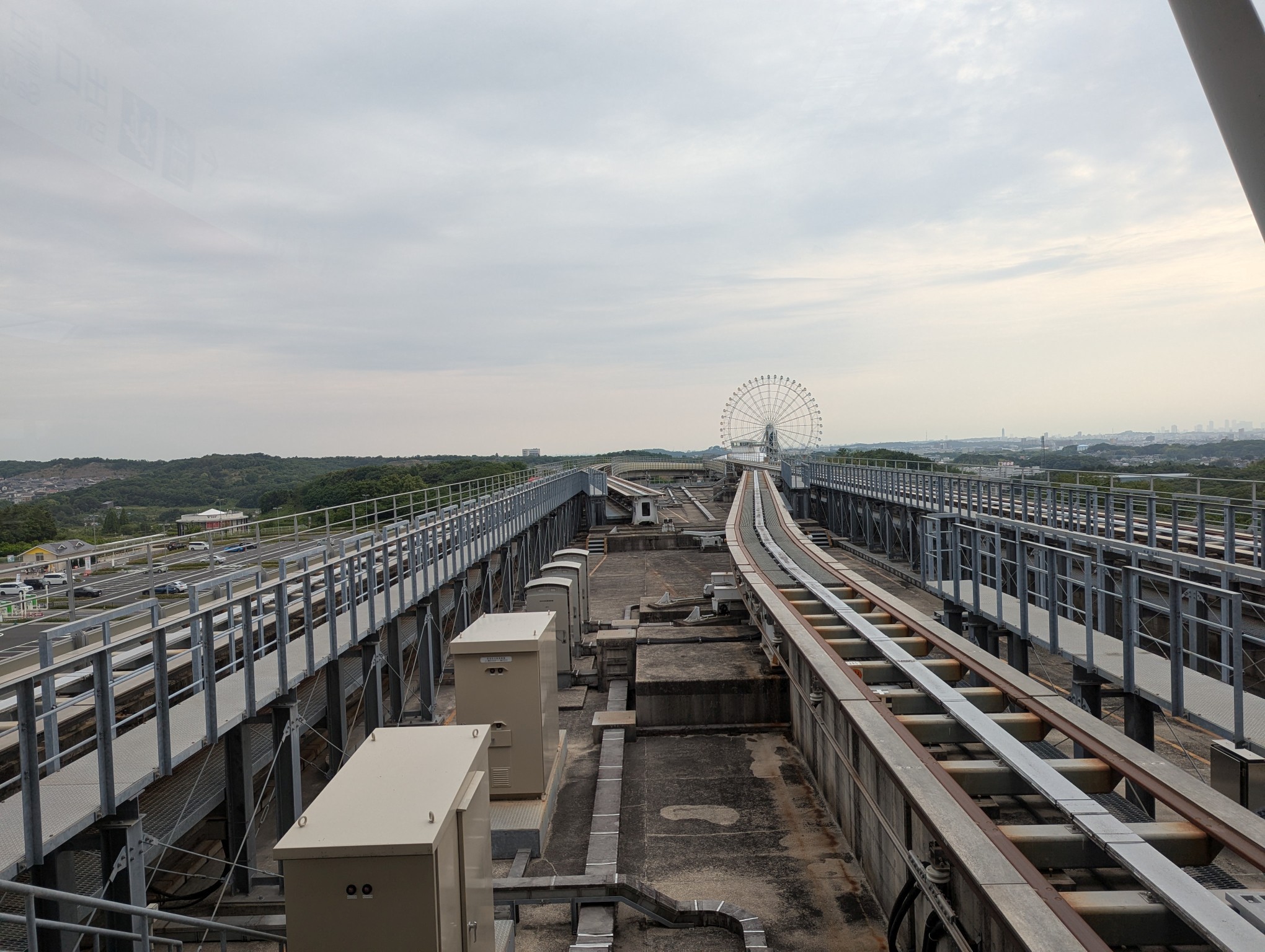
Next, we took the Metro to the park, followed by a special driverless train on guided rails. It was a pretty interesting ride because you could sit in the front and watch the track fly by without an operator present. Since this is a monorail, the track switching was a bit more complicated than with a normal train.
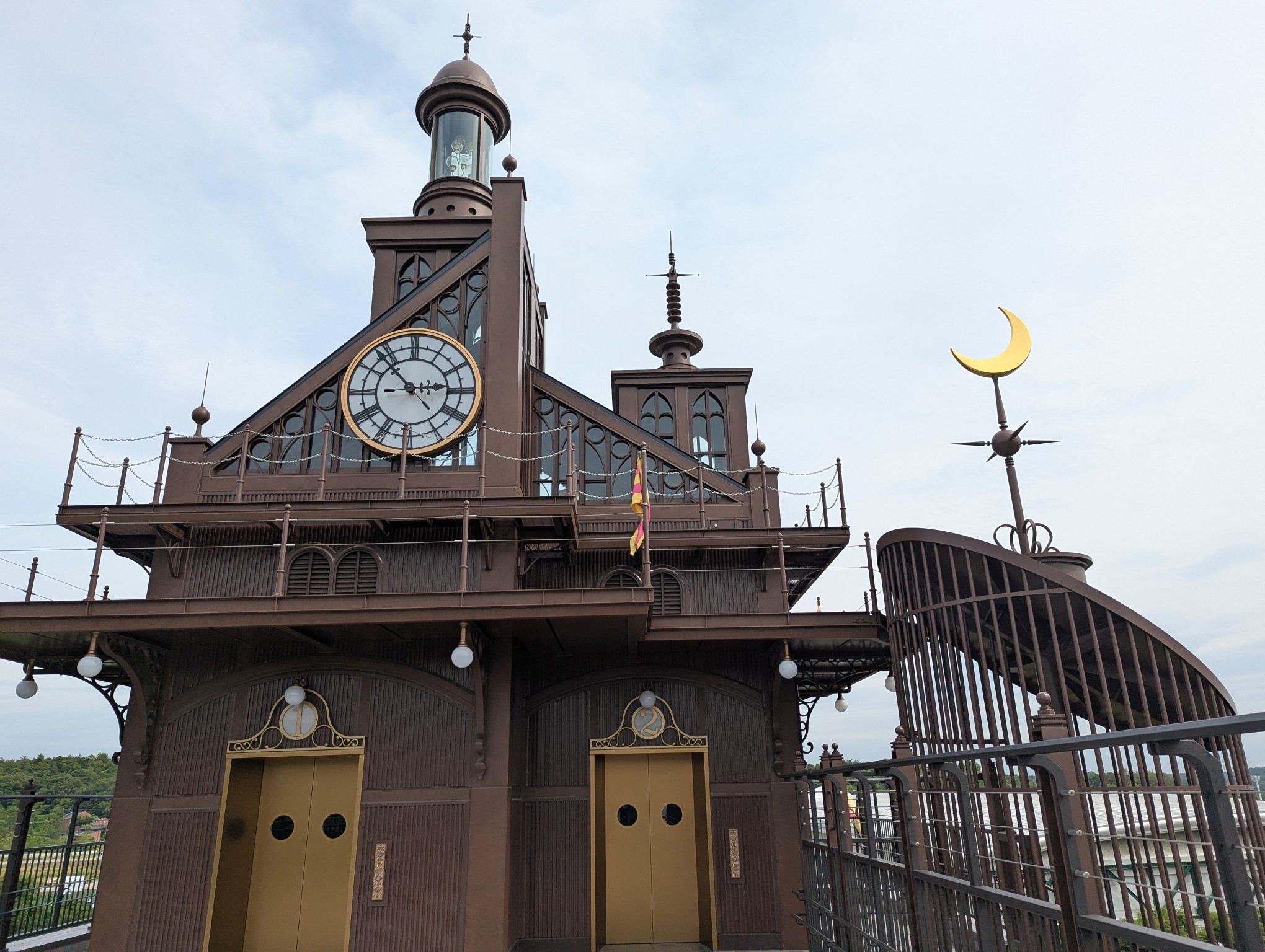
To be frank, I did not prepare for Ghibli Park at all. I did not watch all the Ghibli movies, but when you have the chance to go, you go. The park was not what I expected. From that last phrase, you can probably guess what my expectations were. One park with one entry. Instead, it was four smaller parks in the expo area, which was open to the public. In hindsight, we could have arrived early to walk around and spend more time in the area. We arrived late because of the main Ghibli Warehouse, which has a fixed entry time to control the number of people in the hallways at any given time.
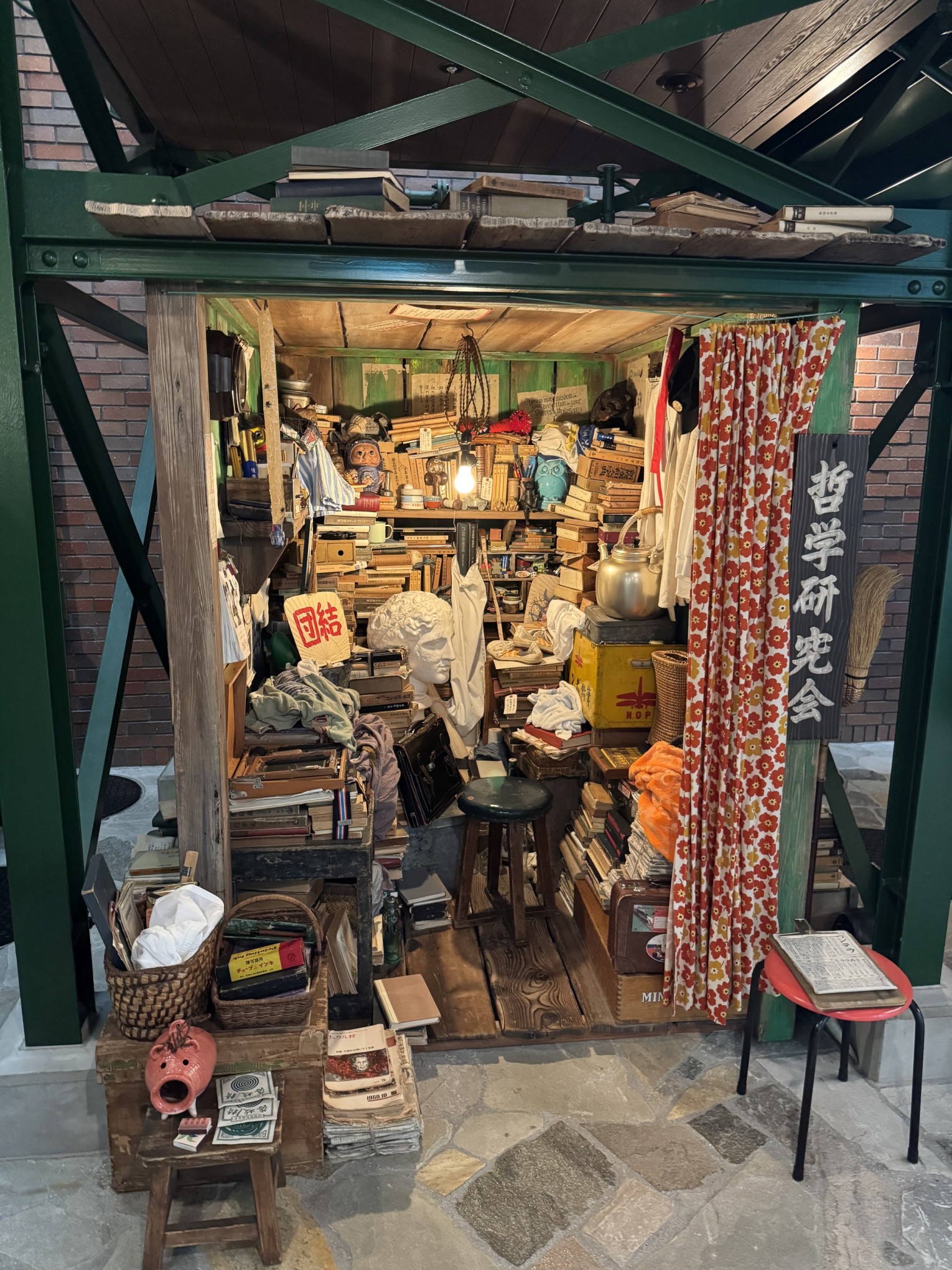
As our time slot approached, we stood in line for entry and wandered around the hall. There was a special exhibition featuring drawings of detailed foods from various movies and another area had different photo ops with life-size figures from various films. This hallway is set up like a warehouse/dream village. There is even a warehouse within the warehouse that you can explore. Overall, the warehouse was a neat experience, even if you don’t know all the movies. The photo ops were a bit excessive, in my opinion, as waiting in line and then taking a photo feels nonsensical. There was one exhibition with a long queue to enter, which you could skip if you weren’t interested in taking a picture with the first figures.
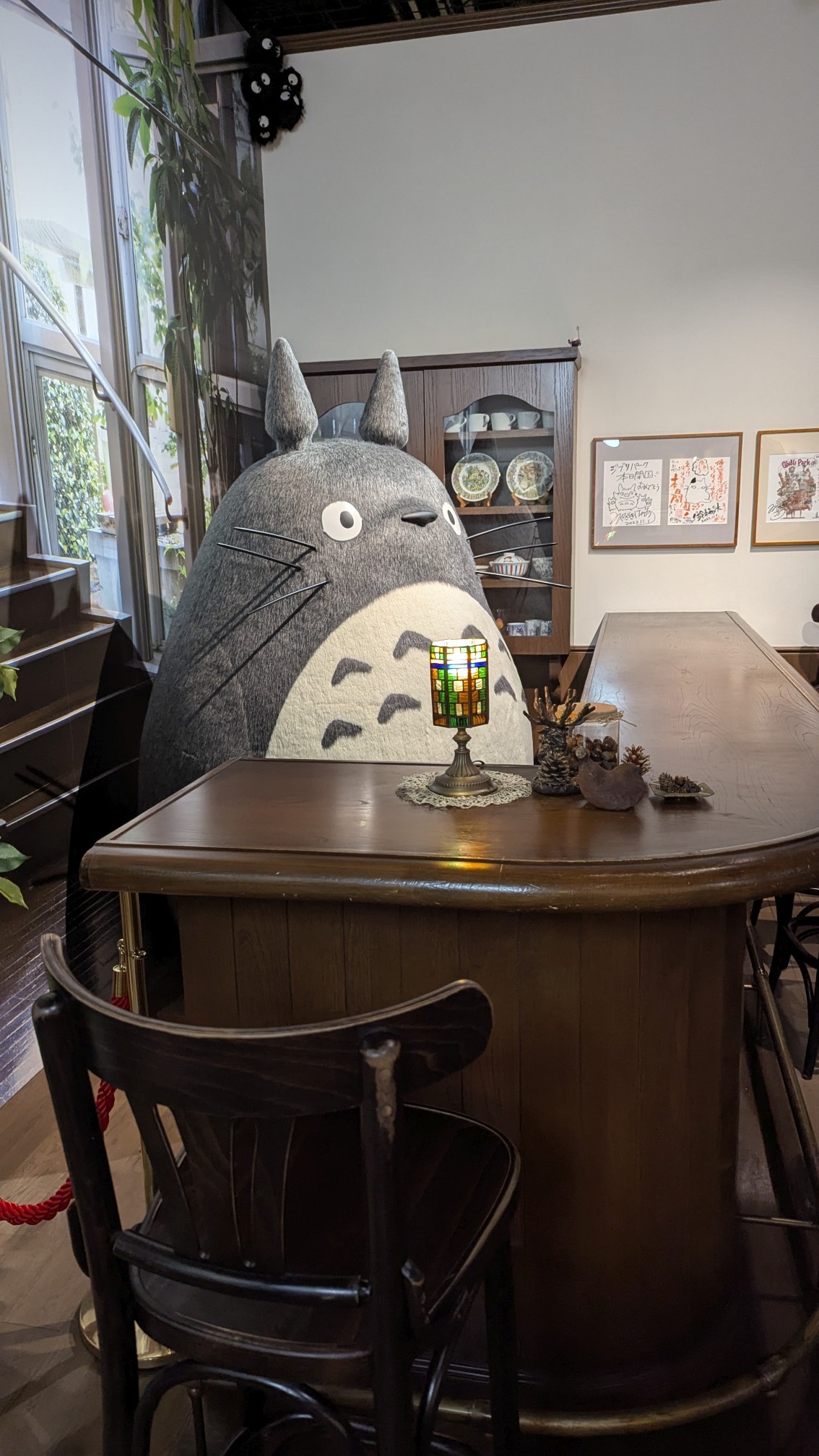
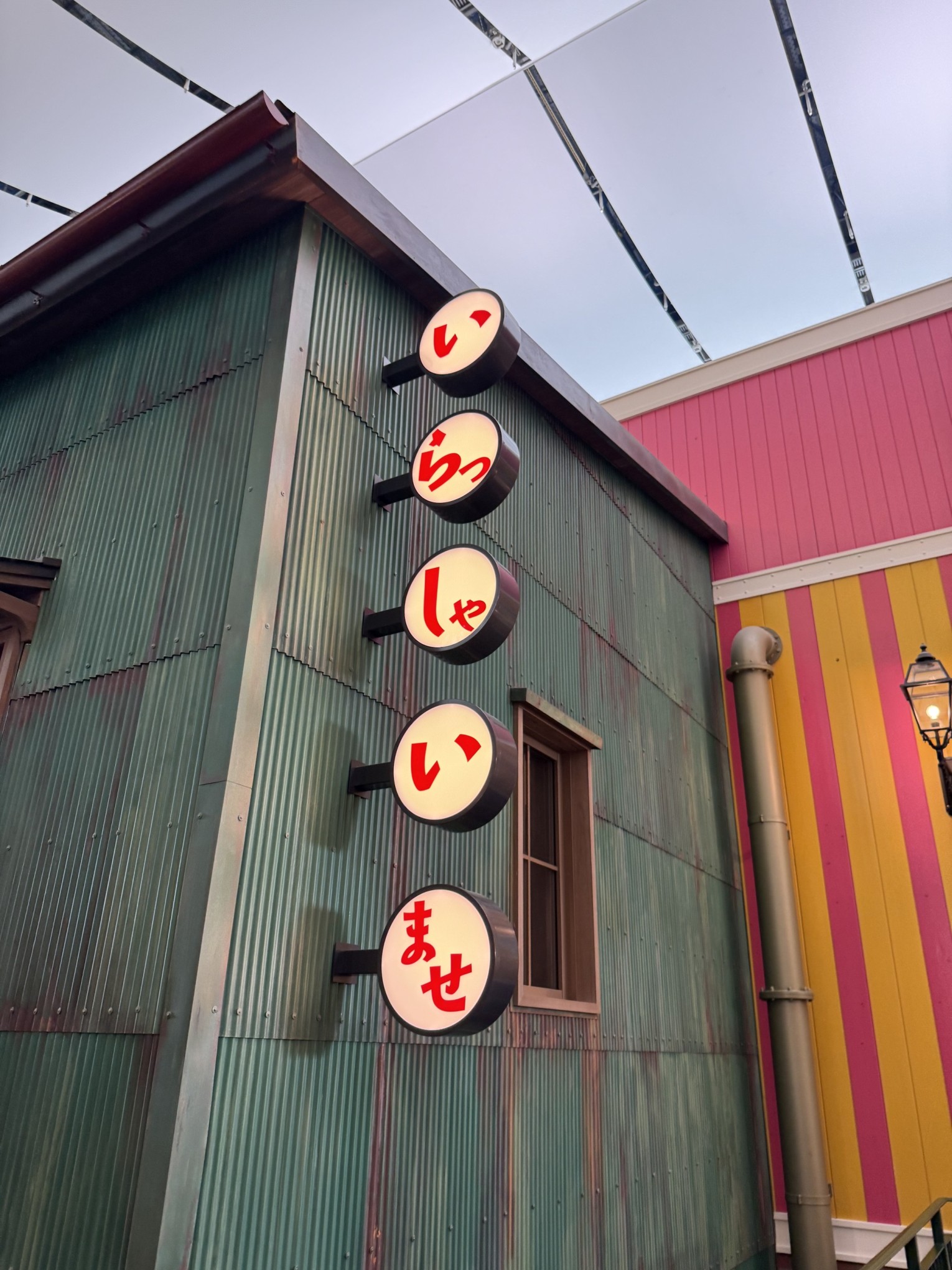
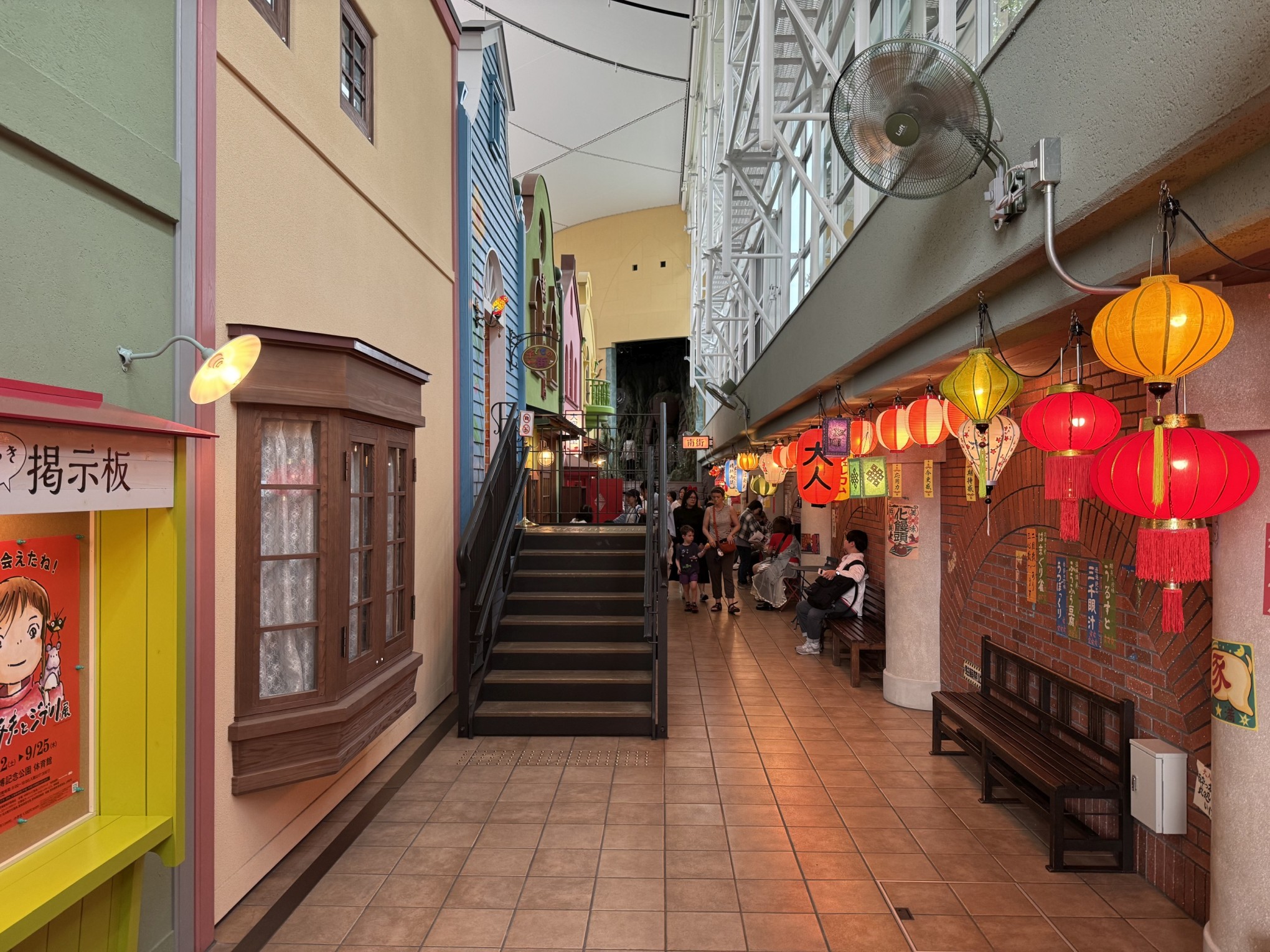
There was also a cinema. It showed a short film about a caterpillar and his struggle to live and survive in the green strips of an unknown city. It was great that the entire film was made without any spoken words, which was ideal for an international audience. After seeing this movie, we had seen everything the hall had to offer, so we headed out through the gift shop. My companions spent some yen on the way out.
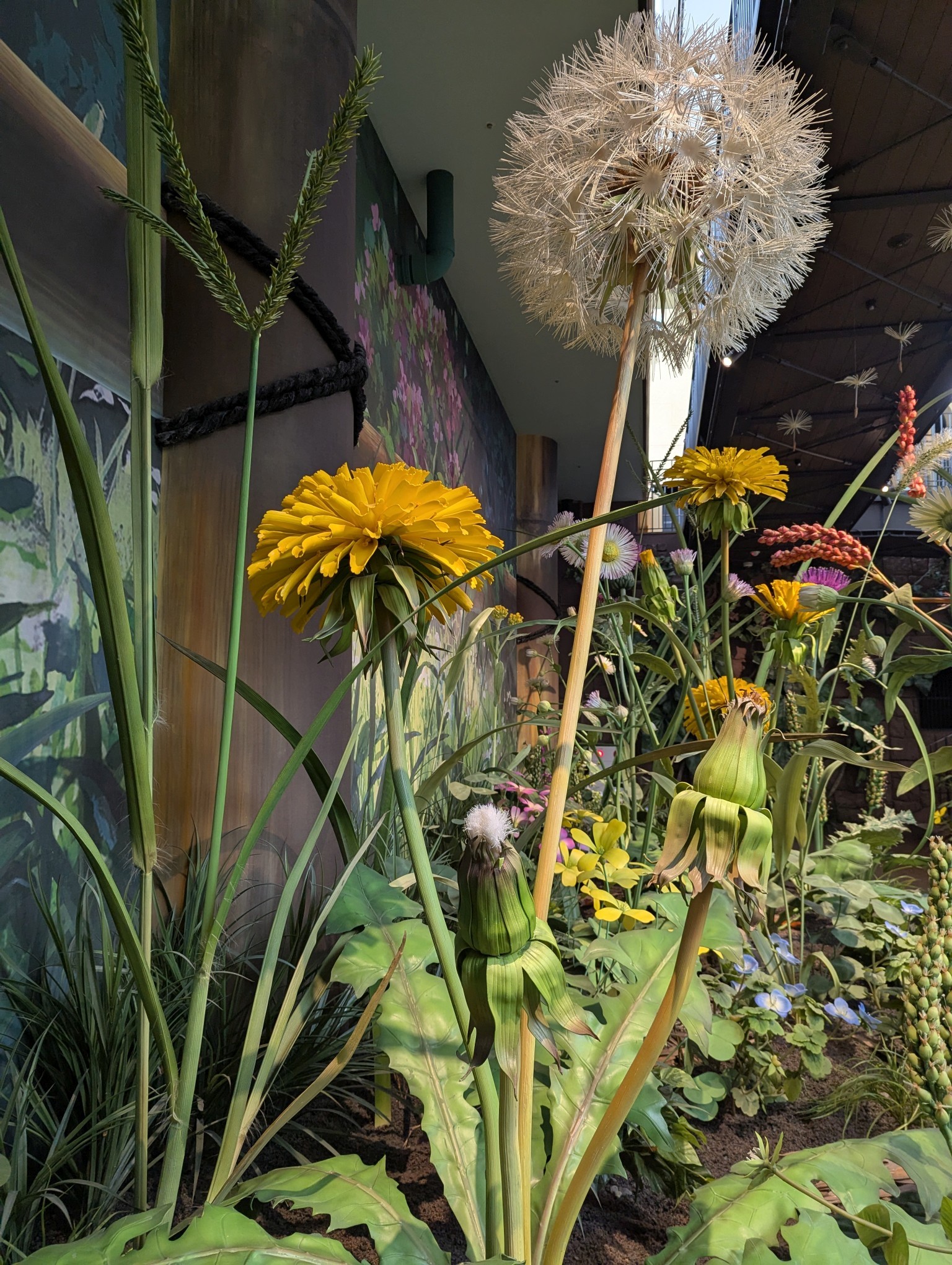
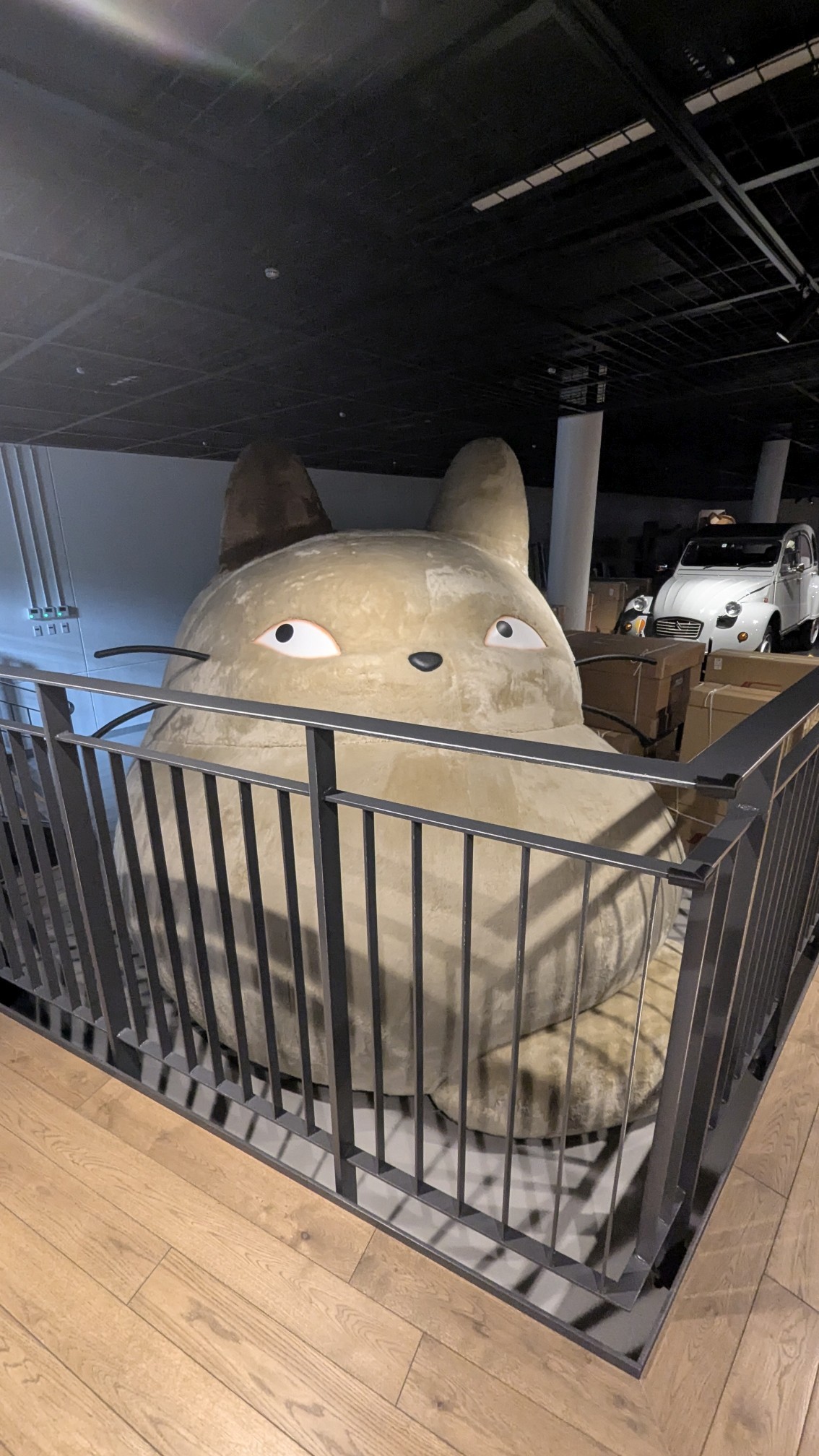
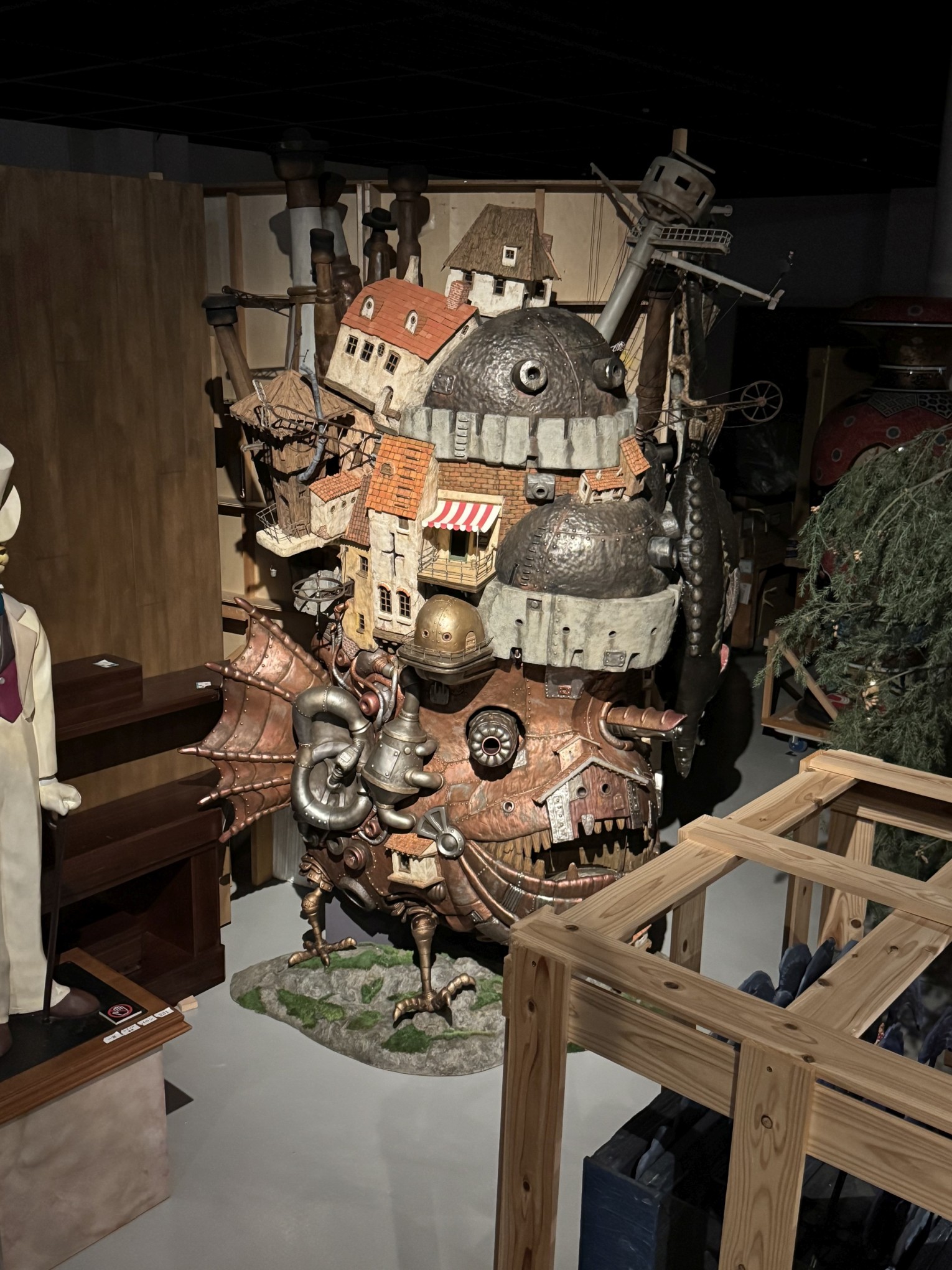
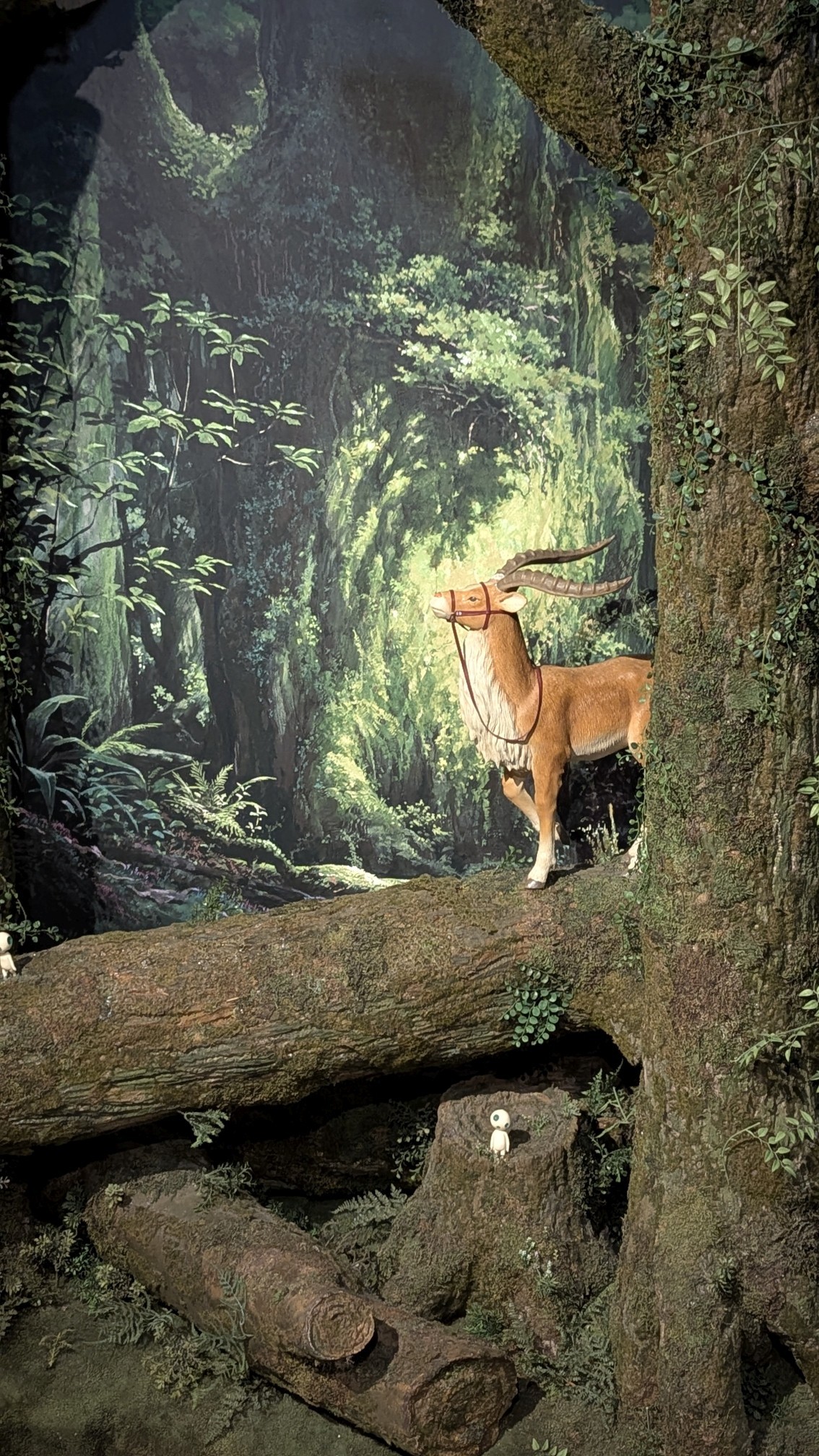
We also visited the Valley of Witches, another part of the park. A life-size replica of Howl’s Moving Castle was built there. Sadly, we were unable to purchase tickets to that part of the park because they are only available on the day of your visit. Still, it was a bit more than I expected, as there were some small rides and a merry-go-round.
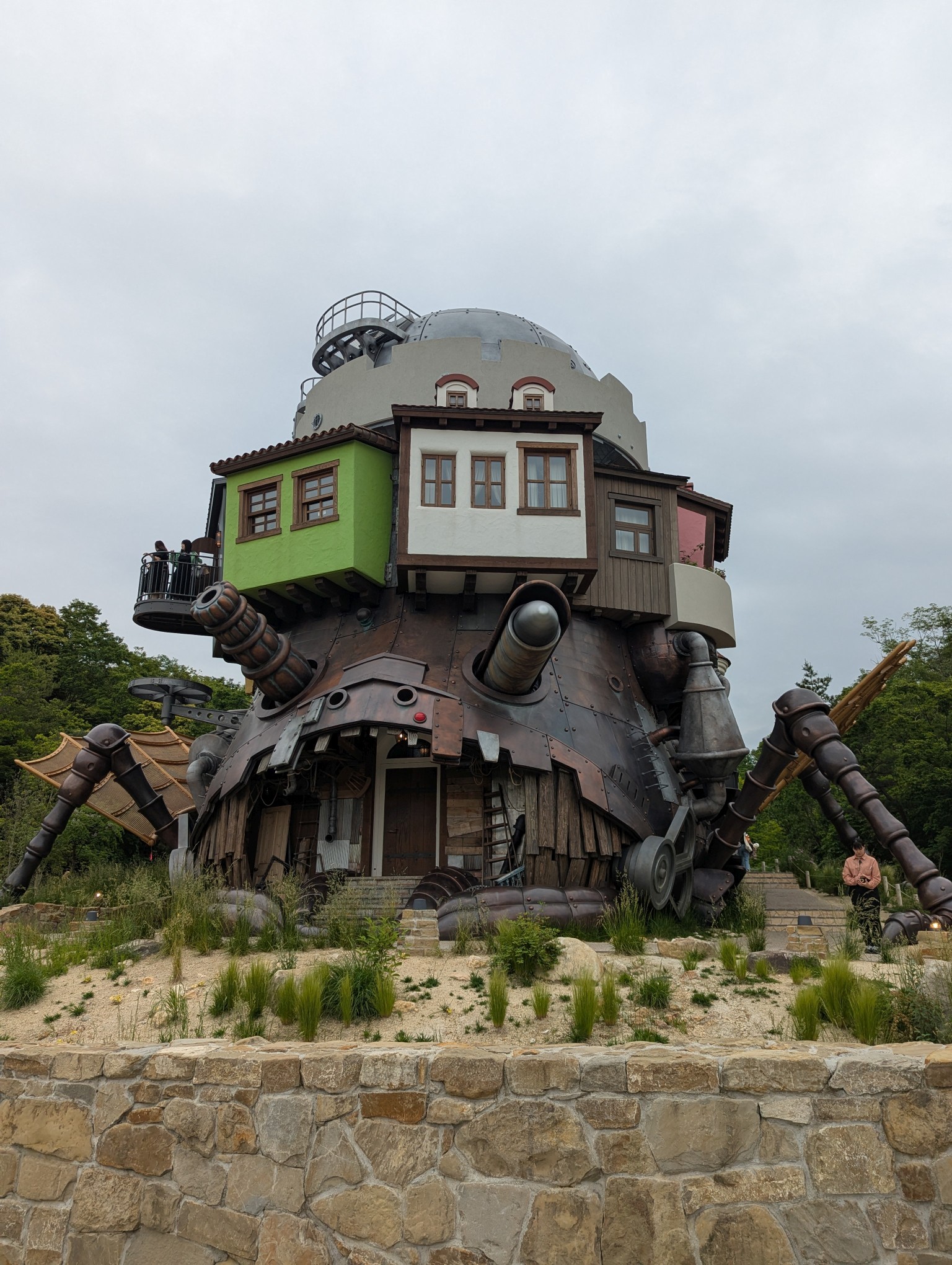
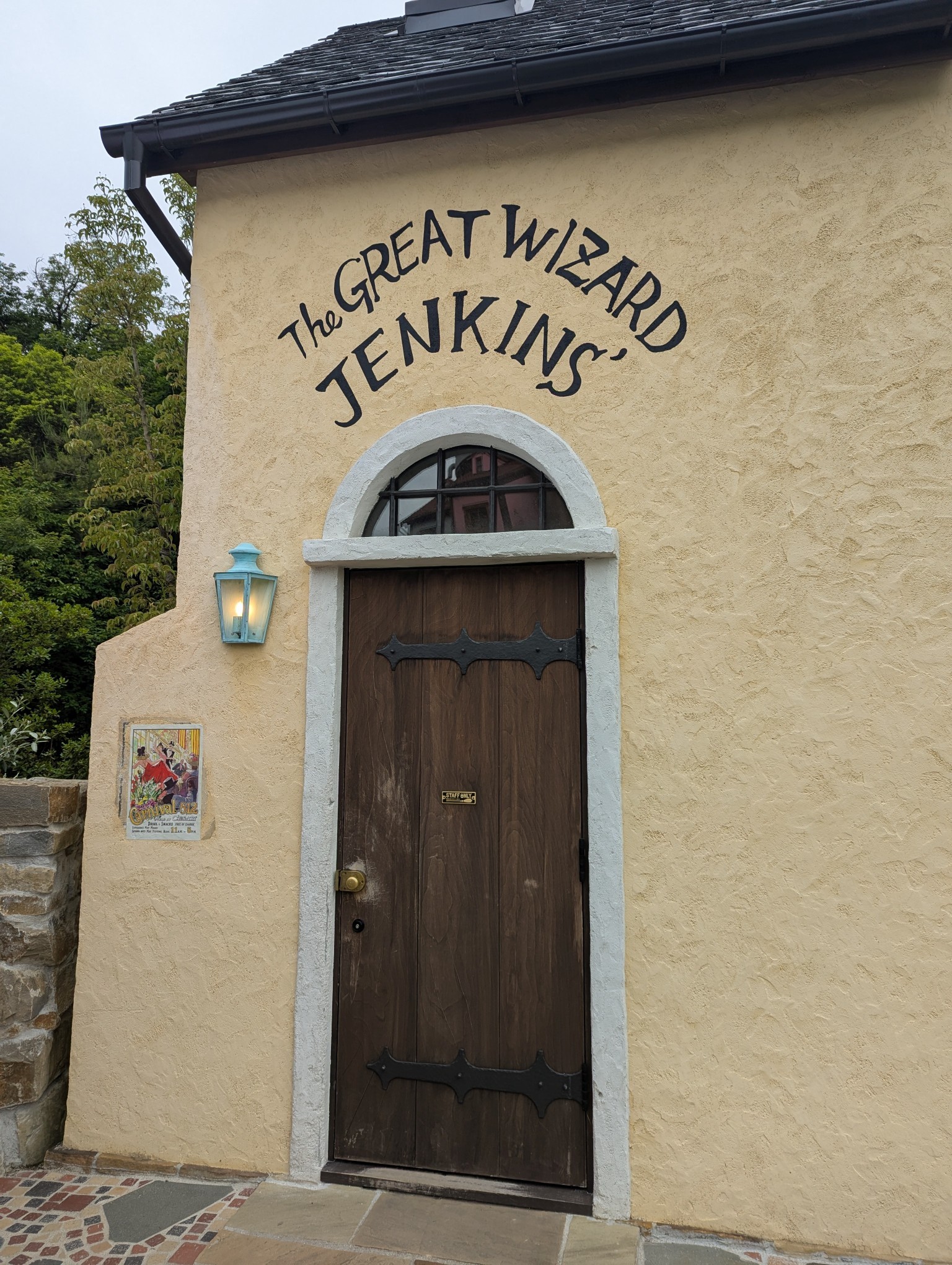
The park soon closed for the day, so we decided to head back to the main entrance and train station. From there, we took the same route to Nagoya Main Station. We had some spare time before our train departed, so after collecting our luggage from the lockers, we split up. Everyone wanted to go in a different direction to buy things and grab something to eat.
It was bento time again for me, as I find the concept fascinating. The last bento box contained fried pork with rice and sauce. After contemplating where to go next, I went to the train platform, where there were plenty of seats available and I knew the others would show up soon. This gave me time to eat my food, write notes for this post and relax. Interestingly, there was a Shinkansen disturbance during that time. Every train heading to Tokyo was delayed by about five minutes. Still, a train came into the station every seven minutes or so, passengers shuffled around and the train left again. Given this narrow window, it was difficult to resolve the delay. Nevertheless, the speed and efficiency amazed me. In Germany, it’s sometimes 20–30 minutes until the next train arrives. However, there are key differences that should not be overlooked: The Shinkansen network is an independent, high-speed rail network and there is a single main route that connects the major cities in the south. Naturally, the frequency and speeds are higher in such a case.
Soon, our booked train arrived and we reached Tokyo. We checked into our hotel, but more on that in the next and final episode.