
This is part two of our stay, you can find part one here. As last time we start with travel.
Shinkansen to Osaka
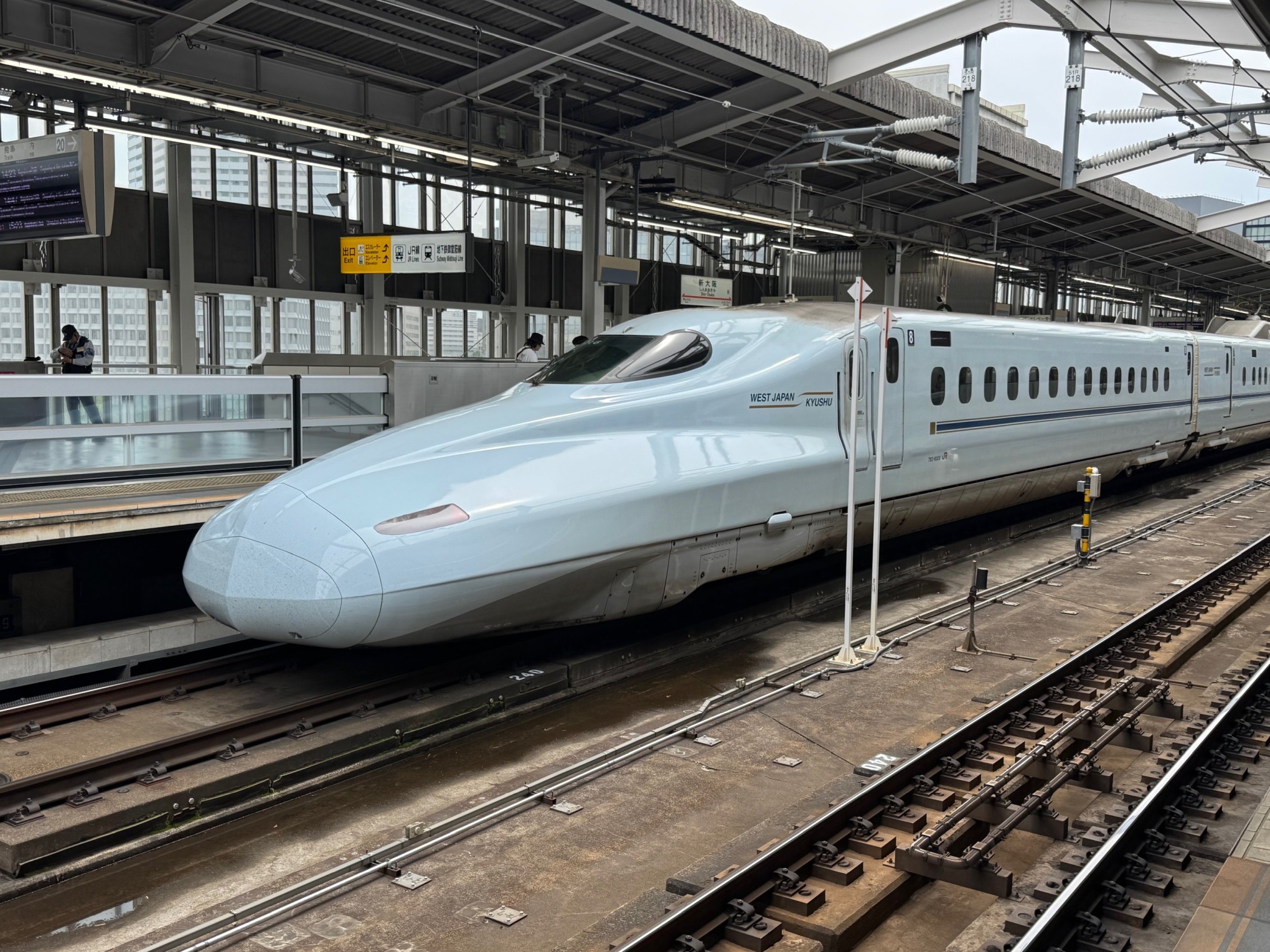
On Sunday, we concluded our stay in Tokyo and took the bullet train to Osaka. This was our first experience of traveling long-distance by train in Japan. The journey took around three hours, costing 90 euros for 500 km.
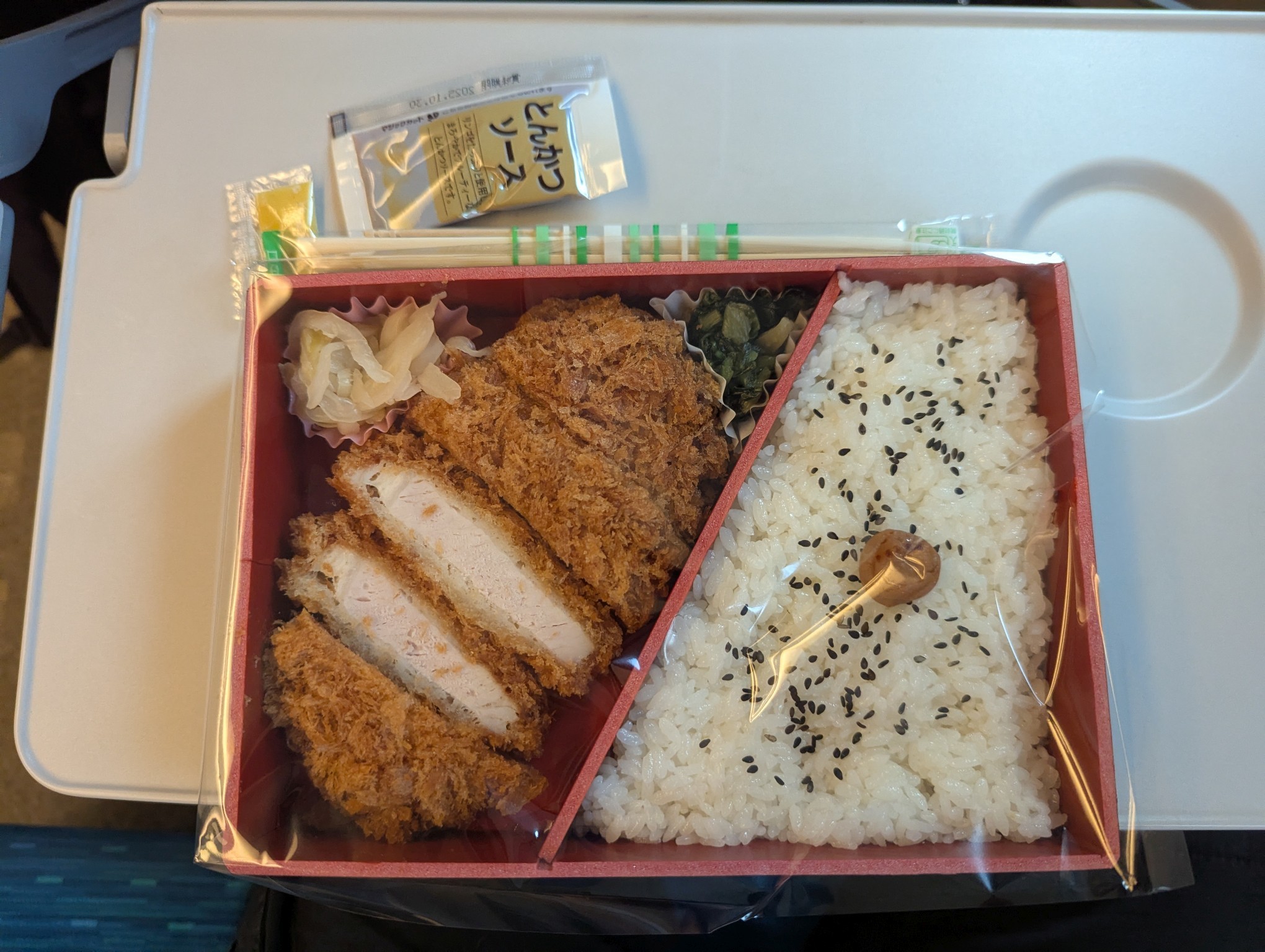
The train ride was as smooth, punctual and on time as you would expect from the Japanese railway system. The cars have a quiet and relaxed atmosphere, which is in stark contrast to the German trains, where it can get a bit louder at times. For dinner, we bought Bento boxes. These are a Japanese specialty, per-packaged meals that you can buy at train stations and small stores right by the train platforms. Of all the boxes I tried, I can generally say that the meals were always really delicious and not too expensive. Mine consisted of pork and rice.
Interesting to note is the presence and attention of the staff pointing at things (shisa kanko, Pointing and calling) or the conductors bowing as they leave the train car. They do this even when exiting on the back and no one is watching, since every seat faces the direction of travel. Speaking of seats facing in the direction of travel, this is not achieved by turning the train or train car, but rather by using a special lever and rotation system to turn the row of seats. This is done at the beginning or end of a line. In our case, we could observe this while waiting for our train to depart in Tokyo.
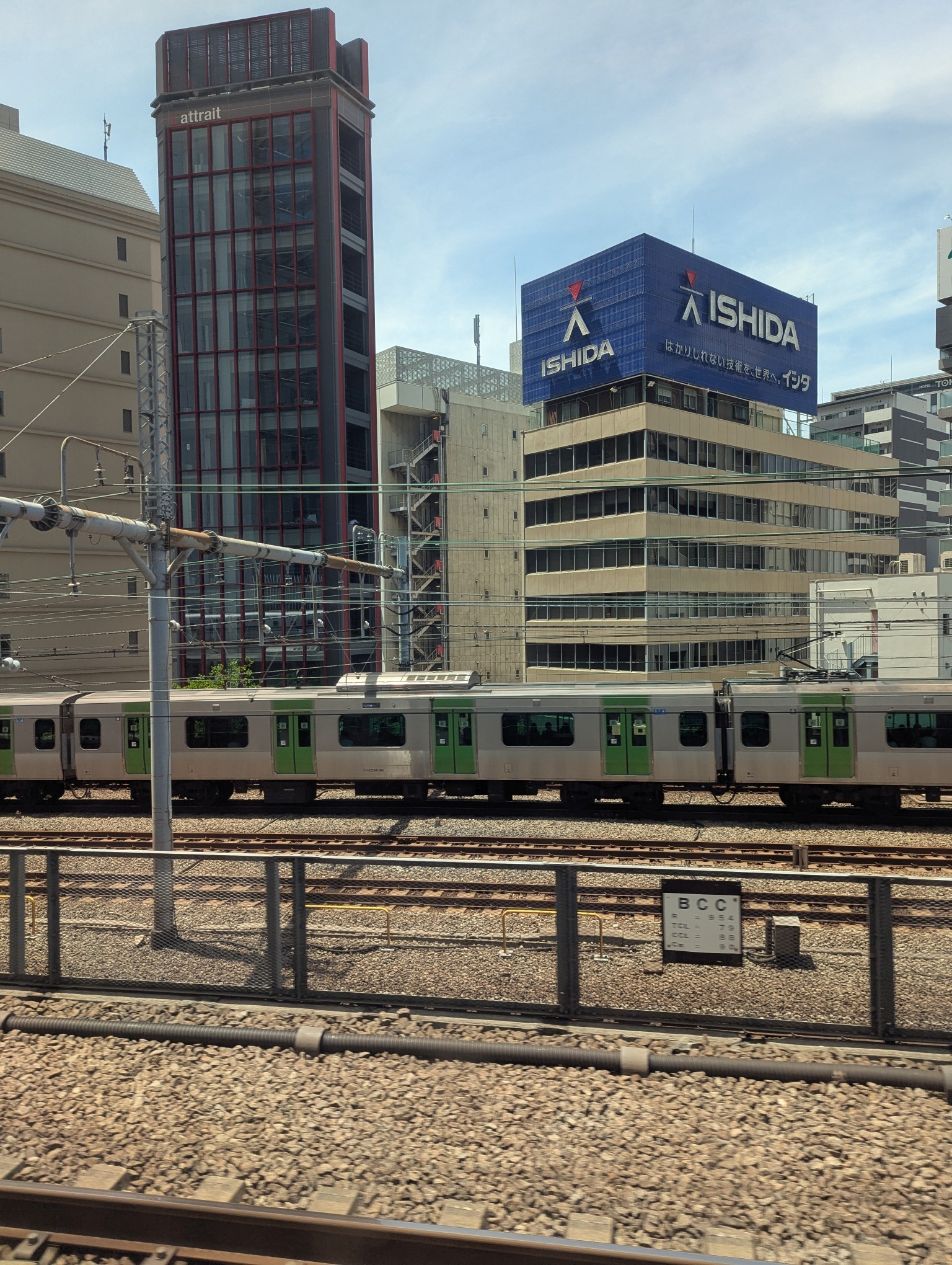
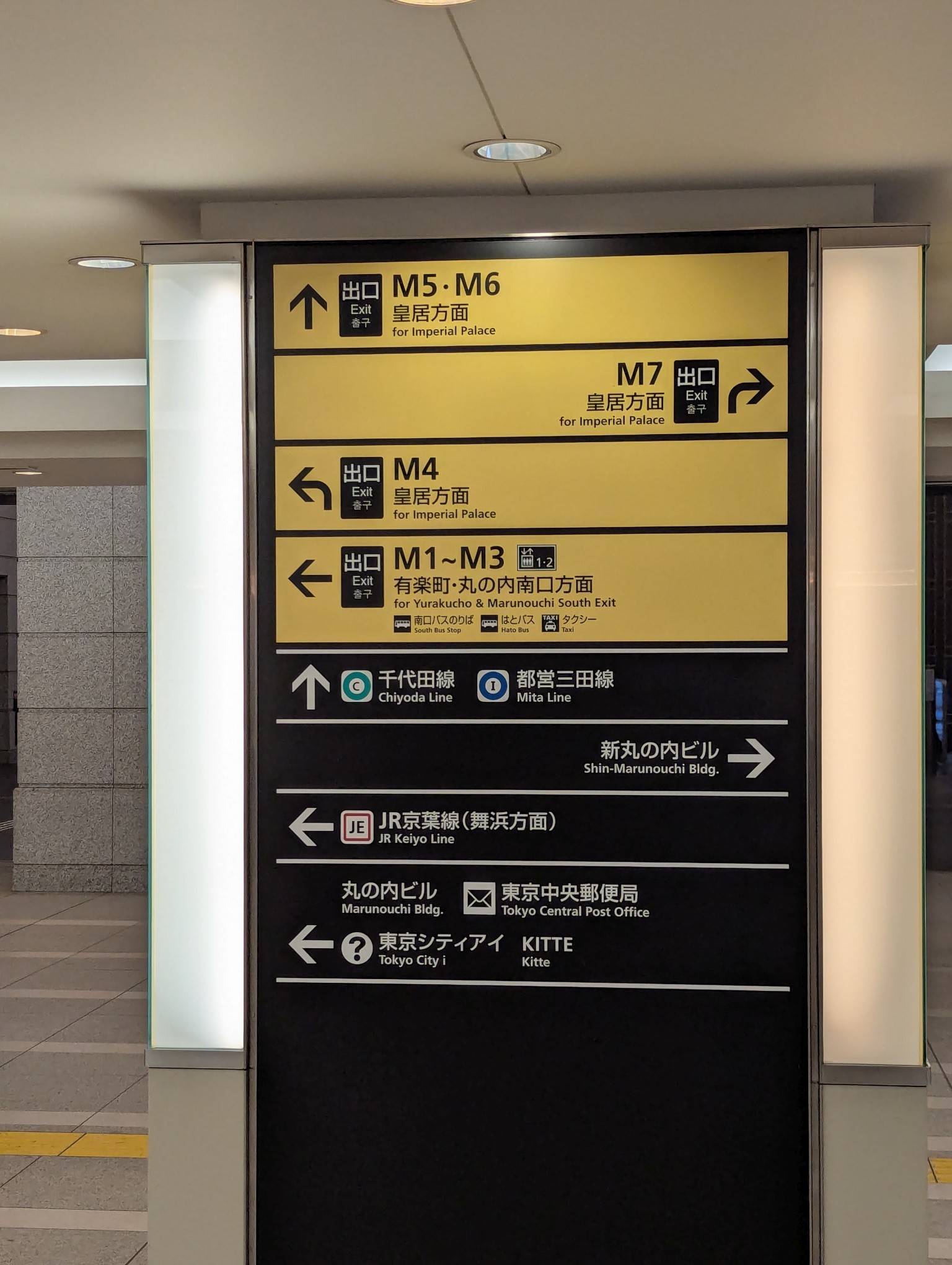
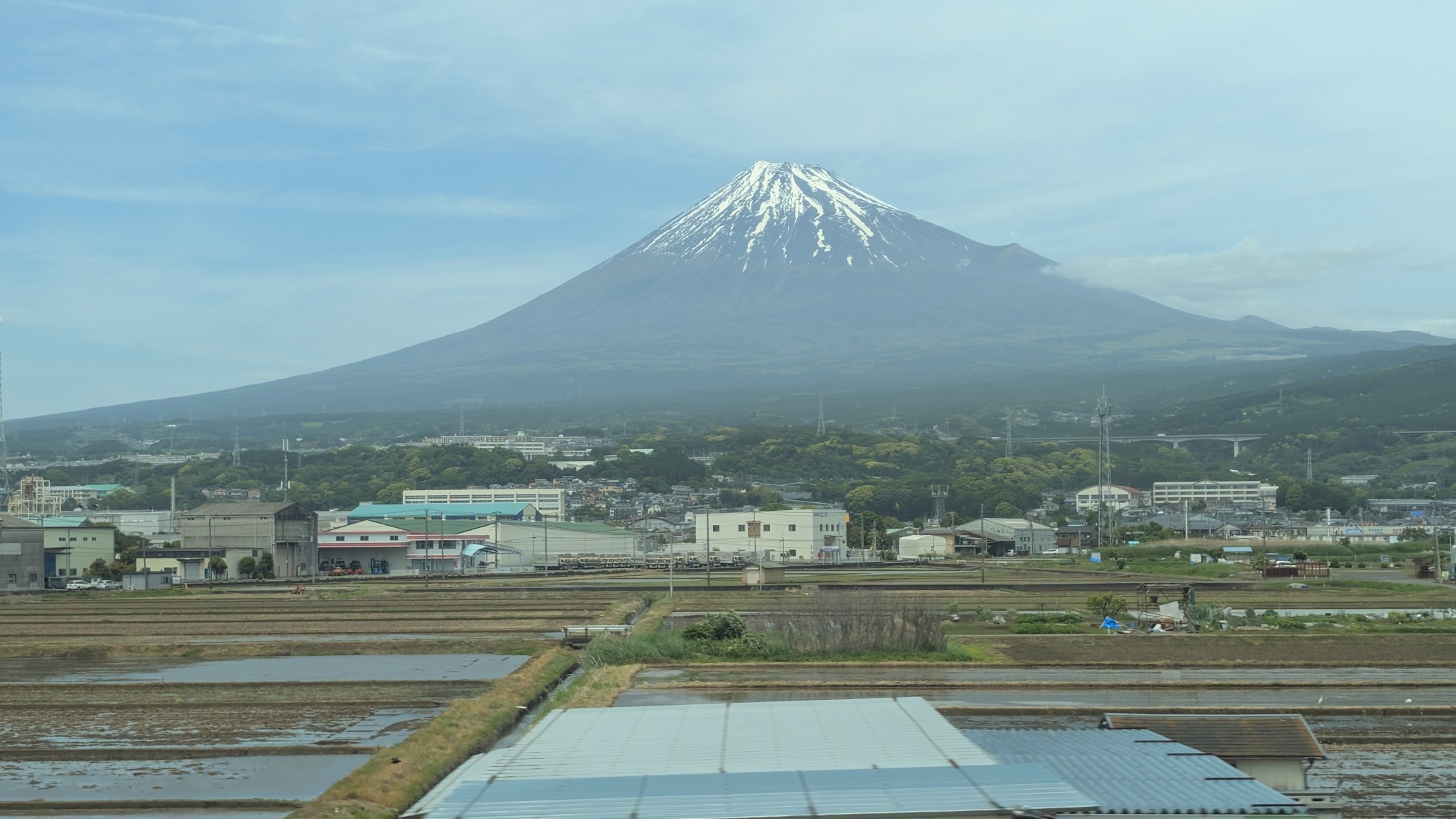
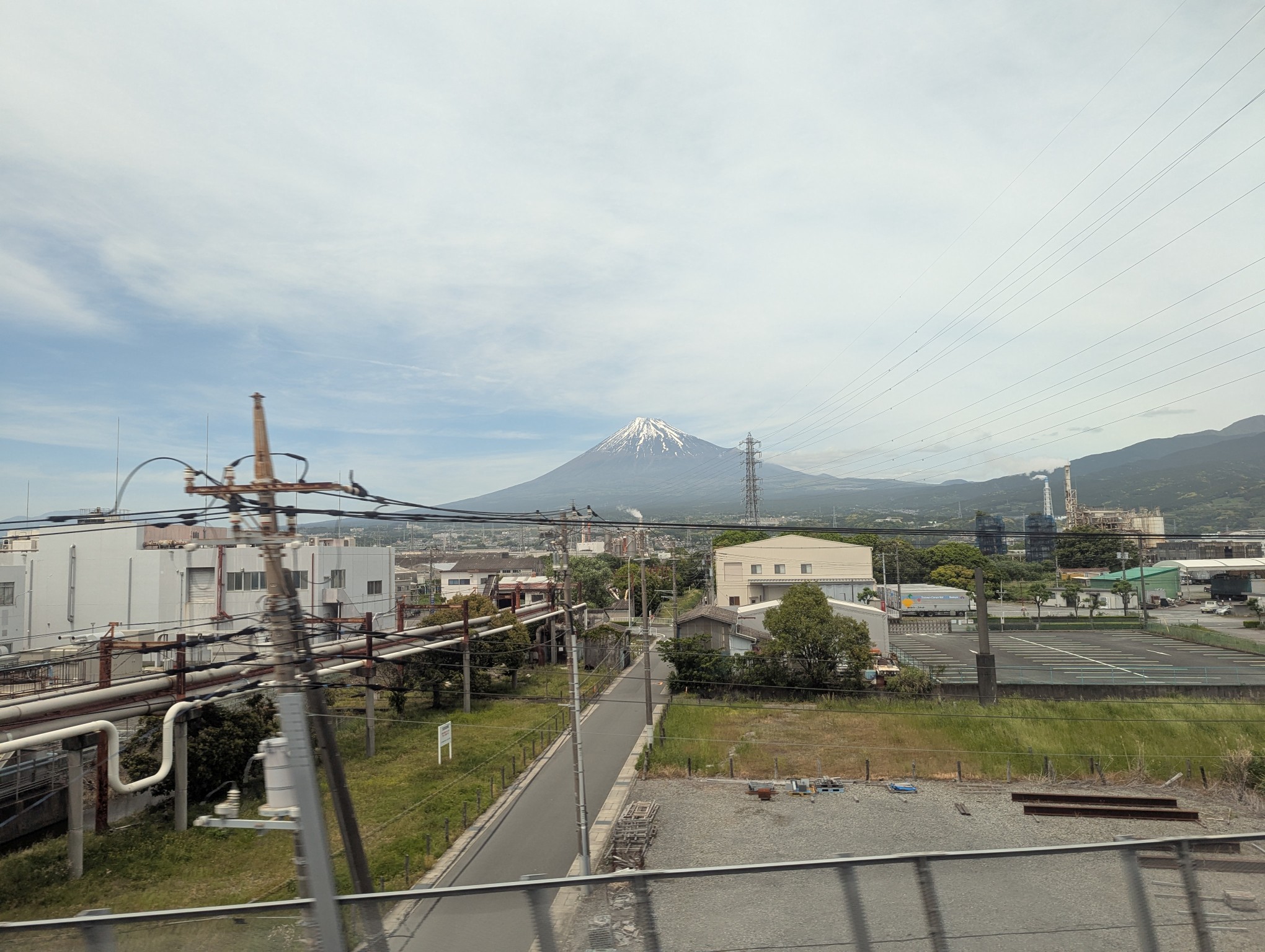
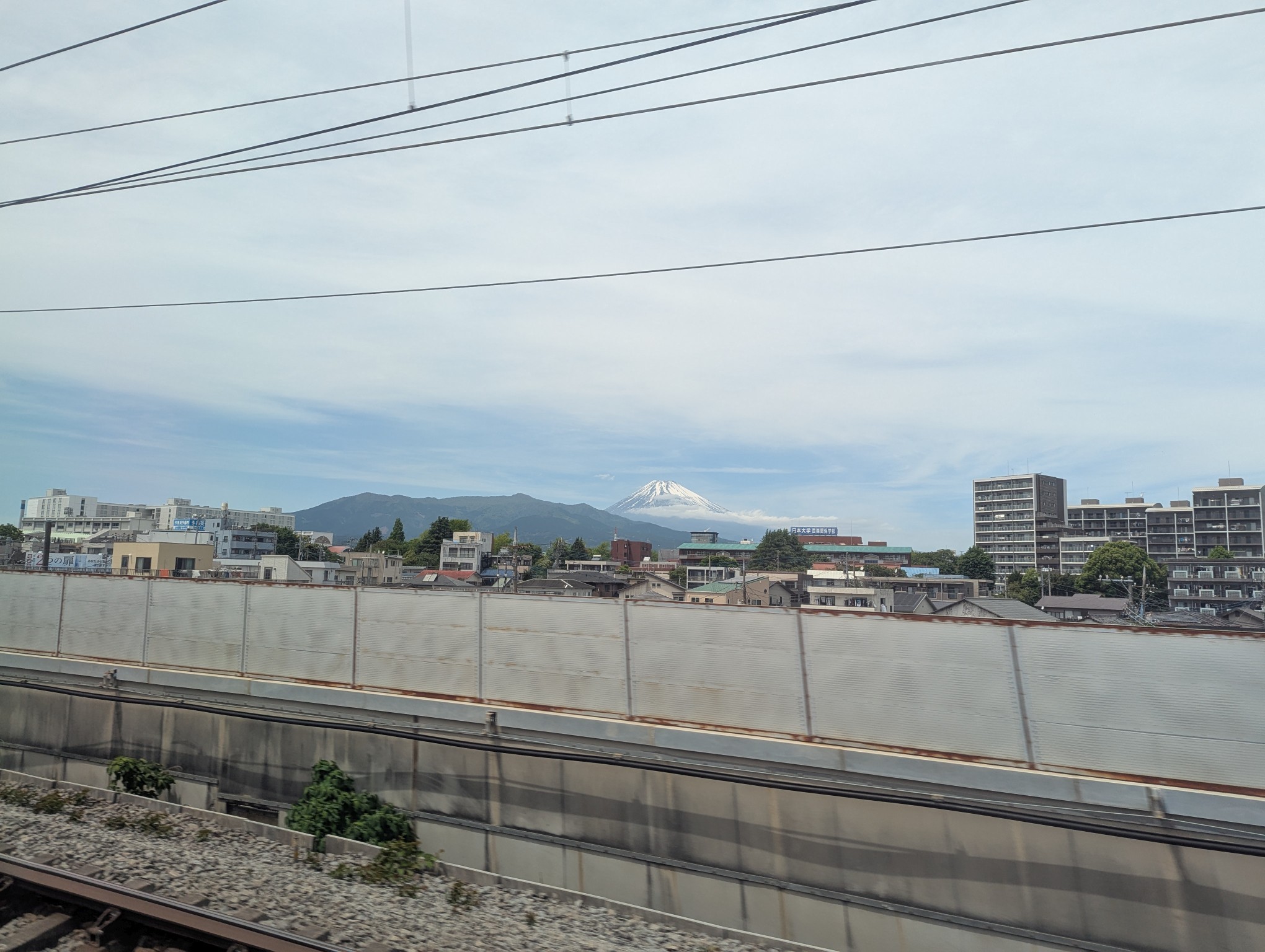
We considered buying a rail pass instead of purchasing individual tickets in advance. However, after doing some calculations, we concluded that individual tickets would be less expensive than a pass valid for the two weeks when most of our travel would occur. On top of that, we didn’t book the tickets in advance, but rather bought them at the counter in Tokyo’s main station. This paid off because we did not have to spend time figuring out the system and we got seats to sit on the right side of the train enjoy the great view of Mount Fuji.
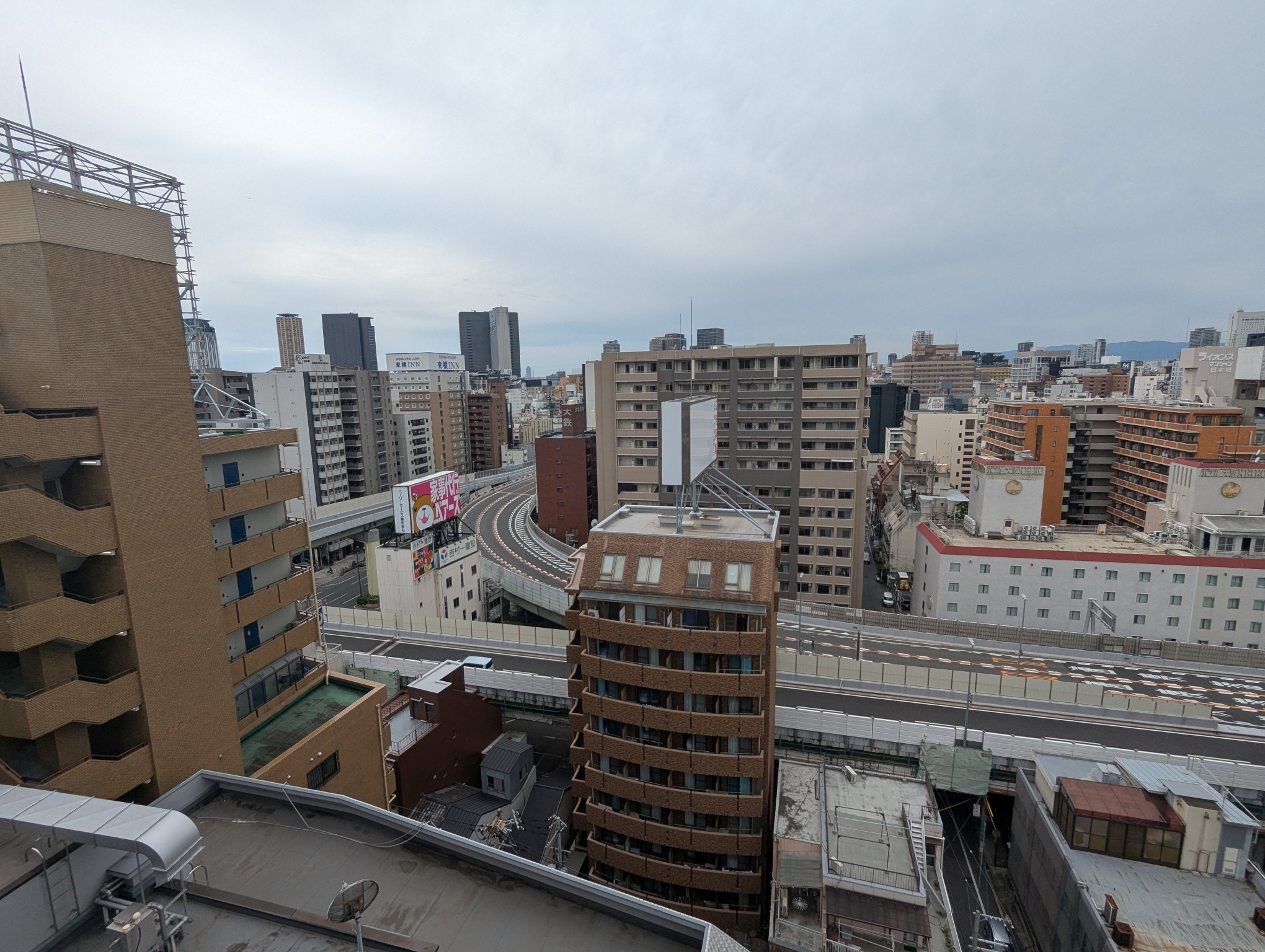
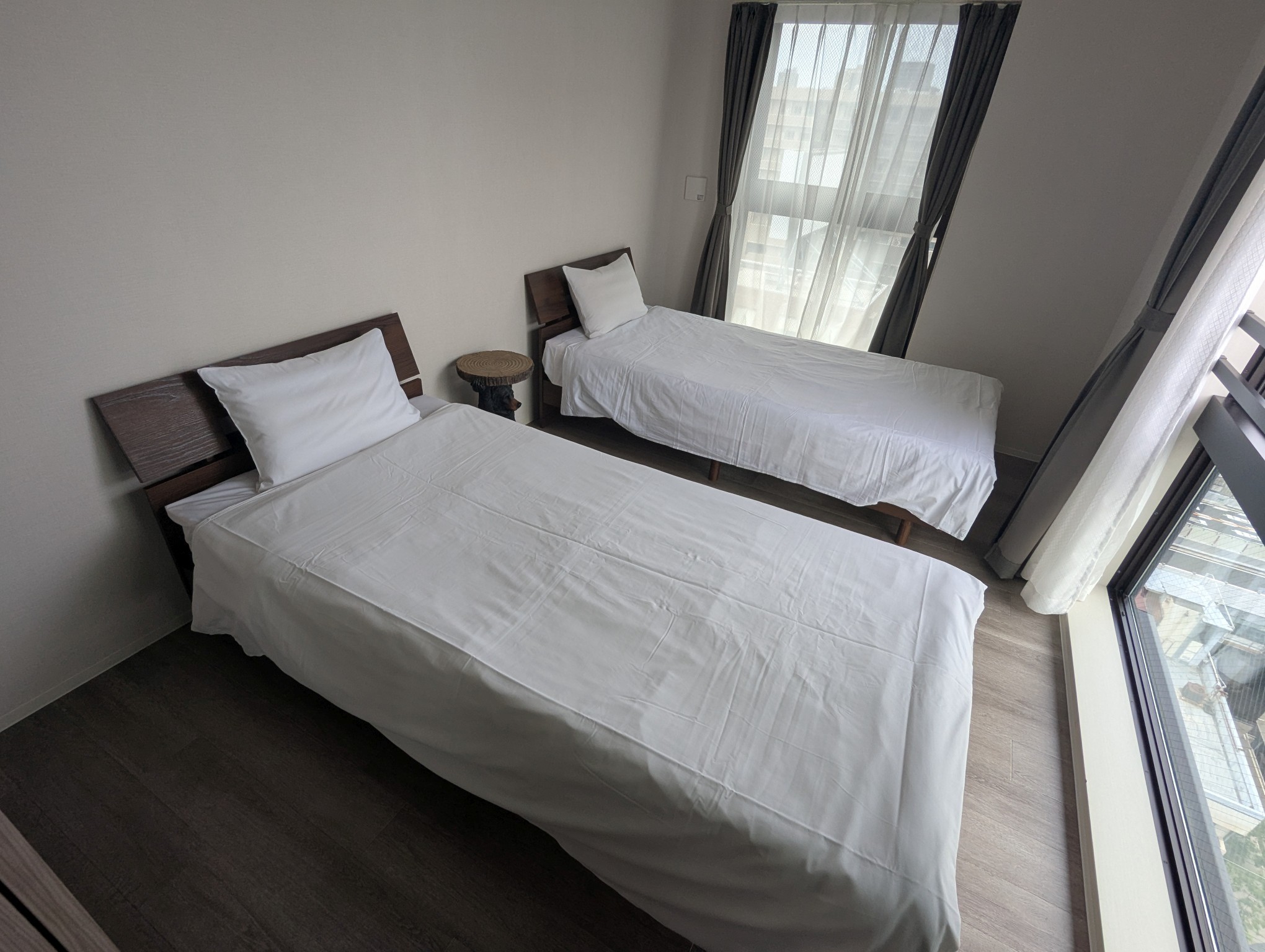
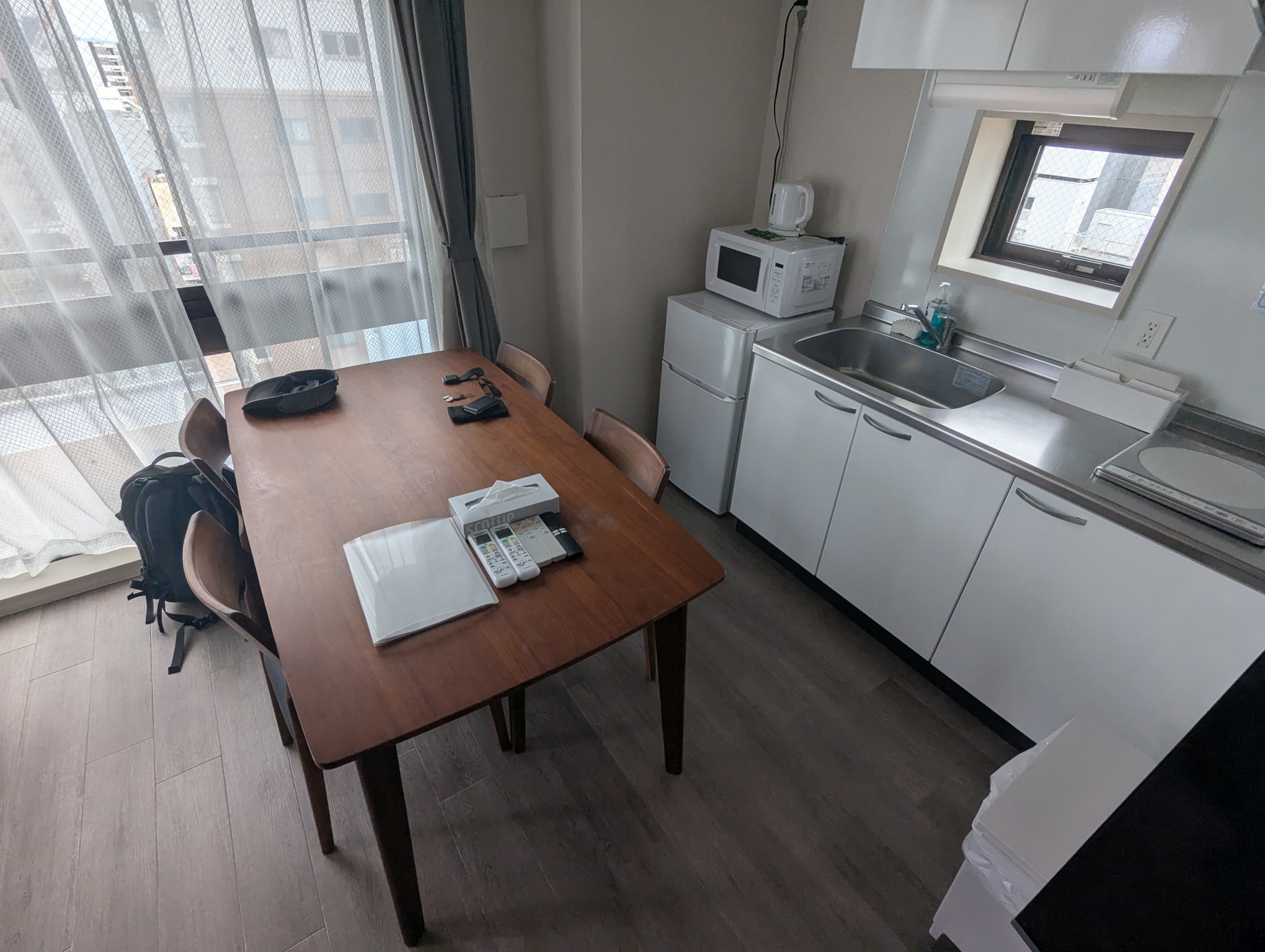
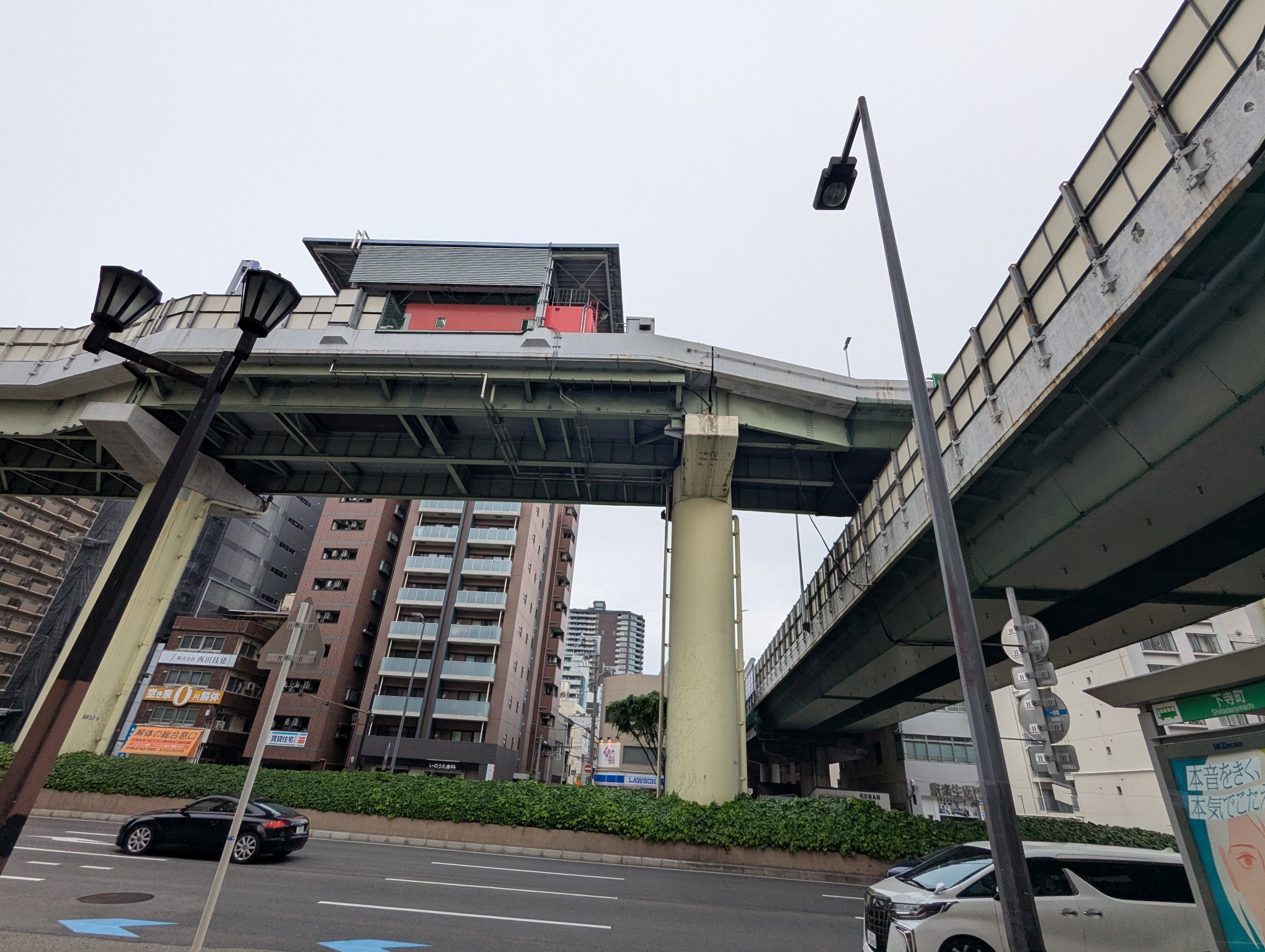
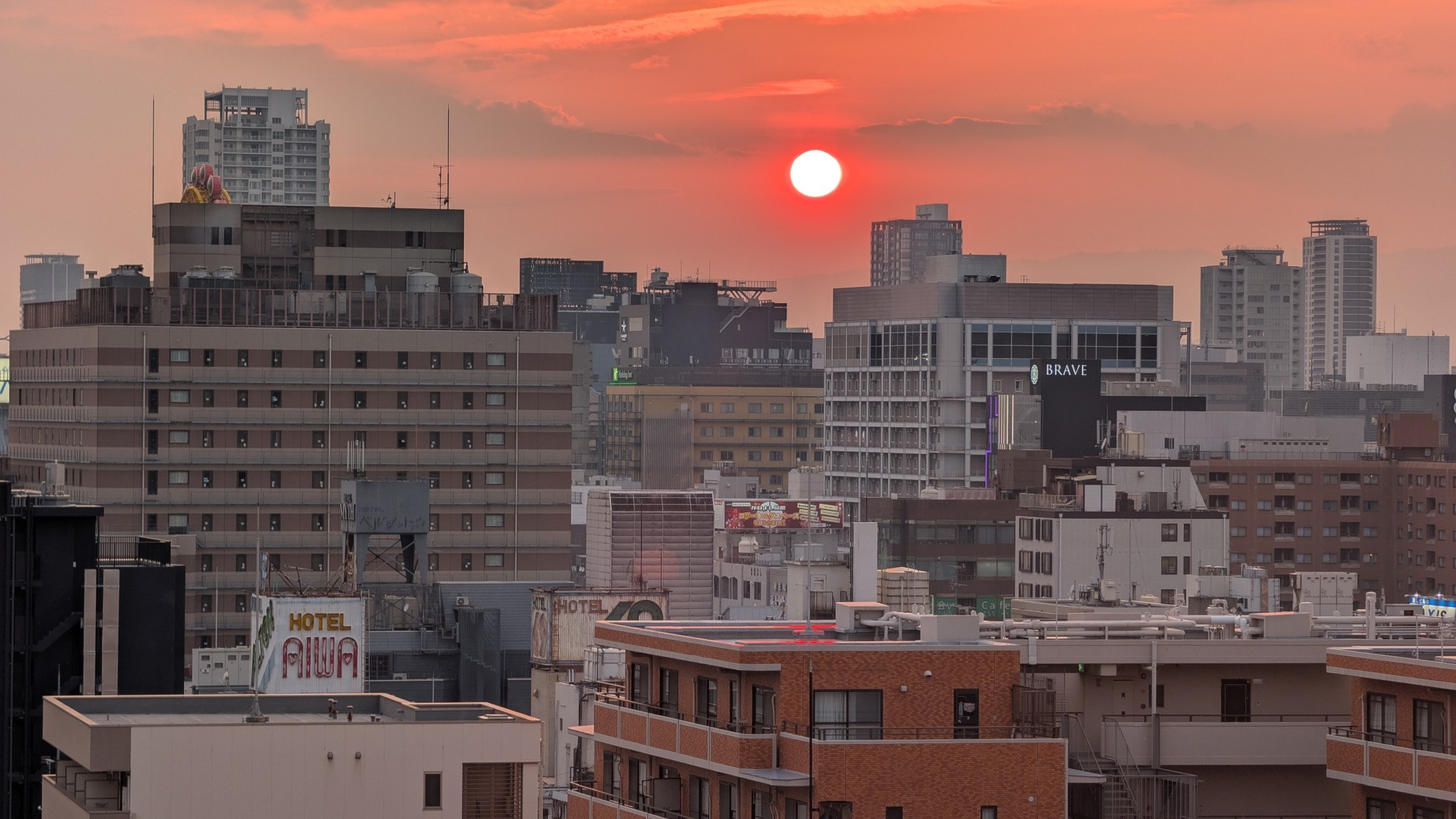
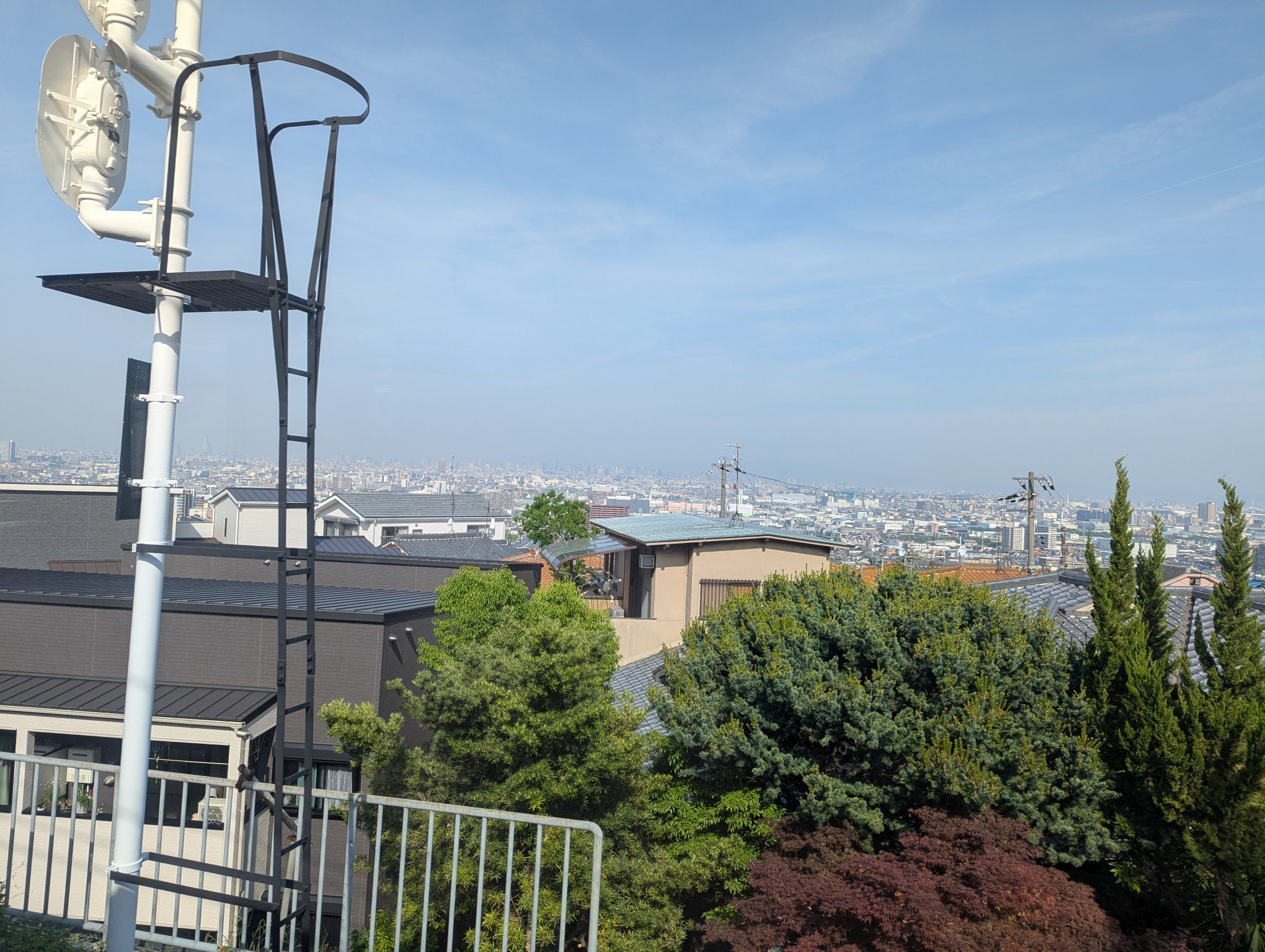
After we reached our hotel, we unpacked and assessed the situation. Sadly, the second hotel was not as great as the first. It was modern and next to a busy highway and there were no Japanese pyjamas (Samue with long or Jinbei with short sleeves and pants). In the last post, I failed to mentioned why I’m fixated on this and wanted one: the first hotel did provide pyjamas for every guest, for sleeping and relaxation inside. Here in Osaka, it was dearly missed and I wanted to buy one as souvenir anyways. Later, we noticed that the images on the booking website did deviate from the actual room. My friend complained about the bed and given that we traveled by train, there was a lot of walking involved to get to the right stations (This last point is on us). Overall, I would not recommend this place, but it was spacious, clean and we had a decent view into the concrete jungle.
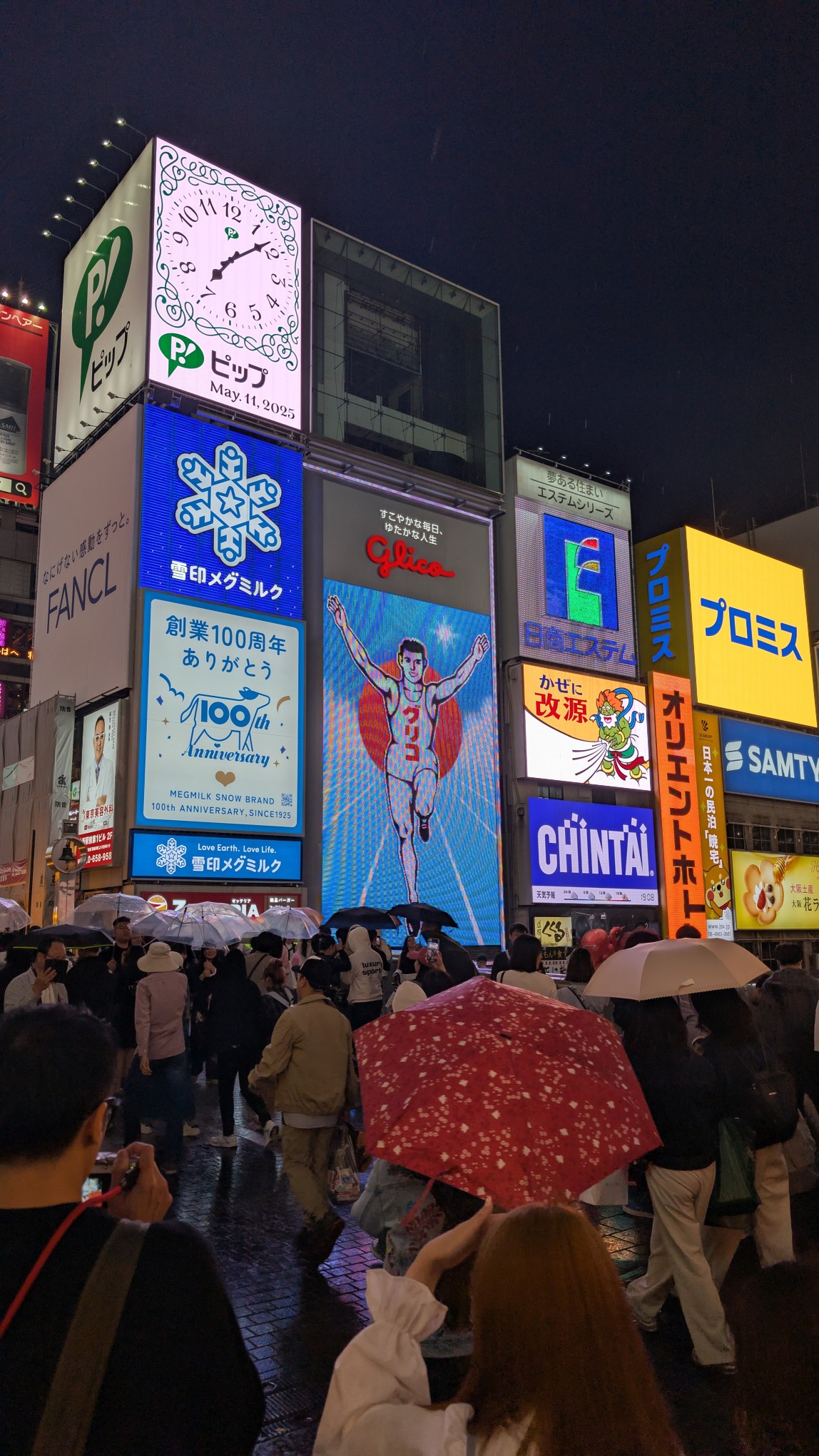
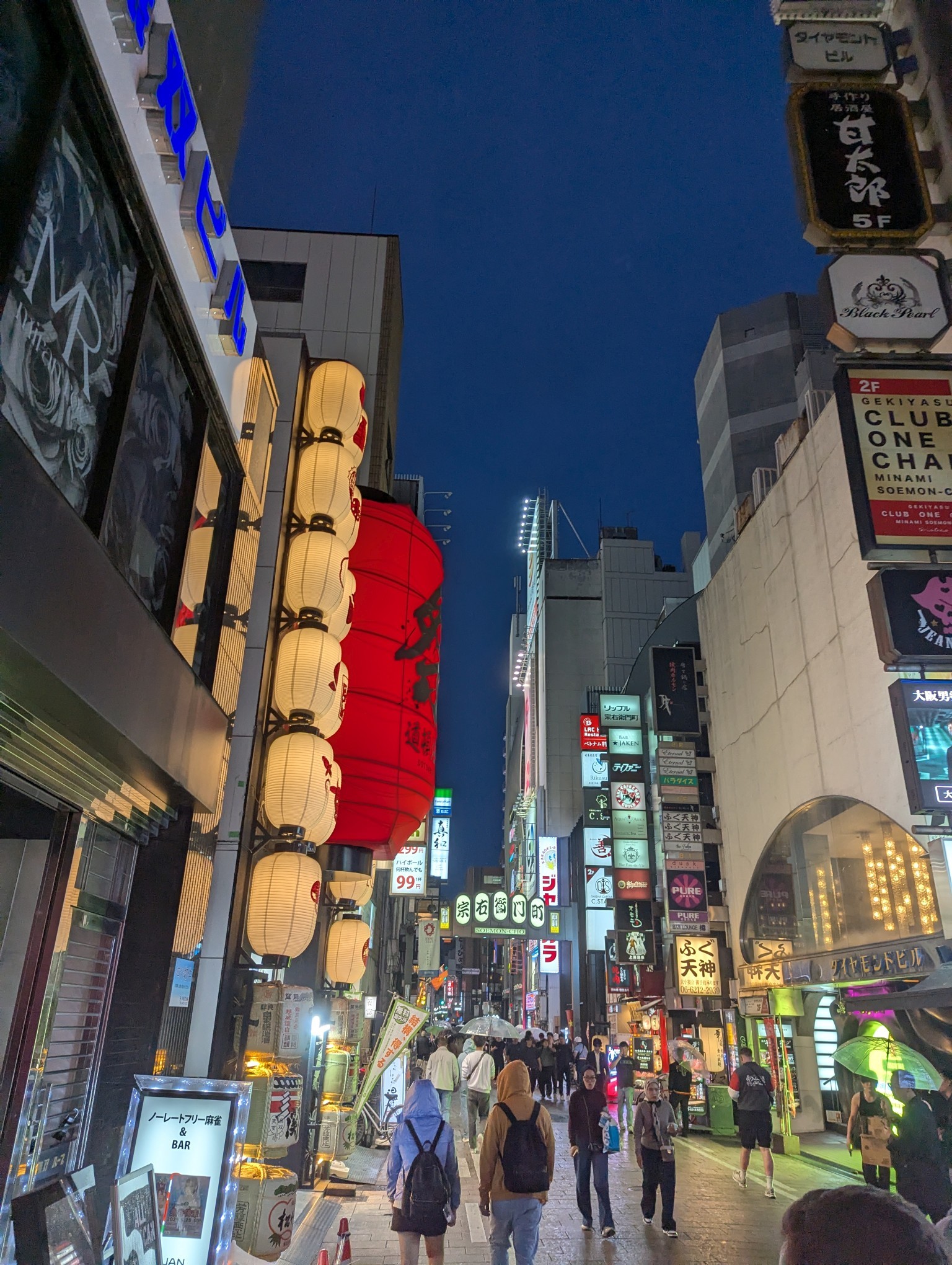
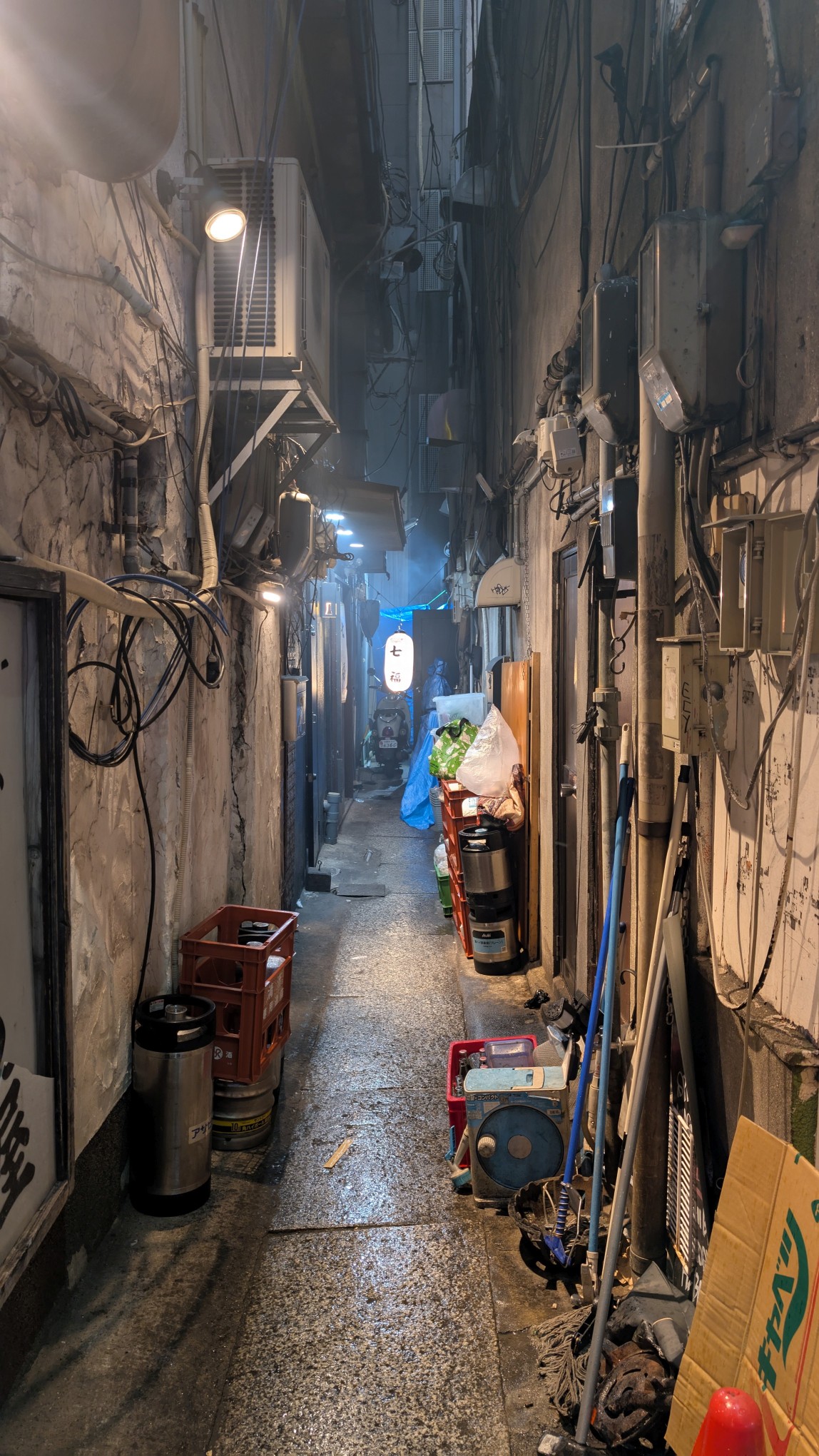
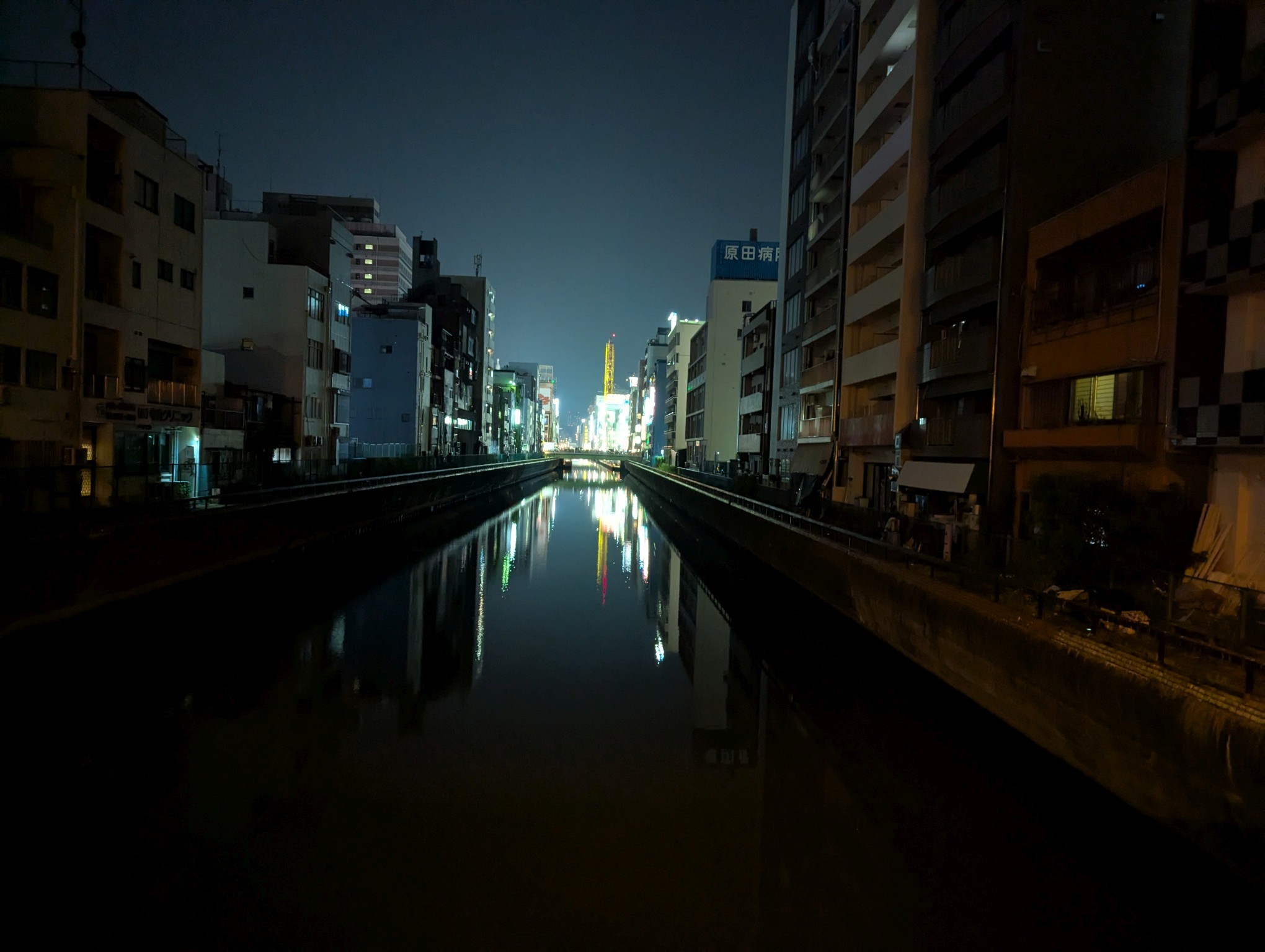
Next, we went into town. It was a busy Sunday evening and the nearby party hot-spot Dōtonbori was very lively. Too lively for our liking, as we were still overwhelmed from the previous days. Nevertheless, we explored the nearby alleyways and party zones for a bit.
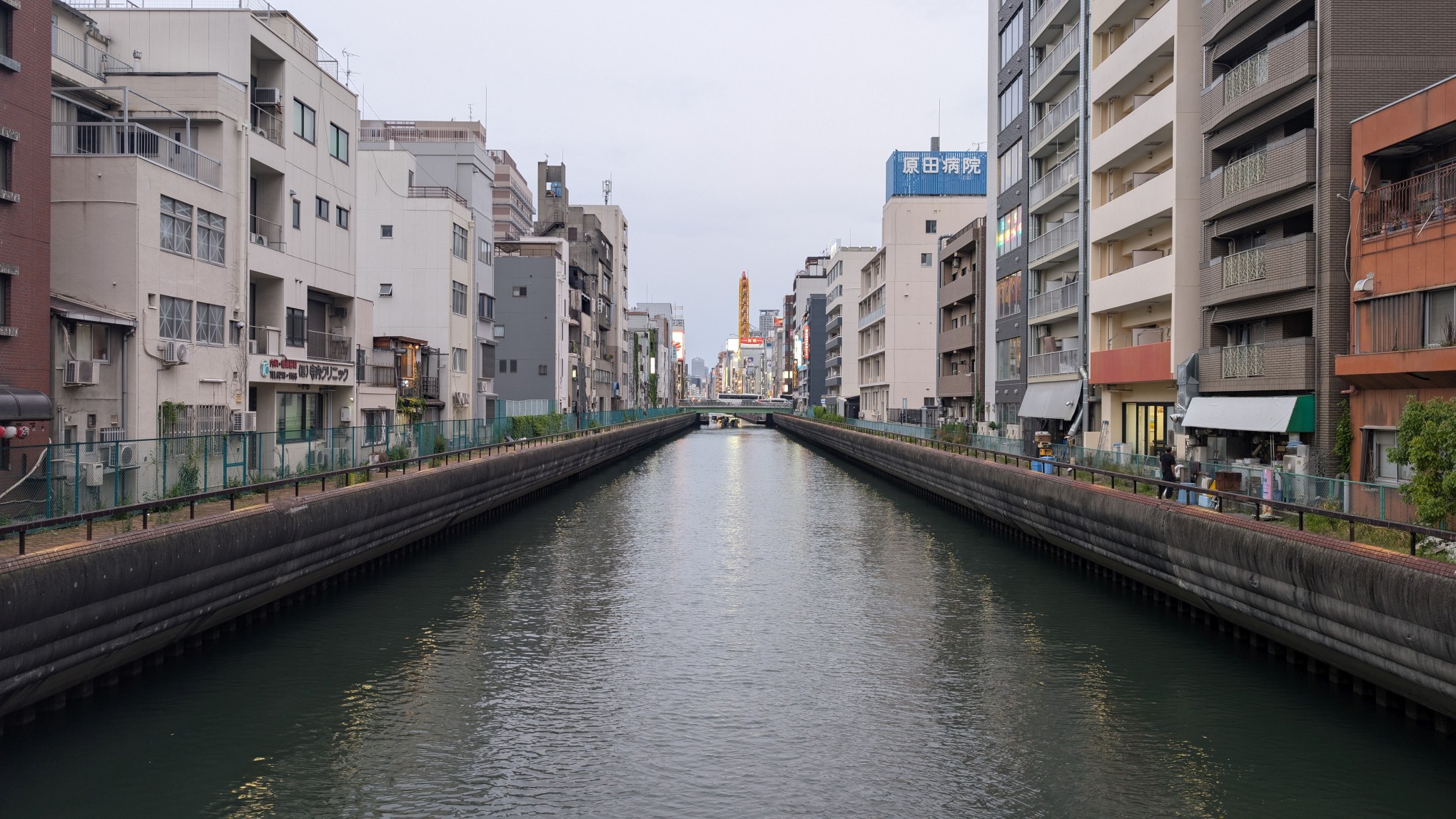
One of the most notable buildings in the Dōtonbori area is the Don Quijote bargain shop. It stands out particularly because a large Ferris wheel is built into the building. Like moths to a light, I was drawn to the flashing building and curious about what it had to offer. On that Sunday afternoon, it was especially crowded and to be honest, not very pleasant. Everything is crammed onto many floors. They sell snacks and sweets, cheap gifts, merchandise, electronics, bags, purses, cosmetics or clothing. I wanted to look for a Japanese pyjama but found kimonos of poor quality which were not made in Japan. The landmark Ferris wheel was also closed on that evening, so we could not go up and see the city from above.
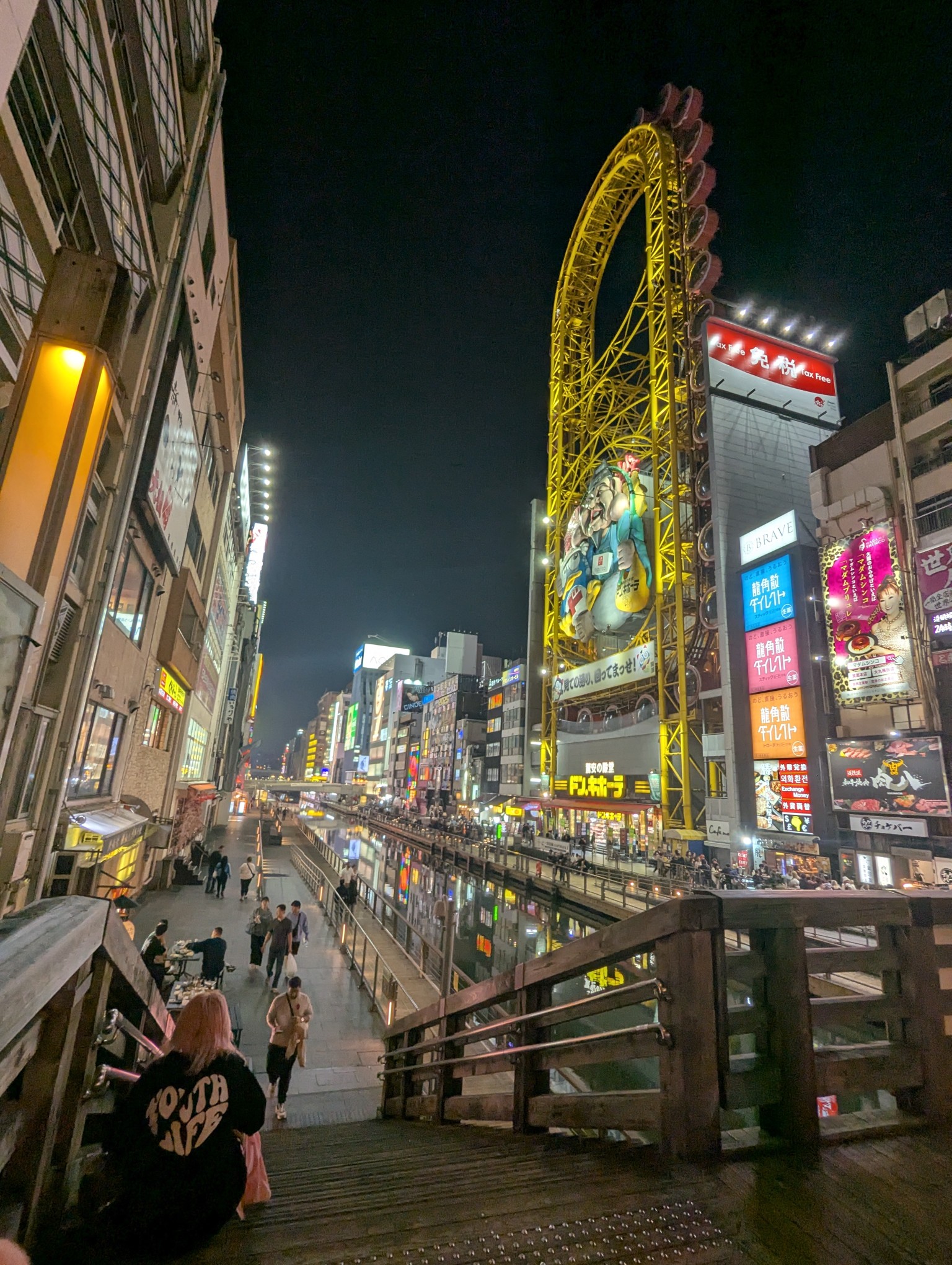
Quickly, we went back outside. Meanwhile, a light rain started to fall. We headed into one of the many nearby passages with small shops to get away from the rain. It was still crowded there, the noise was overwhelming, so we decided to go out to dinner to get away from the crowds.
This time, we chose to go to a ramen shop for dinner. After some searching, I found one online with decent reviews and a more modern atmosphere than what we experienced last time. We settled on a delicious chicken broth with tonkotsu meat and a green algae topping. The ramen was delicious and not too salty.
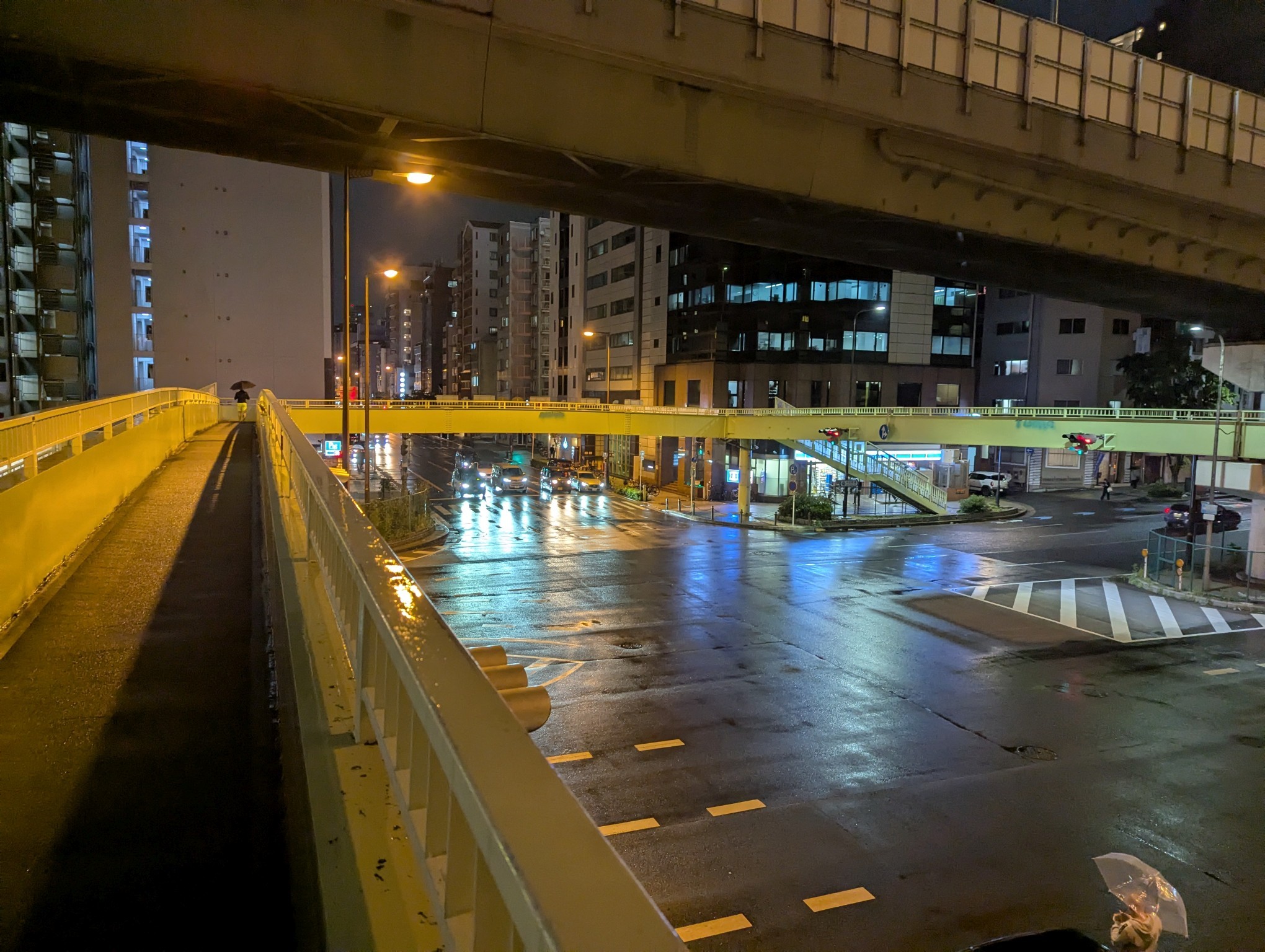
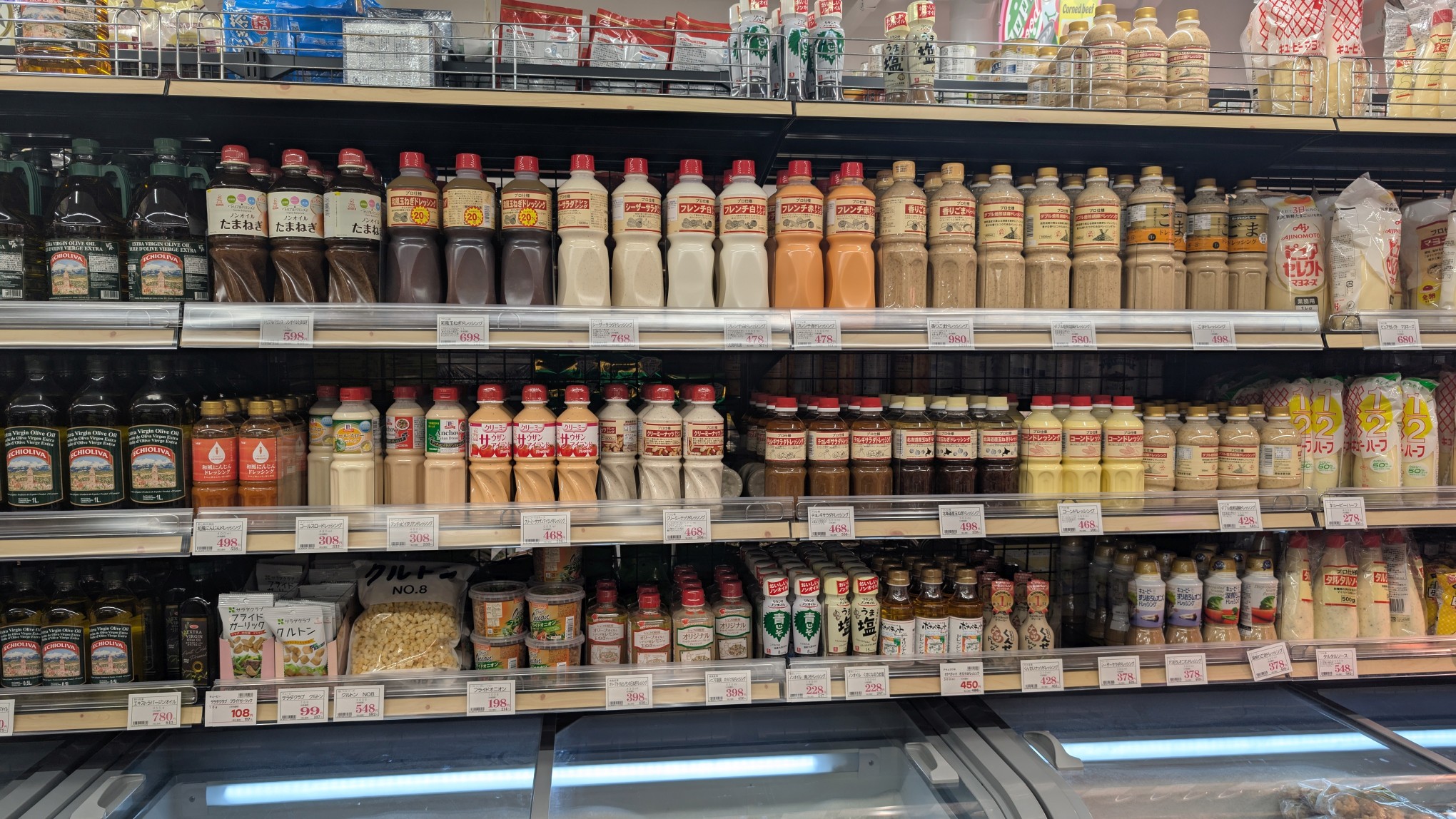
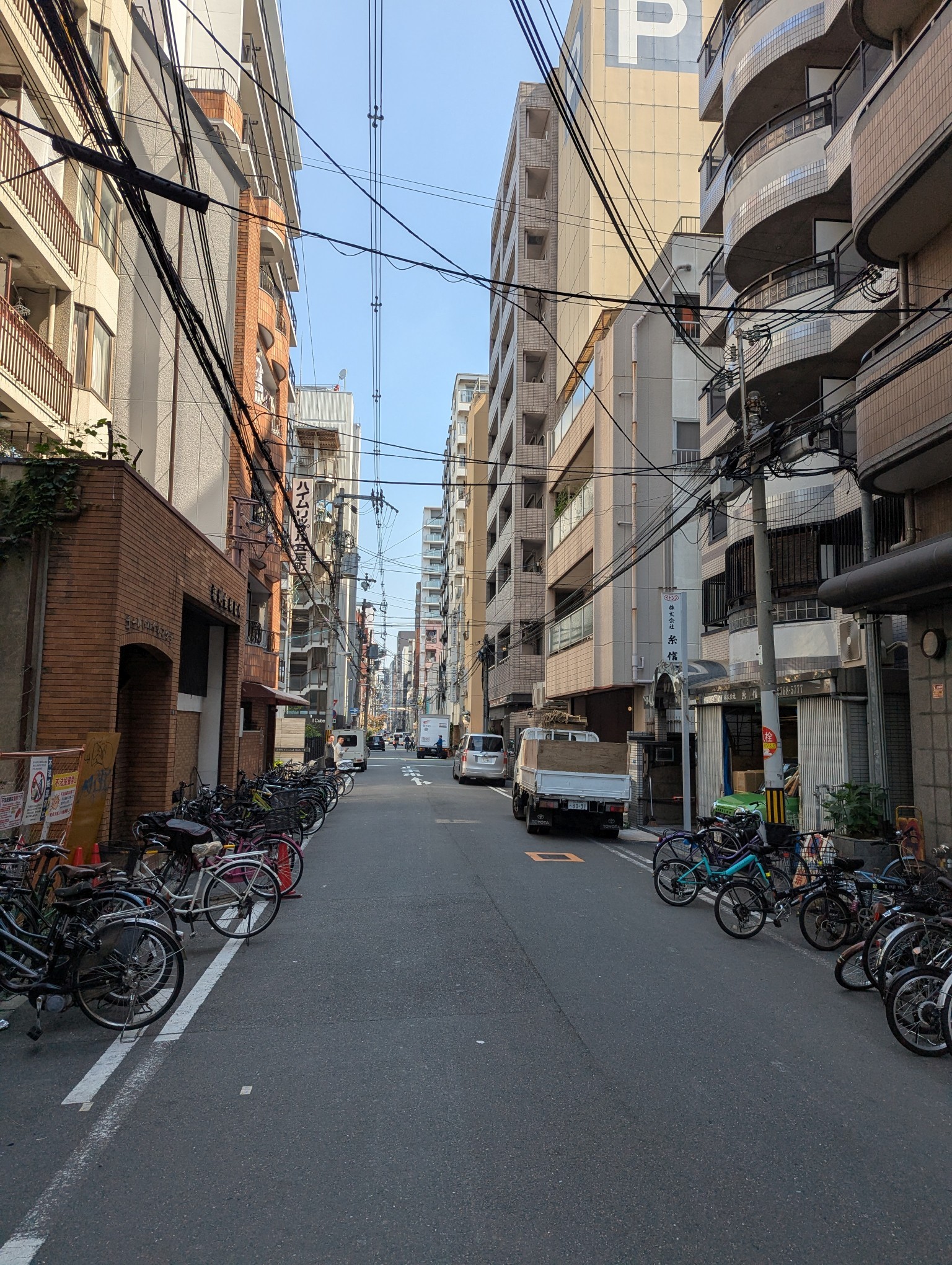
After this meal, we headed back to our place to escape the rain. We took a different route with mostly closed shops and no crowds. There, we passed a supermarket, where we bought drinks and snacks for the evening.
Osaka Castle and Onsen
On the first full day in Osaka, the main attraction was Osaka Castle.
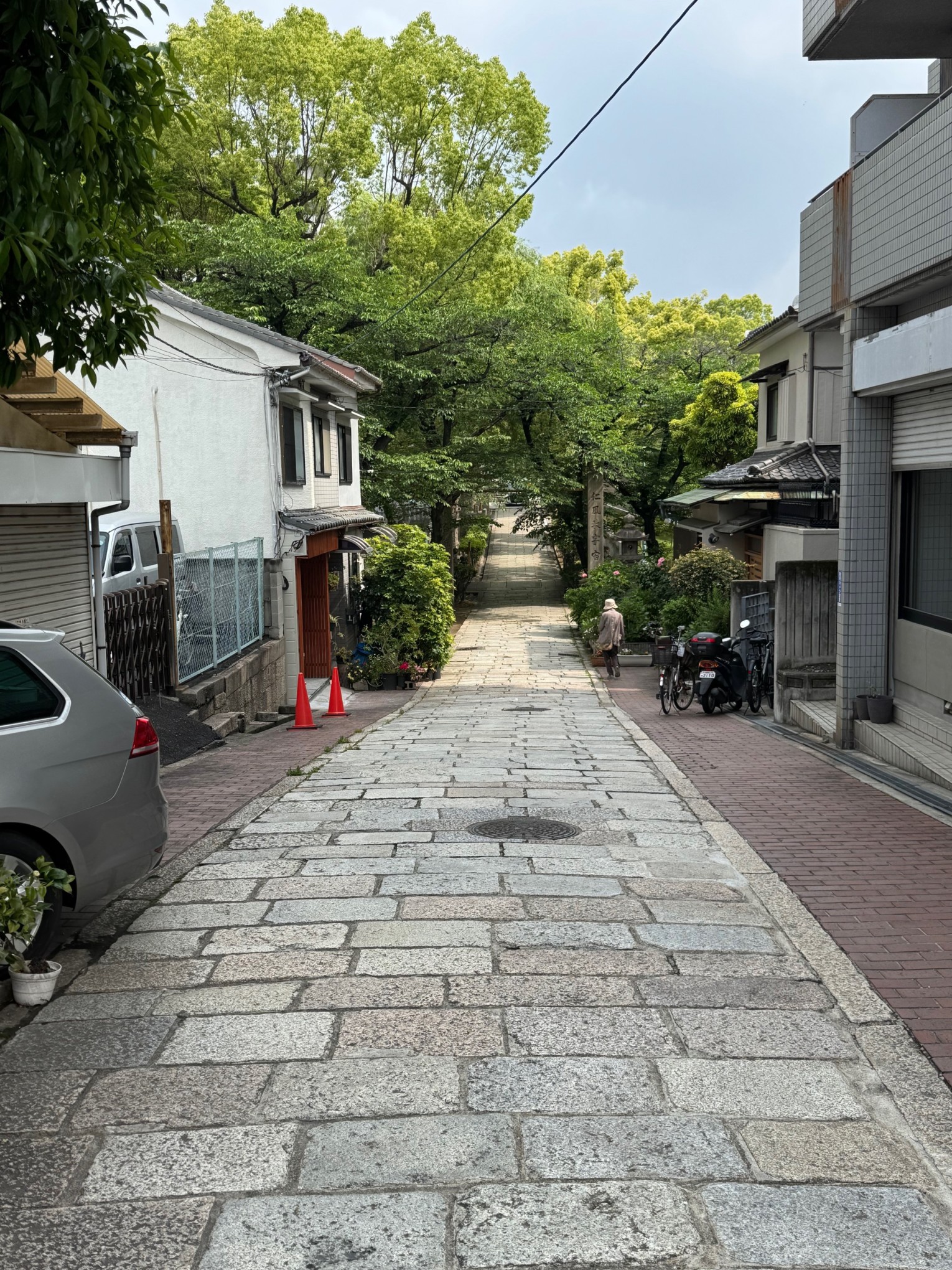
The first thing we did in the morning was go to a small coffee shop right next to the castle for breakfast. The place was located near a park and offered the option to rent a cart and supplies for a picnic. I ordered a delicious sandwich filled with eggs and herbs and the staff was very welcoming. After filling up our bellies, we headed towards the castle.
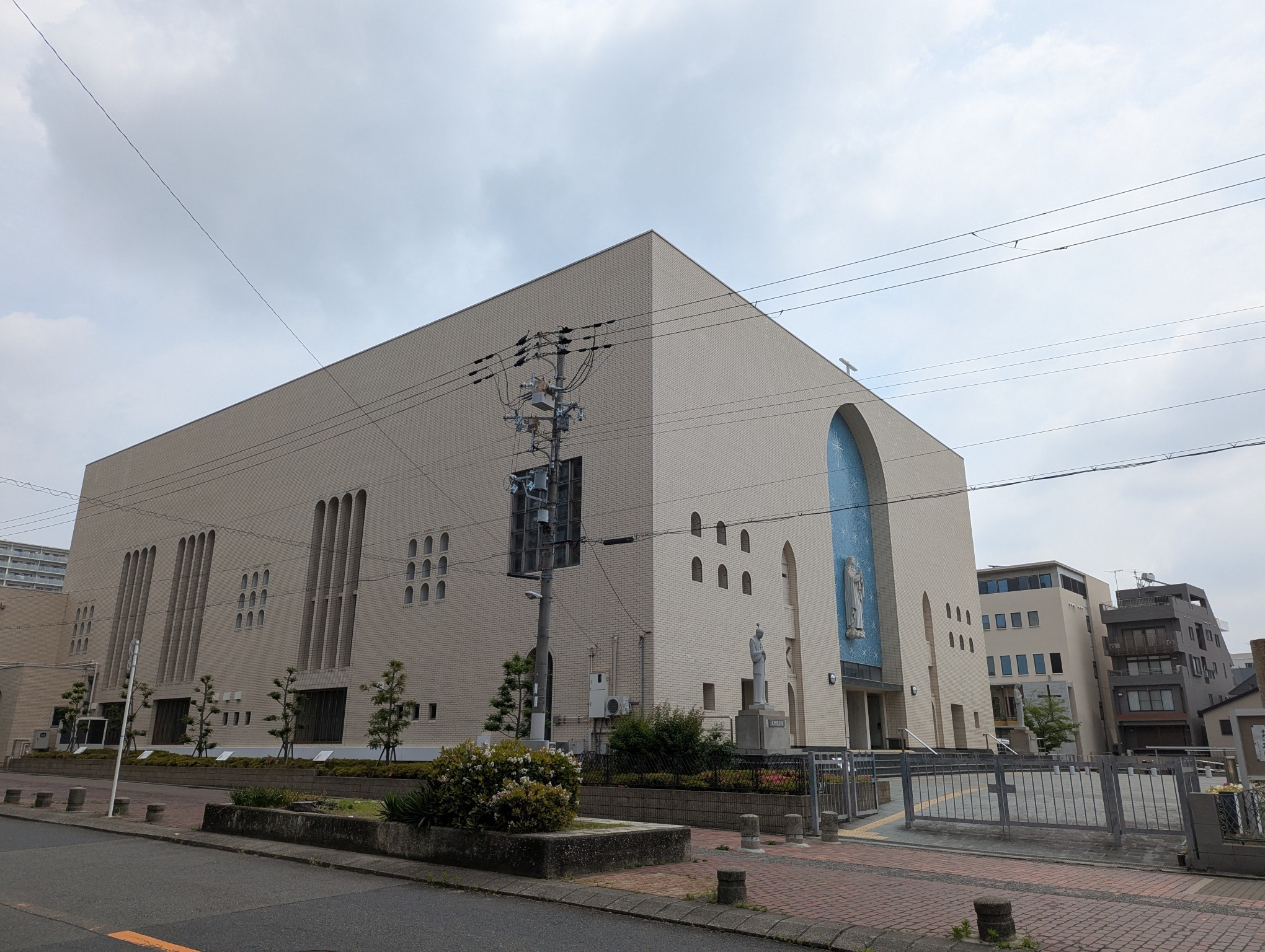
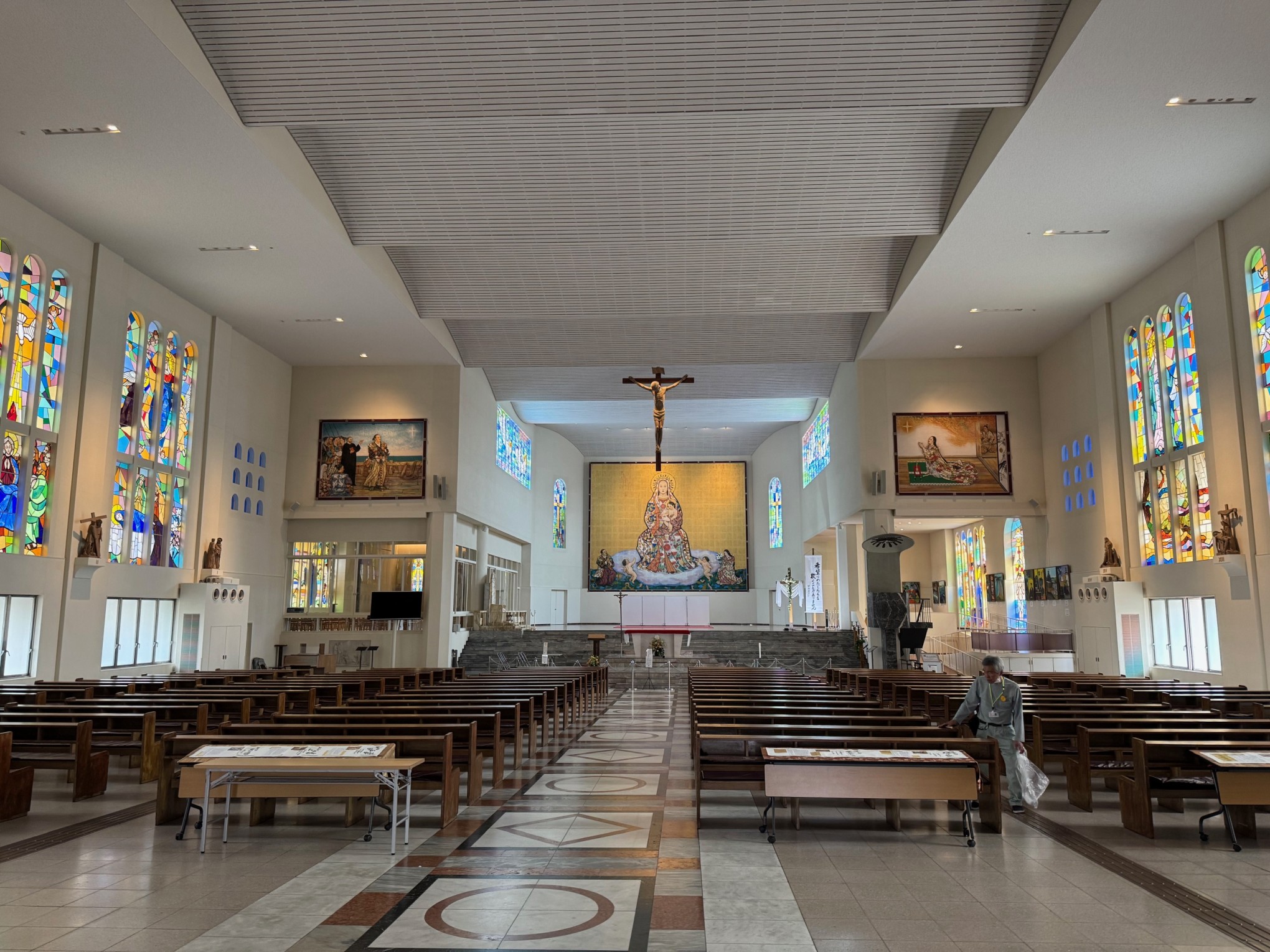
On our way there, we passed a Christian church. Curious to see how this major European religion is represented here in Japan, we went inside to take a look. The boxy interior had lush murals on the walls, similar to those in European churches. One interesting thing to note is that, while the depicted figures in Europe have a Western European touch, the characters here looked more Asian.
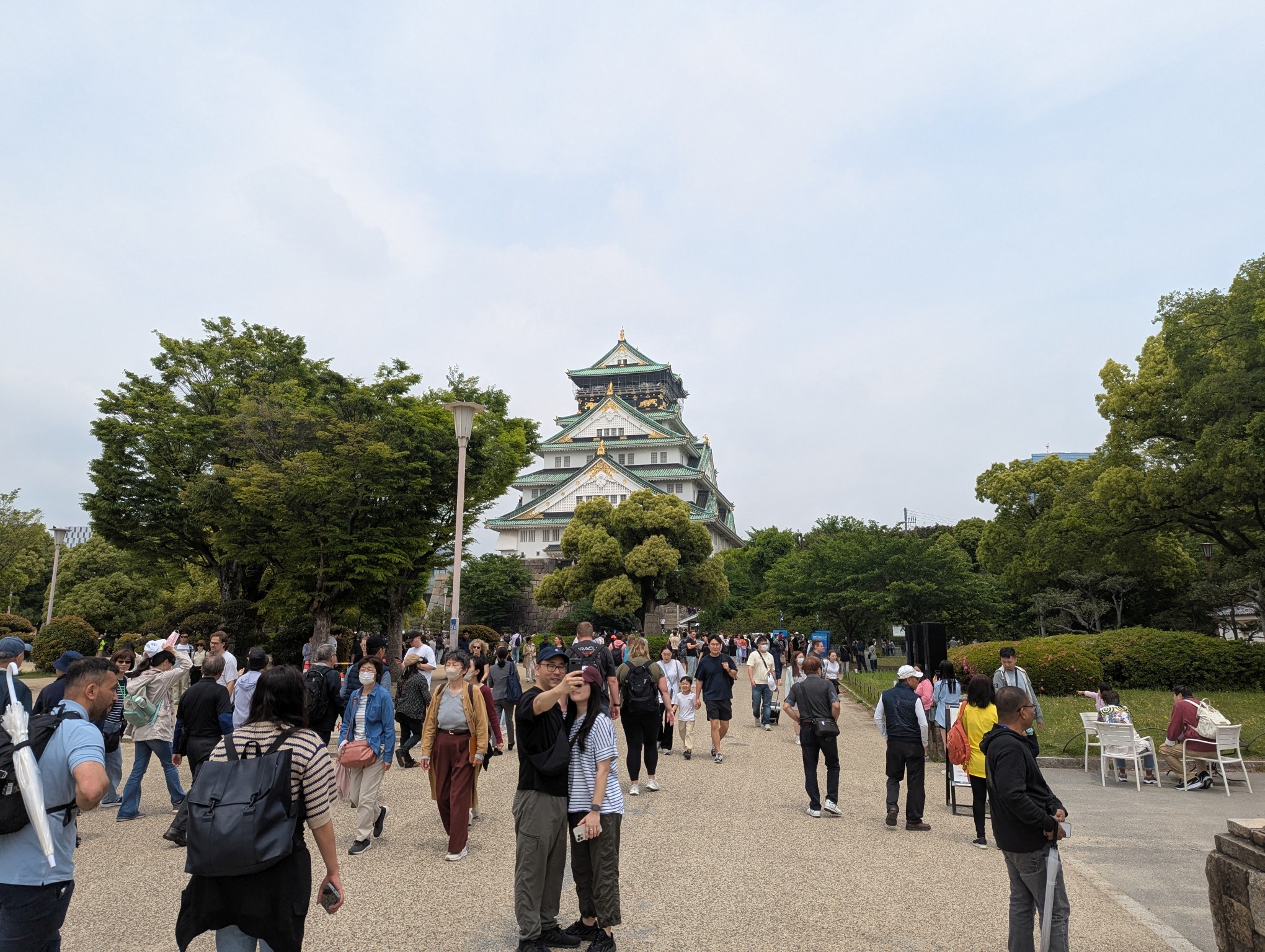
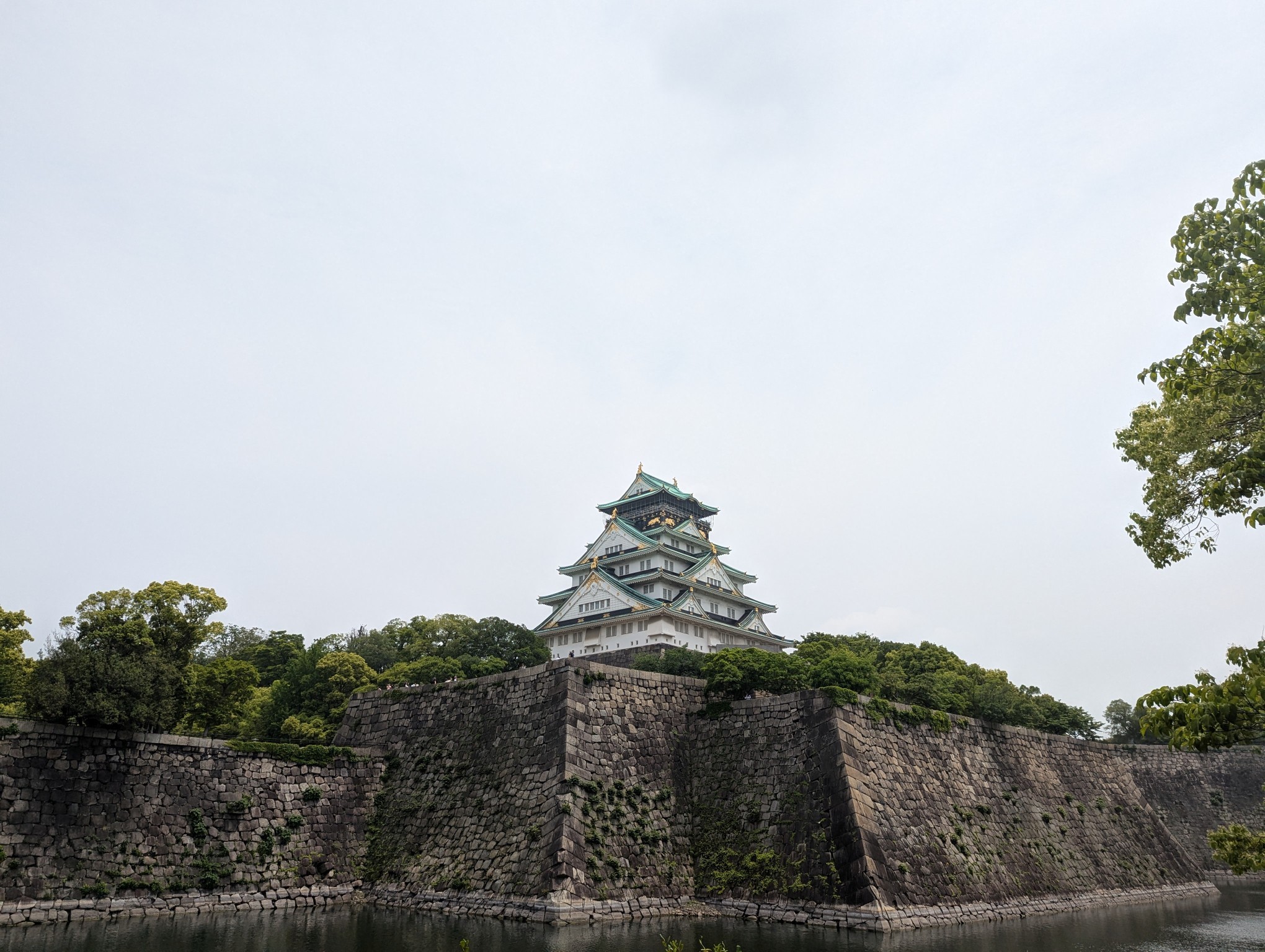
After leaving the church, we quickly went to the castle grounds. The castle was destroyed, but later rebuilt and modernized. There are two lines to enter: one for people with tickets and one for people without. The line for those without tickets was quite long, but there was no wait at the other entrance. Buying tickets online just in front of the castle allowed us to skip the long line for the two ticket machines. Had this not been an option, we might have skipped the castle entirely. Now, we could skip the line and enjoy the view from above. One other note: with hindsight, there is a second museum next to the castle that we did not notice and skipped entirely. For us, the main attraction was the view from the top.
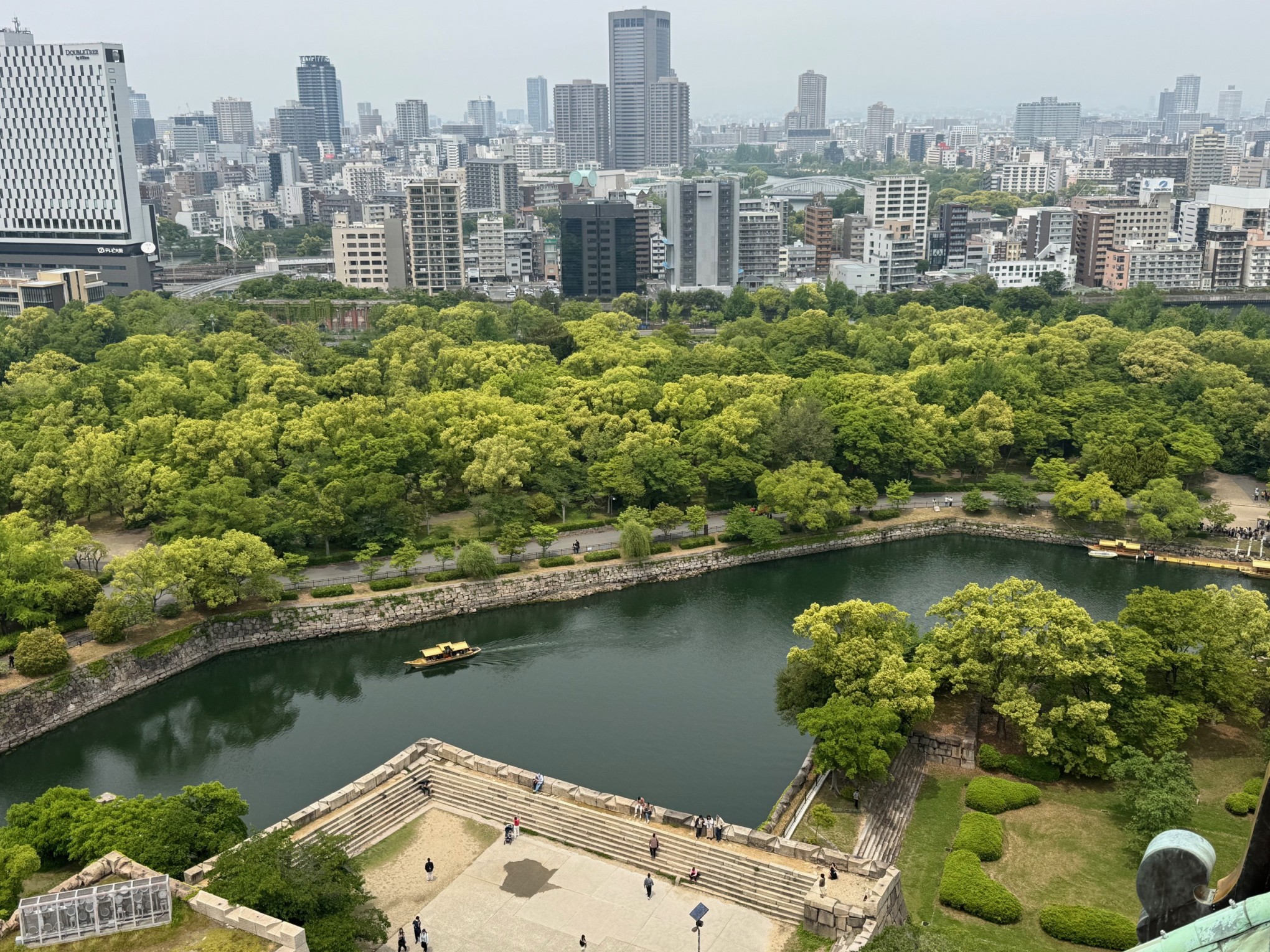
The museum inside the castle was okay. It was more modern than one would expect, which did not surprise me because I had researched this fact in advance. There were some dioramas of the surrounding area from former times. As we walked up the tower, we enjoyed the castle gardens and the skyline. Next to the park are the police station and the Osaka Concert Hall.
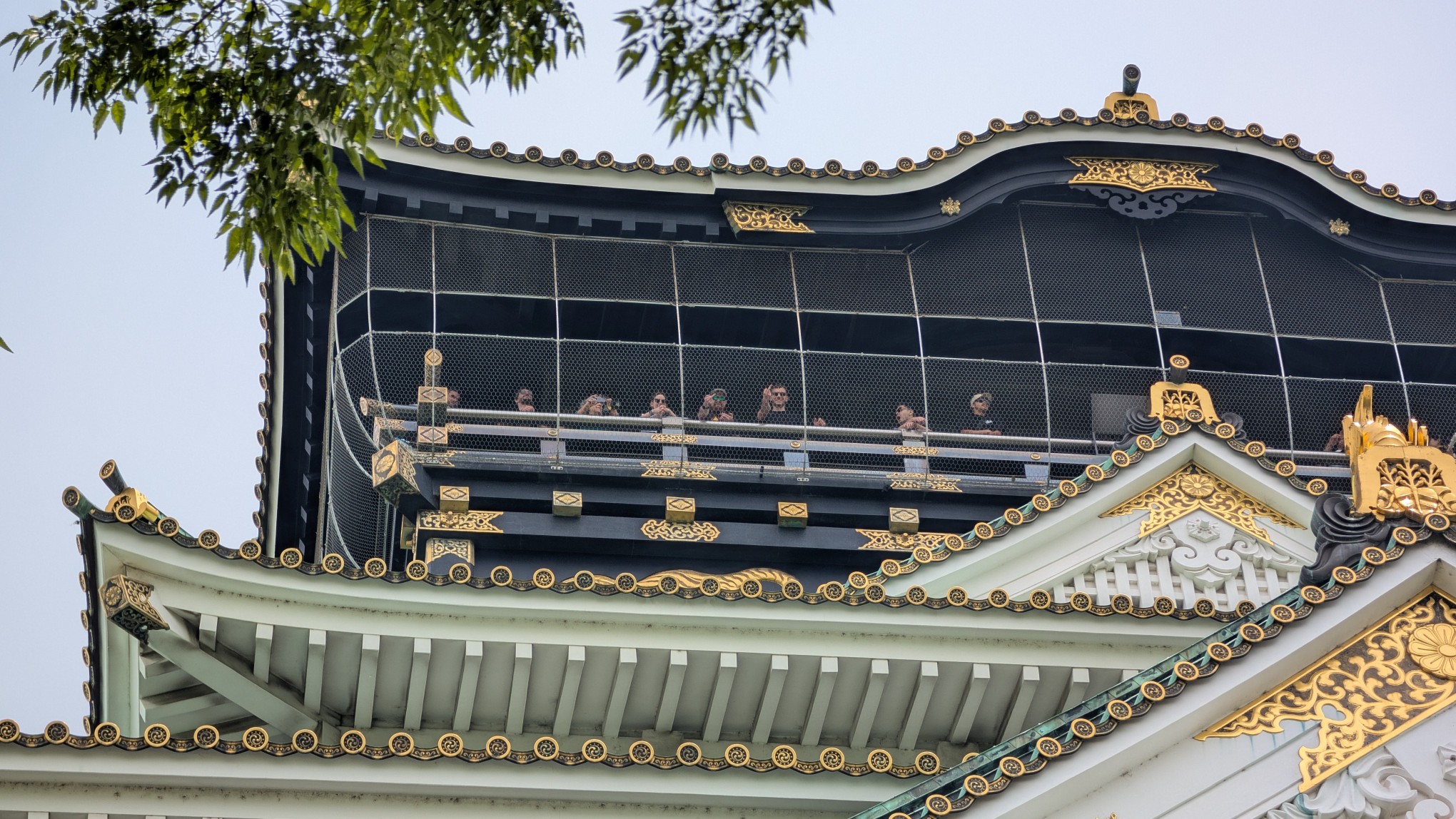
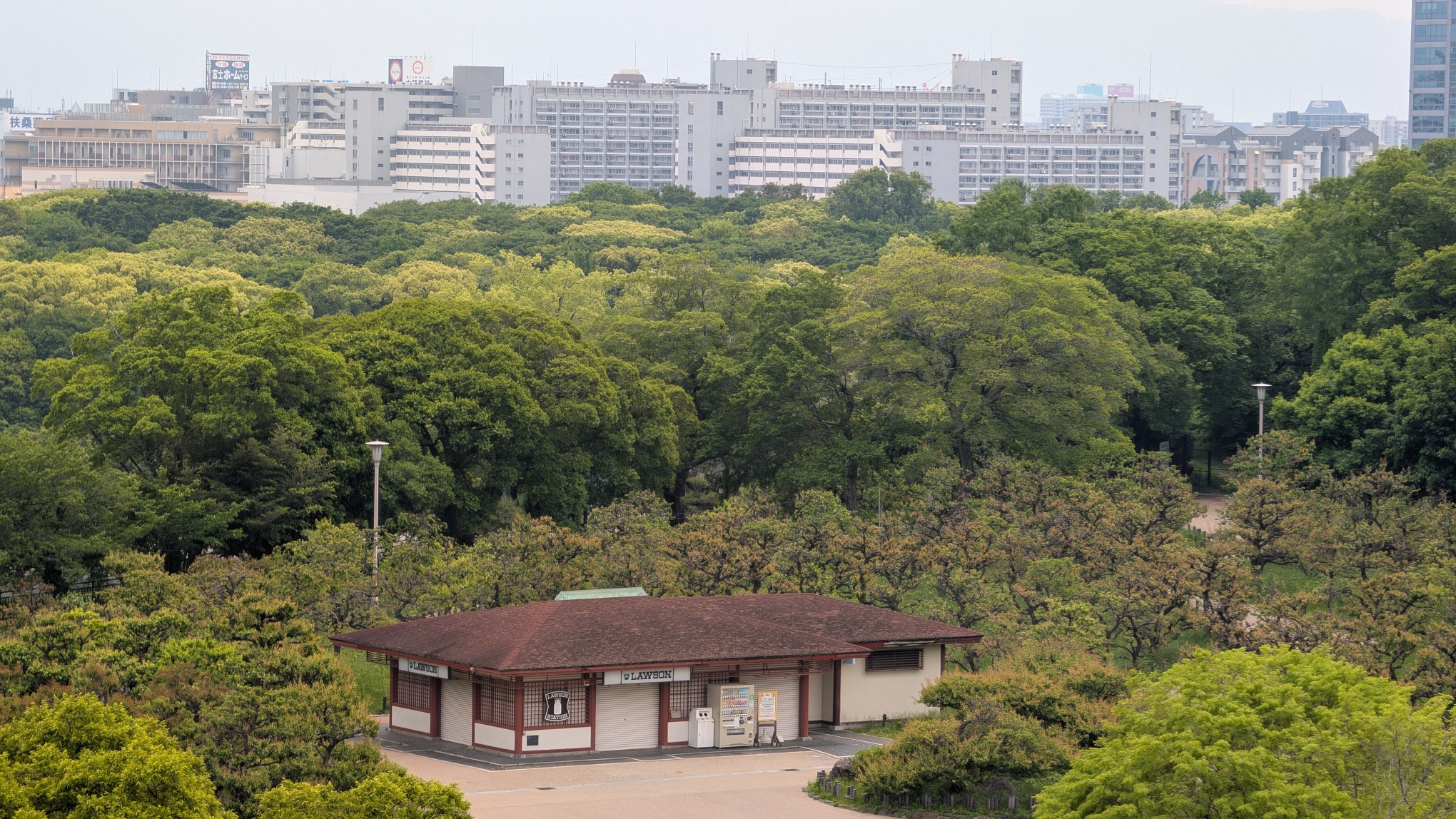
On the way back, we collected the Osaka Castle stamps and returned to the castle grounds. We walked out of the castle grounds through the north exit. Afterwards, we split up: my cousin and I wanted to relax in an onsen bath, while my best friend and his wife wanted to browse for cooking goods and souvenirs.
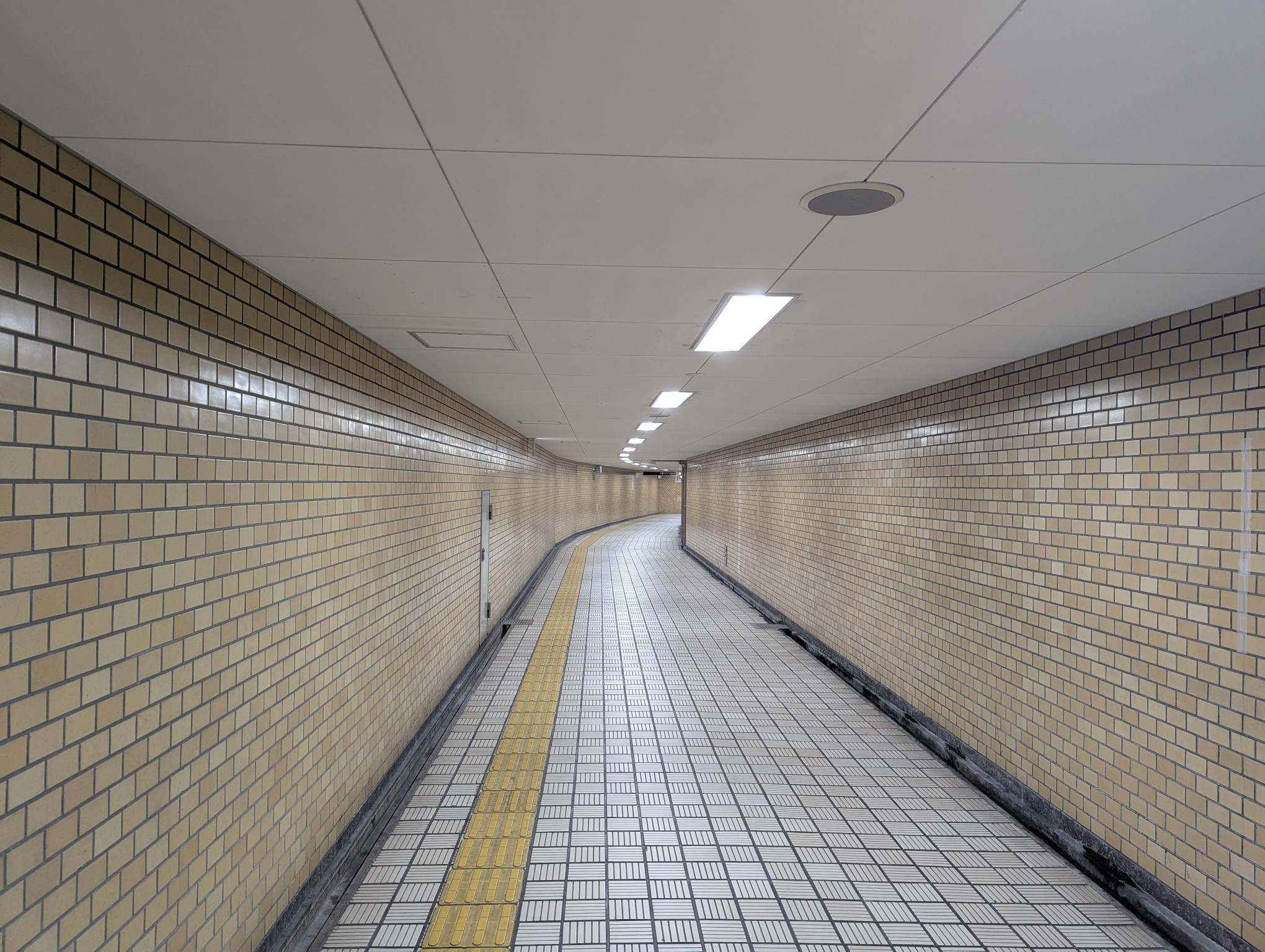
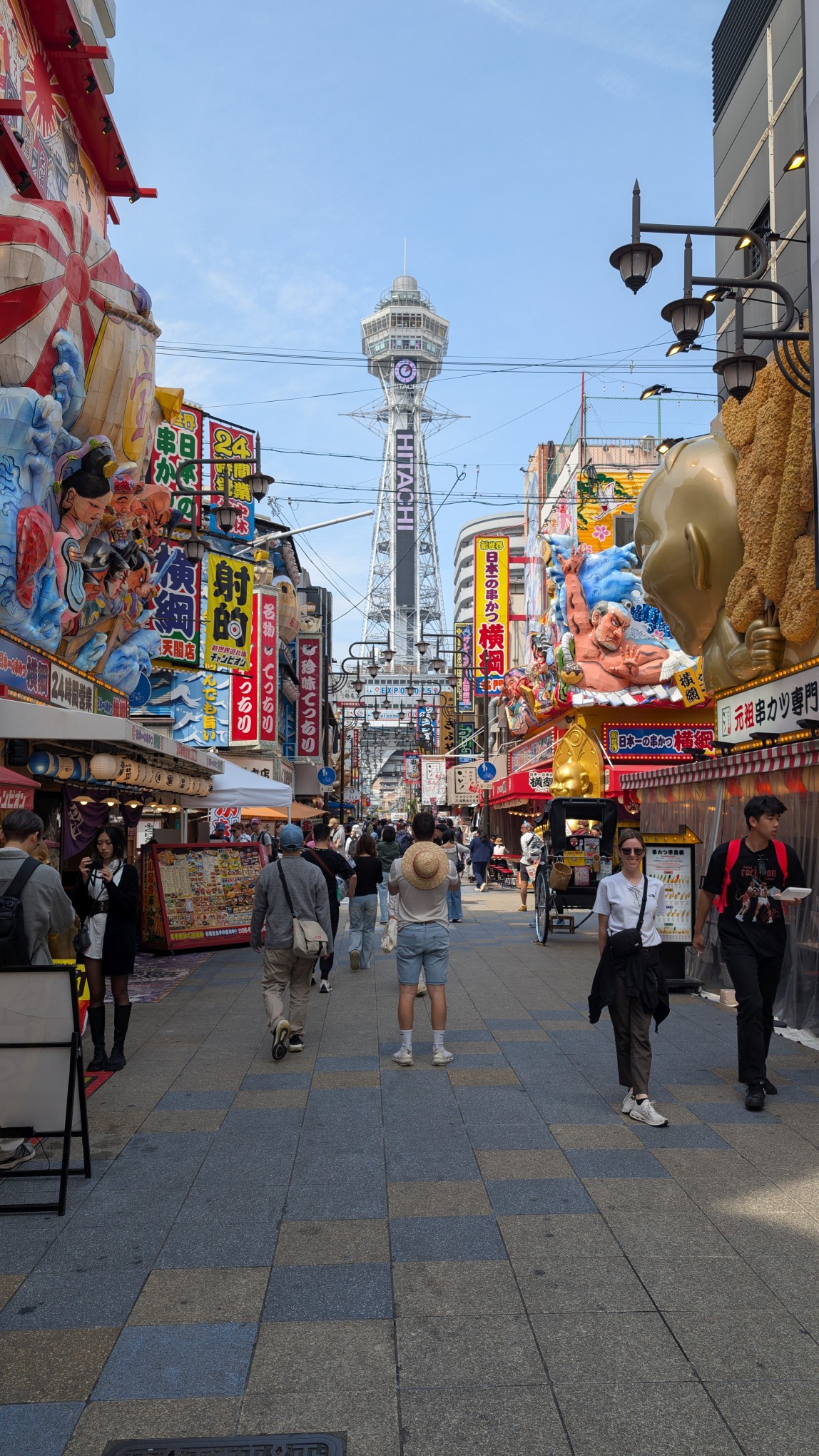
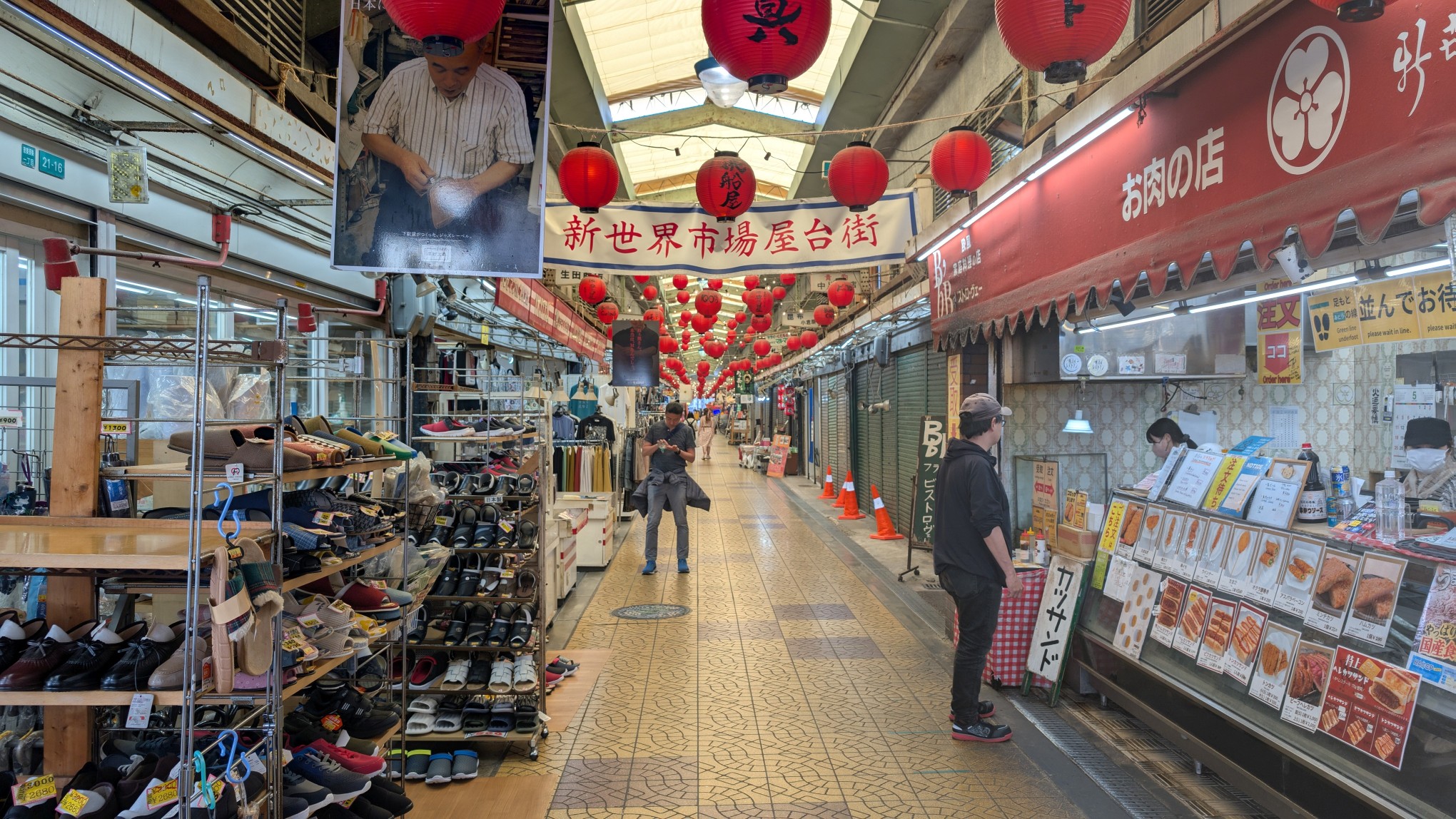
We went to a public onsen located north of the castle that had good ratings.
It was easy to get there, but also strange. First, we went to a different building, expecting a fancy exterior, but we quickly realized that it was the wrong place, most likely some corporate building. We ignored the actual building at first because it was a parking garage from the back side with multiple floors. As we walked around the building, we discovered that it was also a pachinko gambling hall. In the end, though, it was the right spot. Parking, pachinko and onsen bath on the roof.
So, we took the elevator up and began our Japanese onsen experience.
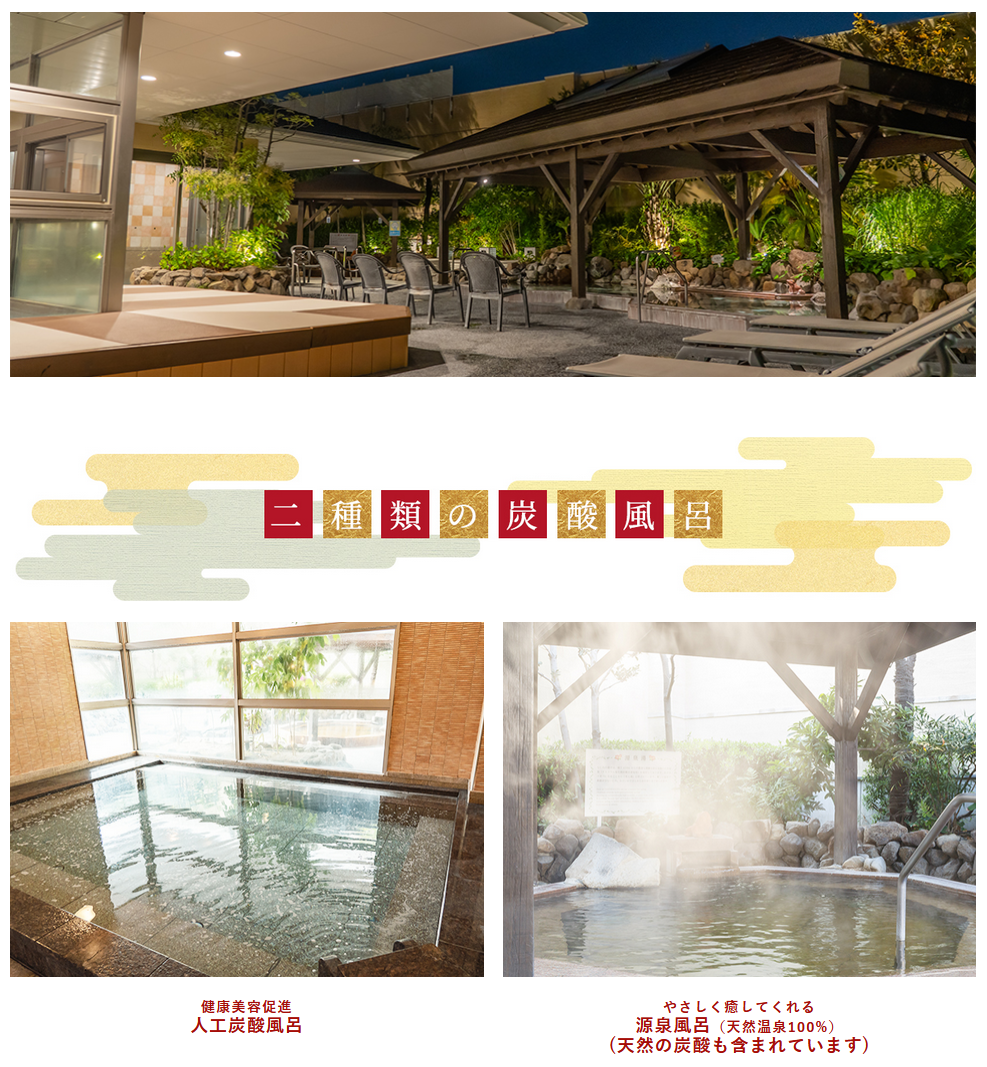
Here is some detailed explanation. This was not the last onsen we stayed during our trip, but it was our first time. The first part is the entryway, which starts off unusual because you have to remove your shoes. The entrance from the elevator is a step down from the onsen and the raised area is the reception area. From there, you must wear socks only, outside shoes aren’t allowed. Small lockers are provided in the corner to stow your shoes. Our next stop was a touch terminal to book tickets, towels and accessories, which luckily had an English language option. The visit costs around 3,100 ¥ for two people with towels. With the receipt from the terminal, we went to the reception desk, where we received the towels and a brochure with all the basic steps in English.
At this onsen, tattoos are not allowed. You must use one large towel to dry off at the end and one small towel to wash and clean yourself in the onsen bath. You are not allowed to use the small towel in the onsen water, so you must store it on your head or on the side while sitting in the hot spring.
After undressing and entering the main bath hall, you will find the shower/washing area. You shower while sitting down using a shower head, bowl, soap and washing cloth. After cleansing, we checked out the hot water bathing options. This onsen had indoor hot baths with water jets. There was one hot bath with water at 42 degrees, one cold bath with water at 15 degrees and a sauna. Outside, there were several resting areas, a foot bath, divan beds with flowing warm water and wash tubs in which you could sit and rest. There were also two hot springs, one of which had water from a depth of 235 meters that was enriched with minerals. The onsen wasn’t too crowded and with the instructions, we managed to cope with the differences compared to a Western-style spa. The only thing I did not like was the sauna. The benches were covered in carpets, floor mats and towels because there were no dedicated sauna towels. Unlike in Europe, where you have a dedicated sauna towel, here in Japan, the large towel we rented is only used for drying off at the end. This led to high humidity in the sauna, as sweat and moisture were trapped in the room. On the wall, there was a clock and a TV showing a „typical“ Japanese reality TV show with subtitles, but no sound. Overall, the sauna was a really unpleasant experience.
It’s interesting to leave the onsen after several hours, too, because there’s a milk machine in the changing room for refreshments. Here is an article with more insights on this. Basically, it was due to the lack of private refrigerators and the desire to sell milk.
After this experience, we went to a nearby passageway. Searching online, I found a small shop in the passage that sells traditional Japanese clothing. I wanted to buy a samue for myself to wear as pyjama. The staff at the shop was very helpful and showed me all the different sizes and options. It was a great experience and we might visit the shop again, as I made all my travel companions envious.
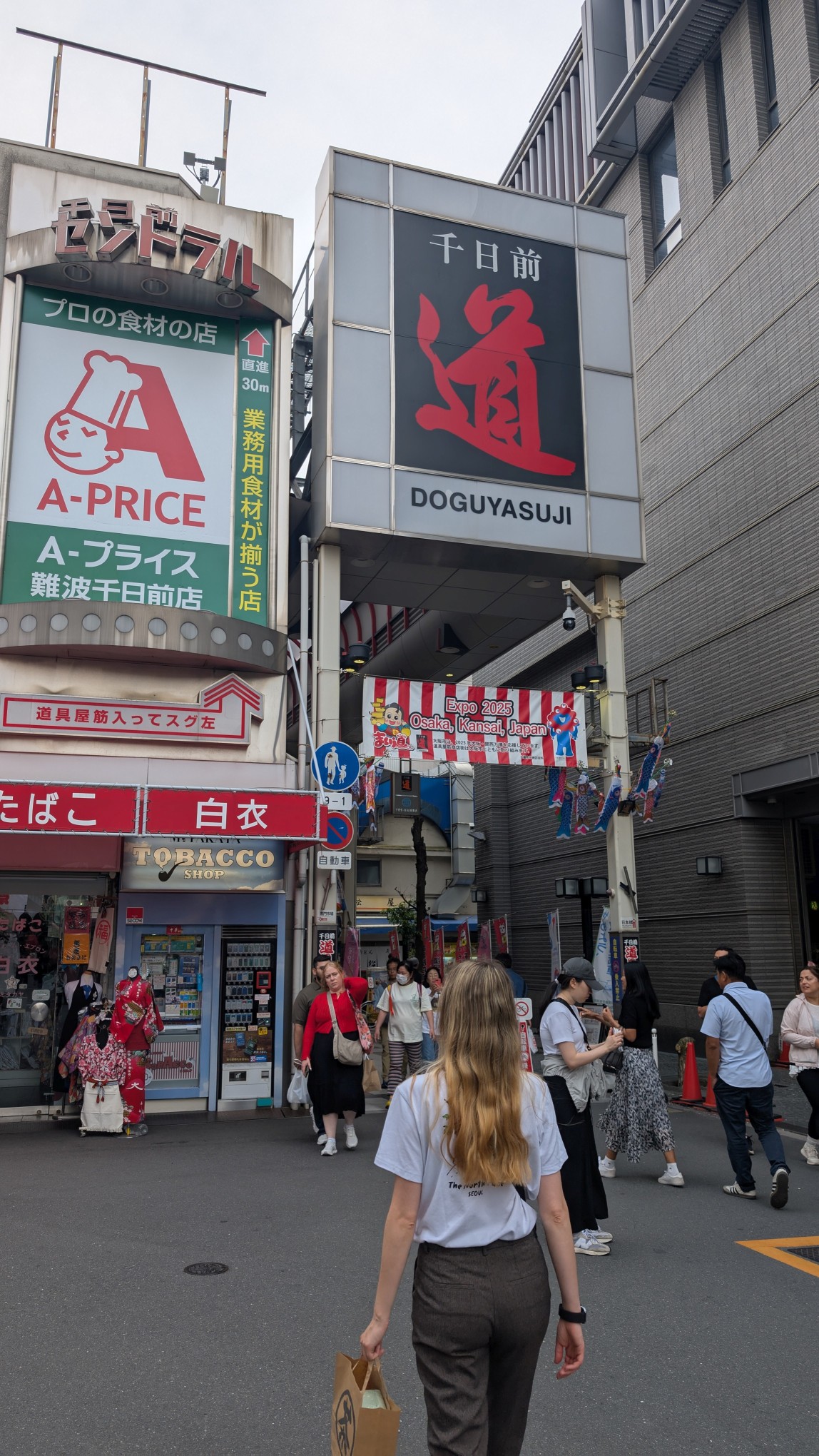
We met up with the others at a different passage downtown, where many cooking supply stores are located. Osaka has several passages that provide cover from the elements, such as the sun, heat or rain. We visited at least five different passages, which each stretch over several blocks in many directions. Here, you can find almost anything, from food to clothing to thrift items and supermarkets, as well as specialty stores, such as kitchen supply stores.
We found items from my list of things to bring home in one kitchen supply store. Chopsticks, a sesame seed grinder and wooden ramen spoons.
For dinner, we chose the local specialty, „fried things on a stick“ (kushikatsu), at a restaurant just one passageway over. After we were seated, the waiter gave us a QR code to order with. With this, anyone in our group could add as many items as desired to the basket and press the send order button. When the food was brought to the table, the staff presented it to us and explained what each item was. However, we instantly forgot or did not understand the explanation because it was partially in Japanese. Still, the food was delicious and I hope we got what we ordered. With some meats, you can’t really tell the difference, but with others, like seafood, it’s pretty clear what it is (if a claw is poking out of the fried dough).
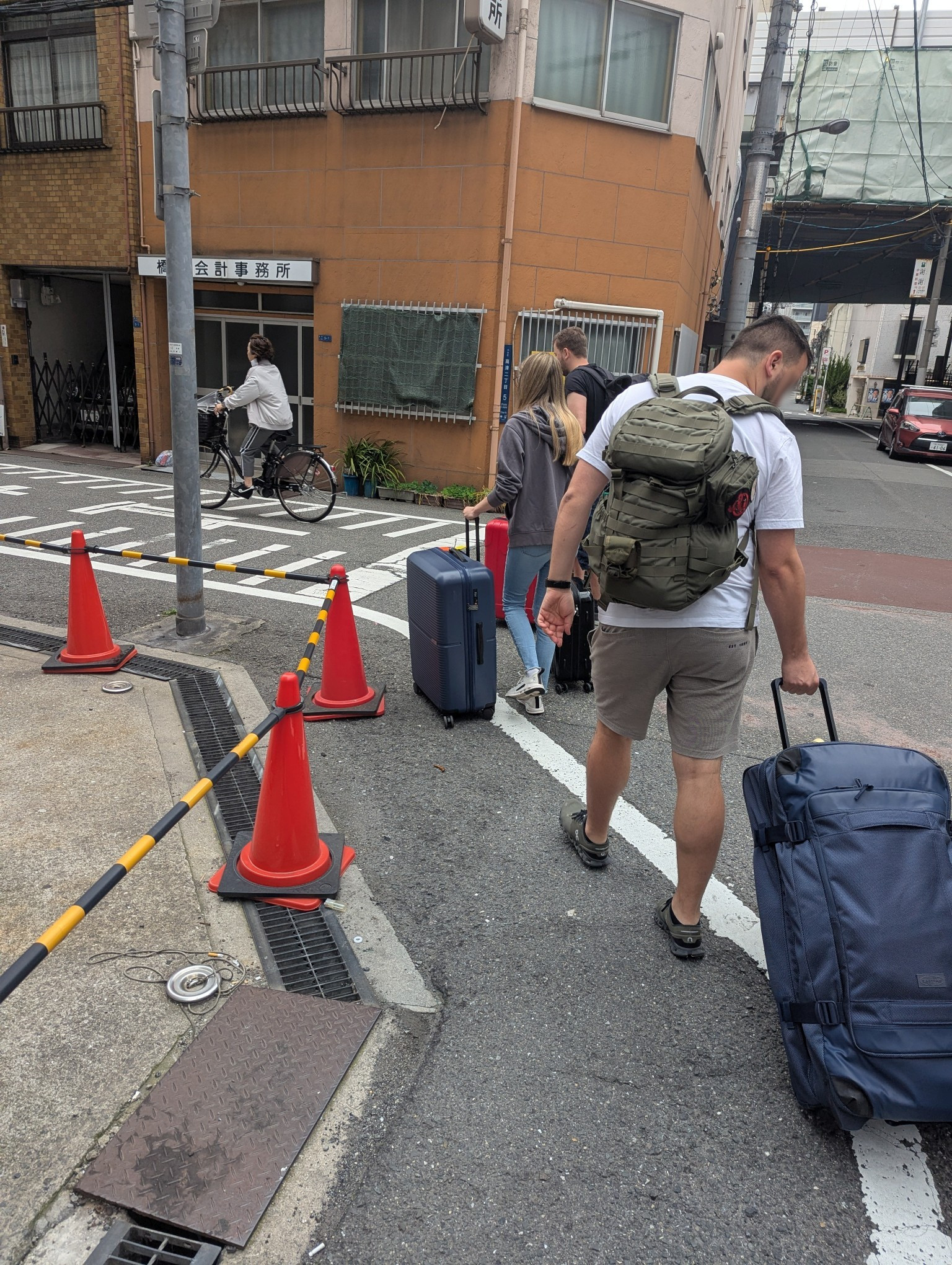
Once my travel companions bags had arrived, we went back to our room to collect them. Side note: There is a shipping service for bags and it is not unusual for travelers to use it to avoid having to juggle luggage during the trip. We used this system several times during our entire trip and our bags had always arrived safely and on time. This gave us free hands for traveling with local or regional trains. In Osaka, our stay did not have a reception desk, so we had to trust the system. At our last stop, we instructed the reception desk to send our bags. They took cash, arranged everything and put the change and receipt in one of the side pockets of our bags. The bags were shipped within two days, spent some time at a nearby facility and were accepted and placed in front of our door by the cleaning staff.
After resting, we decided to head back into the city. Sunday evening was crowded, but the crowd was smaller on a weekday. We went to a restaurant and had a couple of beers. It was a pretty random „Now, let’s go in here“ moment. I cannot tell exactly which place we went to because we stumbled by so many different places and pinpointing the exact location is impossible now (maybe there was some beer involved).
Osaka Expo
On Tuesday, we had tickets to the expo. Thanks to the previous night, we did not head out as early as some of us had wished or planned. Before we left, we had toast for breakfast at a small place nearby.
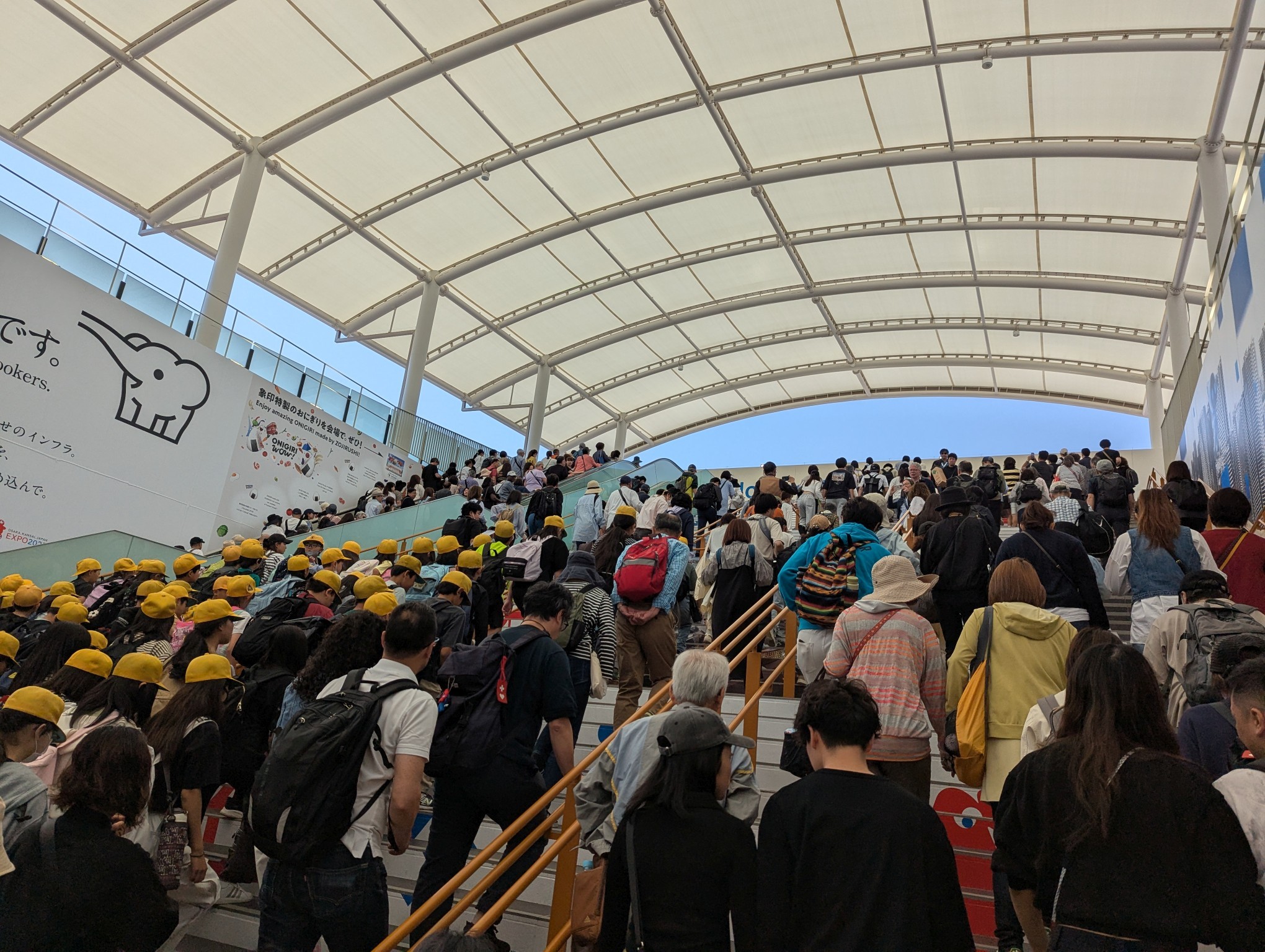
We took public transportation to the expo and as expected, the metro was crowded for such a big event. We had to stand during the trip and put our backpacks in front of us so that we wouldn’t hit anyone.
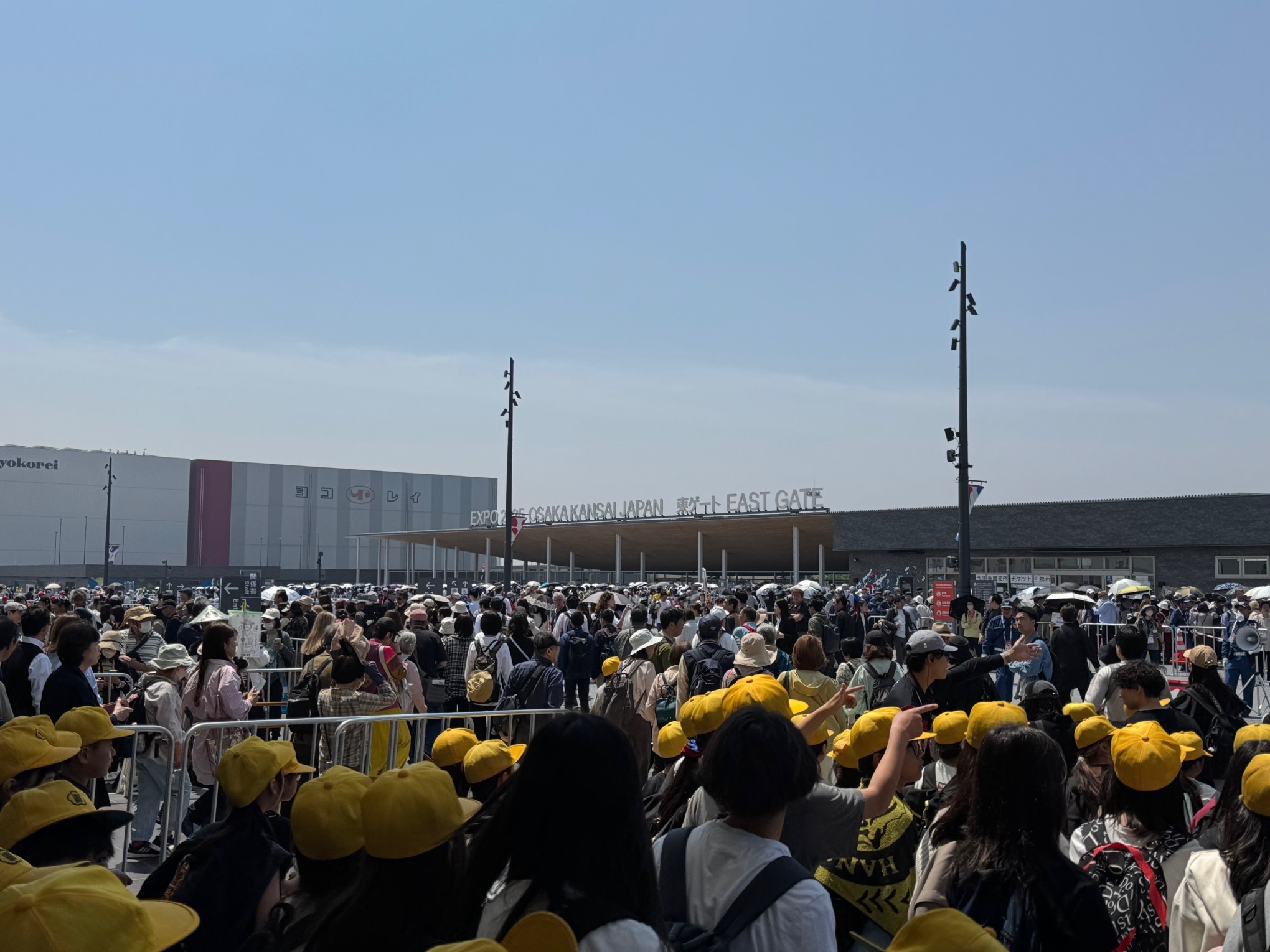
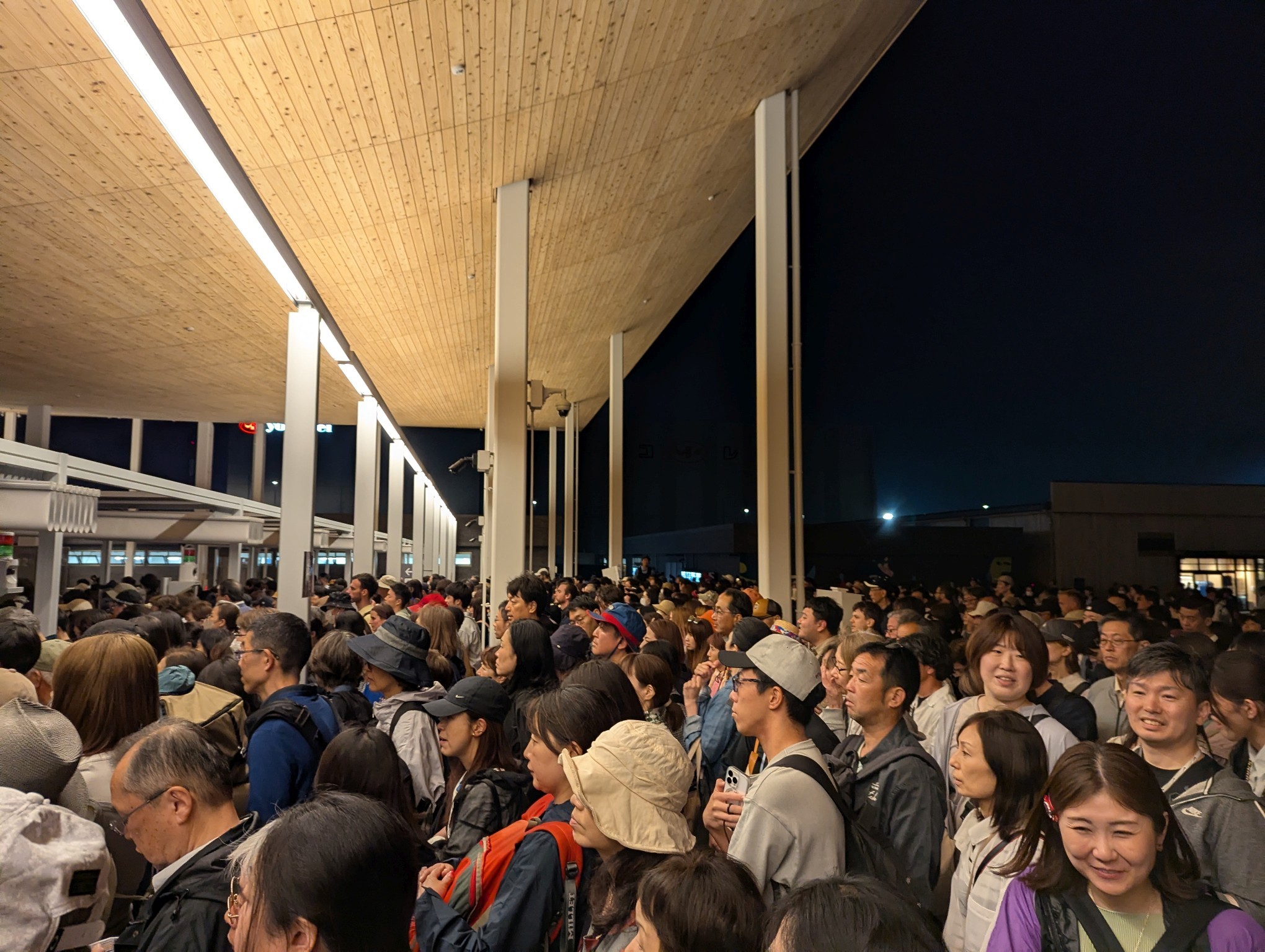
But when you get off the train and up the stairs from the underground station, the scale and number of visitors becomes apparent. The large square in front of the expo entrance is solely for funneling people into line and to the entry. With no shade, many people stood in line until the next batch could be processed at the security gate. Since we arrived later than planned, we were able to skip this line. There was a shortcut for people with early entry, which was nice.
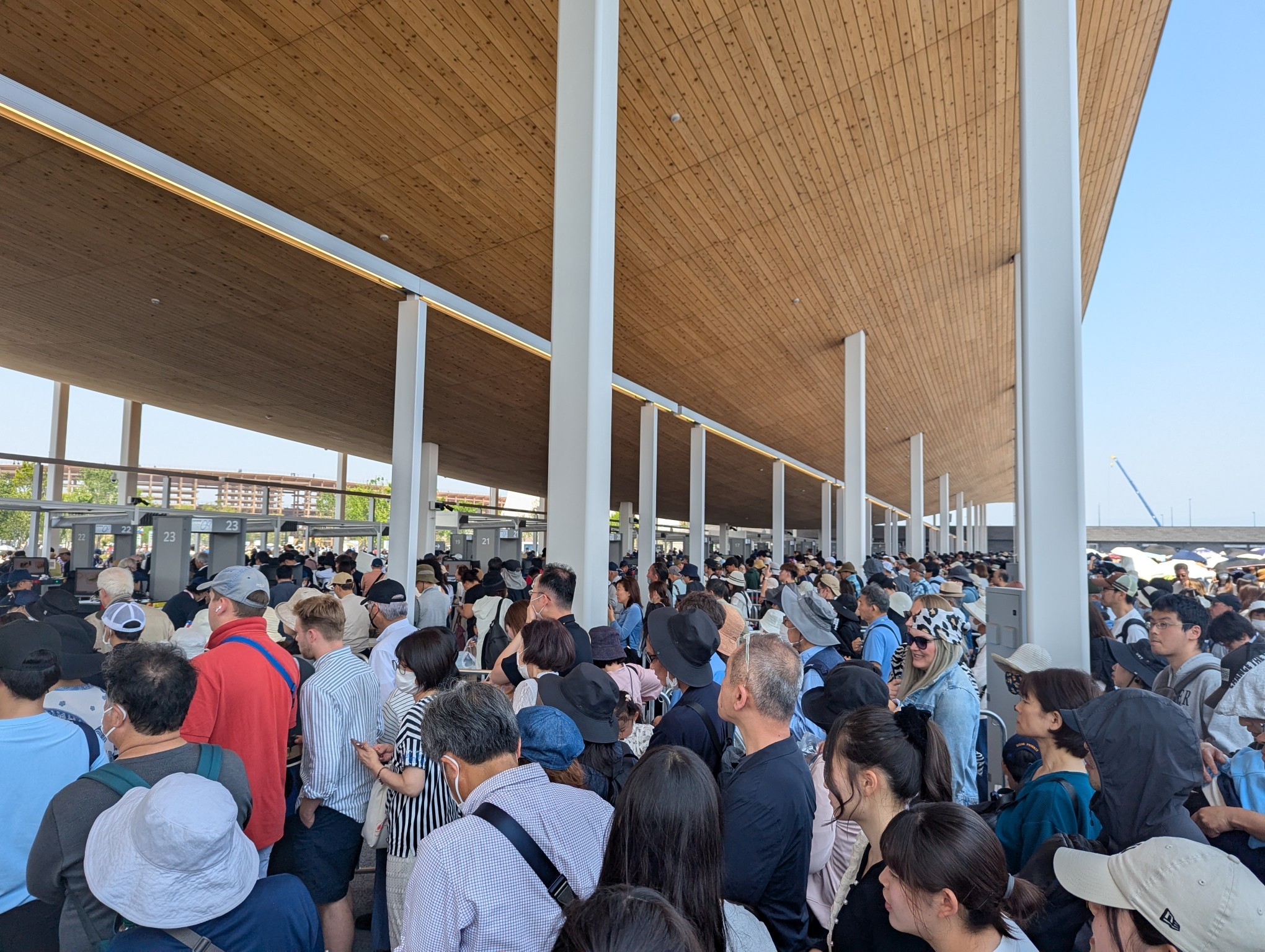
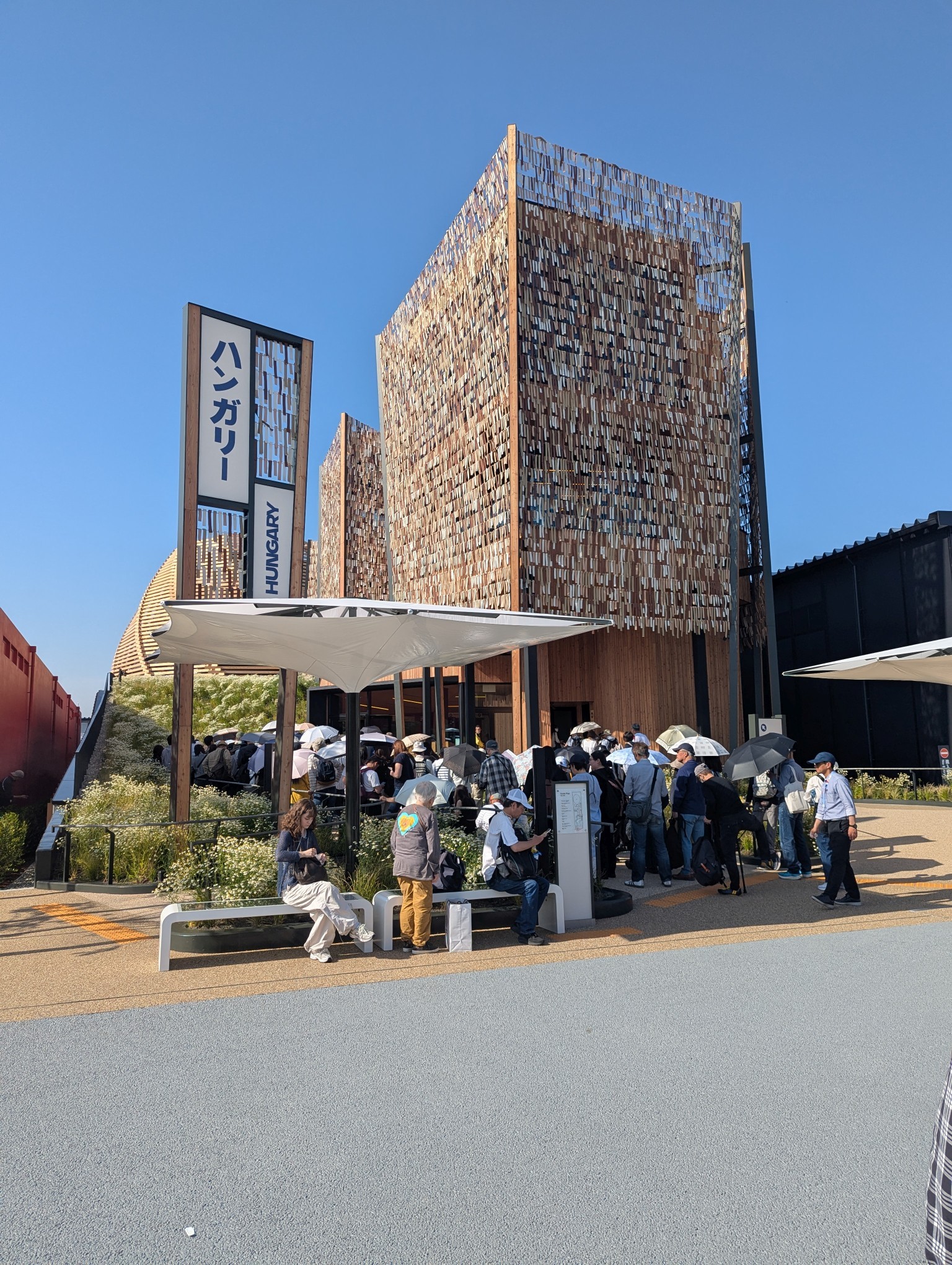
From afar, you could already see the main expo attraction: the large wooden ring. Our first stop was to climb up and explore the site from above. The ring spans the main part of the expo which was also a great spot to avoid the heat of the sun. There are escalators at different key points to get up, as well as elevators and restrooms throughout the structure (which where clean quiet and often without any lines).
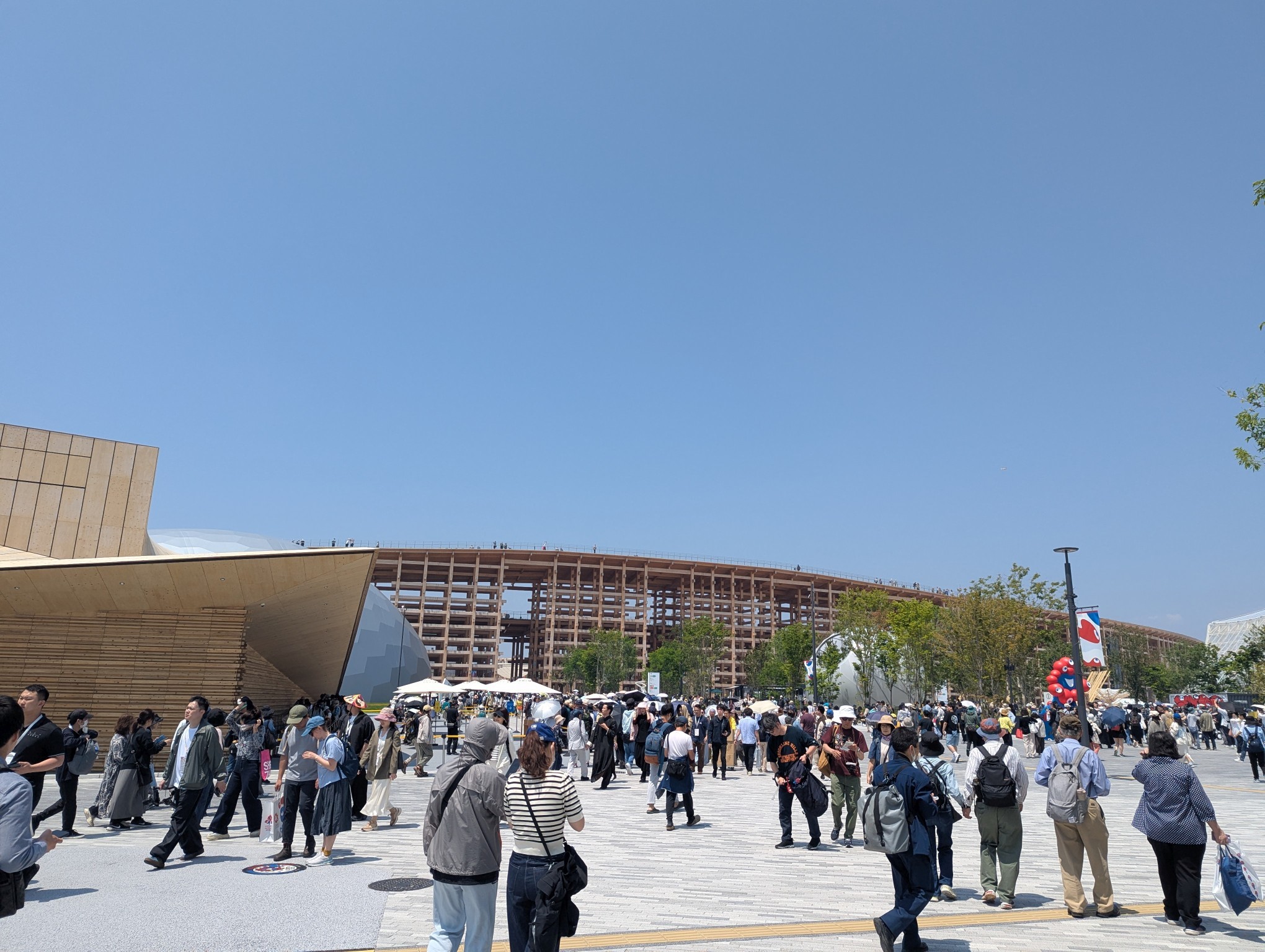
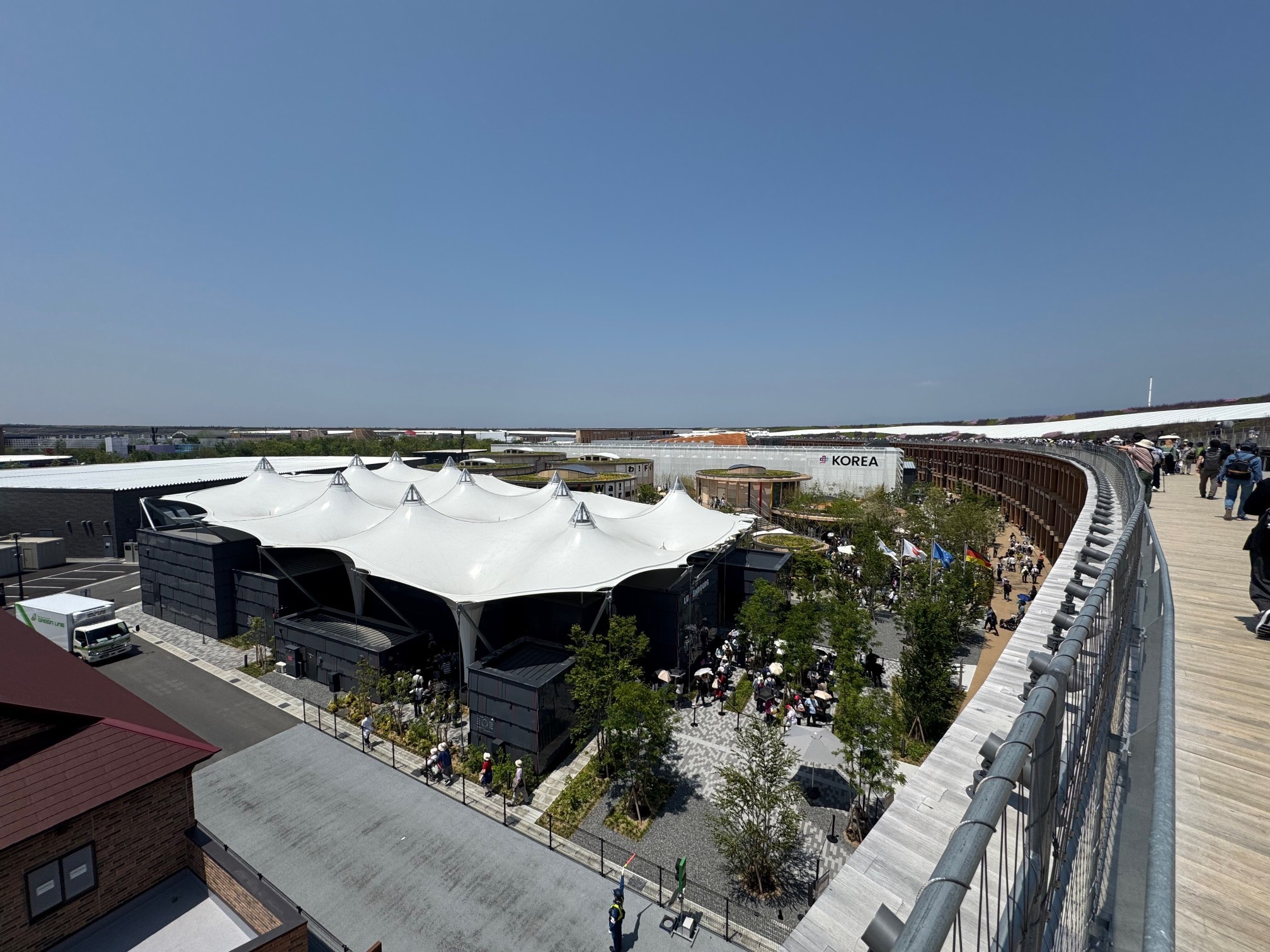
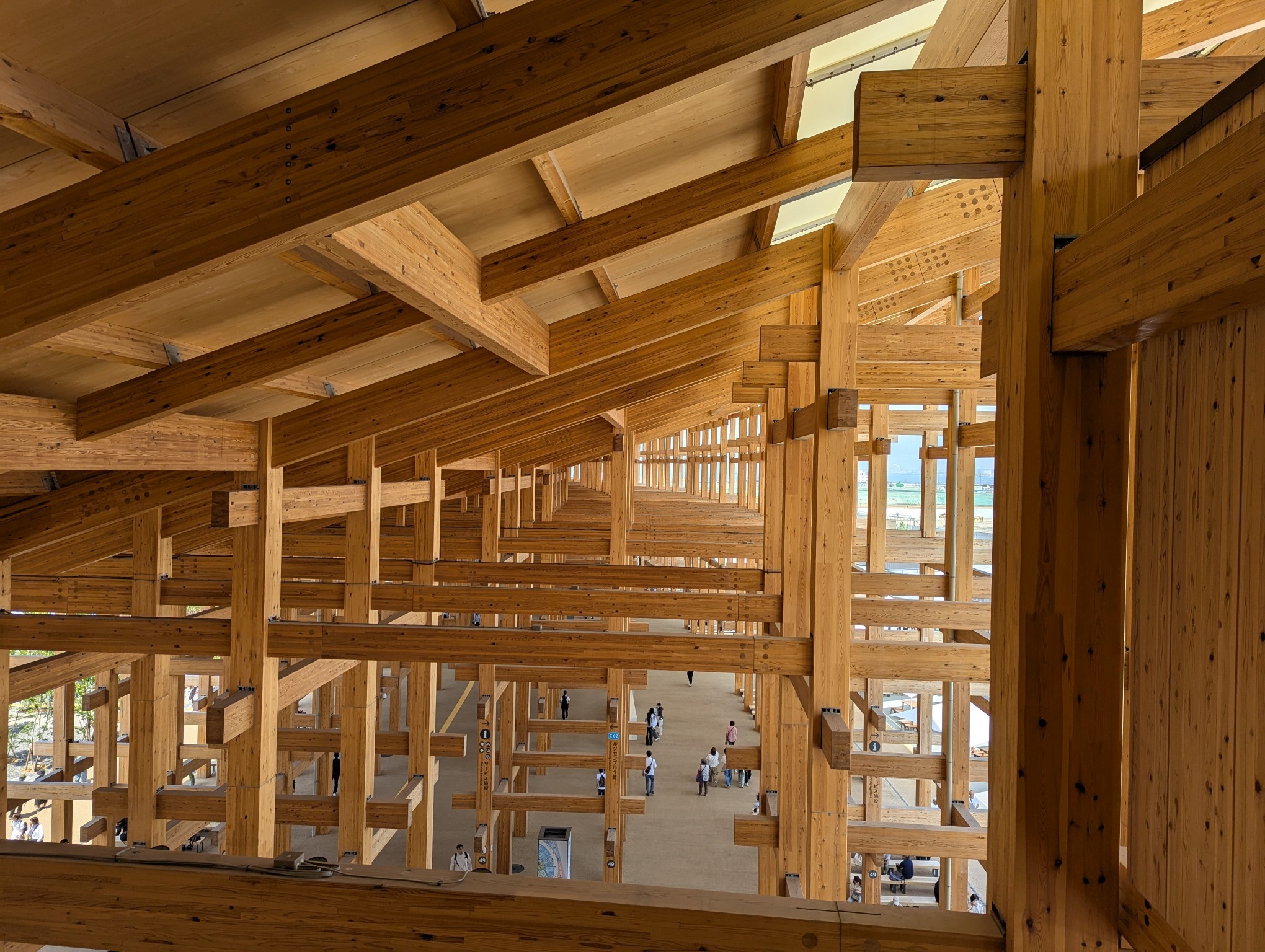
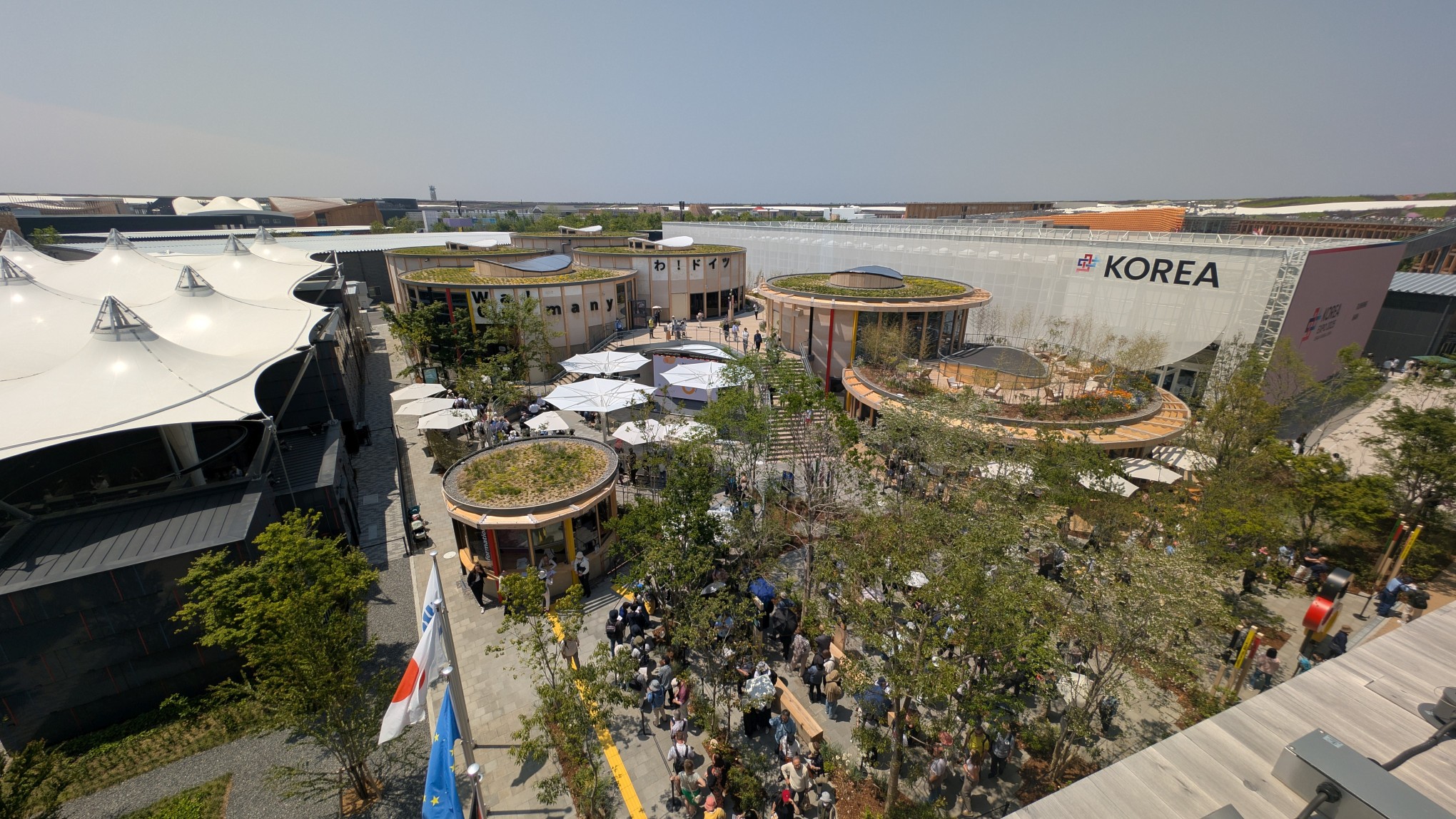
One issue became apparent: the lack of proper sun protection. We brought some sunscreen into the country, but the bottle I had used in the morning was still in our room because there was a restriction on the amount of liquid allowed into the expo. Fortunately, there are several convenience stores right on the expo grounds where you can find the same items as in the city shops, ranging from snacks to necessities like umbrellas, sun protection and batteries. We ended up buying Japanese sunscreen and umbrellas to provide shade from the sun.
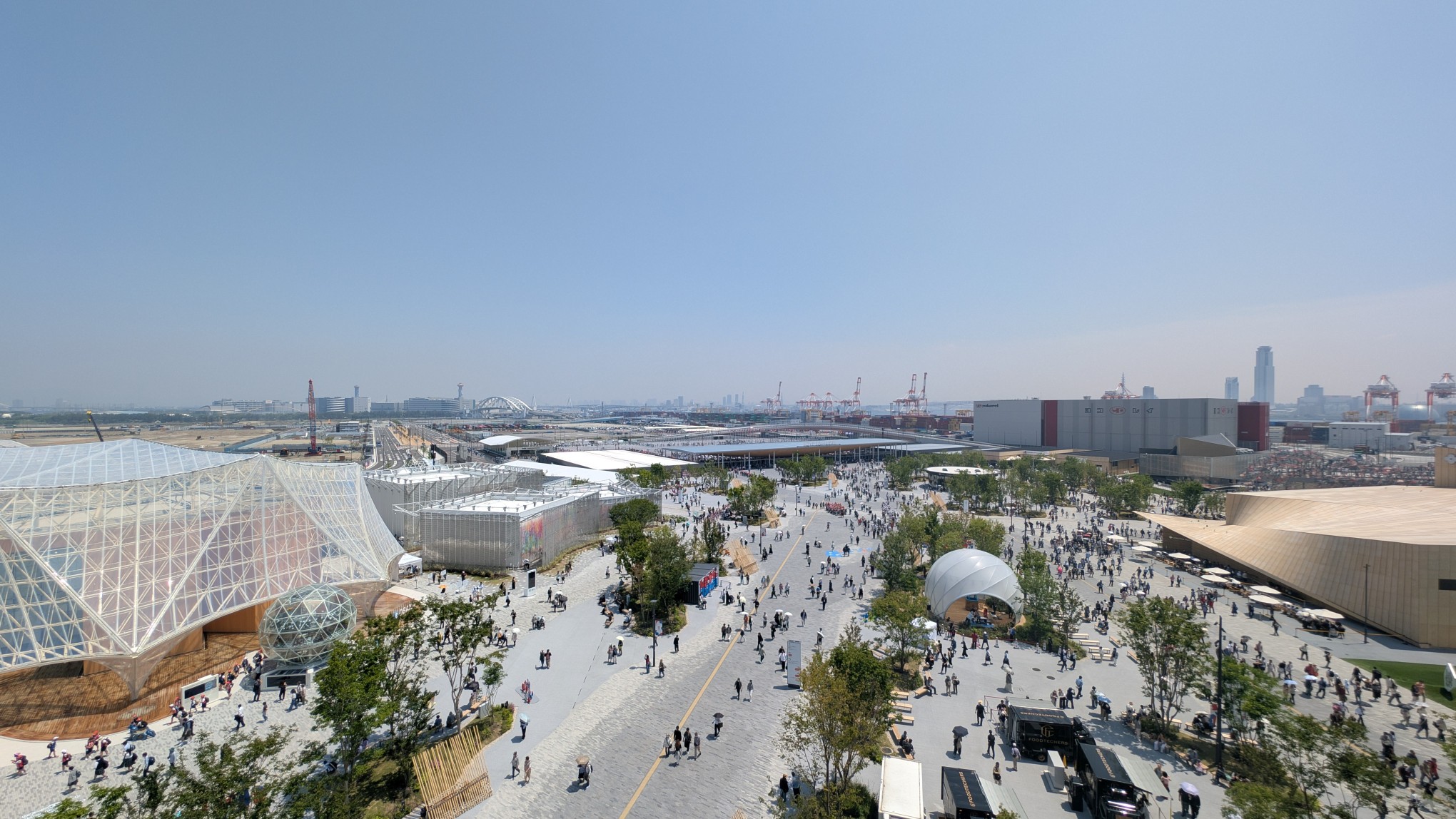
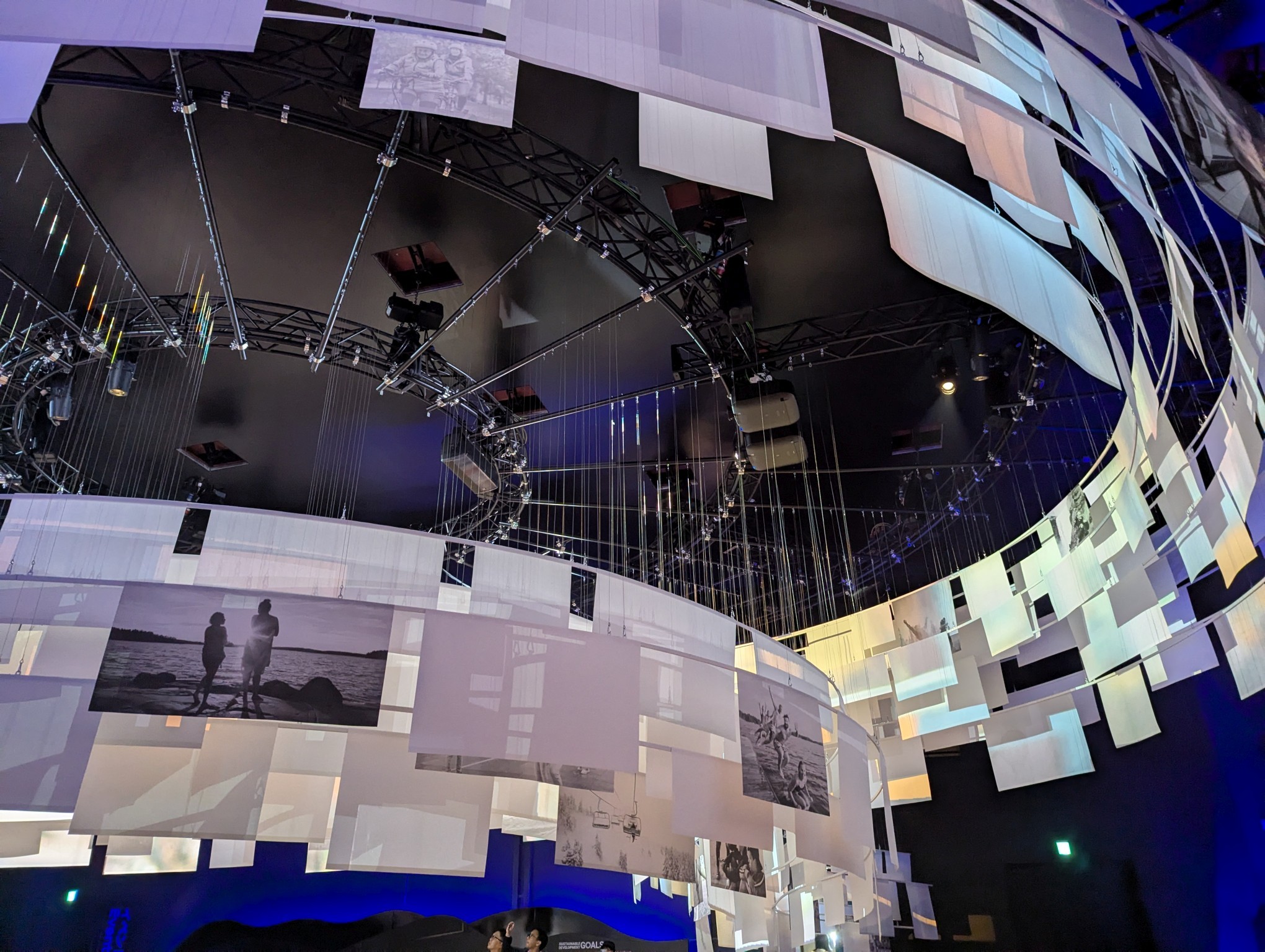
The main attractions are the different pavilions that the various countries have set up to showcase their uniqueness and invite people to visit. First, we visited the Nordic pavilion. We had to wait in line to get into the pavilion. To protect against the sun, this pavilion provided umbrellas at the front of the line. Inside, we watched a short video presentation and then we entered a room with hanging papers.
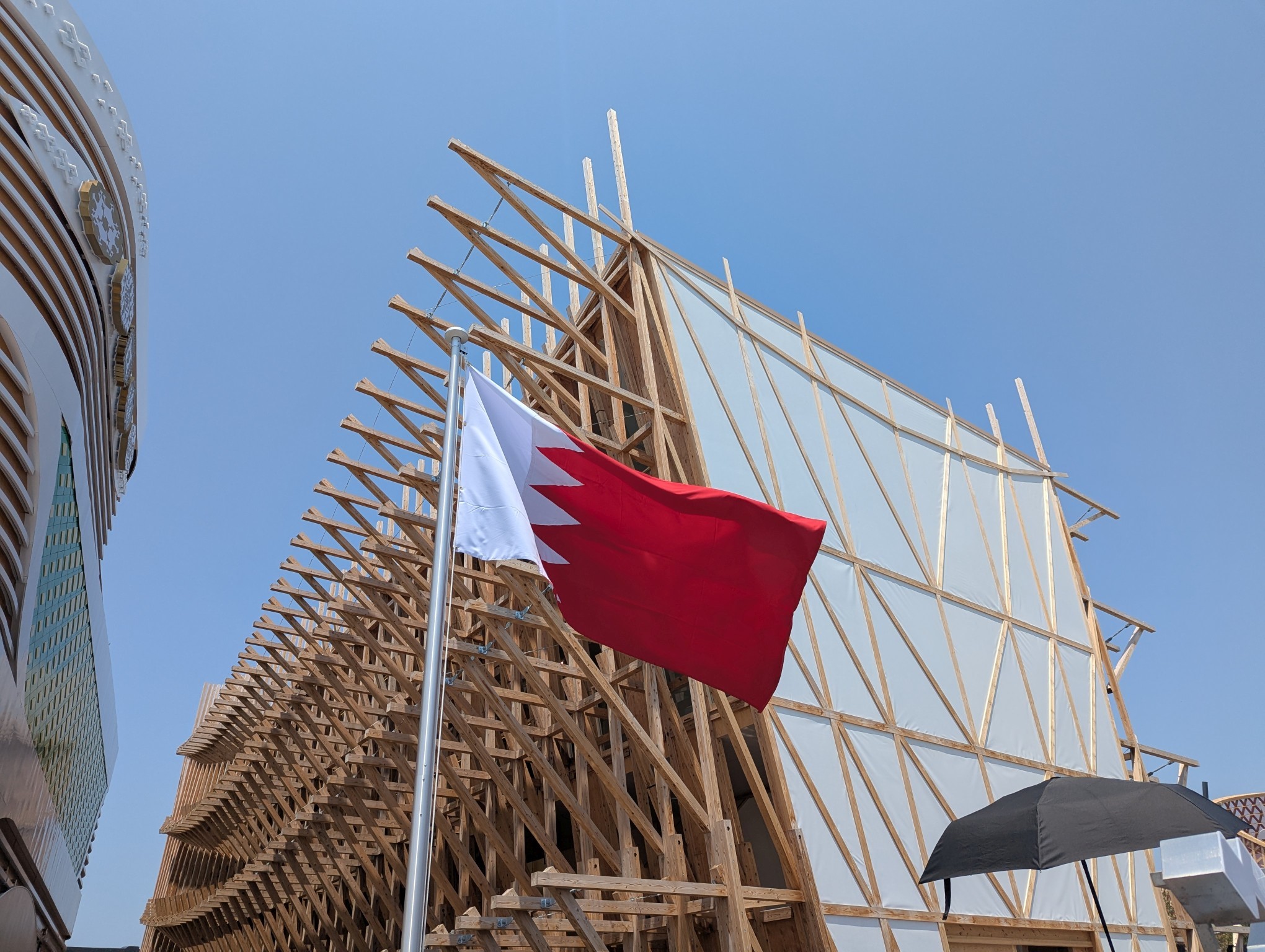
The main issue with the pavilions was the queuing. Some were open, but due to the crowds, you had to wait in line to enter. Others were closed and you could only enter after winning a lottery for time slots. We were only lucky in one of the five advance selections we applied for. This was the Kansai region pavilion, which introduces the regions around Osaka, but I will talk more about this later.
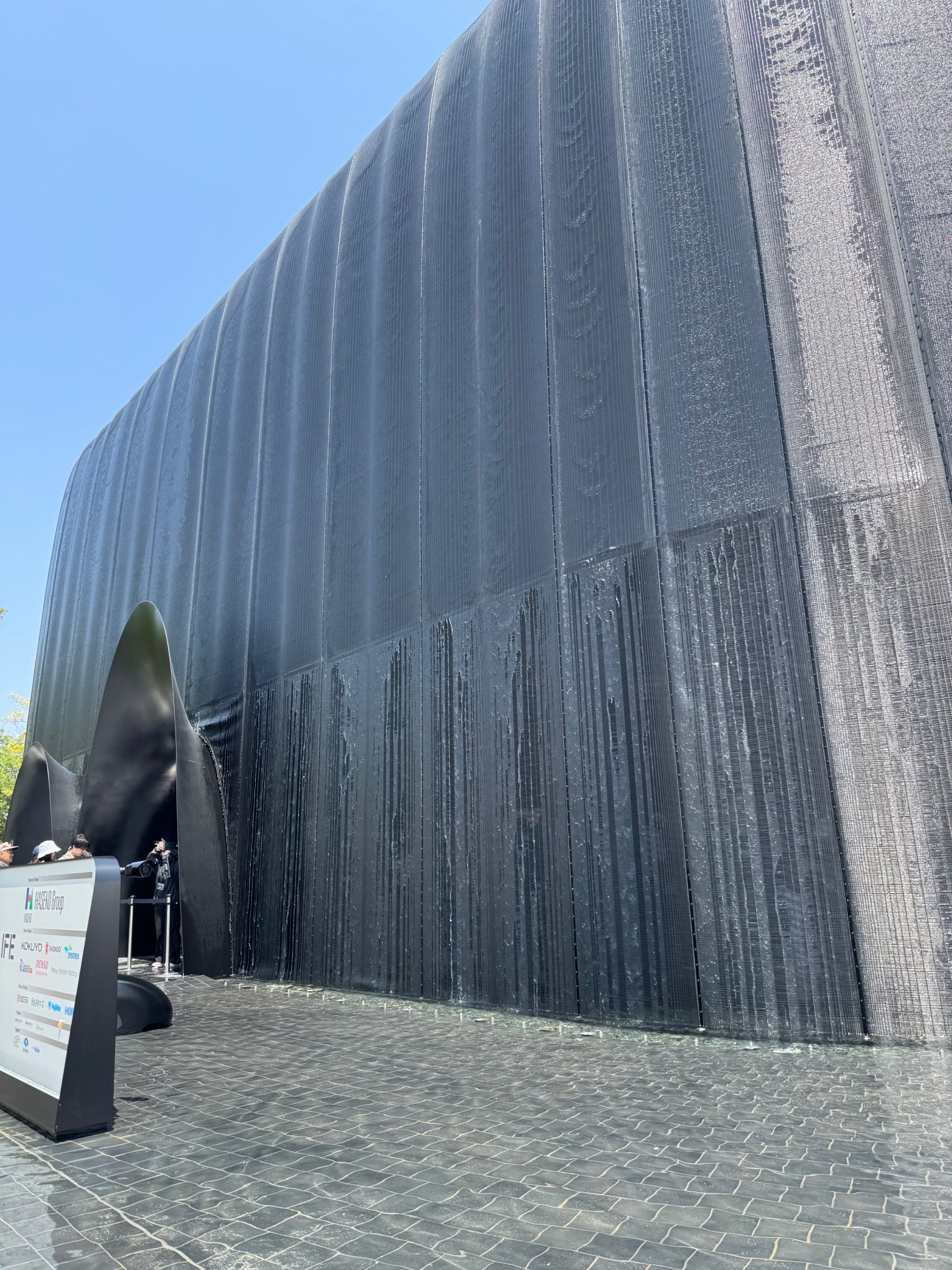
After leaving the Nordic pavilion, we continued into the center of the circle. We passed an interesting pavilion consisting of cubes and silver mirrored surfaces, similar to the cubes shaped by the pyrite mineral. Some of the surfaces had speakers that vibrated with deep humming noises coming out of the structure. This was an art installation/pavilion that we were unable to enter because we did not win the lottery. I would have been really interested in this exhibit, but luck was not on our side.
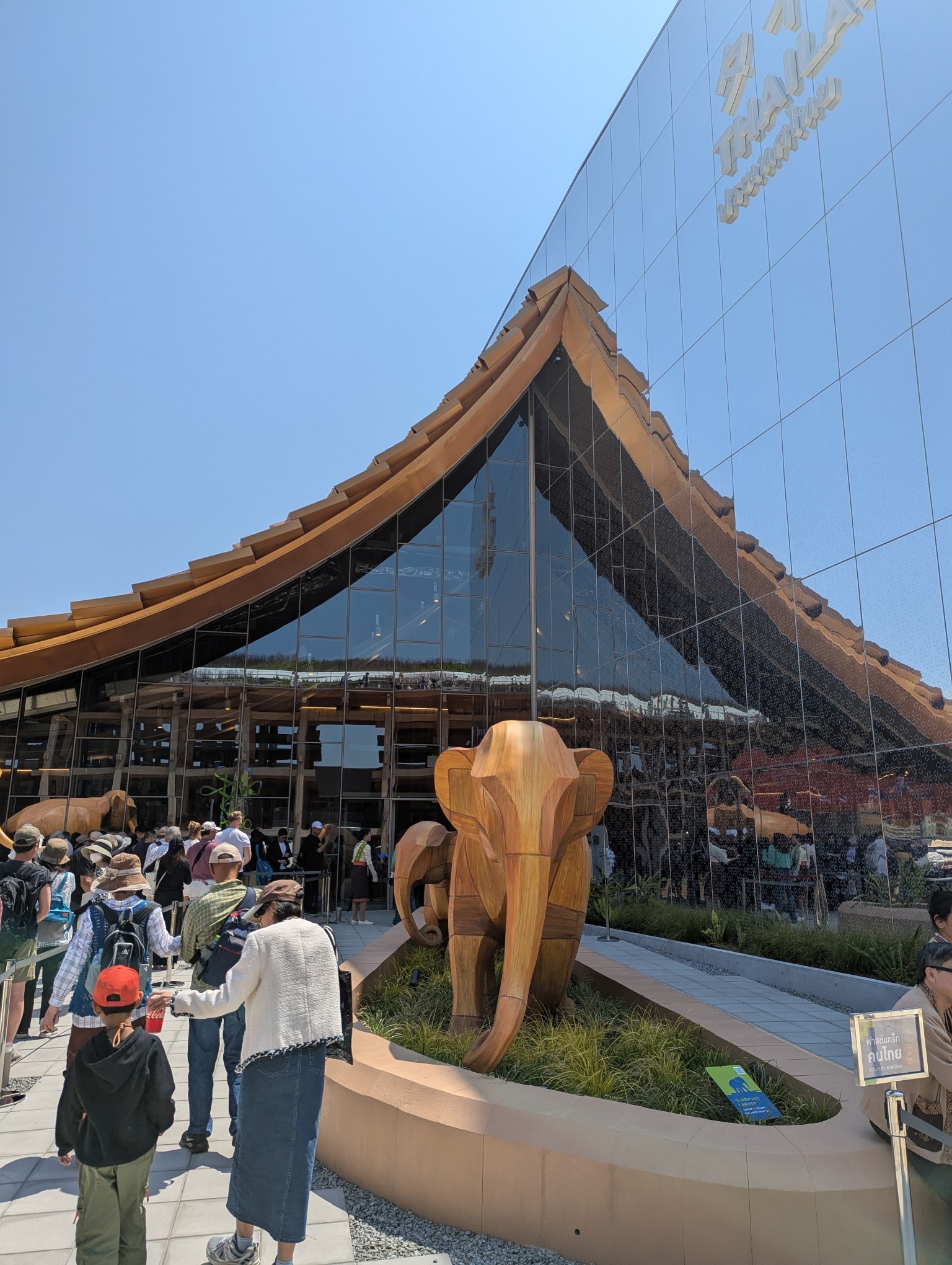
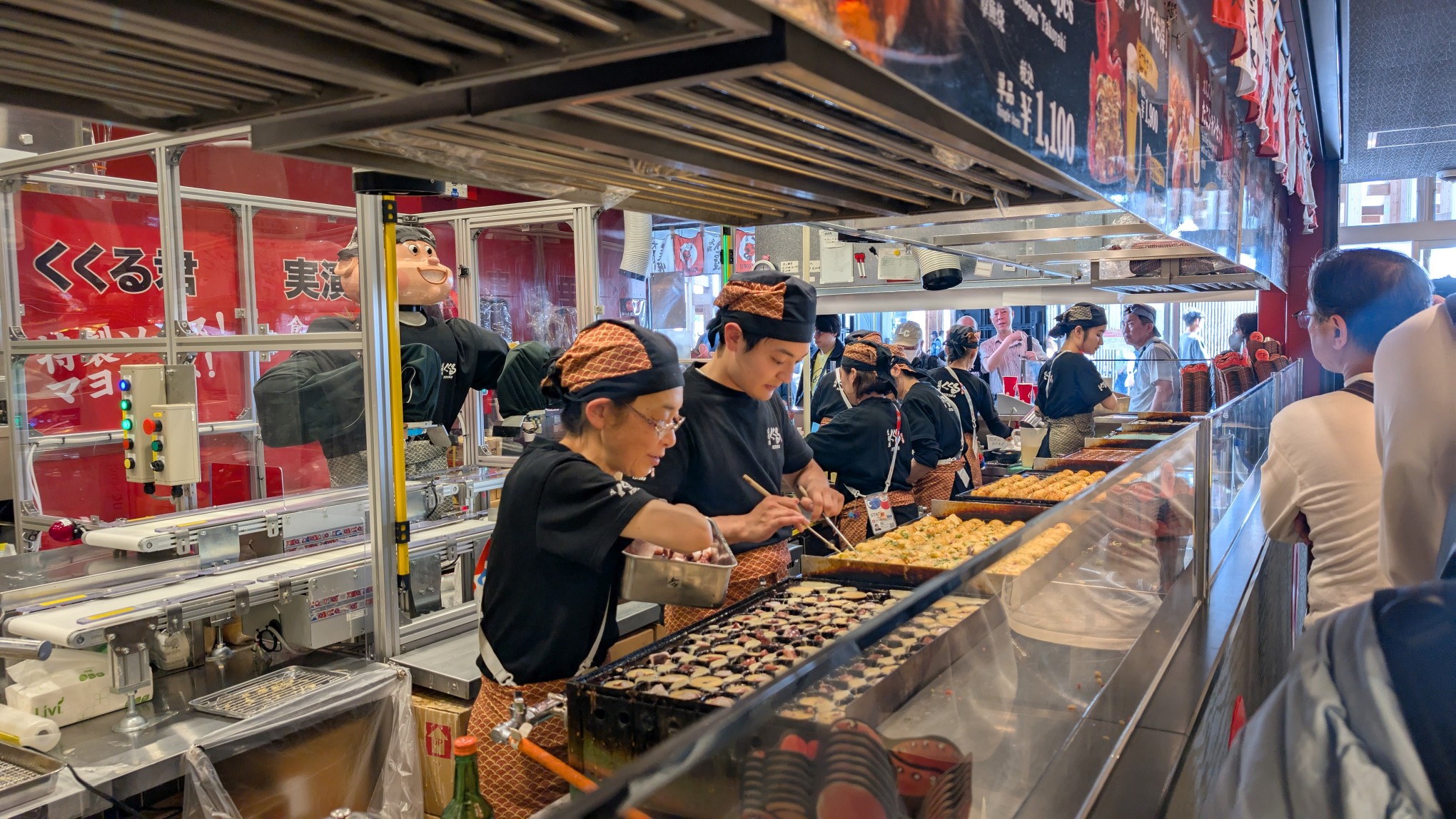
Next, we passed by a water mist installation and took advantage of this spot to cool off. Then, at another robot-human art installation pavilion. Here a guest offered us his spot to get in. Sadly, the time slot passed before we had the chance to get in. Then it was time for lunch. Along the edge of the ring, there are several dining halls that mostly serve Japanese cuisine. For local food, there is also the option to eat at a country’s pavilion and enjoy the local cuisine prepared there. For example, there is Spätzle in Germany or pho at the Thailand pavilion.
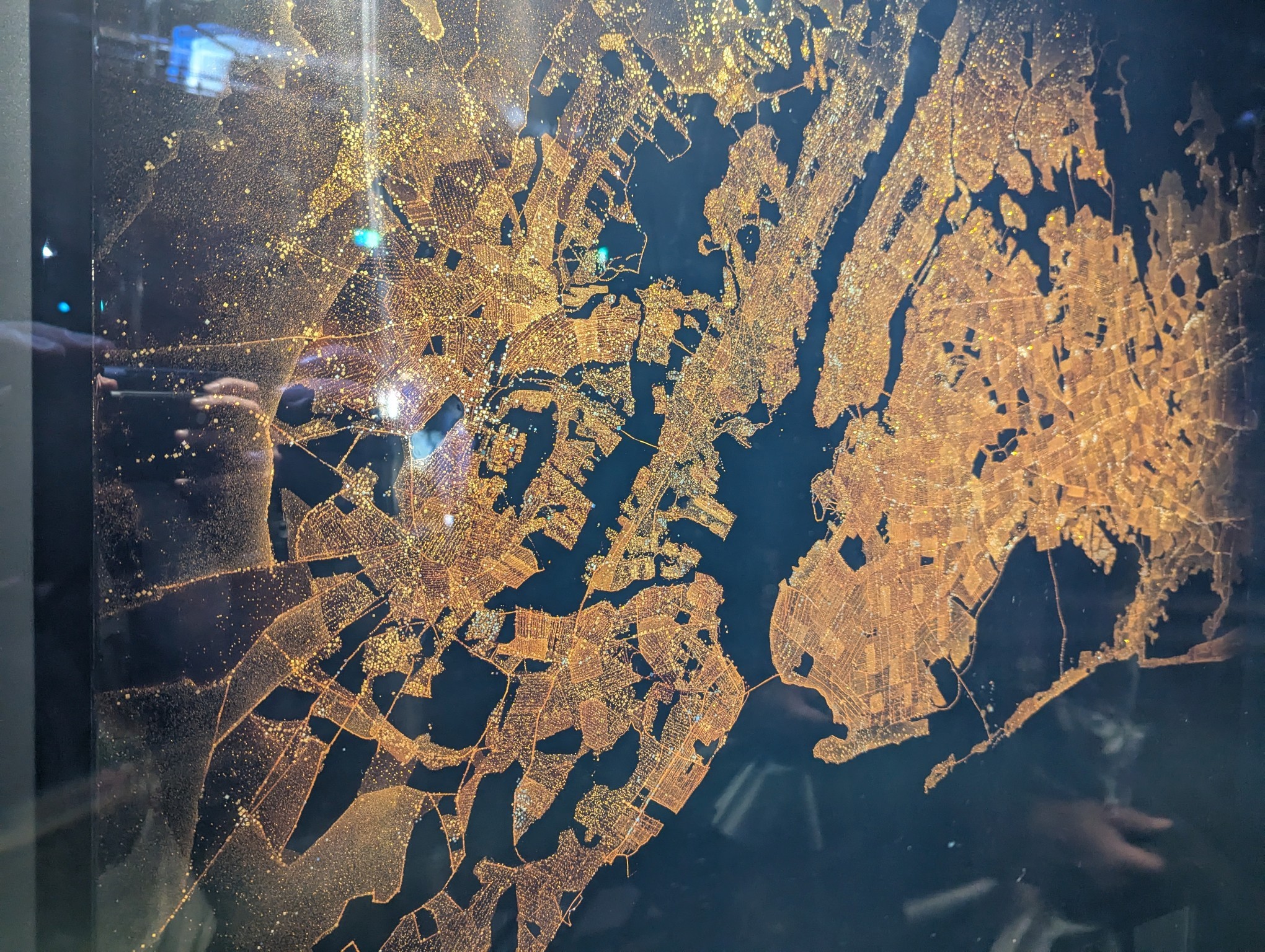
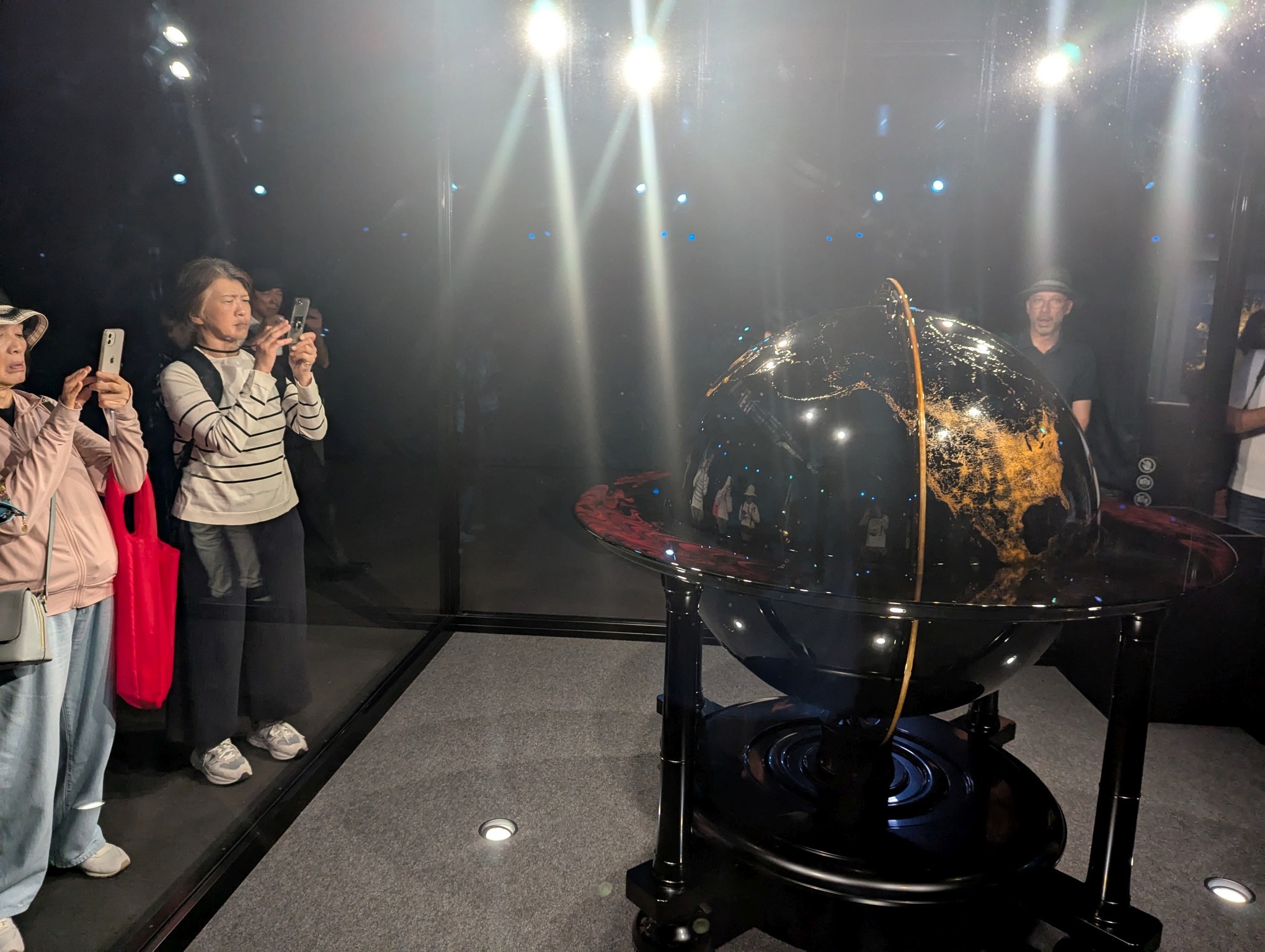
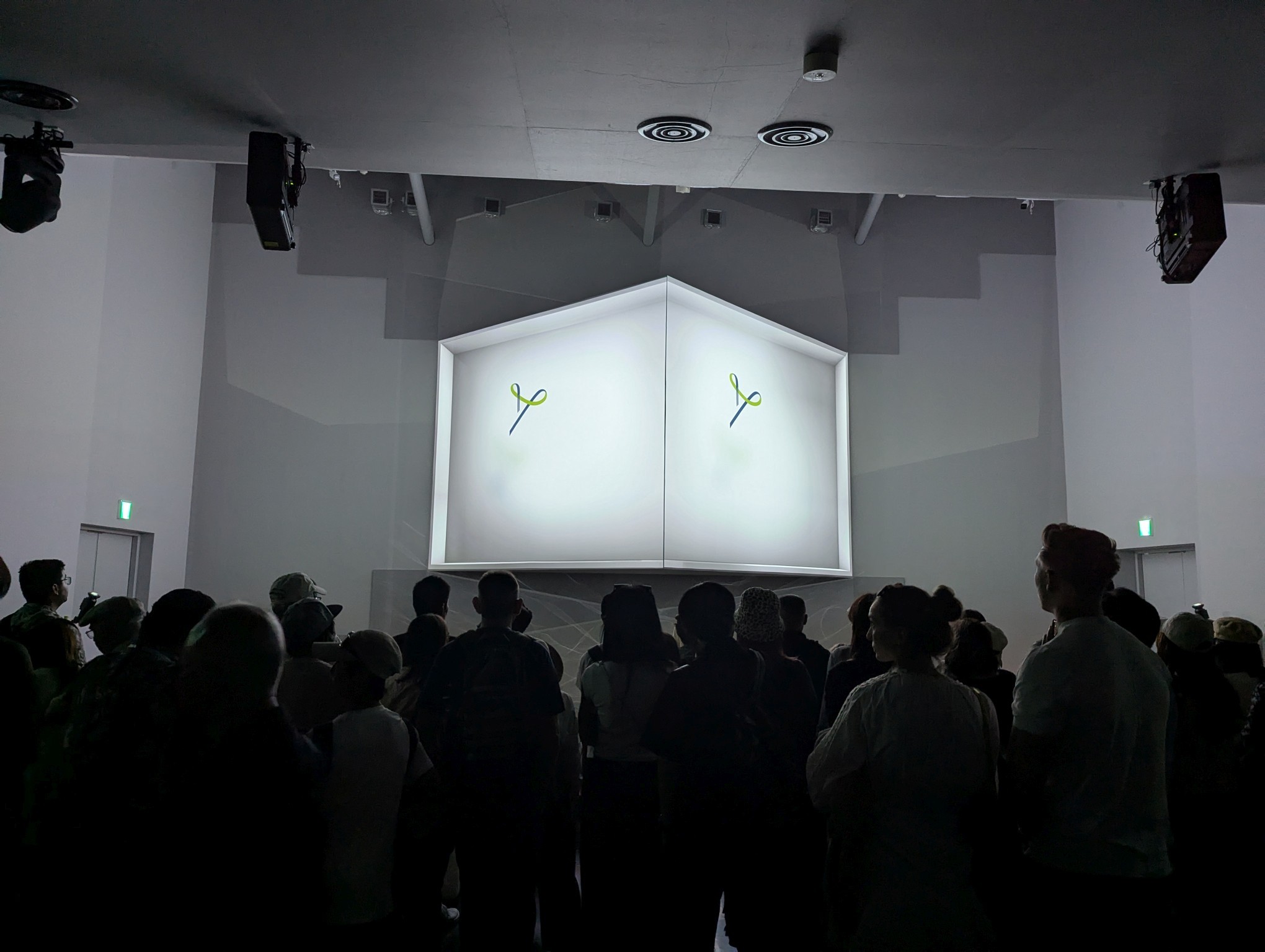
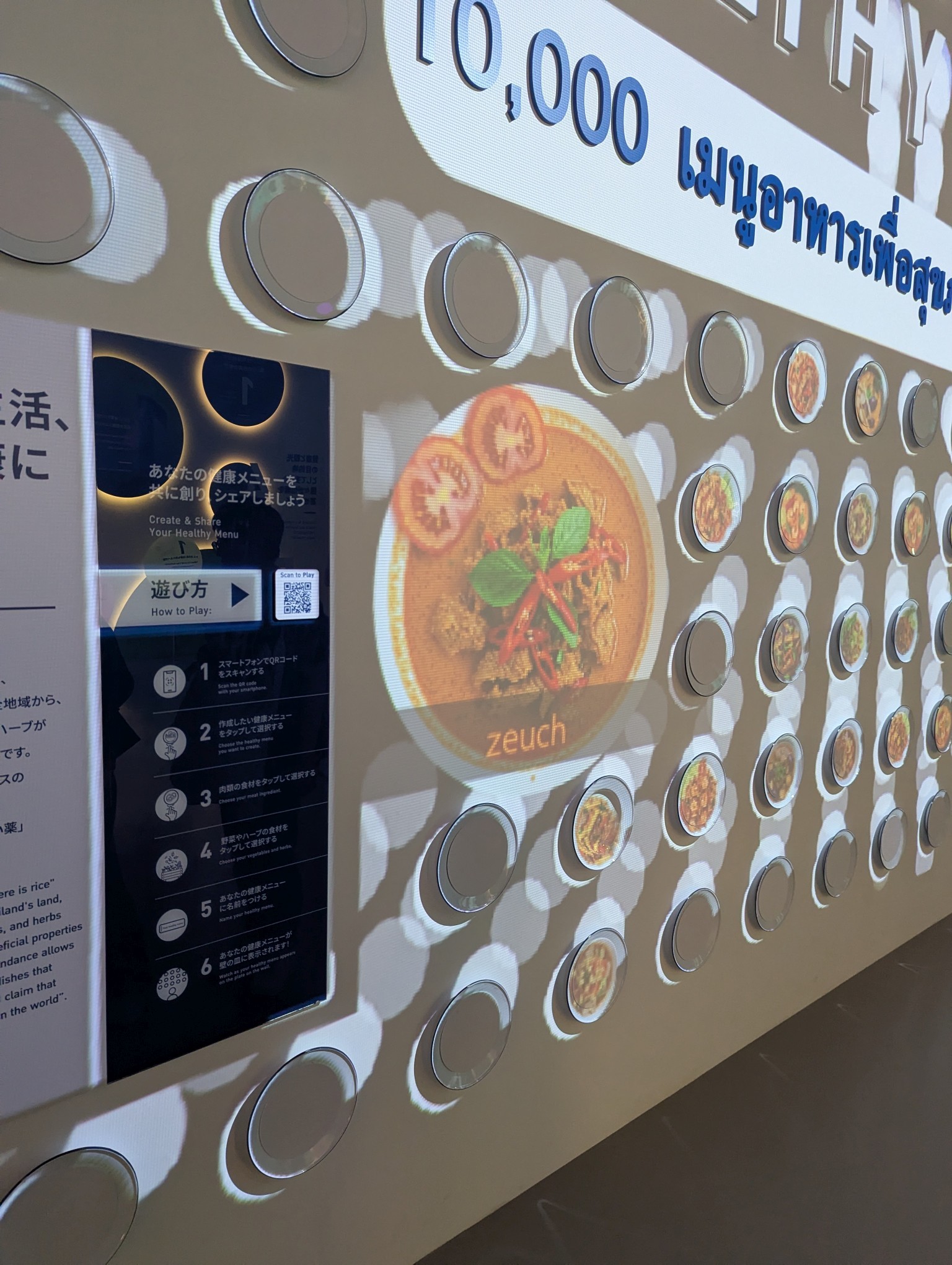
Speaking of Thailand, this was the next pavilion for which we queued. The line was relatively short here and after waiting, we were led into a room with a cube. A projection featuring inspiration for visiting Thailand and its famous products was played on the cube. The next room had samples of these products. I got the impression that the presentation emphasized food and medicine. Around the corner, there was an interactive installation where you could create your own Thai dish. Using your phone and a projection on the wall, you could create your own Thai dish (I cooked „Zeuchs“).
After visiting this pavilion, we went to the other end of the expo to buy ice cream and an umbrella for better sun protection. As time progressed, our next stop was the Kansai Pavilion, where we had a predefined time slot. The pavilion itself was set up like a pizza pie. From the entrance, you went to the center and from there, you could explore the different regions by entering the respective slice of the pavilion. First, though, we went around the circular column to collect our stamps, as each region had one.
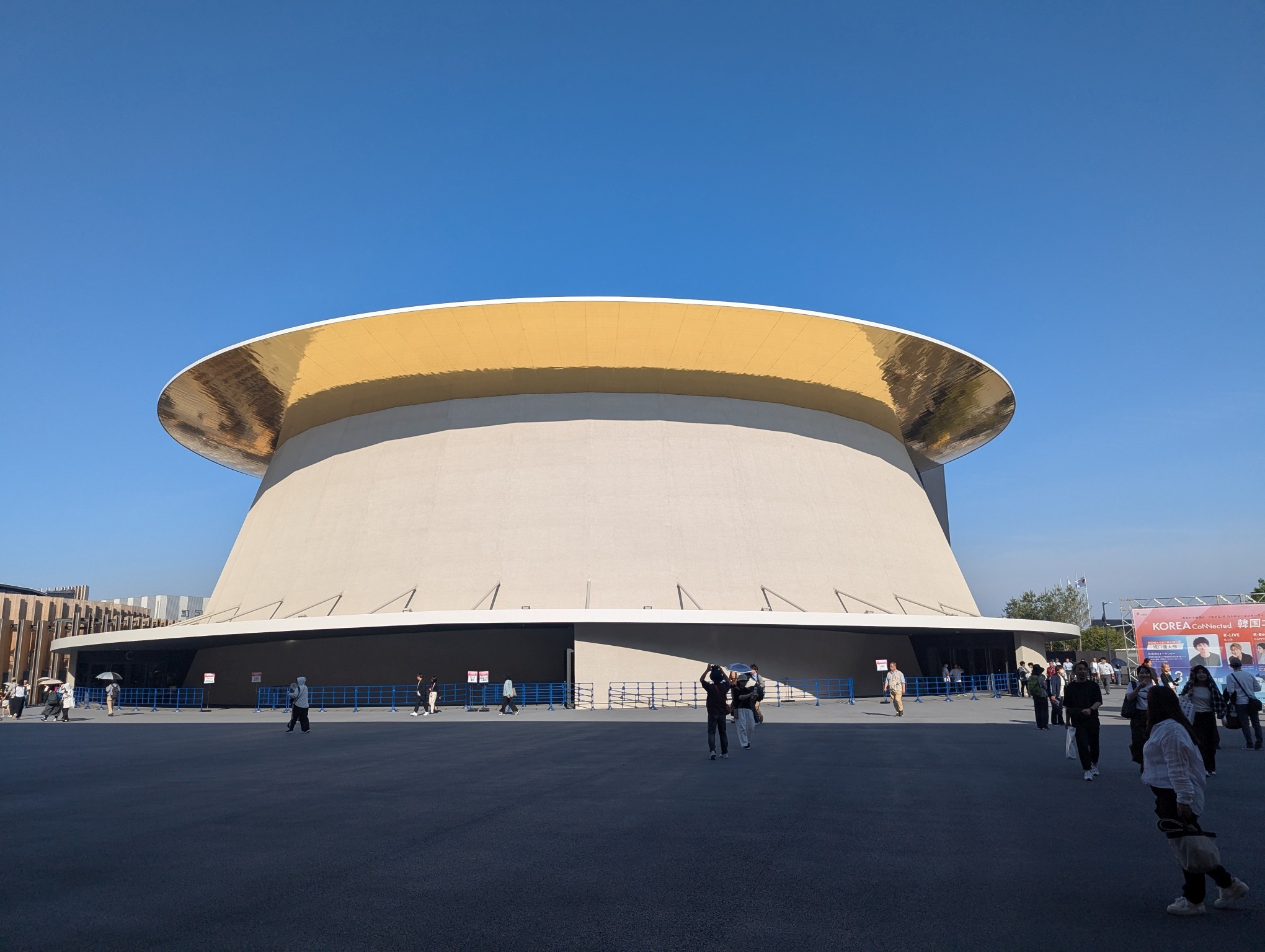
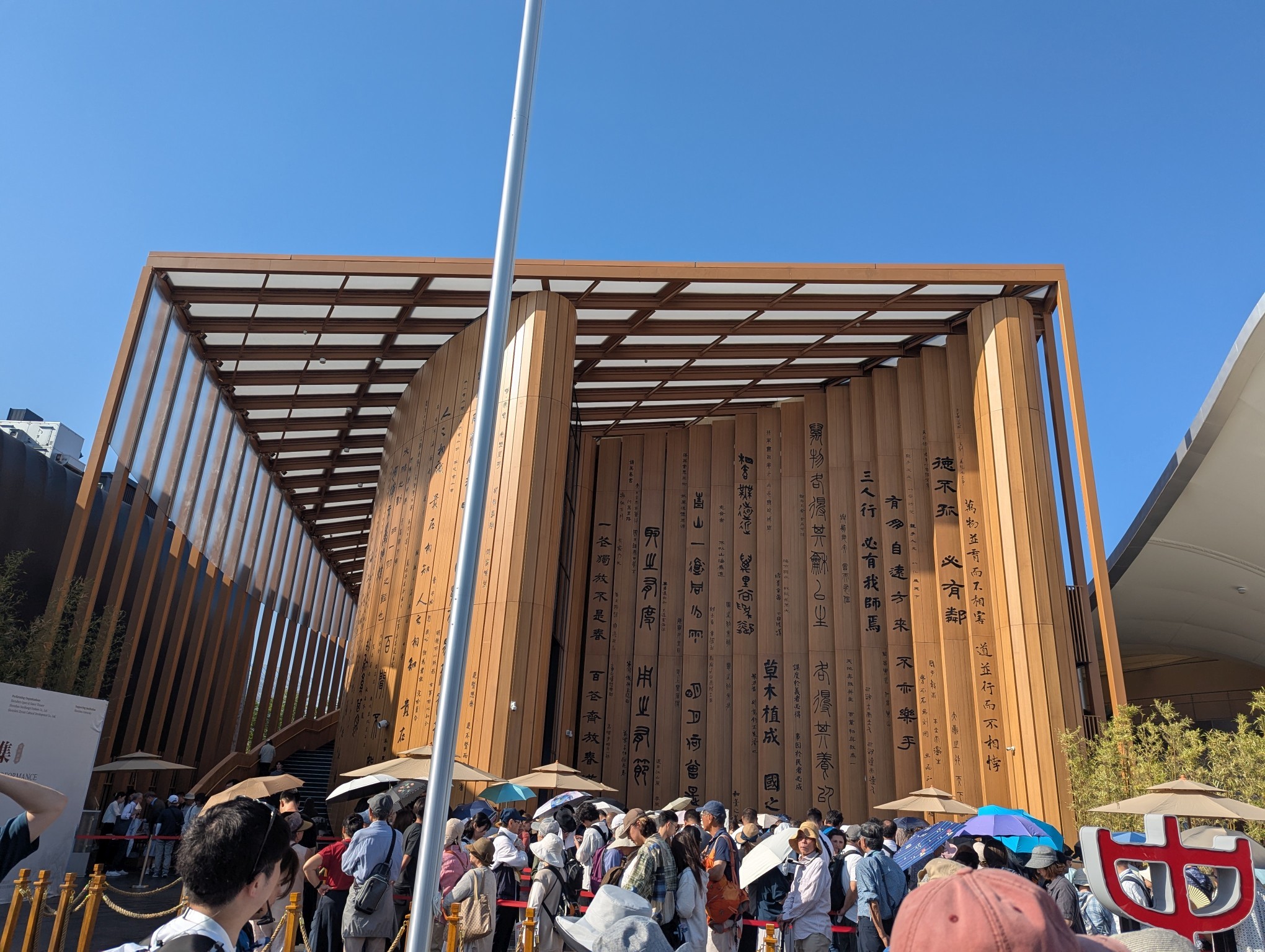
Speaking of stamps, as mentioned in part one of this series with the train station stamps, expo stamps could also be collected. Each pavilion had its own stamps. Some were placed in a spot next to the pavilion, while others required you to enter the pavilion to access them. We quickly filled our books with stamps and even found the special Expo stamp that changed every month.
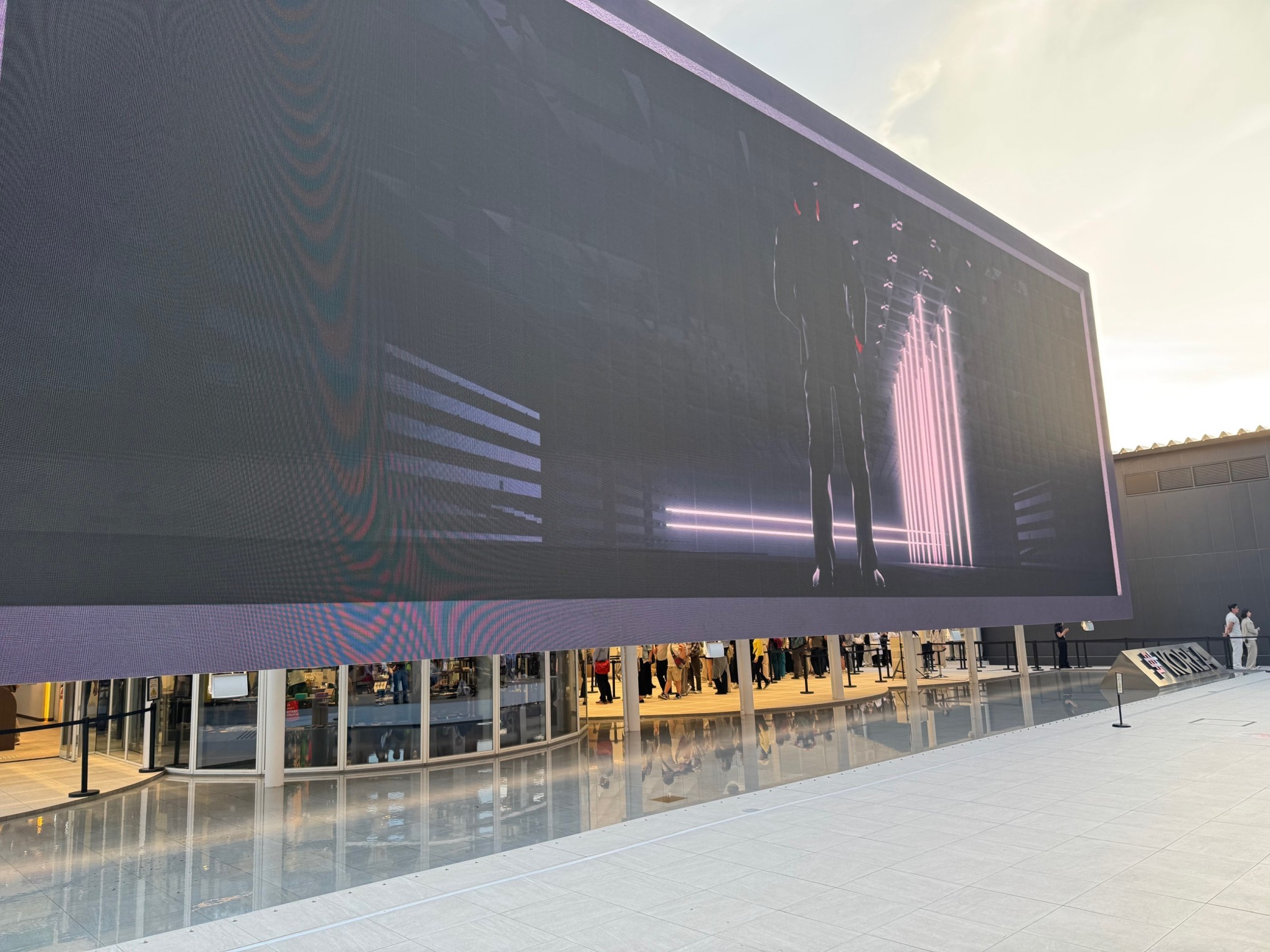
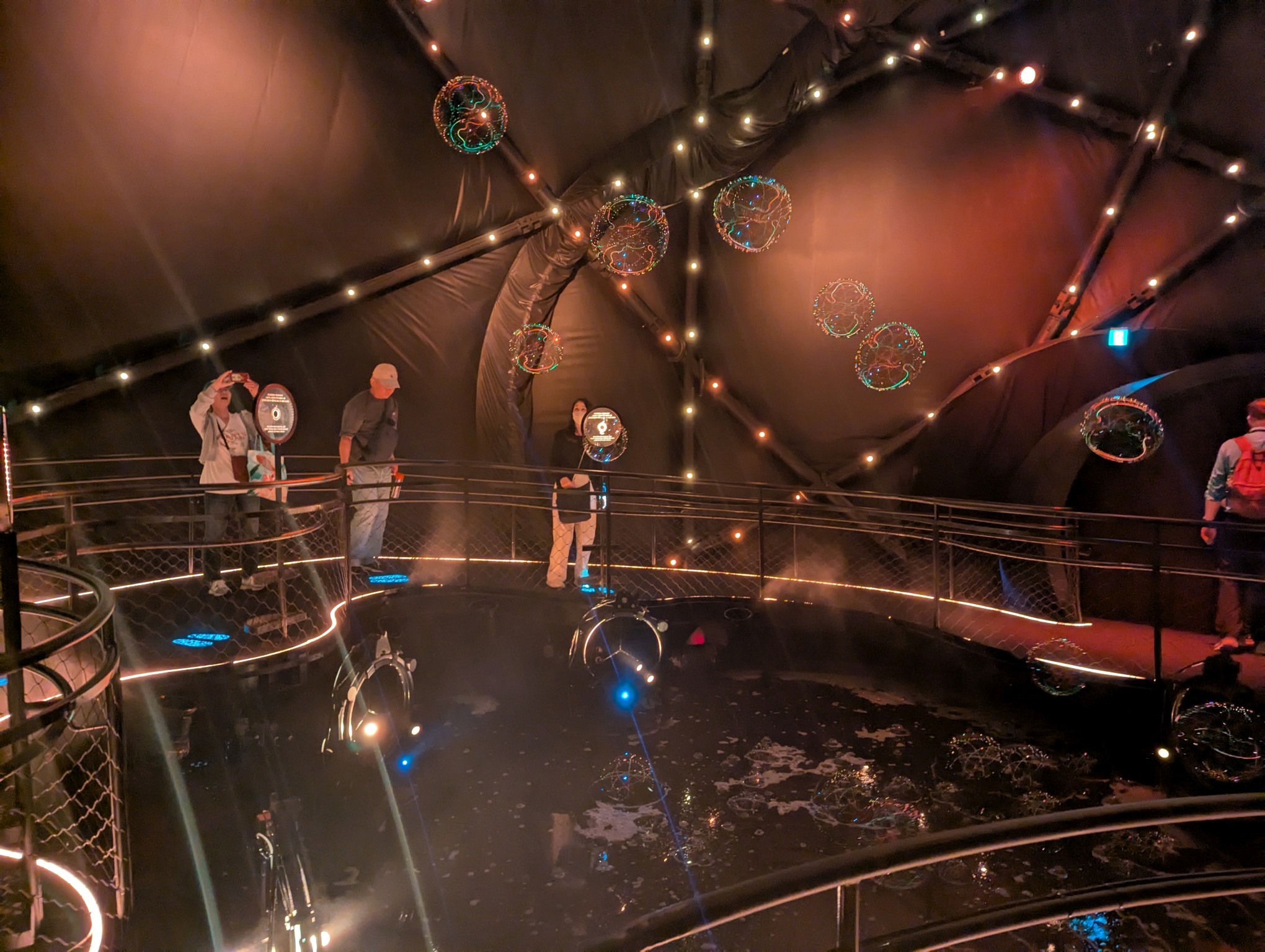
After exploring the Kansai pavilion, we decided to visit the nearby South Korea pavilion. When we reached the front of the line, we were led into sound booths to record a sound for an art installation in the first room. In this room, lights were mounted on the walls and ceilings to form cubes of light. Using a combination of music and light, the recorded sounds were played. In the end, we all agreed that it was a really weird and poorly coordinated experience that left us more puzzled about the intention. The next room had a PC fan setup where one could blow into it, which would then let bubbles fall from devices on the ceiling.
The last room was another video about technology. However, it was full of random CGI drones and other „futuristic“ gadgets used in an unrealistic fashion just to drive the nonsensical plot. This was by far the least interesting pavilion we visited that day.
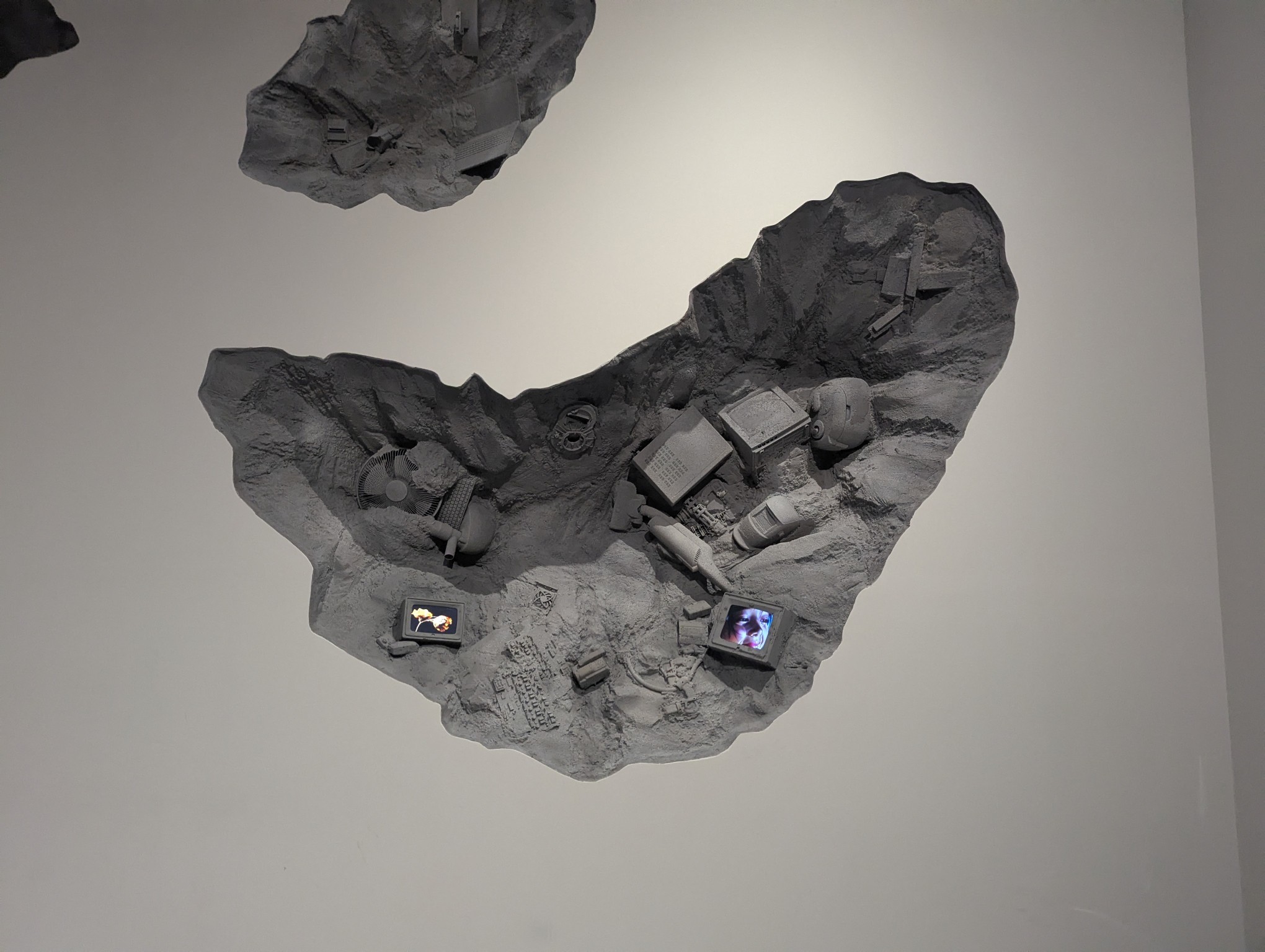
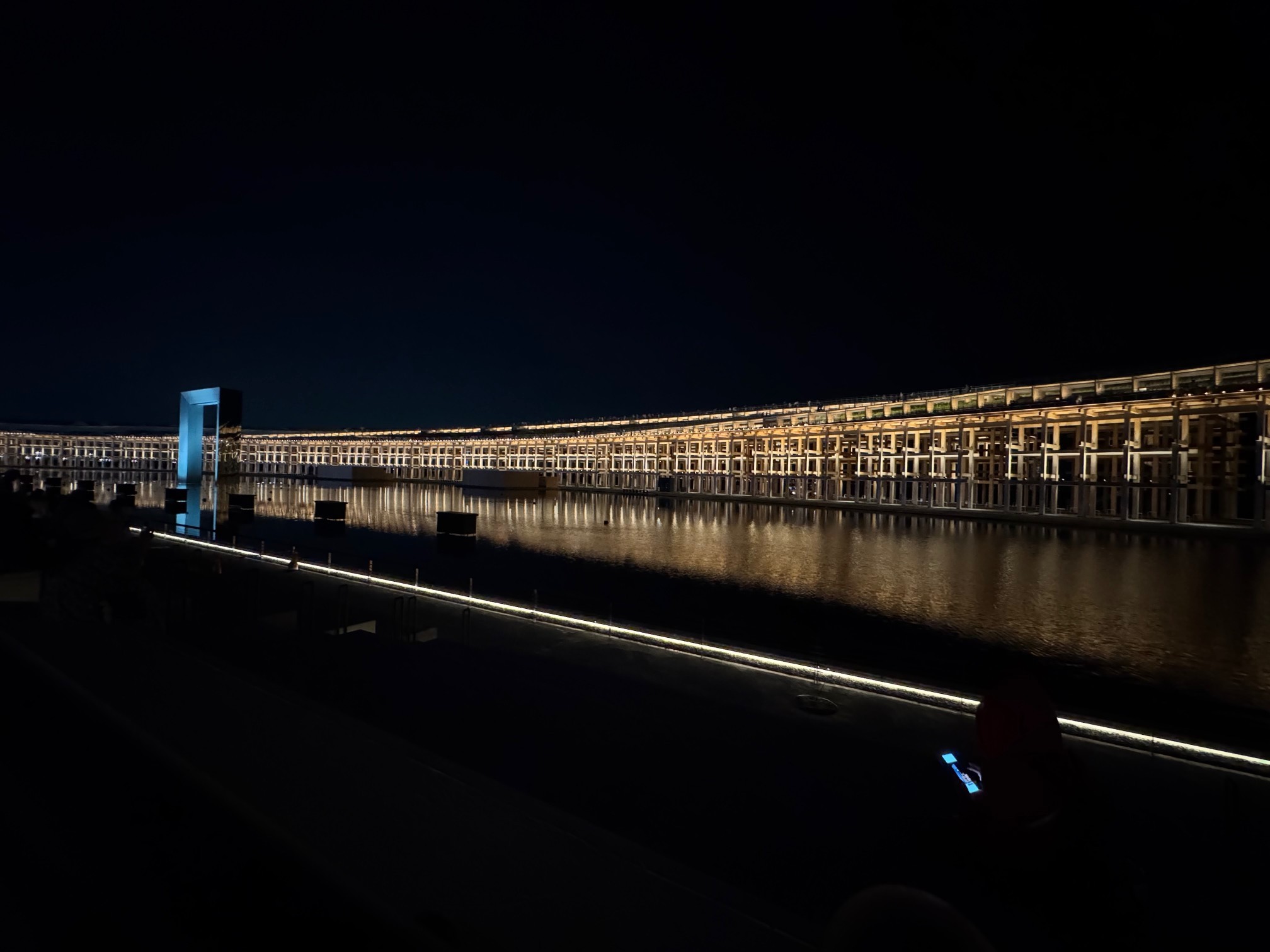
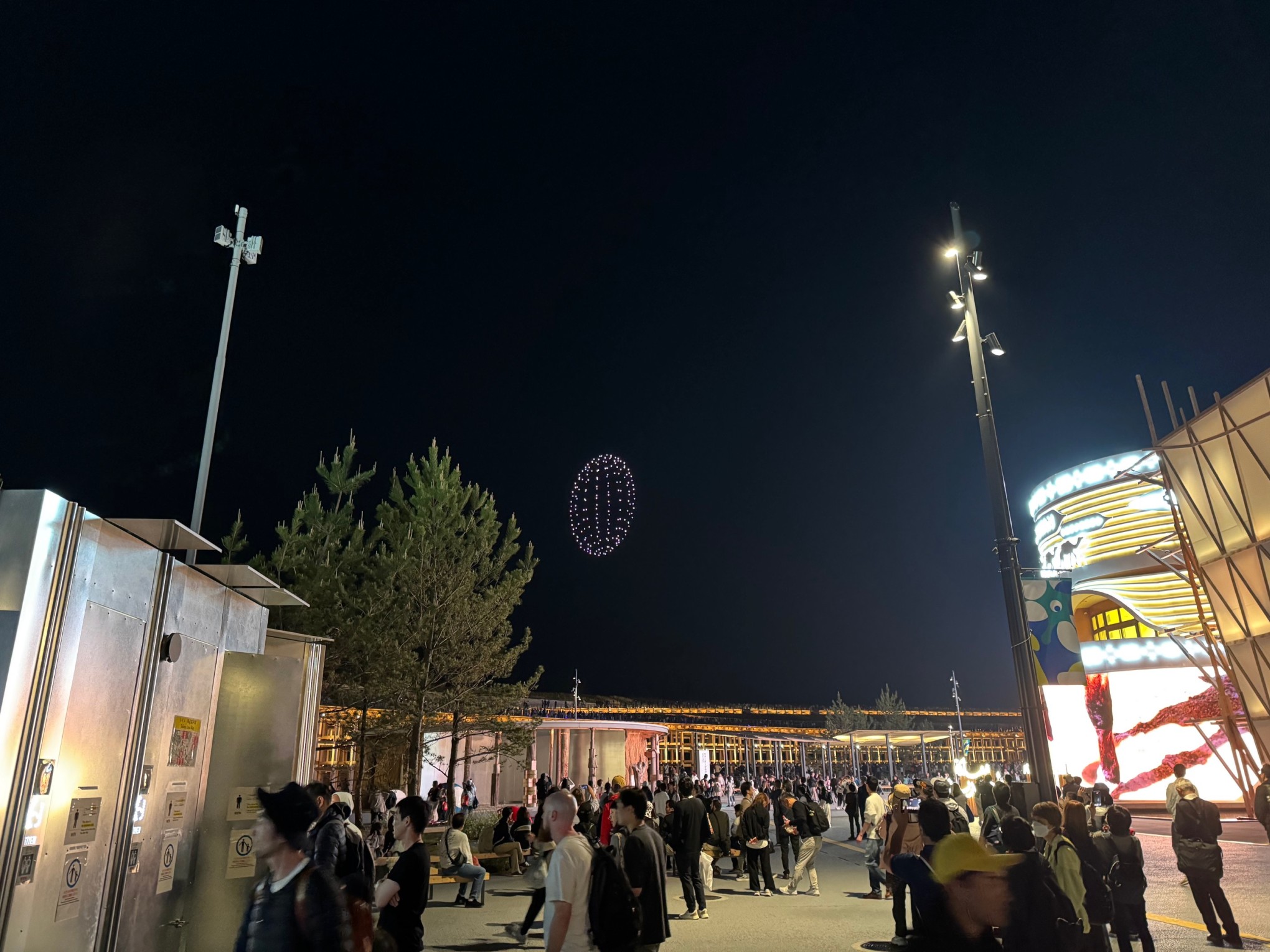
As the sun began to set, the impressive structures started to shine and come alive with light. To me, this was the best part, as a cool breeze set in and protection from the sun was no longer needed. As many people started to leave, the lines began to shrink. We managed to visit a couple more pavilions.
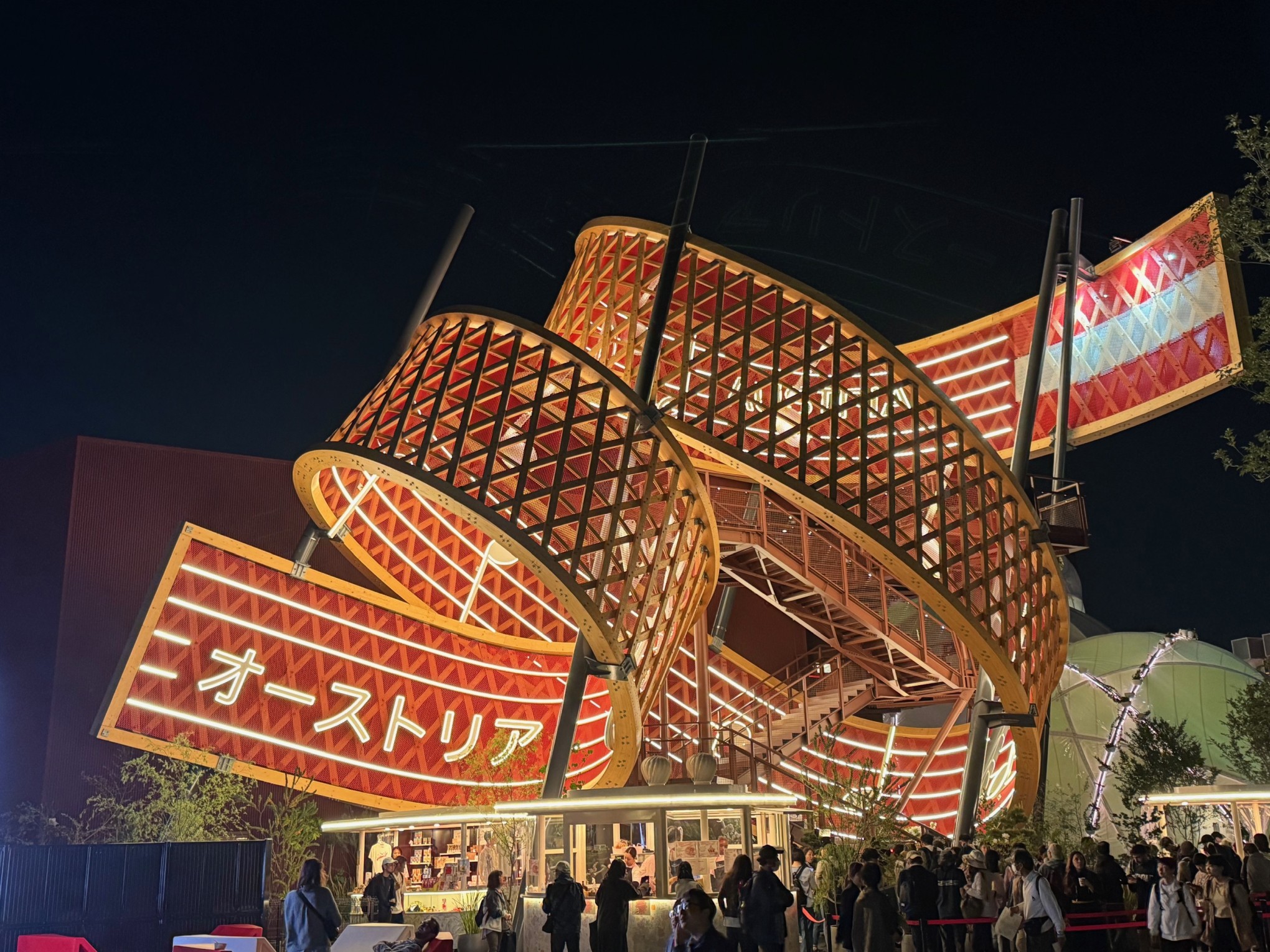
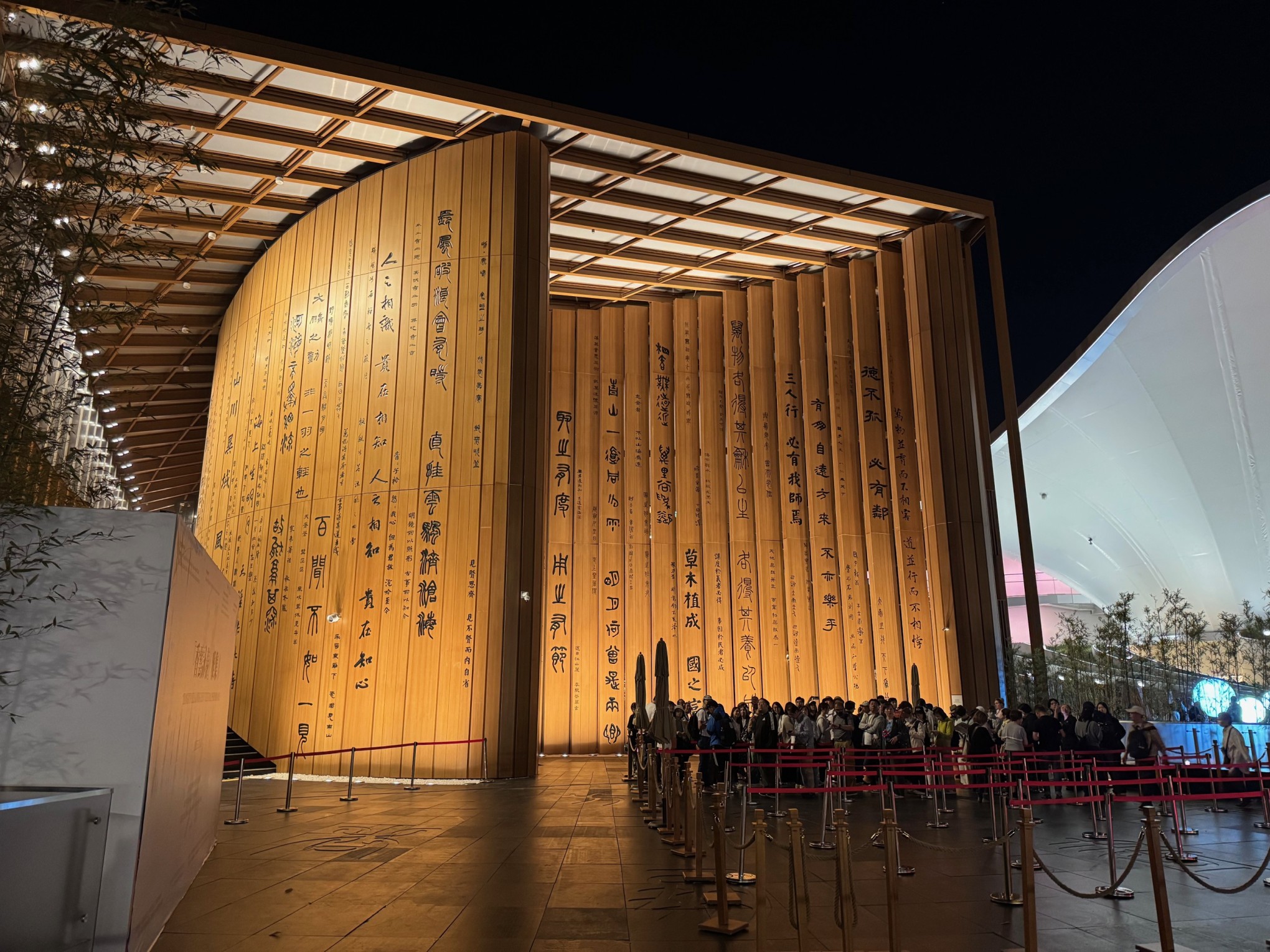
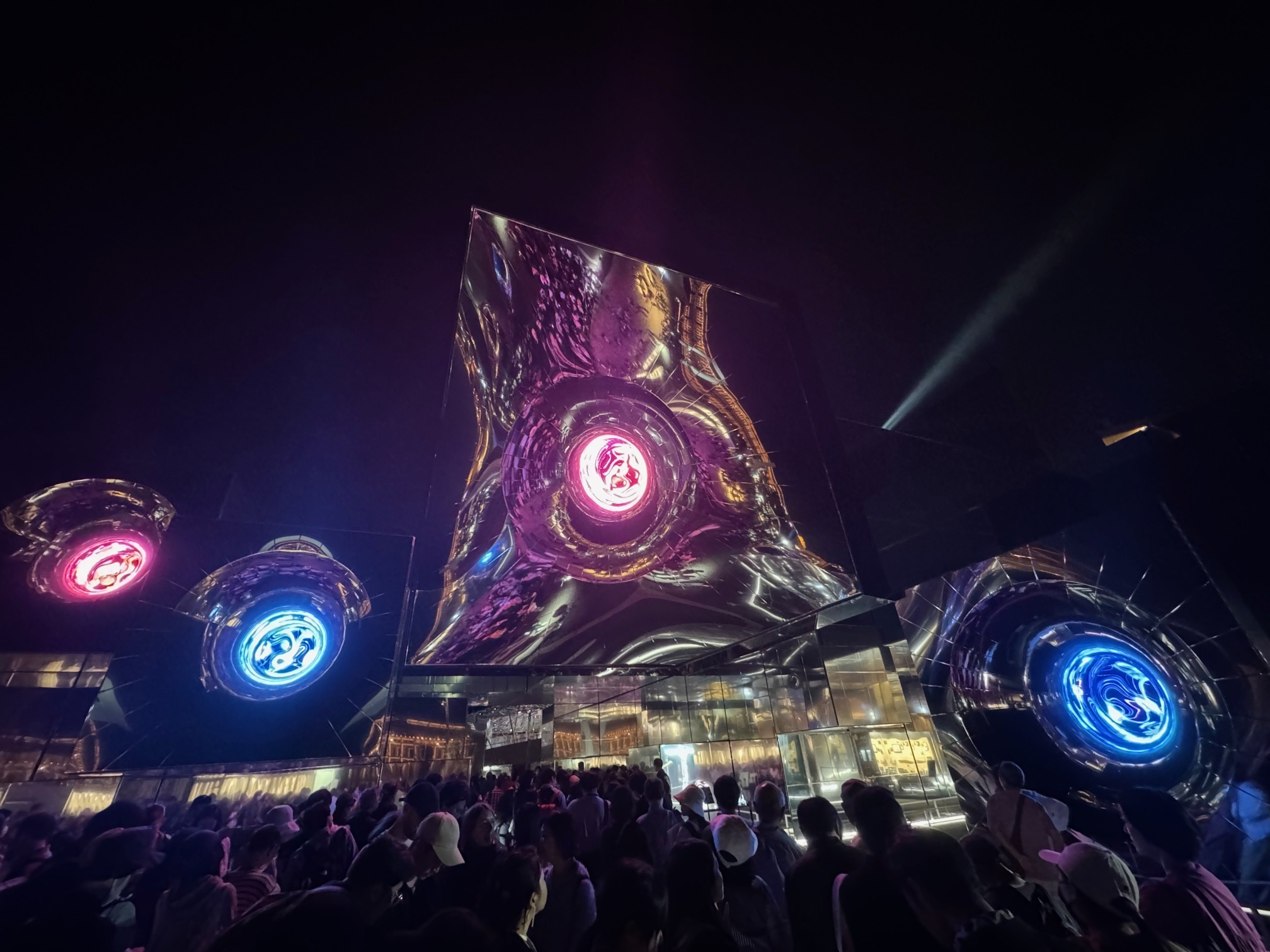
Since my cousin is from Switzerland, we wanted to get the corresponding stamp, but you had to stand in line at the Swiss pavilion to do so. So, we asked the attendant at the side entrance if we could just get the stamp. We had done the same at the German stand. There, we were „lucky“ and experienced German friendliness. They were discussing regulations about strollers and what to allow in the German pavilion. They gave us the stamp and continued their „friendly“ discussion. At the Swiss pavilion, the attendant simply asked us, „Are you Swiss?“ My cousin presented his passport and we were led into the pavilion without waiting in line. The pavilion had many spheres and a „Make a Wish“ fountain with a soap bubble system. It also presented some Swiss technological advancements. The Heidi anime character was cleverly used as a link between the two countries on the stamp image.
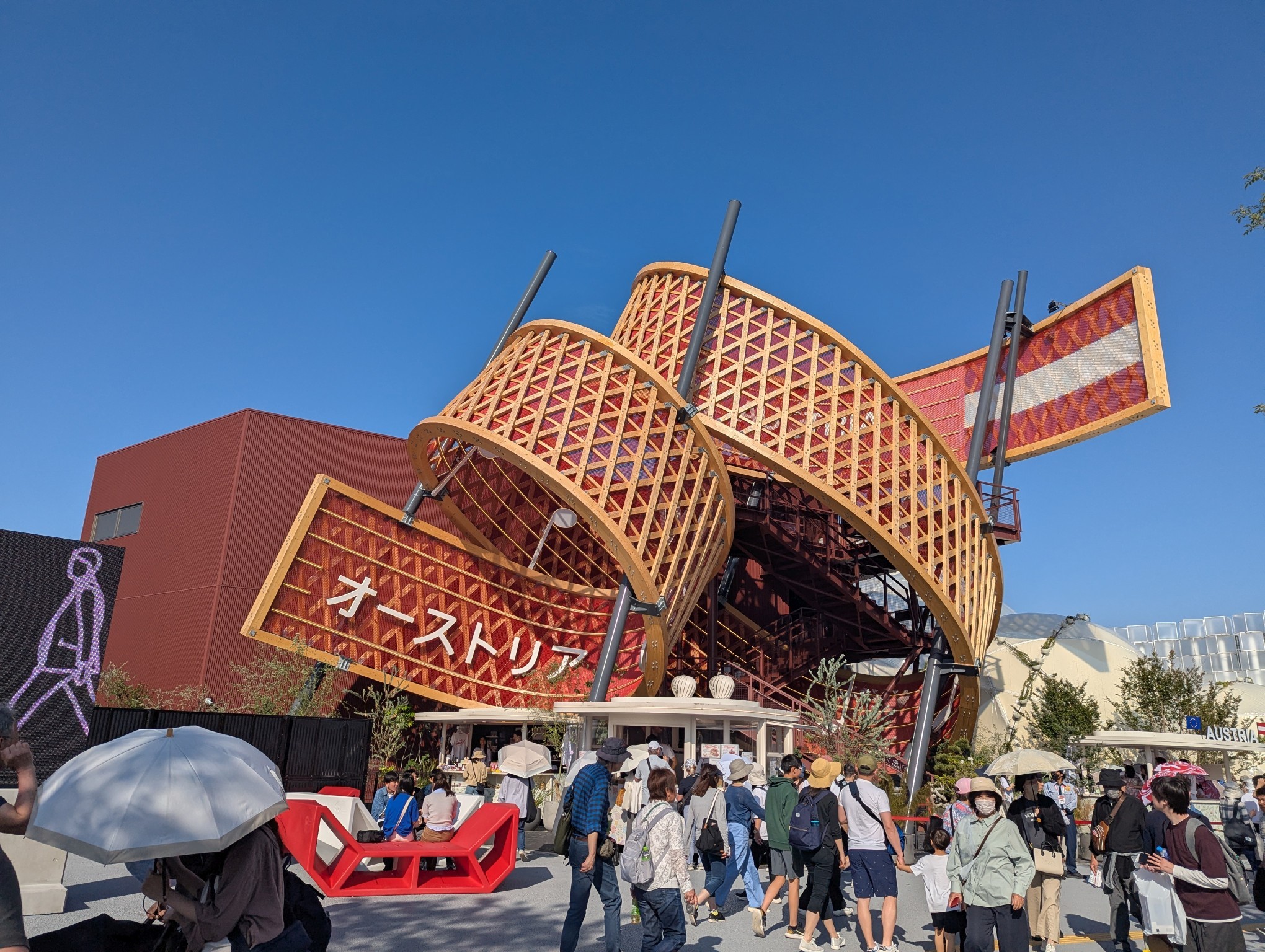
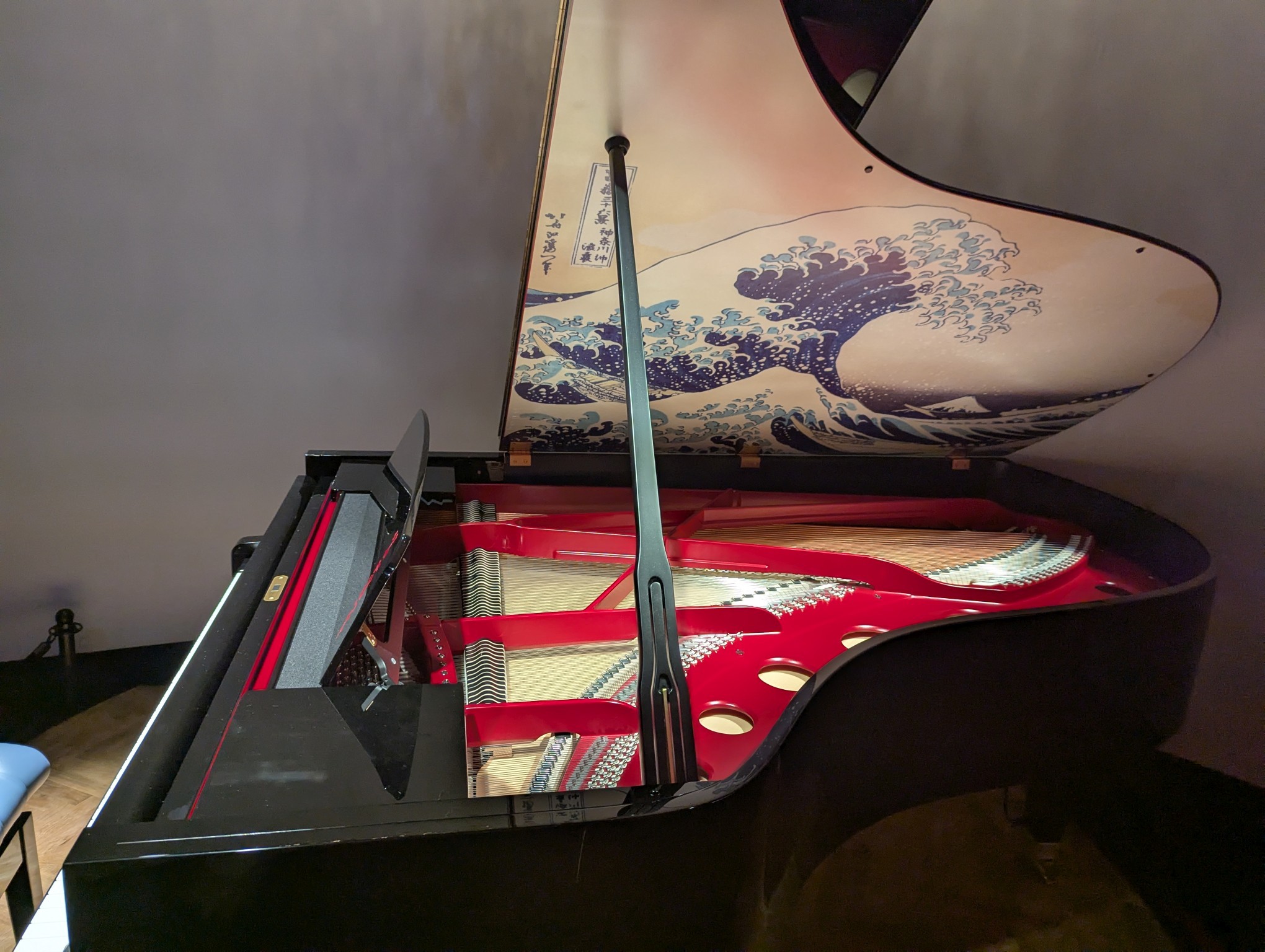
I decided to wait in line alone at the Austrian pavilion, which features a wooden sculpture of a music sheet. After entering, I watched a video celebrating the friendship between Austria and Japan. Next were some interactive game stations, which I skipped, followed by more informational spaces.
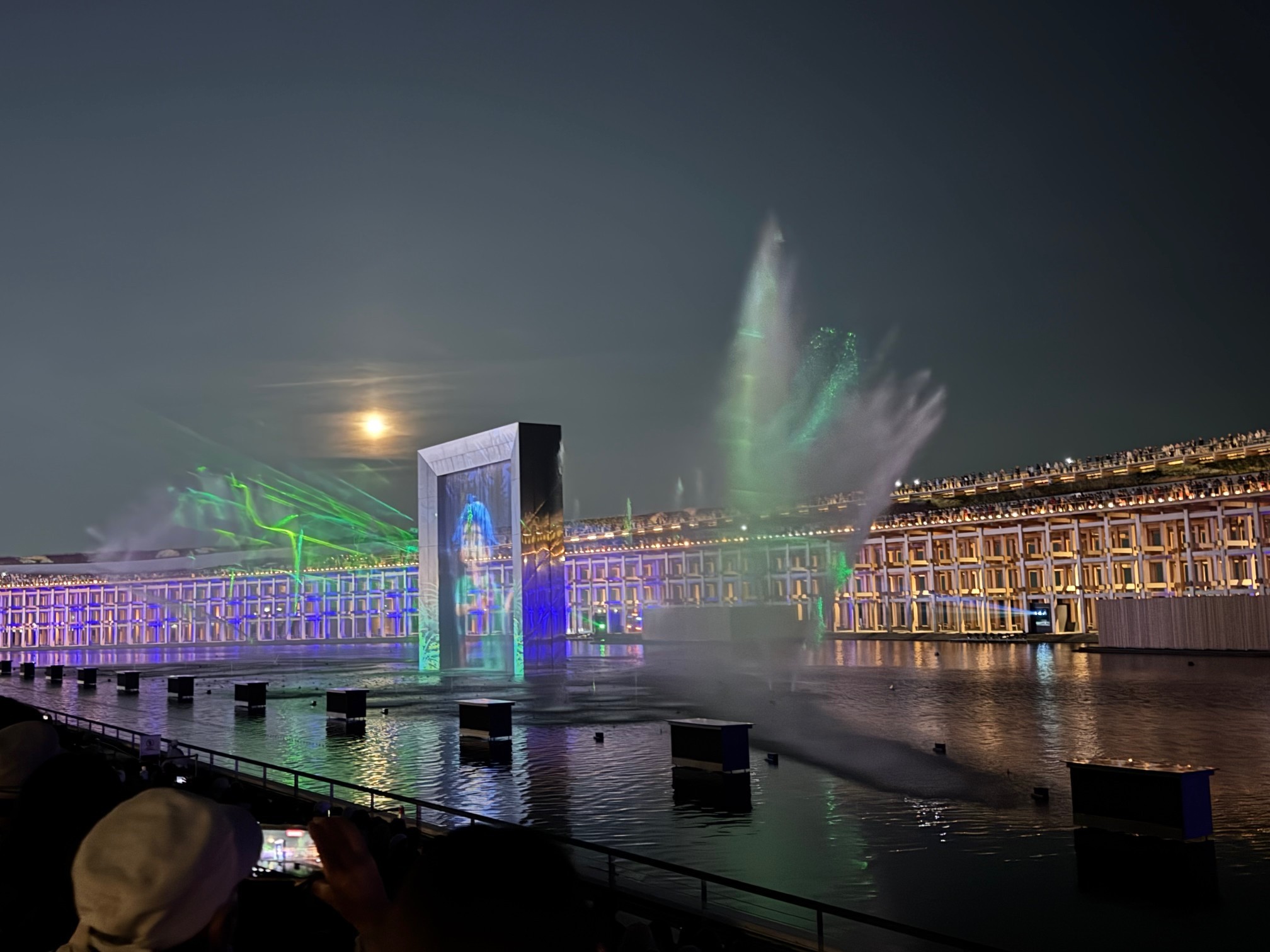
Once all the pavilions had closed for the night, a light, water and sound show started at the waterfront of the Ring. The show is titled Under the Midnight Rainbow and the full moon that night provided a beautiful backdrop for the spectacle.
After the light show, we enjoyed an drone show, which was impressive because it was our first in-person drone show. Before we left, we grabbed a quick snack. The convenience store, which had been fully stocked with fresh goods, was now mostly emptied out. To get some energy for the way back, we settled on ramen cup noodles.
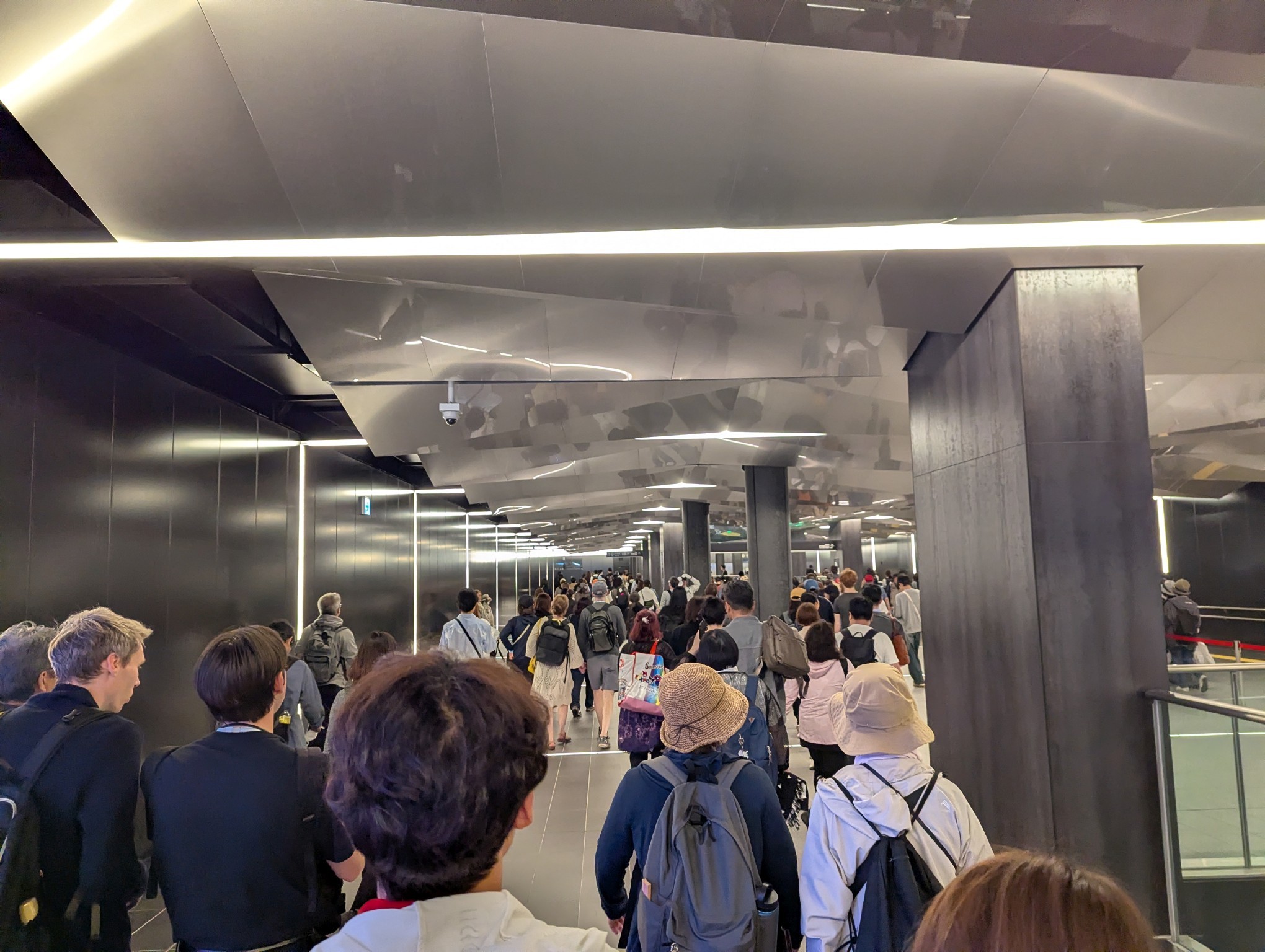
Getting out was similar to getting into the expo: lots of people and waiting. First, we were led around the entrance of the train station and then down into the depths of the underground stop. Staff with megaphones directed us the entire way, giving instructions in Japanese such as „continue,“ „watch your steps,“ and so on. According to my watch, I took 290,000 steps that day.
Nara, Kyoto and Kōbe
Today (Wednesday), we had set our sights on Nara and Kyoto. The initial plan was to leave early to make the most of the day. Sadly, due to a disagreement about ticket booking, this failed as we wasted time trying to get the right pass and get out the door. Ultimately, we missed the express train that would have brought us closer to our destination more quickly.
In the end, we left for Nara earlier than expected, but not as early as some of us had hoped. We had the first few hours in the park to ourselves. So, getting there early paid off.
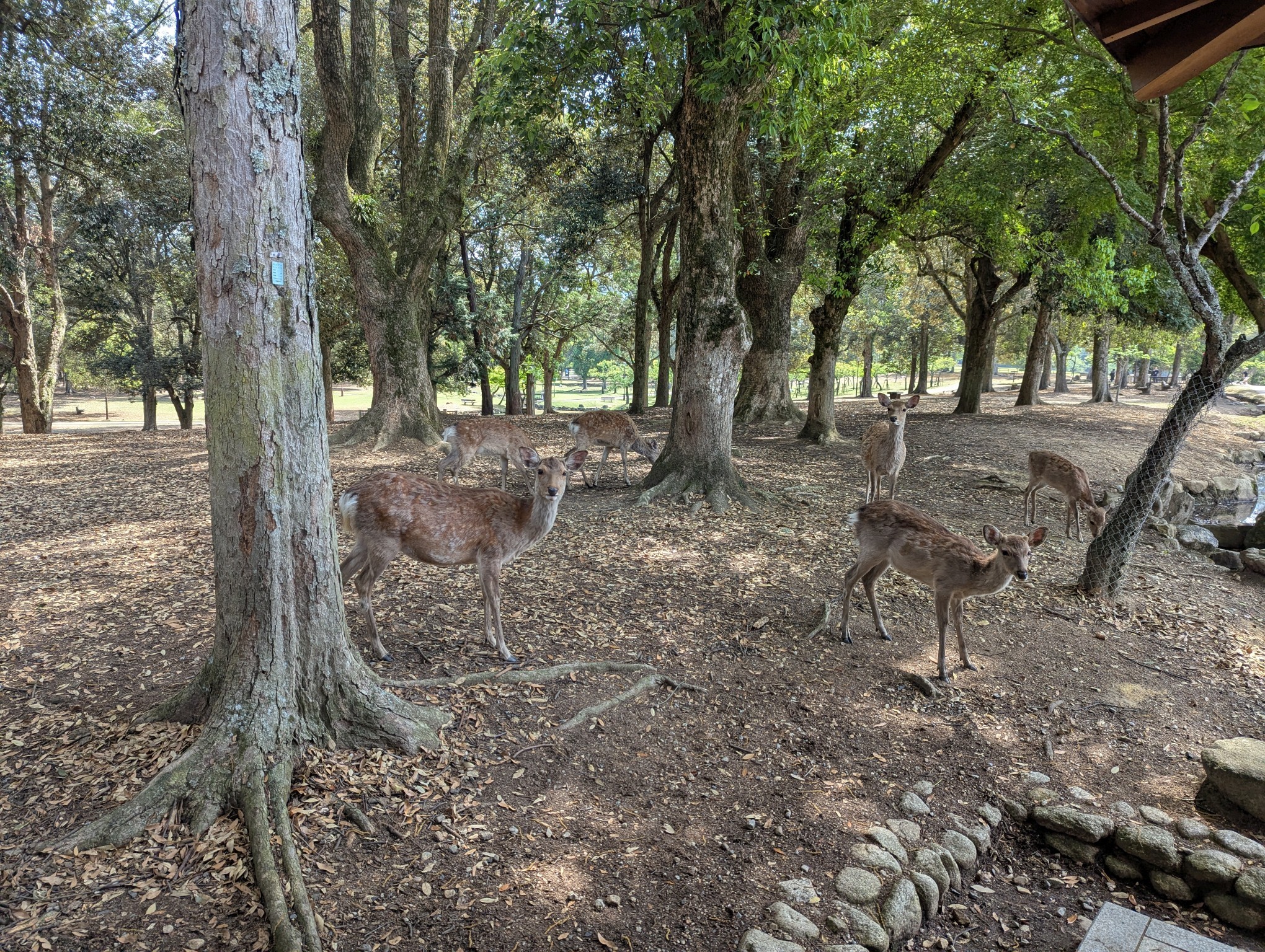
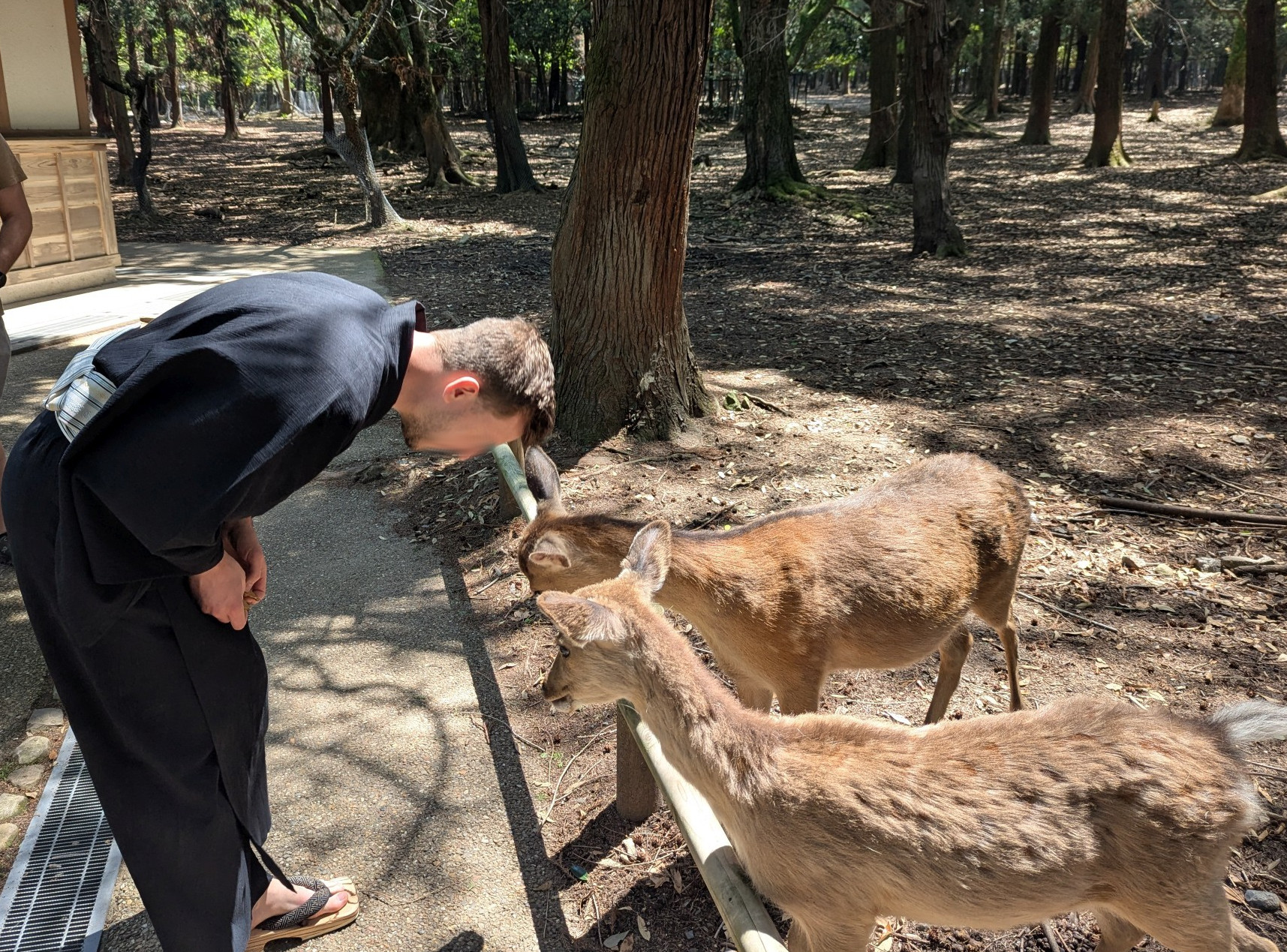
For breakfast, we made a quick stop at a local bakery and stocked up on coffee and baked goods. The plan was to eat the food in the park. While the local deer initially seemed peaceful and friendly, they swarmed us once they noticed that we had food. One even tried to eat the bread in the plastic bags. If you move away slightly and don’t leave your bags of food lying around, the deer will stop pestering you. You can buy biscuits made for animal consumption to feed the deer in the park.
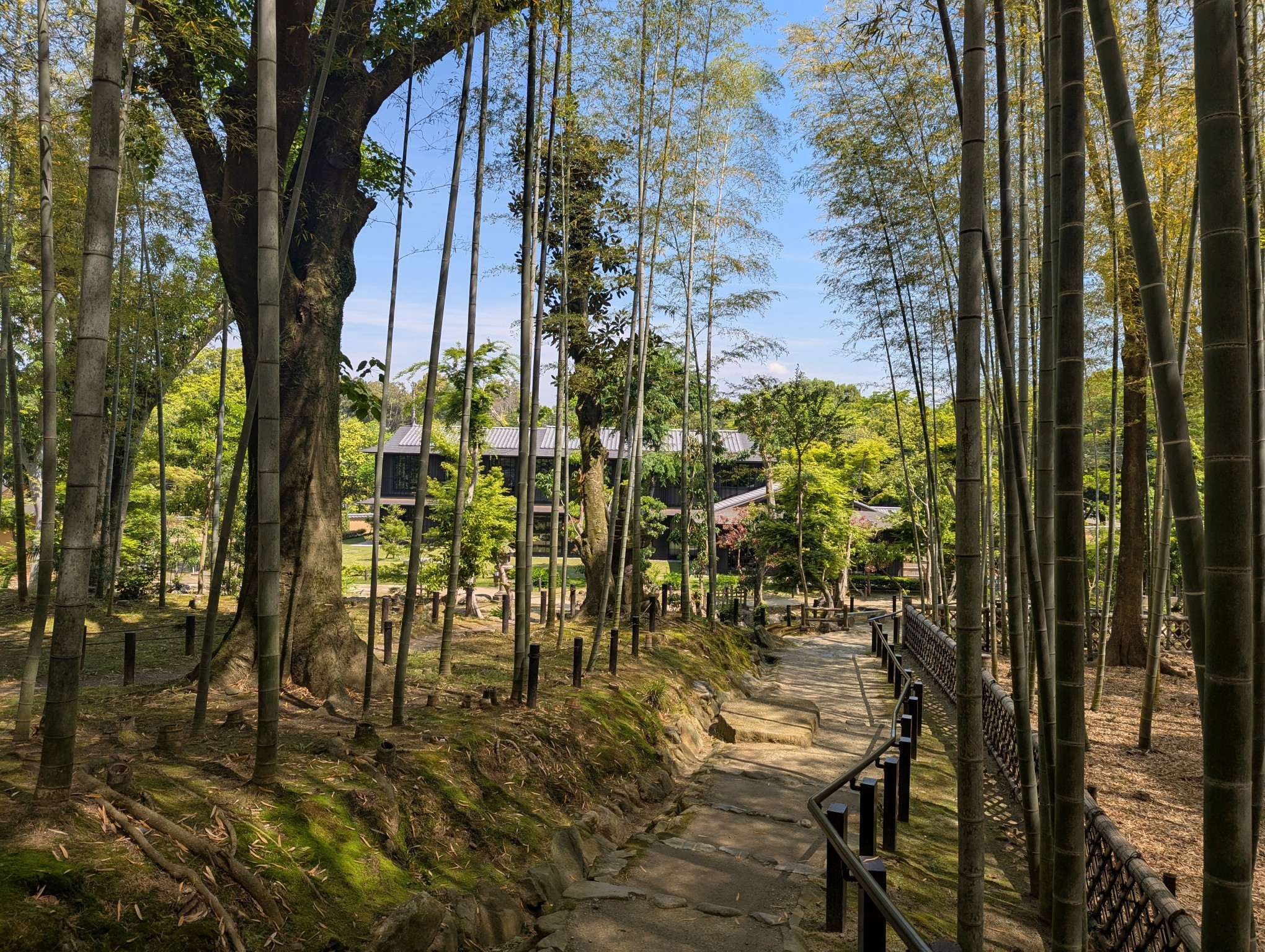
We stumbled into a nearby place to grab something to drink. It was listed as a coffee shop, but it turned out to be a hotel with adjacent bamboo gardens. The waiter told us that they were only open to guests at a later hour, so we briefly explored the beautiful garden and then left to go back to the park. Of course, there was a vending machine there that supplied us with refreshments.
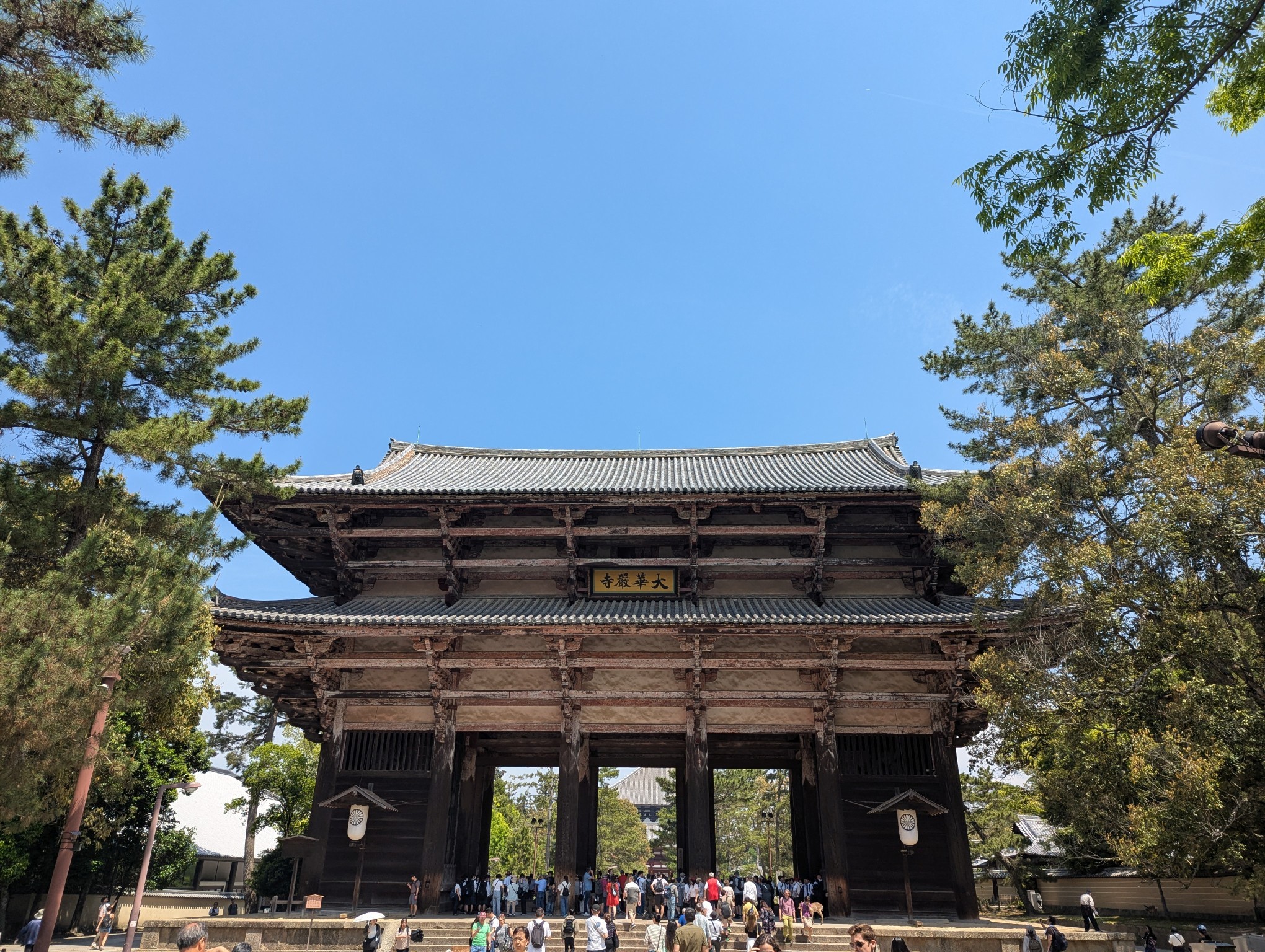
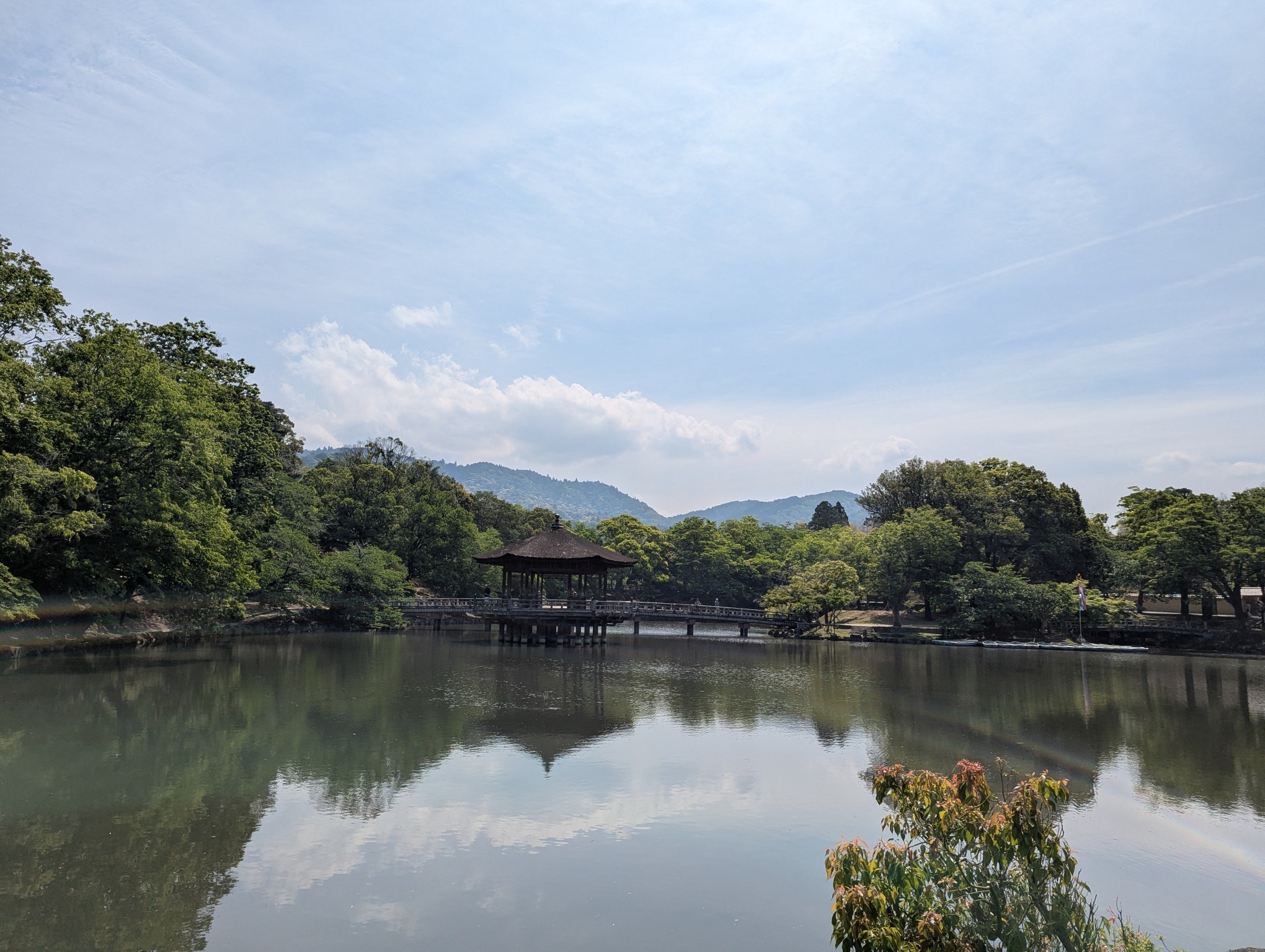
Then, we decided to visit one of the park’s temples, but the crowds had arrived. The peace and quiet was gone. After a brief stop at the tourist information center to get the Nara Park stamps, we headed to our next destination: Kyoto.
First, we visited the Senbon Torii shrine, which is known for its many torii gates. I took a photo of my cousin wearing his yukata, which he had brought to wear for the occasion. Then, we stopped by a nearby coffee shop to escape the heat and so my cousin could change clothes because his black yukata was trapping too much heat.
The coffee shop is great. It’s right next to the temple and if you sit in the back, you get a view to the nearby pond. Unfortunately, we missed the lunch menu, but the cake and toast were filling. The cold drinks gave us the energy to continue up the mountain.
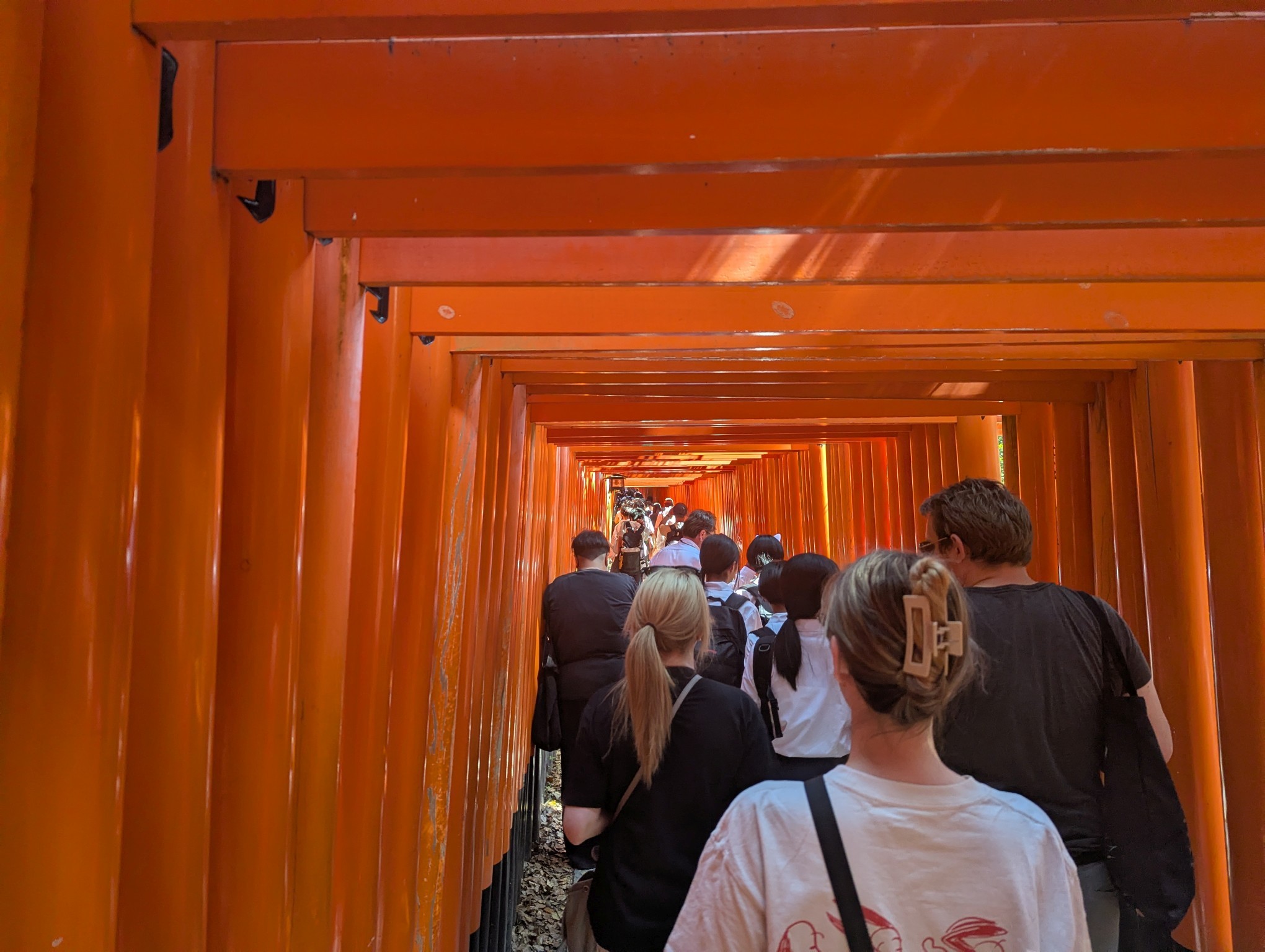
The ascent is really fascinating. At the beginning of the hike, there are crowds. The farther we went, the more the crowds dispersed and thinned out. Soon, we had entire sections of the path to ourselves and could wander at our own pace. The alleys of torii gates are interrupted by small temples, sometimes accompanied by shops or graveyards. In typical Japanese fashion, there are also several vending machines set up along the path that serve chilled drinks. After walking up the mountain for some time, we rested at one of the several junction.
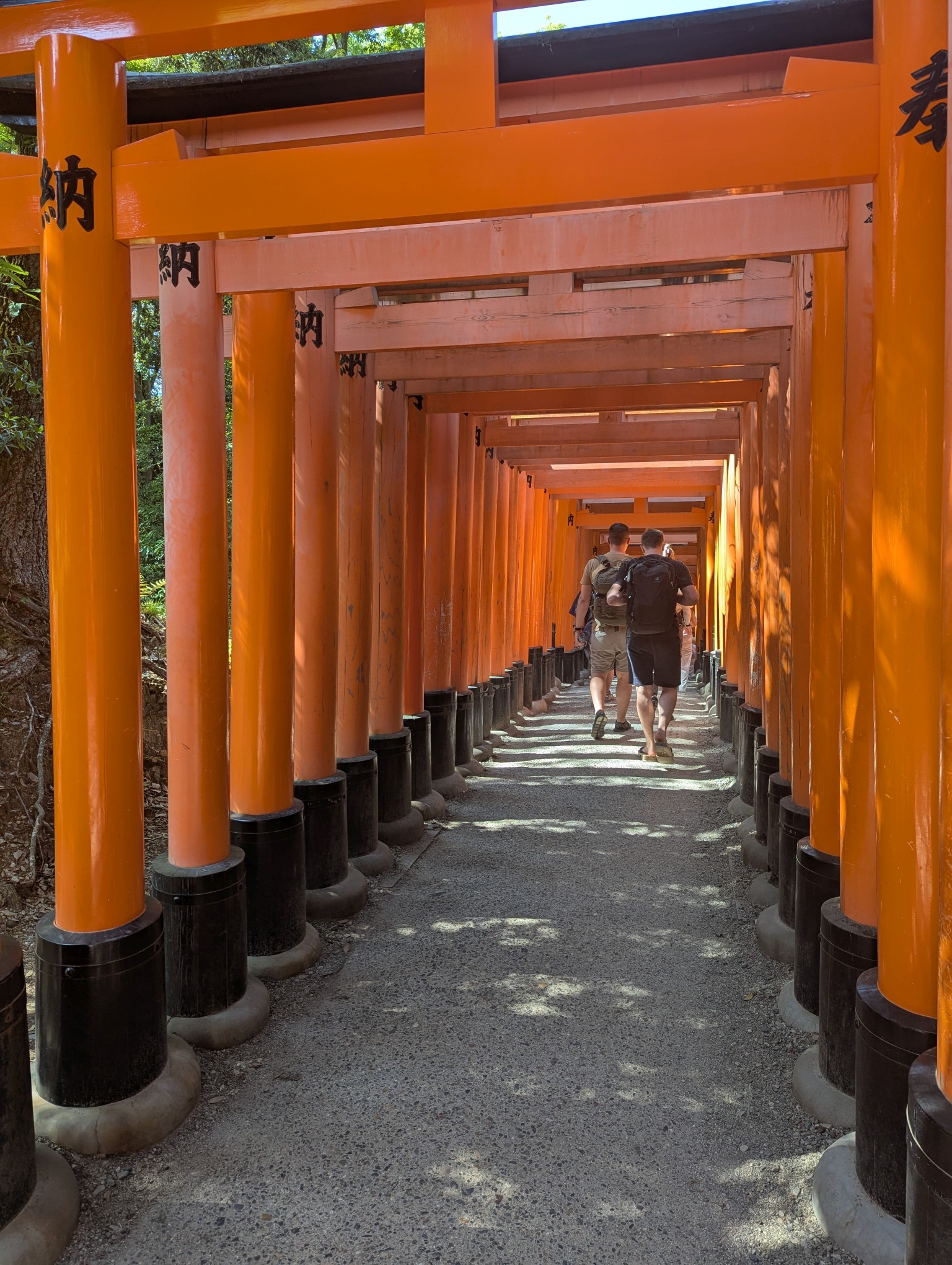
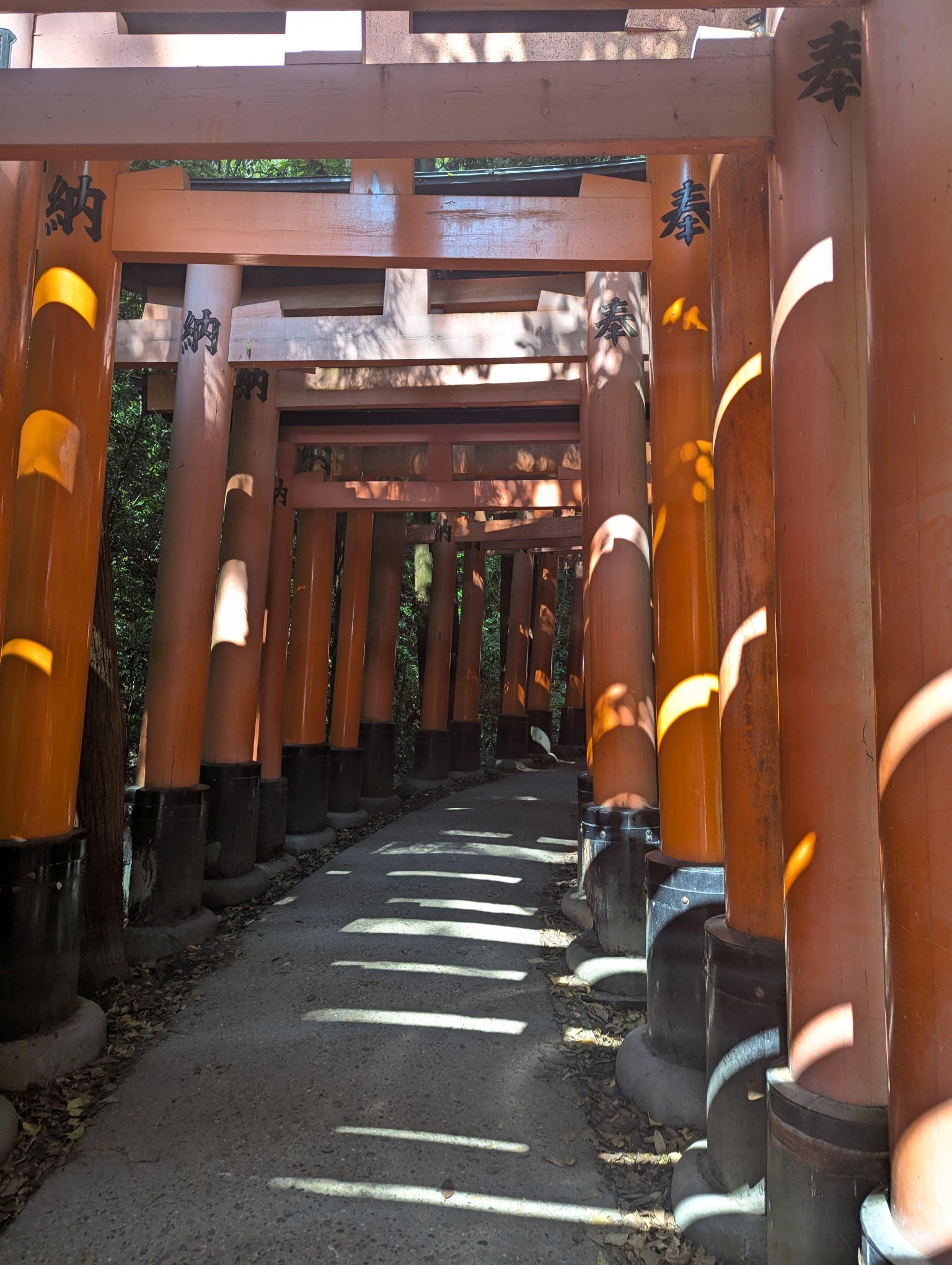
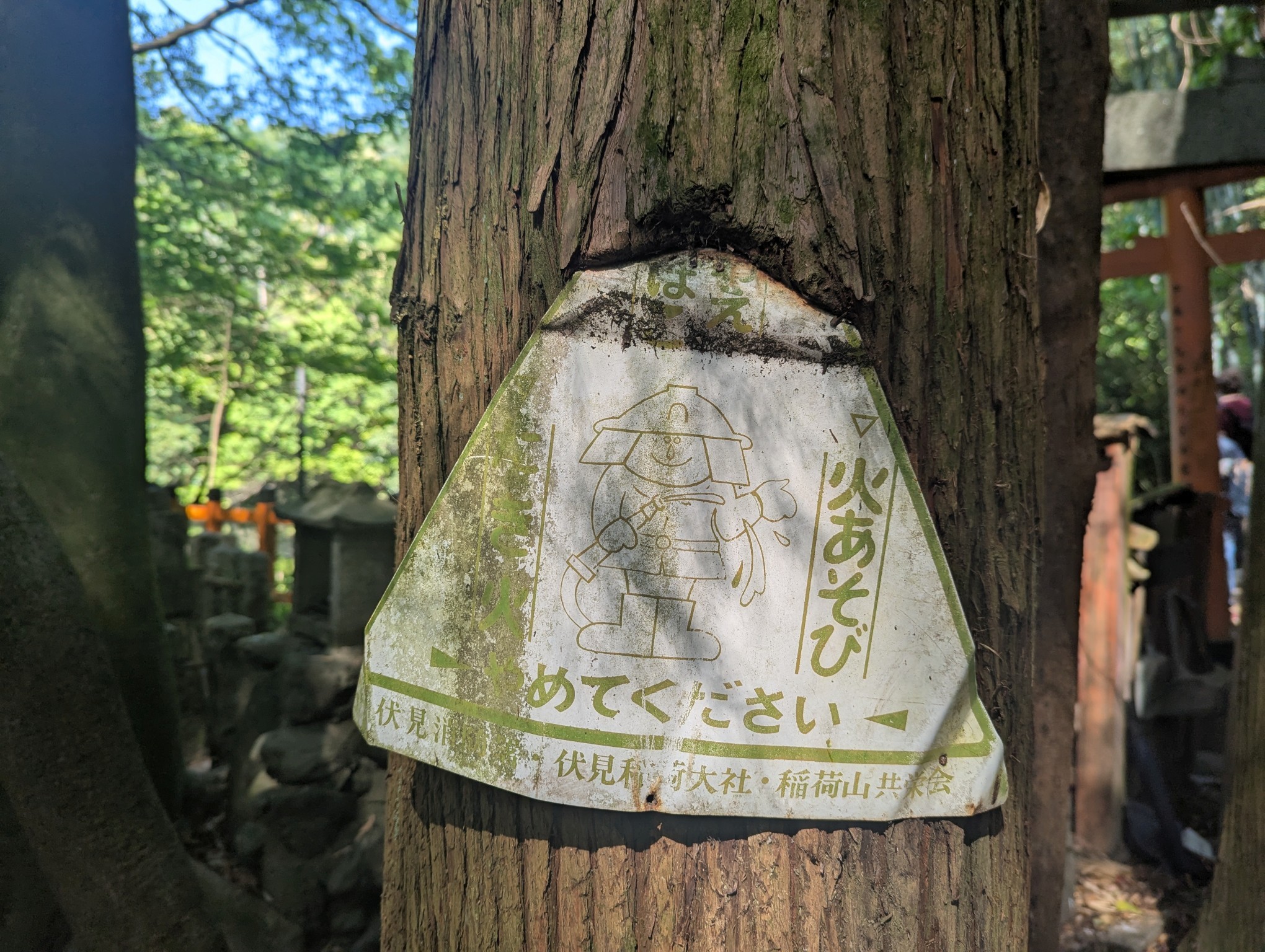
When we reached one of these junctions, we had to make a decision. We could either continue exploring the temple grounds and walk further up the hill or head back to Osaka to freshen up and spend the evening exploring Kōbe. Since I was exhausted from the previous days, the idea of a trip to Kōbe with a steak dinner sounded more enticing to me.
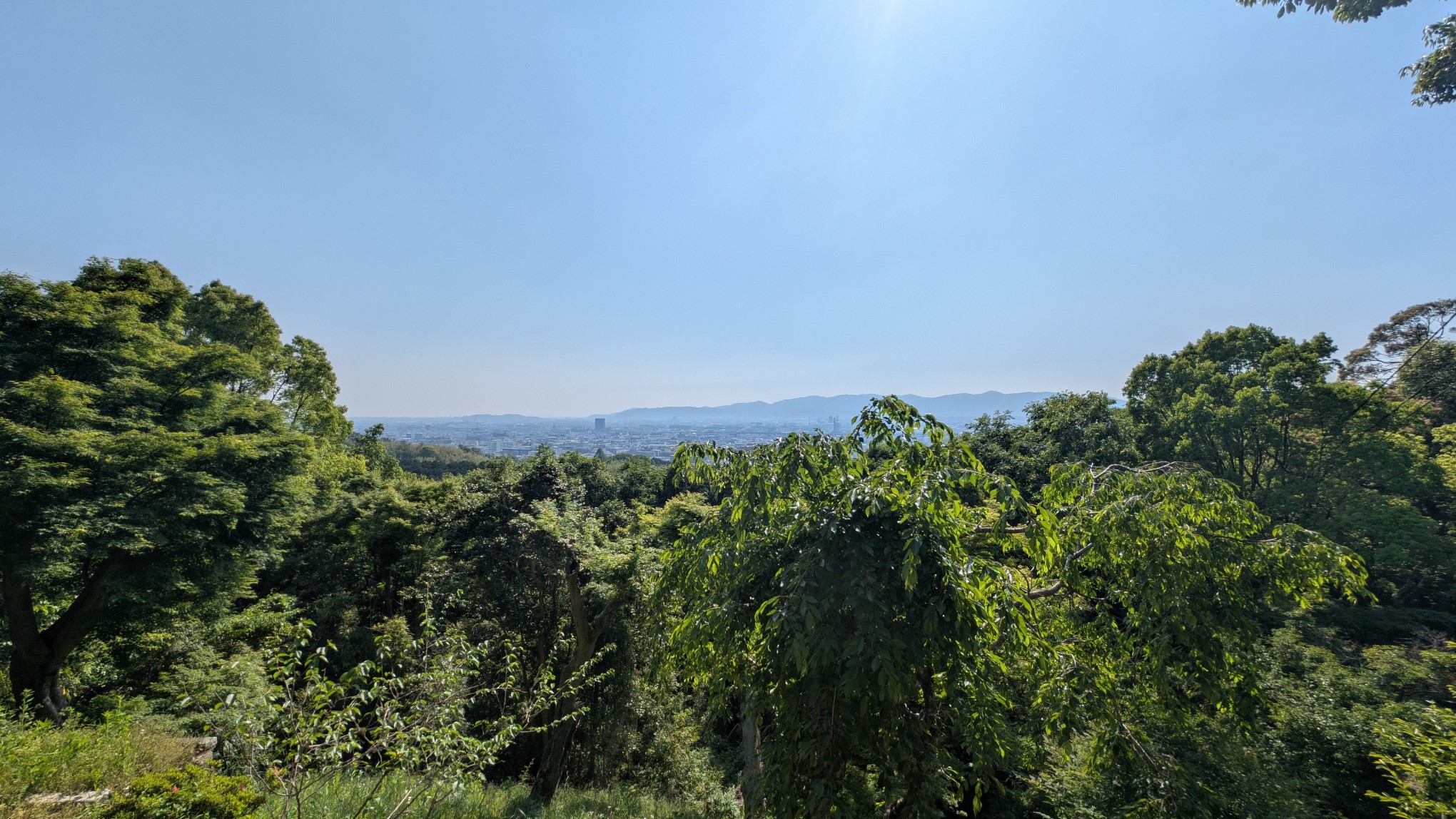
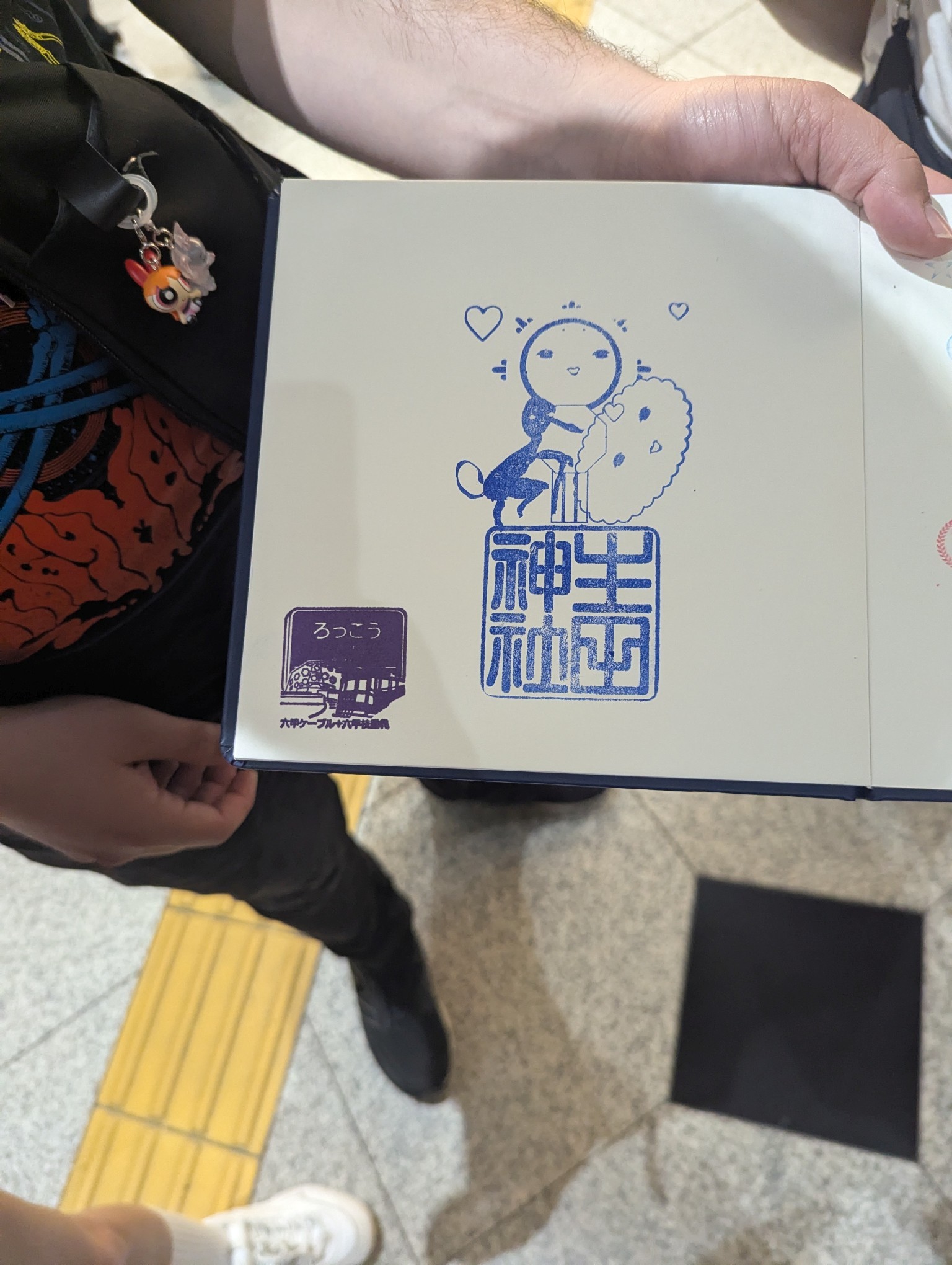
So, we headed back down from the temple jungle into Kyoto City’s jungle. Since there are several connections to Osaka, we took a direct line to Osaka Station. Once we arrived, we took some time to collect the train stamp and met other travelers who were doing the same. It was really interesting to share our stamp-collecting experiences and some places have interesting twists on the simple „press the stamp into your book to get a mark to remember the trip“ concept. For example, one temple has several stamps that must be layered on top of each other. Others had a stamp from a cable car, where you get one at the bottom and one at the top of the mountain.
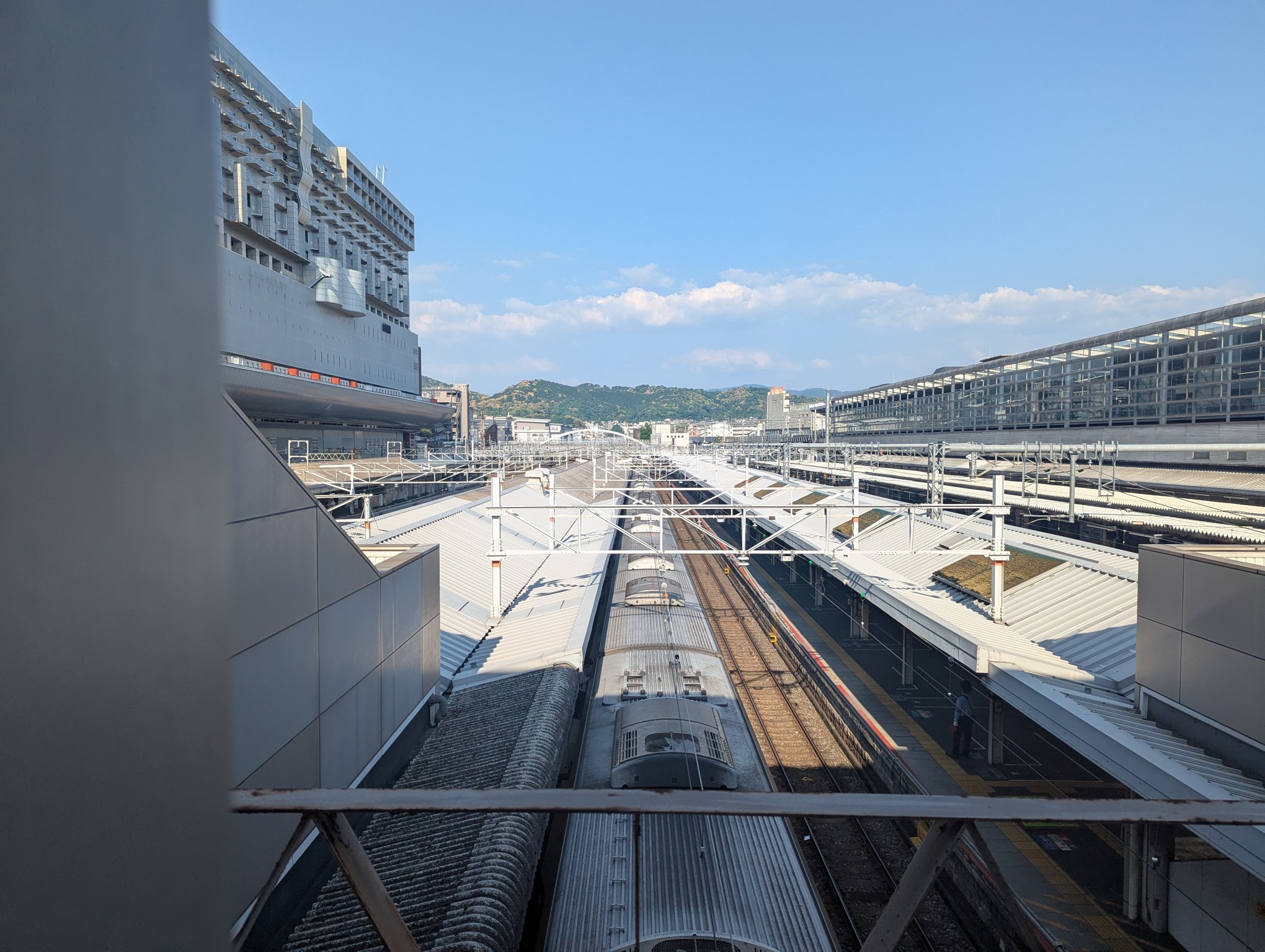
From Osaka Station, we took another train to get close to our hotel and then we walked the rest of the way. As night fell, we wanted to look decent for dinner, so we switched from cargo shorts to long pants, which we had brought for cold weather but hadn’t worn at any other time during the trip because the weather was mostly warm.
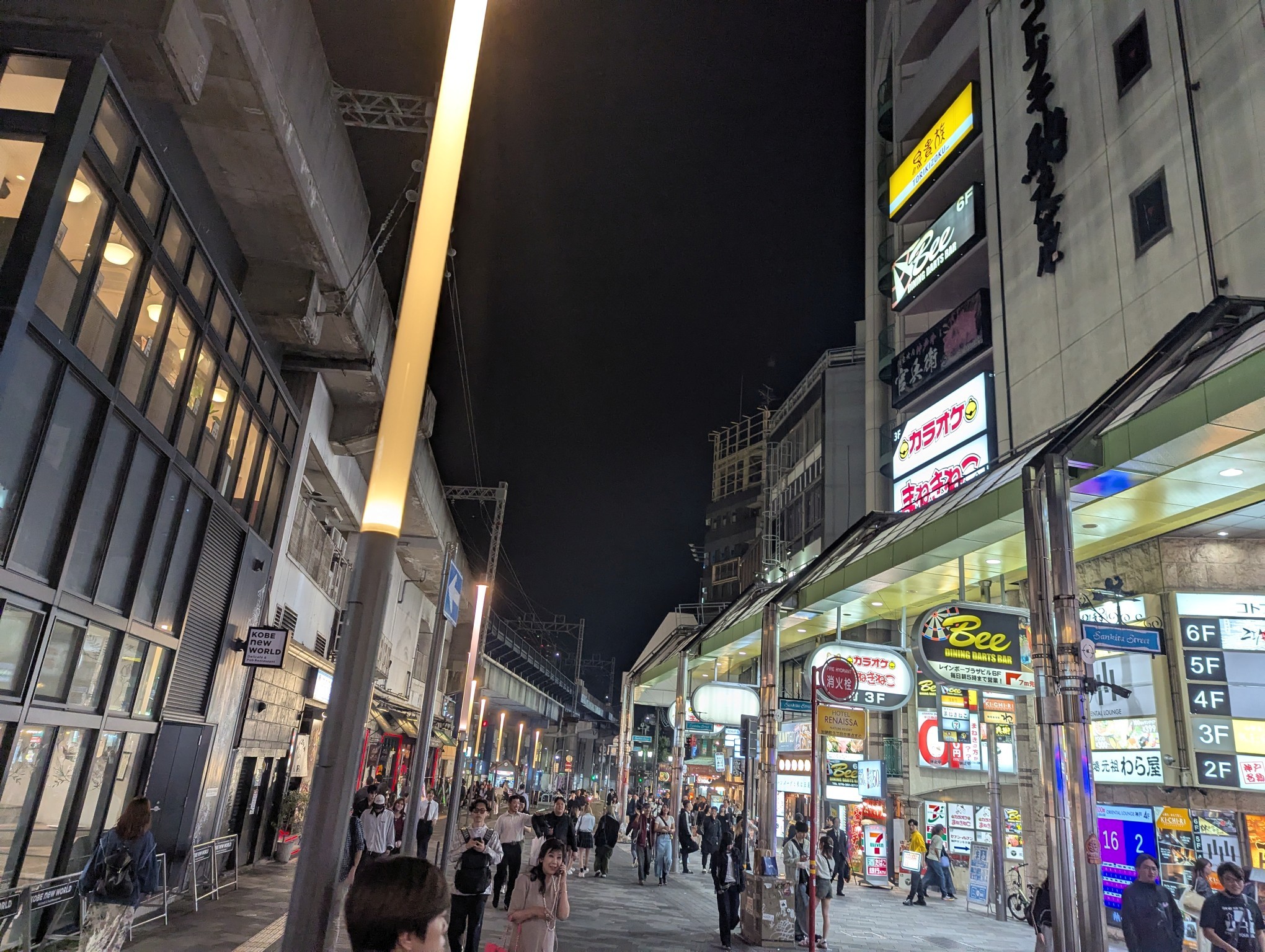
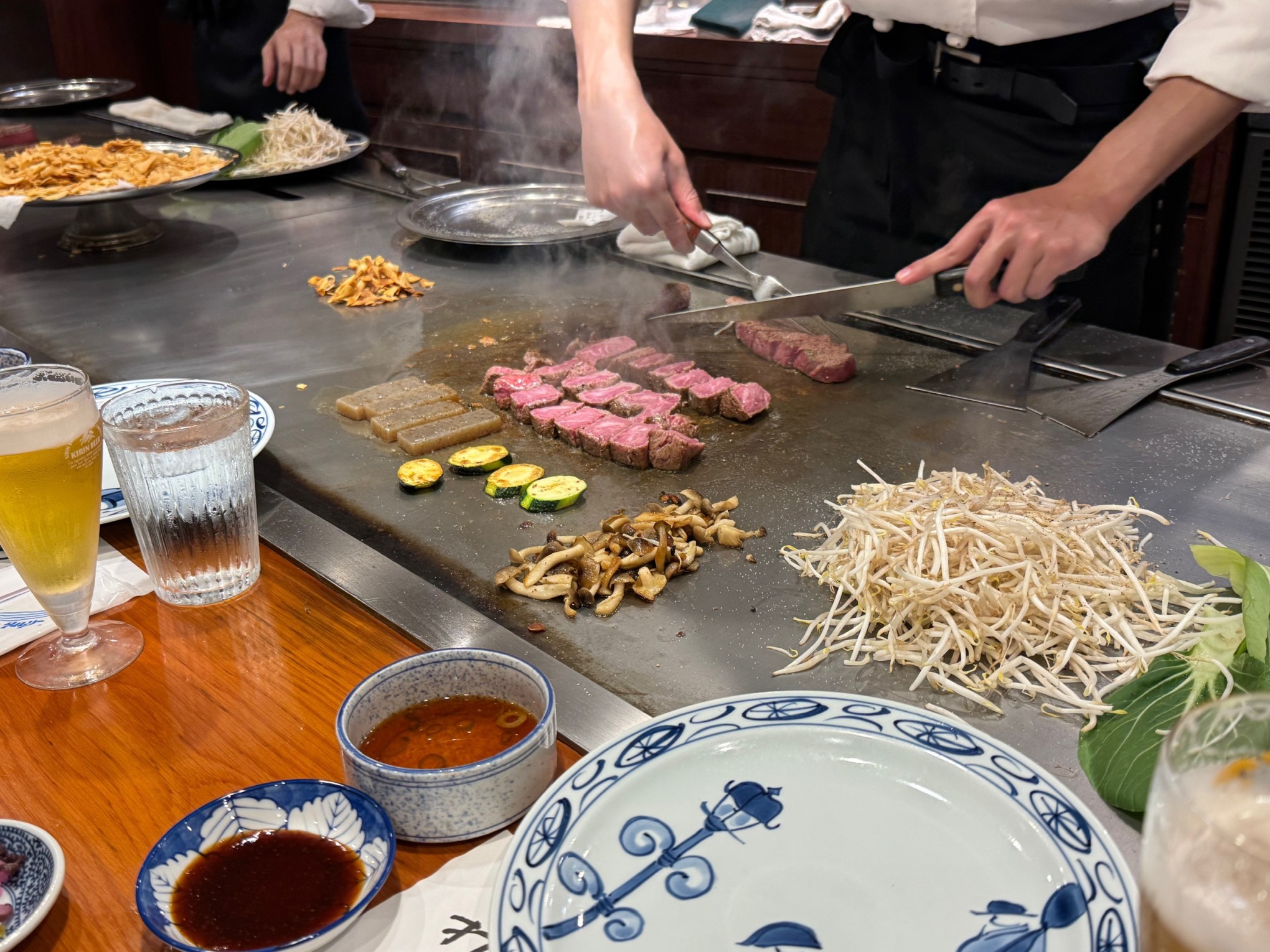
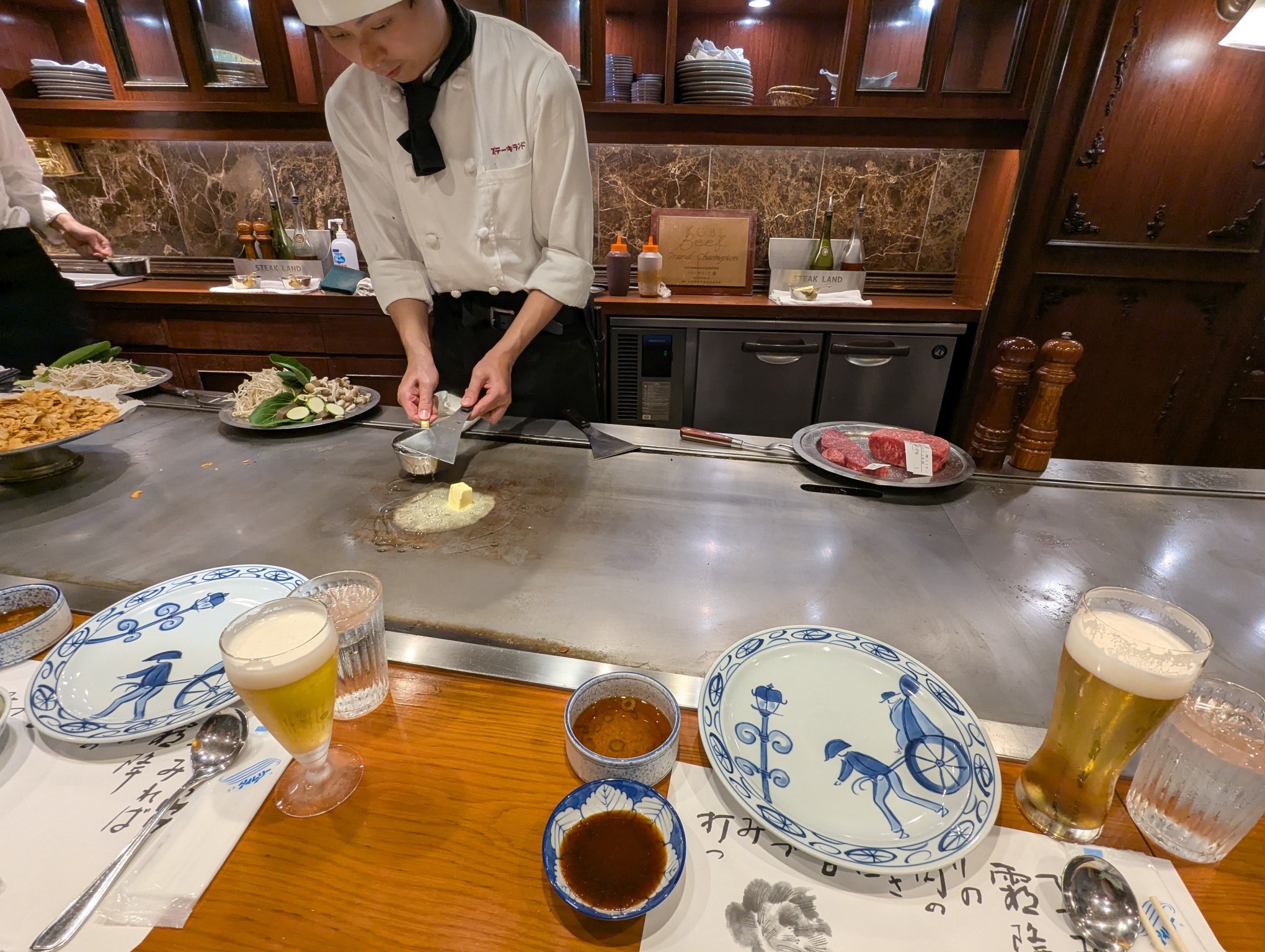
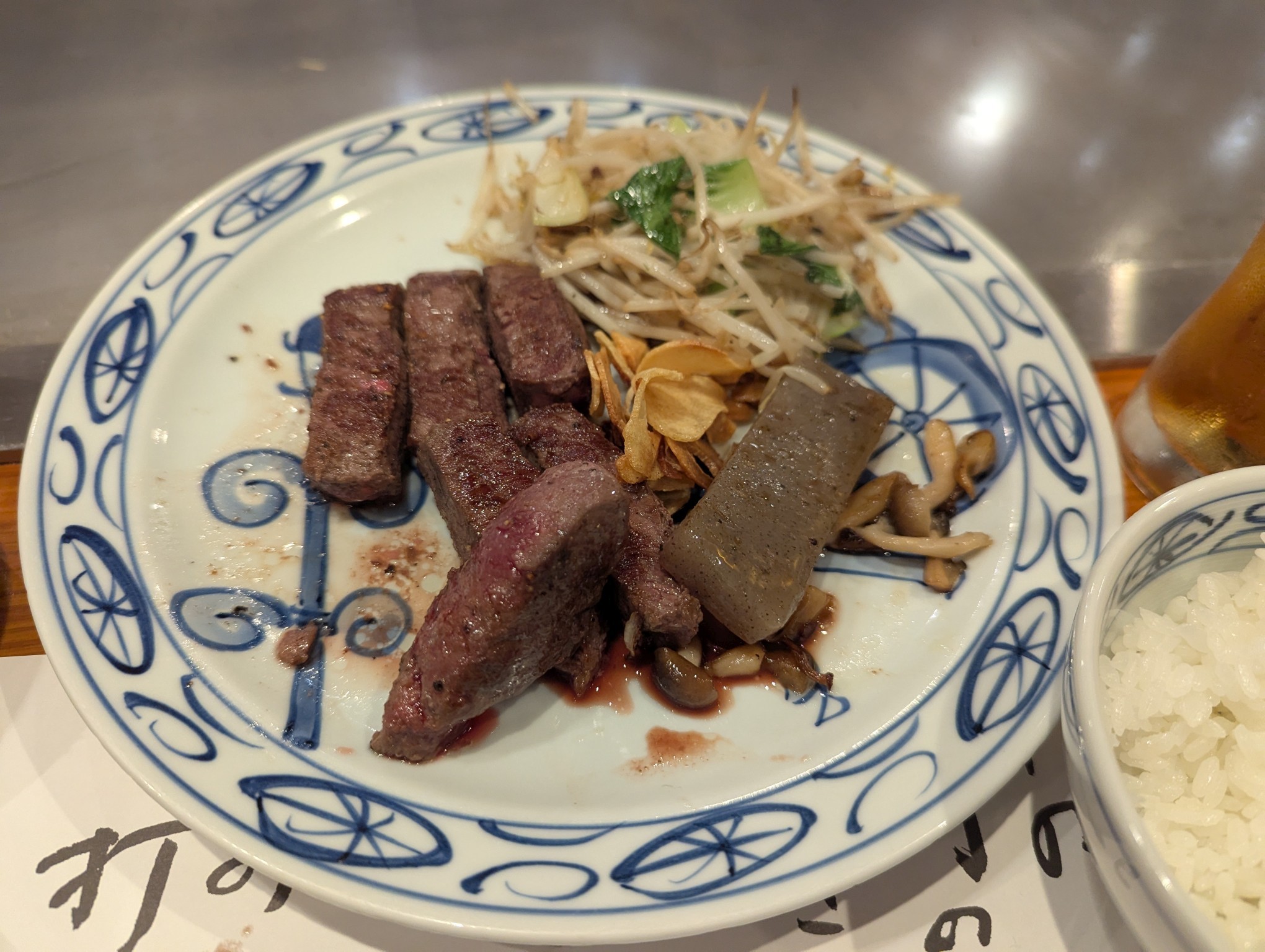
By the time we reached Kōbe, night had fully settled in. For dinner, we wanted to try the famous Kōbe beef. We could have done the same in Osaka. It is also sold at many street restaurants, but you never know if it’s the real thing. In Kōbe, we can at least claim to have eaten beef in Kōbe. To do so, my cousin selected Steak Land, which had good ratings and was near the train station. To get in, we had to use a side entrance and take the elevator up to the seventh floor. At the reception, we were informed that the restaurant was already closed to new customers that evening. Confused and frustrated, we went back down and consulted our internet devices. It turns out that there are several restaurants with varying opening hours. We went one block to the right and had better luck. This place had a long bar-like cooking area where guests sat facing the chef preparing the food. We ordered the steak menu, which included a salad and soup for the starter and mushrooms, mungo beans, a gelatinous gray block of protein, Japanese kelp, bread or rice for the main course. For dessert, there was the strange option of choosing between orange juice or coffee. A personal chef cooked the food and we could decide how the meat would be prepared. The meat was really great. The menu price was around 6,400 ¥, or 60 € per person for 160 g of tender Kōbe steak.
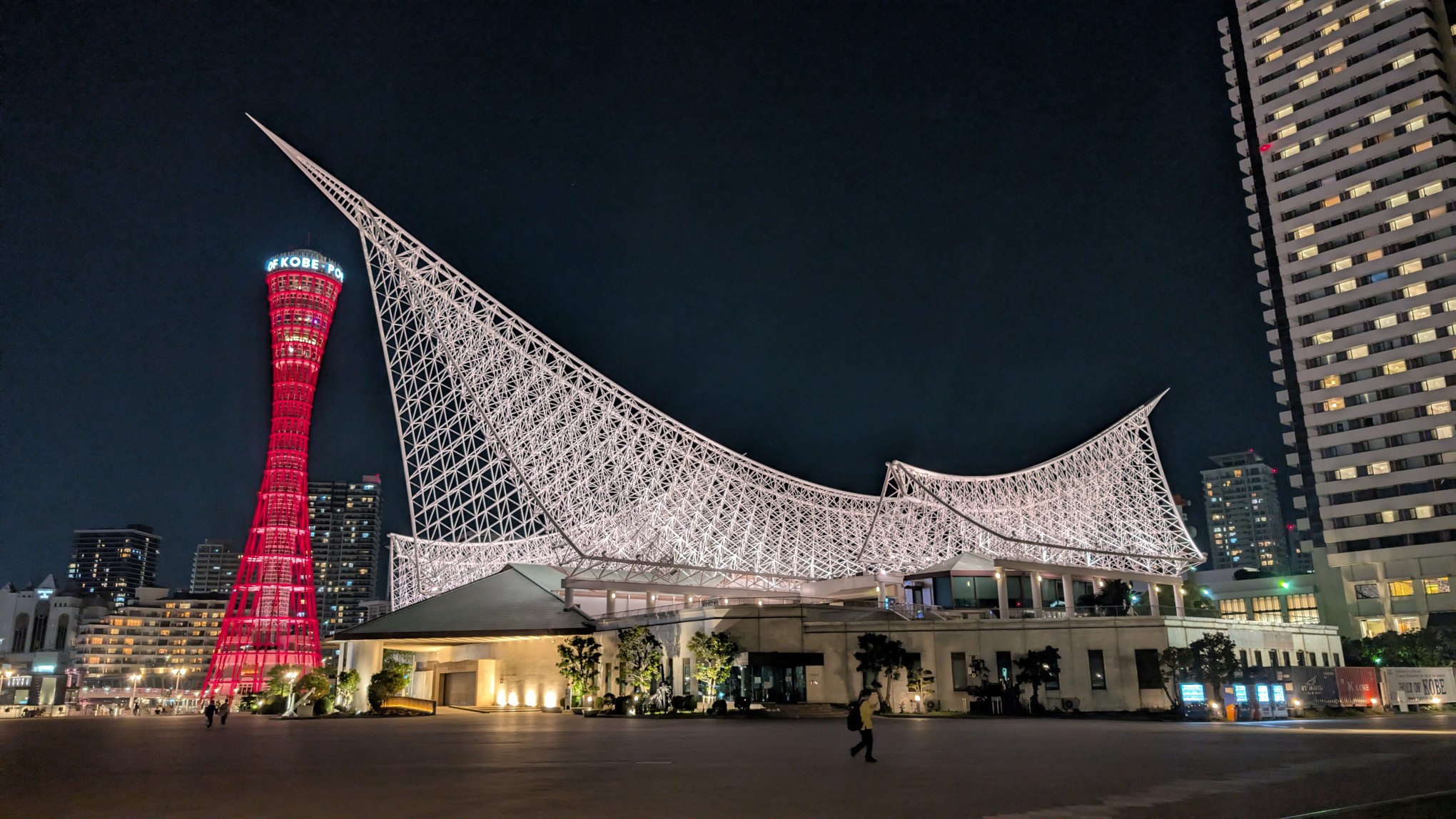
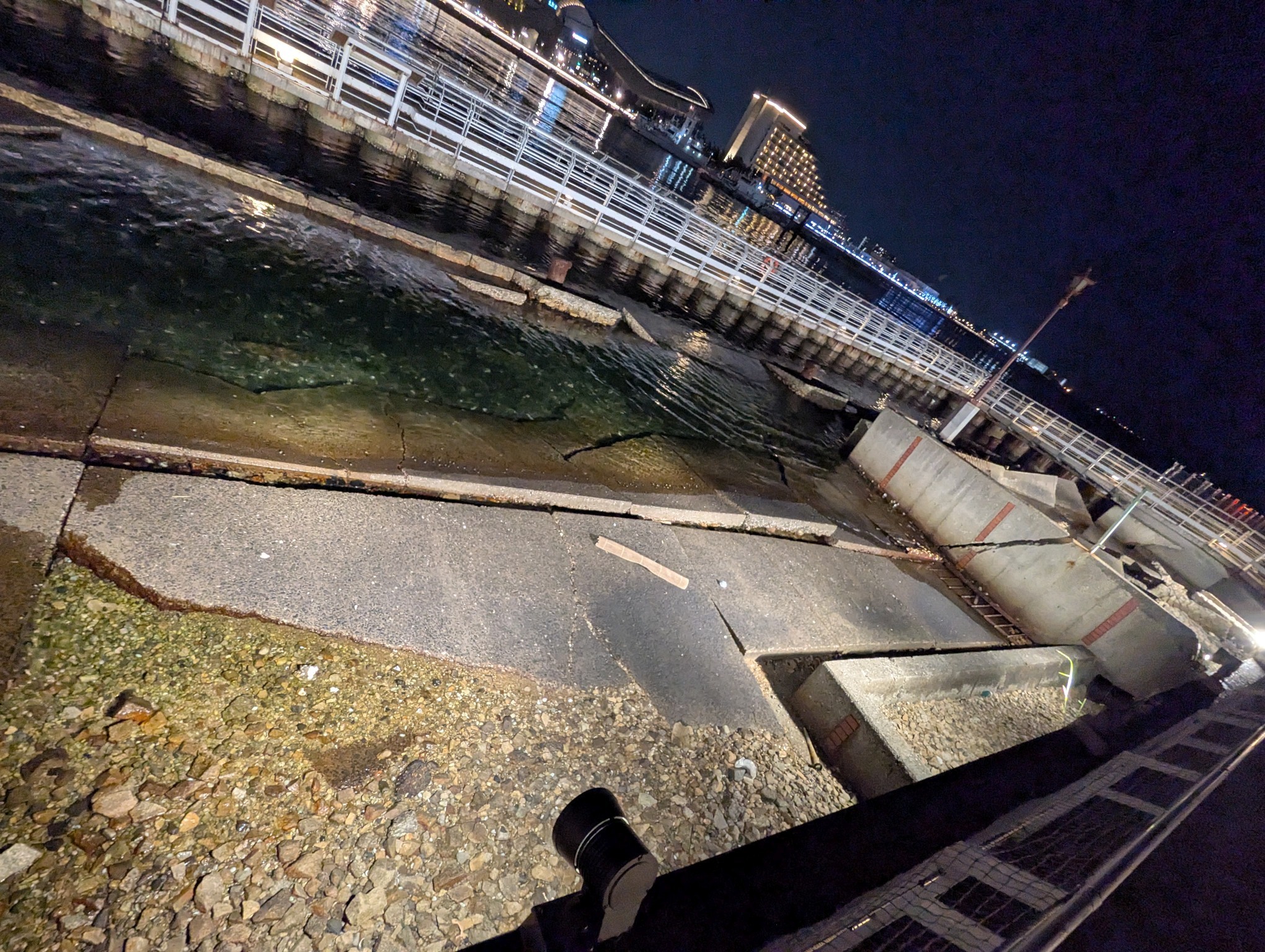
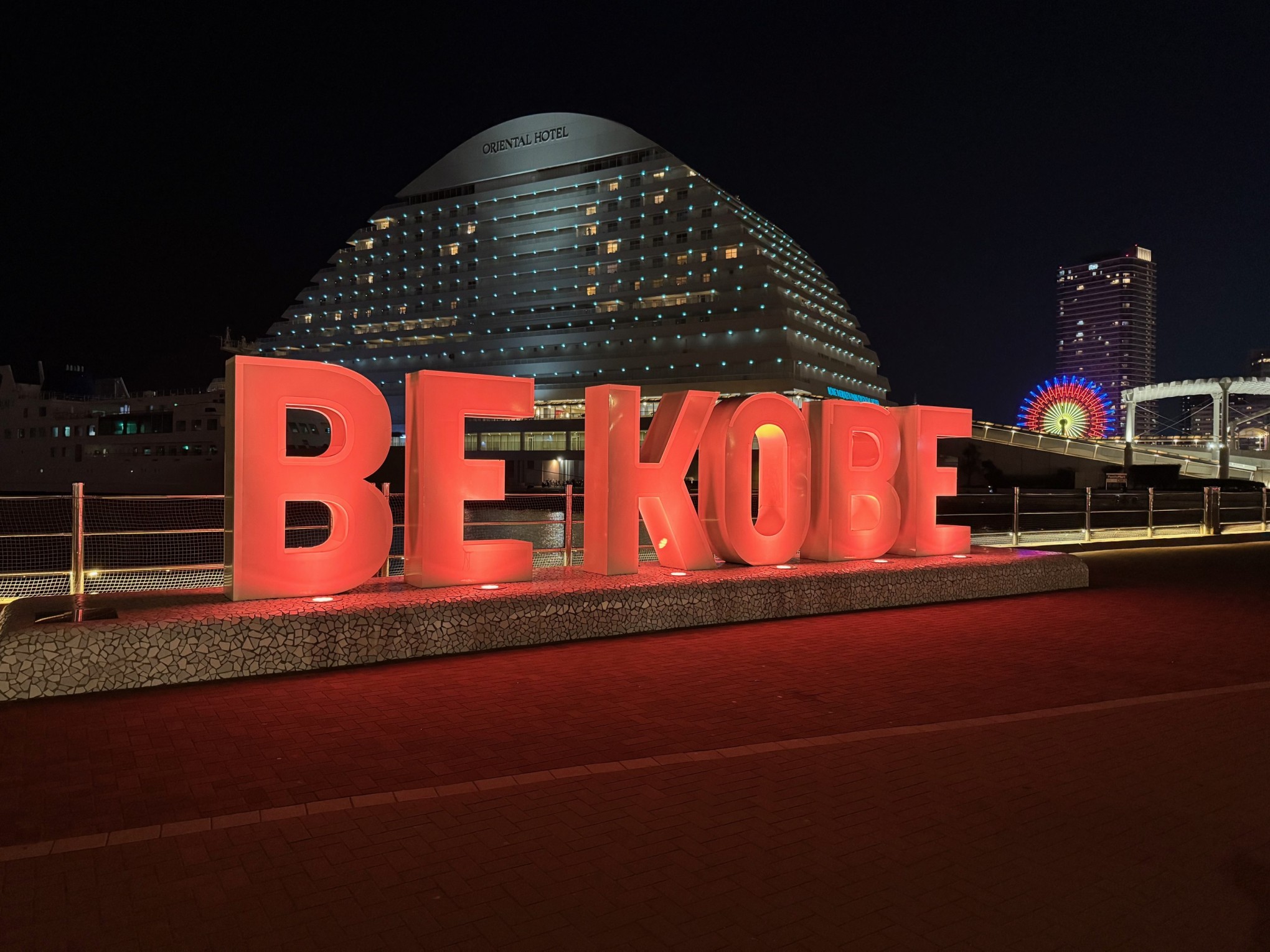
After dinner, I suggested walking toward the harbor. It was strange to see the contrast between the crowded areas of the city during the day and the fully illuminated but nearly empty park at night. Next to the waterfront is an open-air museum and memorial to the 1995 Kōbe earthquake, which preserves some of the destruction. Other attractions in the park include the BE KOBE sign, the Kōbe Maritime Museum and the Kōbe Port Tower. As we walked through the park, a light show began. After this wonderful detour, we decided to head back and rest for the day.
Kyoto day 2
This was the last full day in Osaka and the Kansai area as we had seen enough from Osaka we decided to spend the entire day in Kyoto.
We failed to notice that the Kansai Mini Pass is only valid on JR lines, so we had to take an odd route from our hotel because the next JR line was quite far away. On the way to the train station, we stopped at a small coffee shop for a coffee. The coffee was much better than at the Toast shop because a real barista made it.
After reaching the Ring Line, we grabbed our local stamps and headed to Osaka Main Station. From there, we took the rapid express to Kyoto. Taking the train was a good opportunity to relax, do some research and write the initial draft of this blog series.
Once we arrived in Kyoto, we purchased our Shinkansen tickets for the following day, which was one of the items on our to-do list. However, the ticket machines were no help because they were preset to Kyoto as the starting destination and we needed to depart from Osaka. We stood in line and got everything we needed for the ride without much hassle or menu navigation. For this trip, we got two tickets and at the gate, you have to insert both tickets at the same time. It felt a bit strange, but we later discovered that one ticket was for the entire trip (as we took a regional train) and the other was specifically for the Shinkansen.
Completed this task, we headed to a nearby park to discuss further steps and eat the sandwiches we had bought at the supermarket. One Japanese etiquette rule is to not eat while walking. This is something Europeans regularly do, so it took me some time to get used to it.
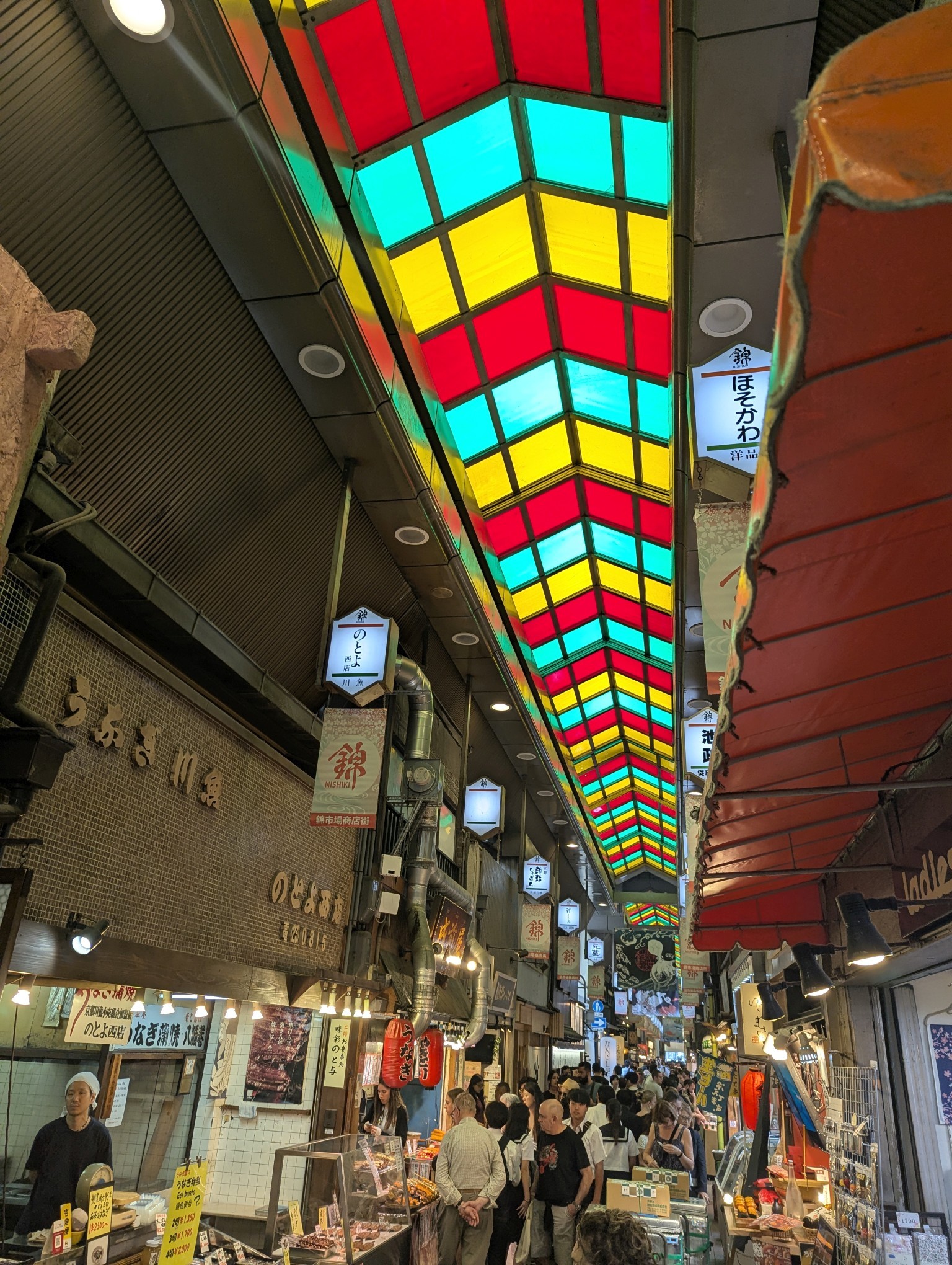
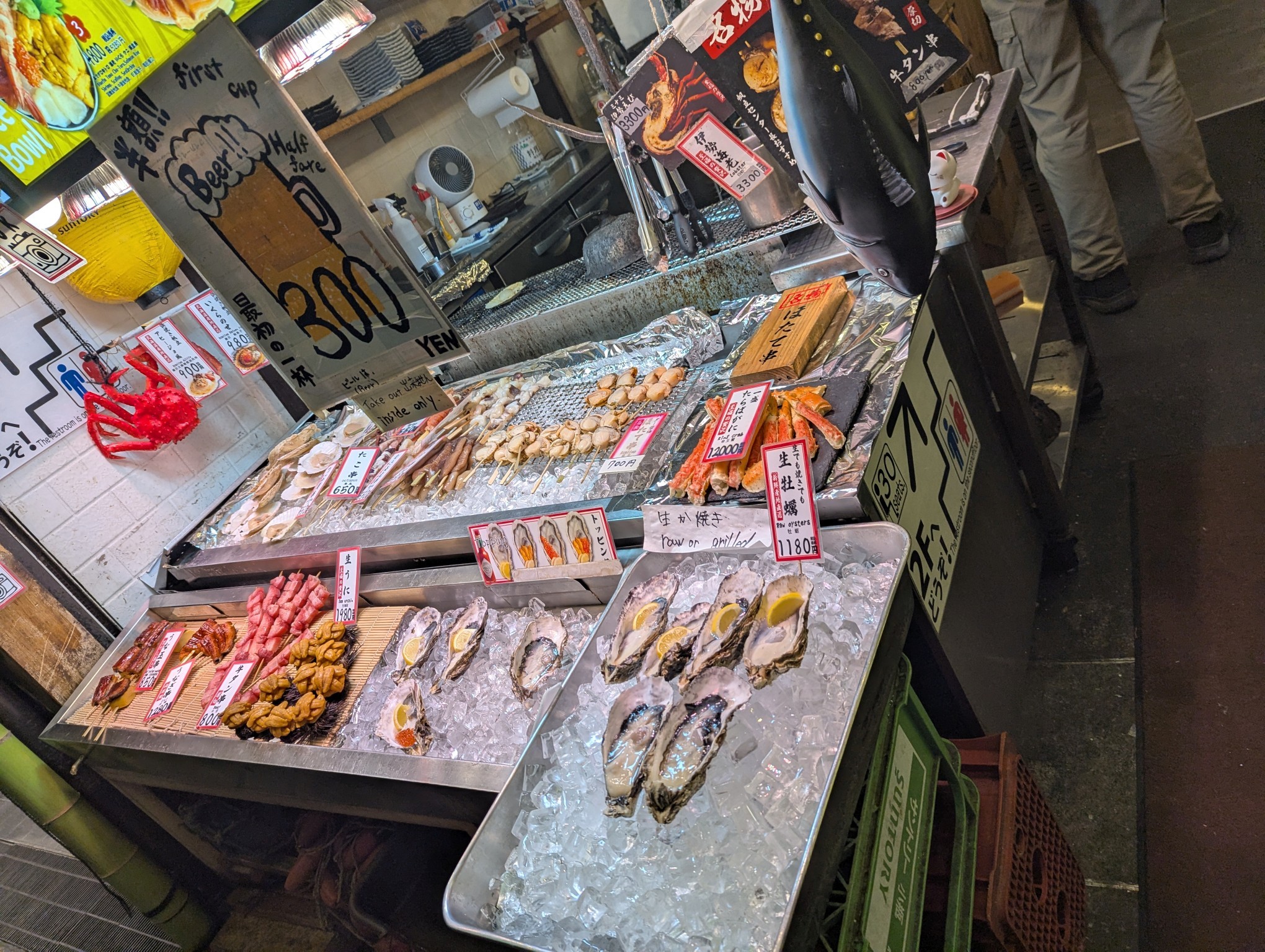
From there, we headed into the city center to shop for goods and souvenirs. Our first stop was the famous Nishiki-Markt, where many different kinds of food, delicacies and souvenirs are sold. Since this street is famous, the crowds are huge and some of the goods can be bought elsewhere. Nevertheless, I tried mochi balls on a stick because it’s difficult to find fresh mochi in Germany. As the stupid tourist that I am, I started walking while eating them. I realized my mistake when I saw the many signs posted and heard the announcements made in the passage. We stopped twice more, once for sweet potato slices and once for octopus on a stick. The mini octopuses looked kind of cute, but also disgusting. Seafood is not for me.
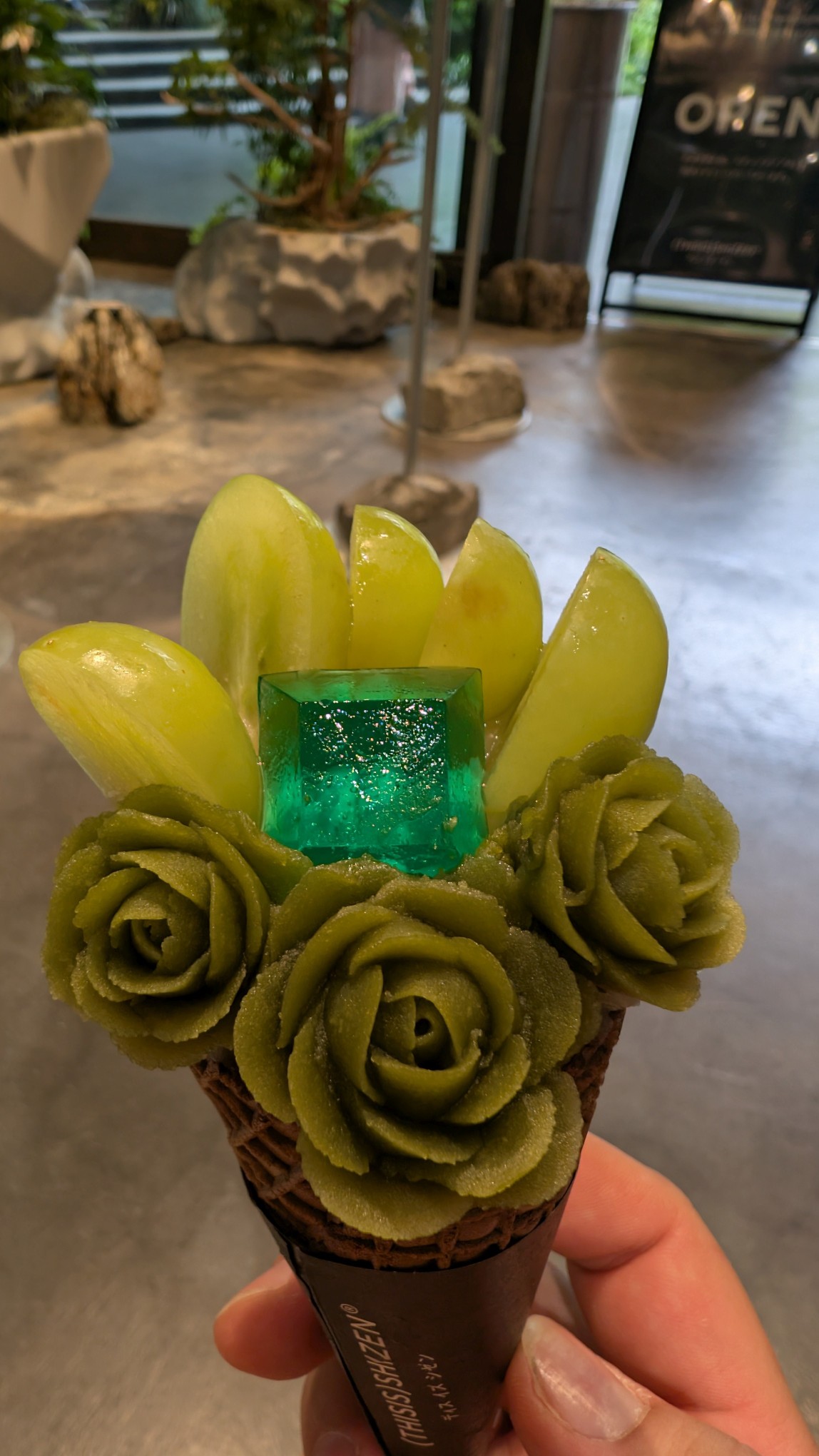
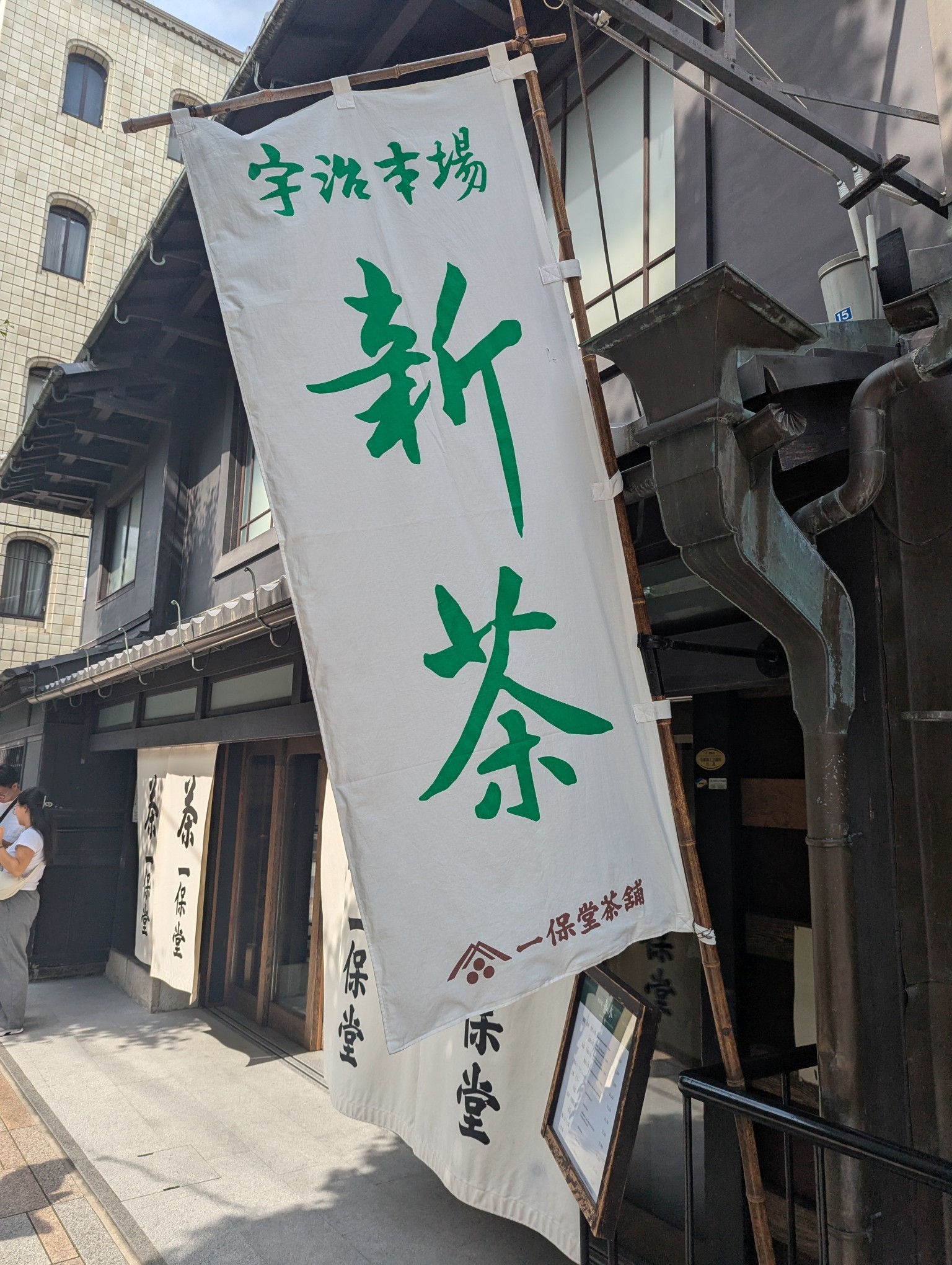
After leaving this passage, we went to a scented stick shop, where different types of incense can be purchased. Then, we went to a tea shop. There, you could purchase high-quality green tea and matcha powder. They were selling different grades of matcha powder and green tea and were limiting the amount per person to ensure enough goods for every customer.
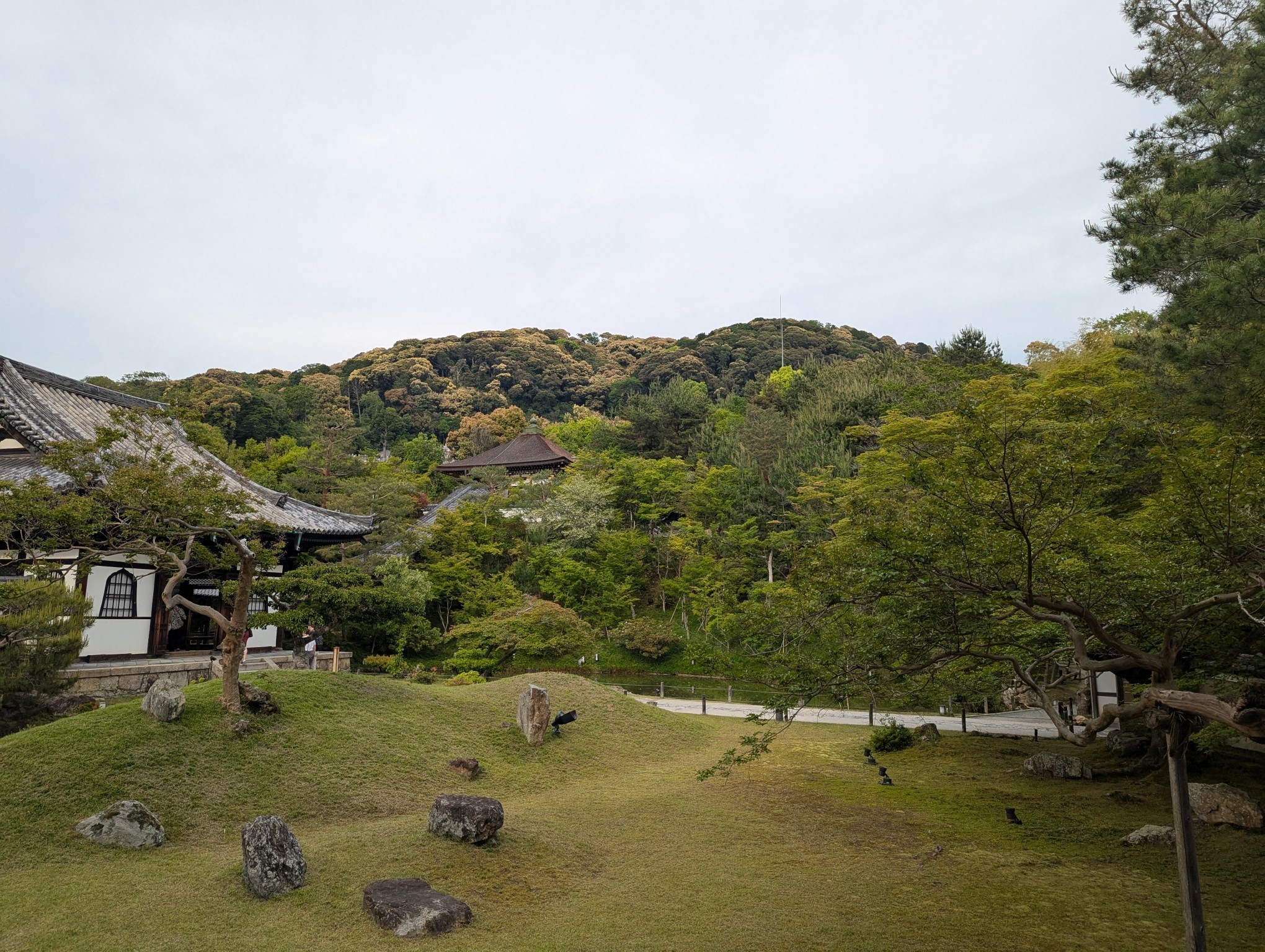
We took the bus from the tea shop towards the Kōdaiji Tenmangū Shrine and its adjacent garden area. After paying the entrance fee, we roamed around the garden and visited the main quarters. You have to remove your shoes here because shoes are prohibited in the quarters. We walked around and spent some time in the temple’s small bamboo forest. I find the tall, even bamboo stems to be a really fascinating sight.
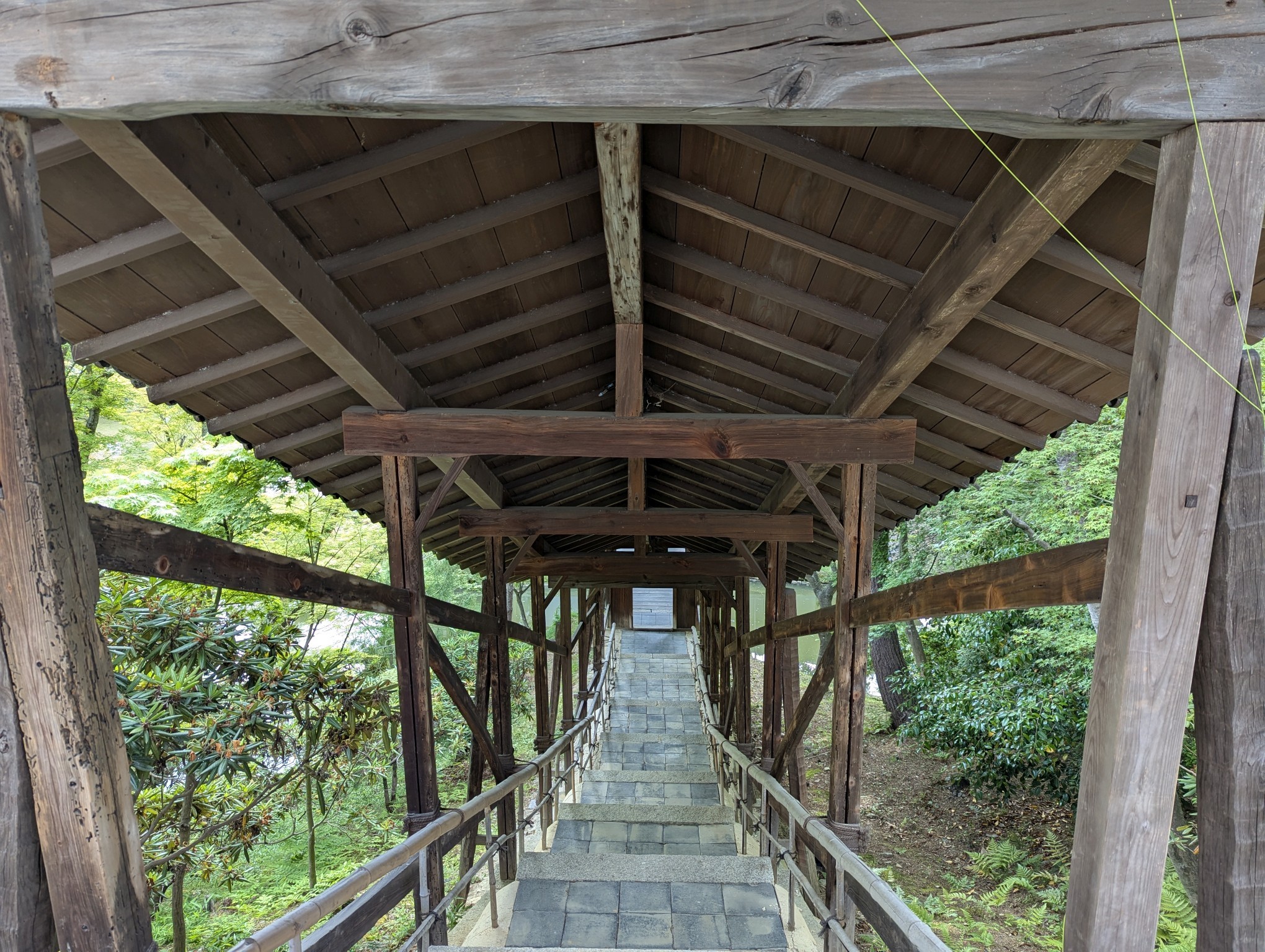
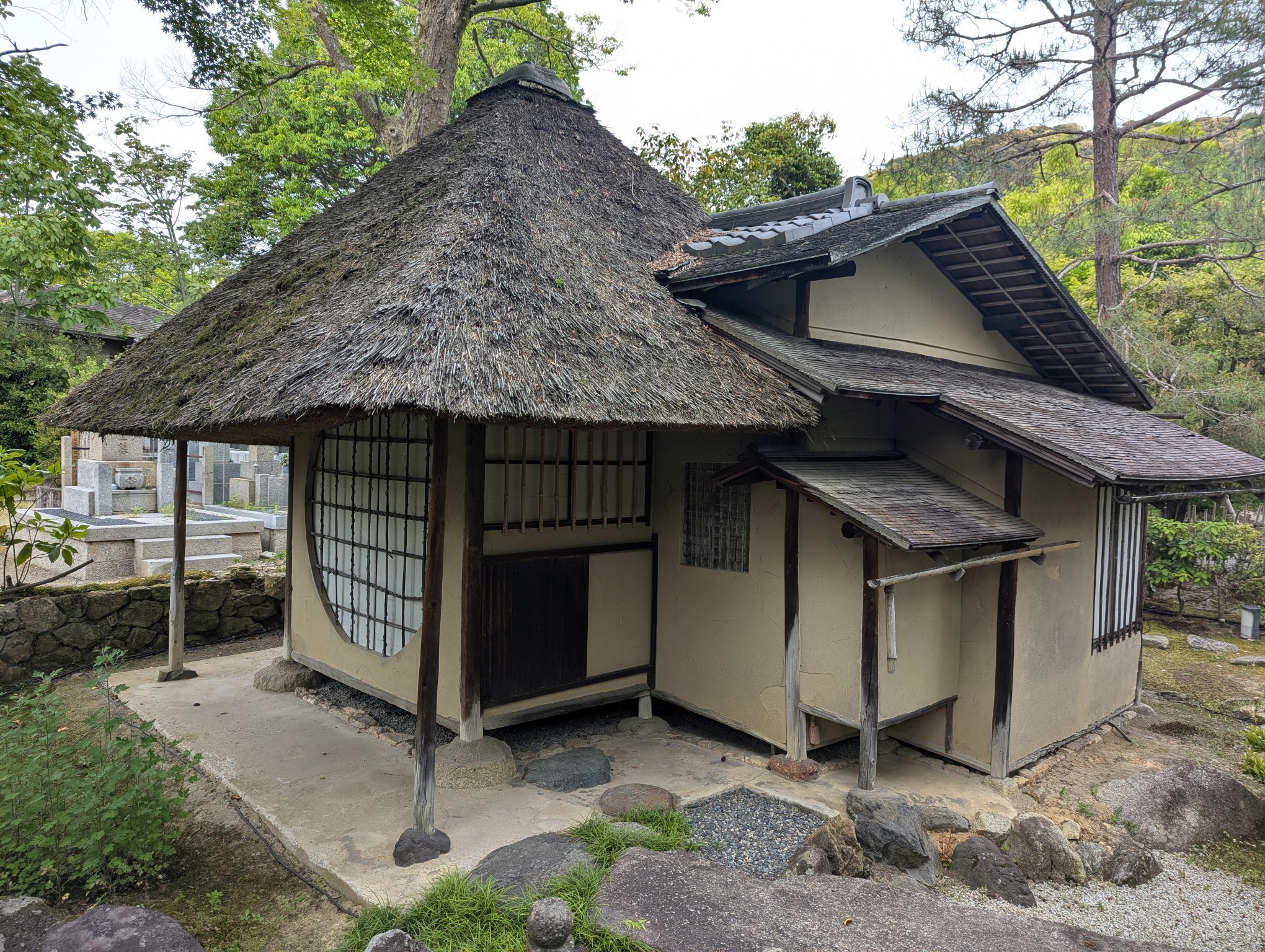
From the temple, we walked back into town towards the famous geisha district, Gion. We managed to see a geisha swiftly pass by people in the street. It’s sad to hear stories about people treating geishas like mascots at a theme park, unable to comprehend that they’re normal people following their occupation. To protect them, there are side streets that are off-limits to tourists. It’s sad that a few bad apples spoil the place for everyone. After this brief stop, we decided to head back to Osaka. This time, we went back to the Japanese clothing store where I bought my samue. I wanted to buy souvenirs and my companions searched for clothes.
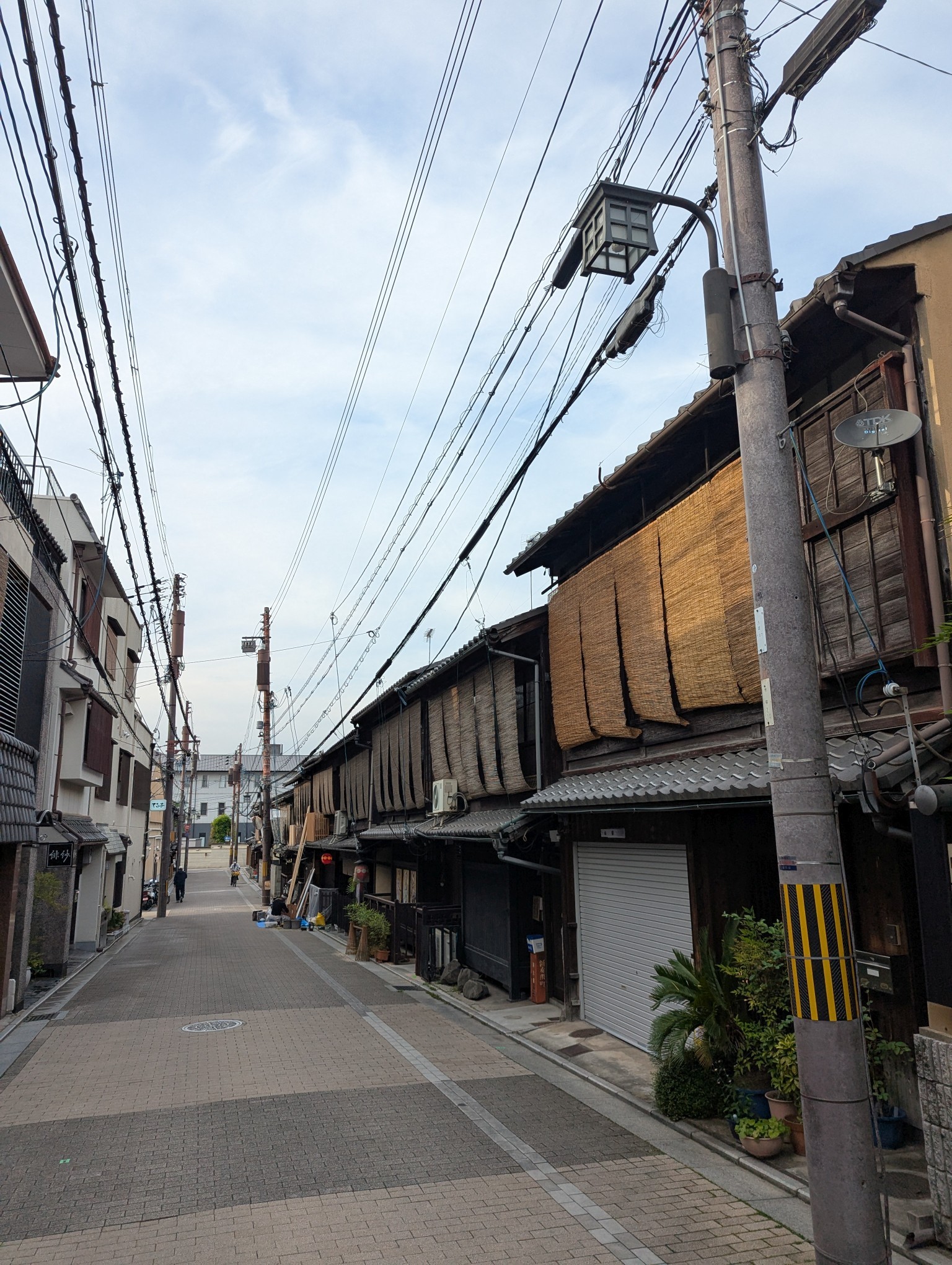
In the end, we arrived at the store 30 minutes before closing. Out of politeness, we asked if this was still acceptable. After the other customer left, we bought some clothes and towels. I took the opportunity to give away the sweets I brought from Germany. In exchange, I received some Japanese sweets, and the entire exchange was a really nice experience.
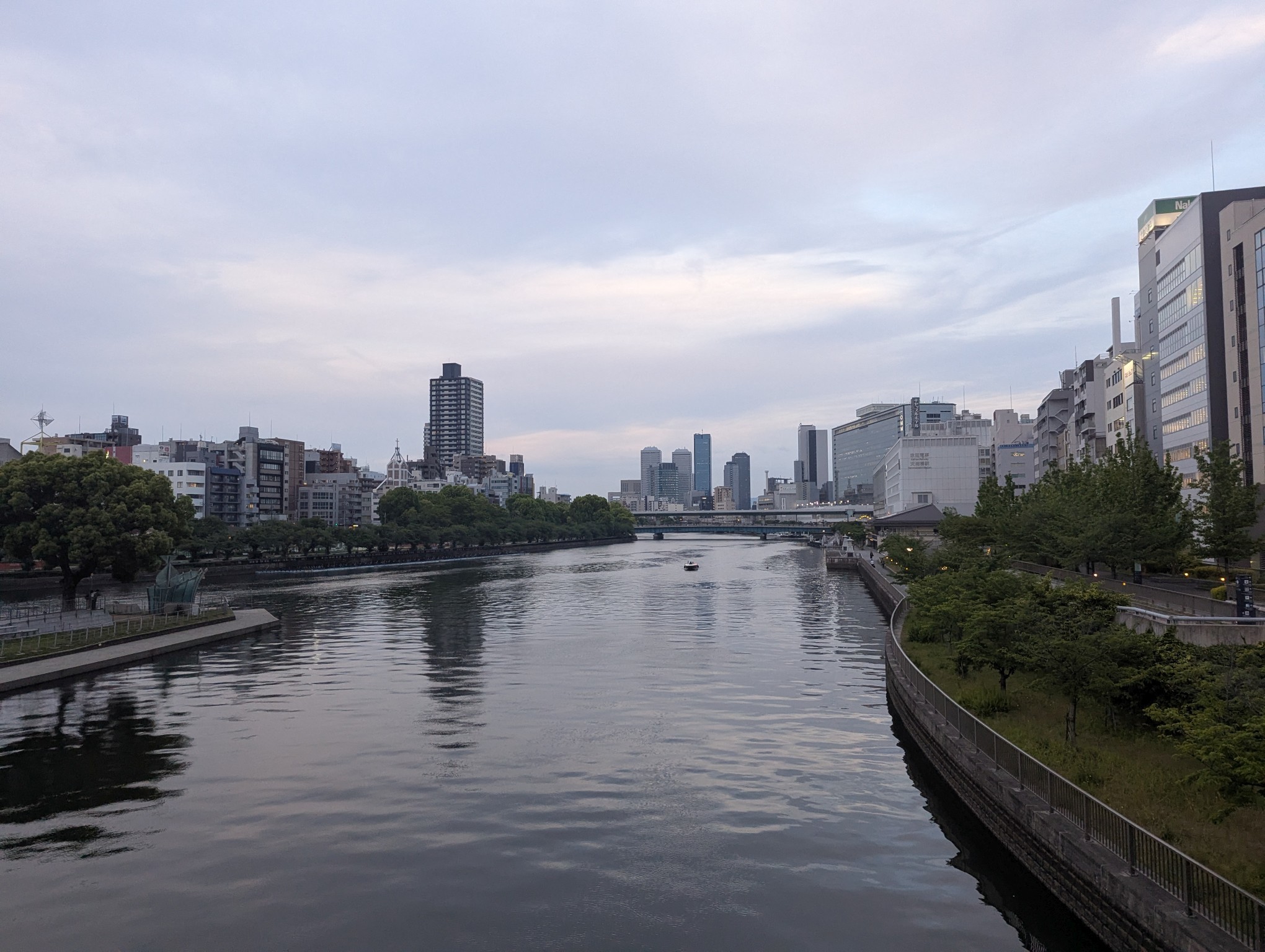
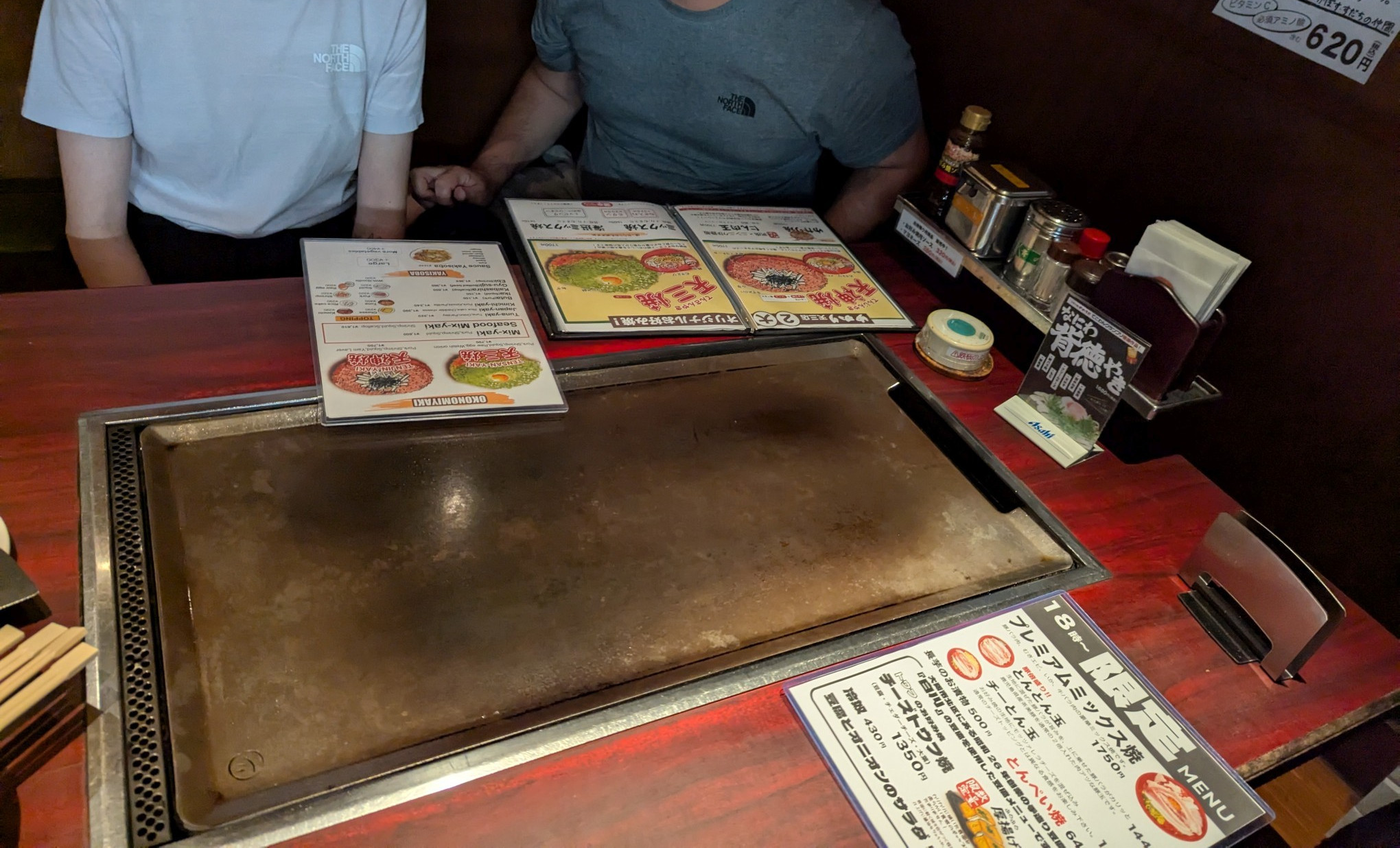
When it was time to grab dinner, we asked the shopkeeper for suggestions on where to get okonomiyaki, a regional Osaka dish consisting of a pancake base with customizable toppings. She immediately had a place in mind, so to make sure we could go there, she called and tried to make a reservation. She even guided us to the store because we had some trouble communicating. From the outside, the place looked similar to some of the other restaurants we had stumbled upon, but it was fully booked downstairs. The shopkeeper went in and confirmed the reservation. After saying goodbye, we were ushered into the restaurant.
First, we had to remove our shoes, as is customary in more traditional places. Then, we were led to the back of the restaurant and up some stairs. Our table had a gas grill insert in the center, which was smaller than my kneecaps, so we had to sit on the ground. We were warned about this, but we wanted to have the experience. We ordered using a bell, and the food was delicious. First, we had one pie of okonomiyaki and a heap of noodles, but since we were hungry from the day’s activities, we quickly ordered a second round.
After this fascinating experience, we headed back to the apartment for our last night in Osaka. We had to pack our bags because the next day, we were planning to head to Onomichi.
Pingback: Part 1, Going to Japan
Pingback: Part 4 with Kinosaki Onsen
Pingback: Part 5 with Kyoto, Otsu and Nagoya
Pingback: Part 6 with Tokyo